Sarasota upper cervical ratings near me searches work best when you compare more than star averages. The right match usually comes from three things: whether the provider truly focuses on the C1 atlas and C2 axis, whether reviews mention clear exam findings and consistent follow-up, and whether the practice location fits your weekly schedule in Sarasota, Lakewood Ranch, Osprey, Venice, or Bradenton.
If you are trying to sort through upper cervical chiropractor near me reviews, look for patterns tied to your symptoms, not marketing language. For upper neck pain, headaches, jaw tension, dizziness, or neck pain when turning your head, the useful ratings mention range of motion, imaging or structural analysis, gentle adjustment style, and how the provider tracks progress over the first 2 to 6 weeks.
Why Search Sarasota Upper Cervical Ratings Near Me
Searching sarasota upper cervical ratings near me narrows a broad chiropractor search down to a specific type of conservative care focused on the top of the neck. That matters because the occiput, atlas, and axis influence head position, upper neck mechanics, and the way force moves down the cervical spine when you turn, bend, or sit at a desk for hours.
General local results often mix every kind of chiropractor into one list. That does not tell you who spends most of their time evaluating upper cervical alignment, head tilt, suboccipital muscle tension, or restricted motion at the cranio-cervical junction.
Review research across healthcare consistently shows that patients use ratings to choose providers, but decision quality improves when they also compare review volume, recency, and written comments on communication, scheduling, and treatment explanation.
A local ratings search helps you answer practical questions fast:
- Does this provider actually focus on upper cervical care or just mention it once on a services page?
- Do reviews describe problems similar to yours, such as headaches, jaw tension, dizziness, or upper neck stiffness?
- Is the practice close enough for an initial exam plus short-term follow-ups that may occur 1 to 2 times weekly?
- Do reviewers mention short wait times, clear home care instructions, and measurable changes in ROM?
That is the difference between browsing and choosing.
If your symptoms include head pressure, jaw pain, or persistent neck tension, it helps to understand related upper cervical topics before booking. Medximity has plain-language explainers on what an upper cervical subluxation means, how upper cervical care is used for headache-focused evaluation, and how upper cervical care may relate to TMJ and TMD symptoms.
What Upper Cervical Chiropractic Care Means
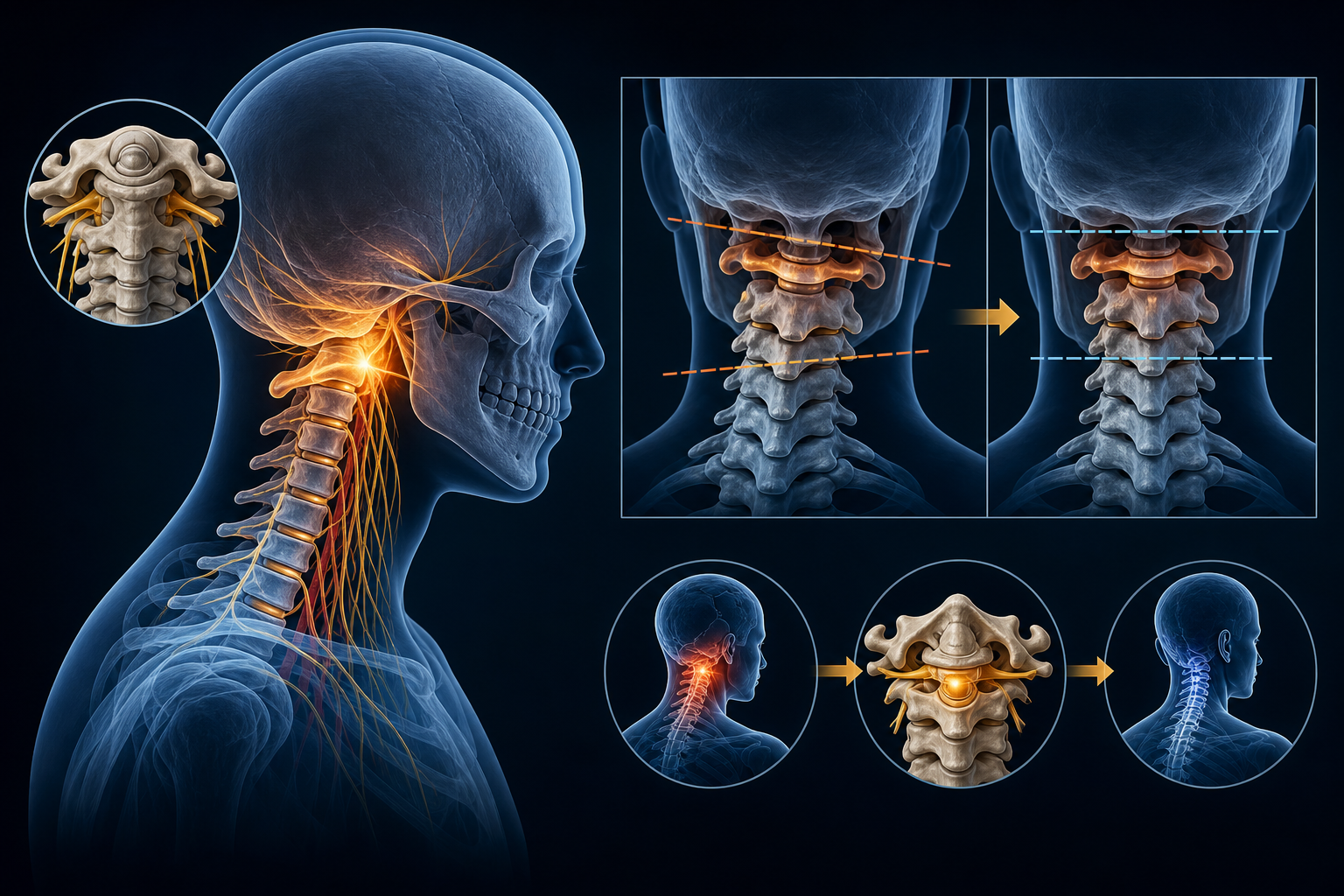
What is upper cervical chiropractic care? It is a branch of chiropractic that focuses on the top two vertebrae in the neck, the atlas and axis, and how those joints relate to head posture, muscle tone, and cervical motion. Instead of broad full-spine treatment every visit, upper cervical providers often spend more time analyzing the relationship between the skull and the upper neck, then apply a precise, low-force correction when indicated.
Which structures are involved
The main anatomy is specific.
- Atlas (C1): supports the skull and allows nodding motion.
- Axis (C2): contains the dens and supports rotation.
- Occiput: the base of the skull, which articulates with C1.
- Suboccipital muscles: small stabilizers that often tighten when alignment and posture are off.
- Sternocleidomastoid and upper trapezius: larger muscles that may compensate when upper cervical mechanics are restricted.
How do upper cervical adjustments work
How do upper cervical adjustments work? The goal is to reduce asymmetric loading and restore cleaner motion at the top of the neck. Many providers use postural analysis, palpation, ROM testing, and sometimes imaging to decide if a correction is needed. The adjustment itself is usually gentle and targeted, often with very little twisting.
Patients searching local ratings often assume every chiropractor treats the neck the same way. Upper cervical care is different in three common ways:
Feature Upper Cervical Care General Chiropractic Visit Primary focus C1, C2, occiput relationship Whole spine or multiple regions Visit style Detailed analysis before correction Broader exam and regional treatment Adjustment force Typically low-force and precise Varies by provider and technique Progress tracking Often based on posture, ROM, symptom response, hold pattern Varies widelyIf you want broader context on expected benefits and quality-of-life discussions around this style of care, review upper cervical chiropractic and quality of life.
How to Compare Sarasota Upper Cervical Chiropractor Ratings
The best upper cervical chiropractor Sarasota search should never be decided by a 4.9 versus 5.0 score alone. The stronger comparison method is provider focus plus review depth plus logistics. That is how you separate a truly upper cervical-centered practice from a general practice with a local SEO page.
Use this framework when comparing a upper cervical chiropractor Sarasota vs chiropractor result:
- Check specialty language. Look for repeated mention of upper cervical, atlas, axis, cranio-cervical alignment, or specific techniques. One passing mention is weak evidence.
- Check review count. A 5.0 average from 9 reviews tells you less than a 4.8 average from 150 reviews spread across 24 months.
- Check review recency. Fresh reviews reveal current staffing, scheduling, and communication quality.
- Check symptom match. Reviews should mention headaches, neck stiffness, dizziness, jaw tension, posture issues, or restricted turning.
- Check exam detail. Strong reviews mention assessment, explanation, re-checks, and home exercises, not only “friendly staff.”
- Check location realism. If you live in Palmer Ranch, Fruitville, Southgate, Siesta Key, Gulf Gate, or Lakewood Ranch, drive time affects follow-up compliance.
Ratings become more useful when you compare them side by side.
What to Compare Why It Matters Strong Signal Weak Signal Star rating Quick screening 4.7+ with high review count Perfect score with very few reviews Review themes Shows actual care experience Mentions ROM, headaches, follow-up, explanations Only “nice staff” comments Technique focus Confirms specialty fit Upper cervical named repeatedly Generic chiropractic wording Scheduling access Affects care consistency Easy booking, short waits Repeated delays or limited availability Care plan clarity Sets expectations Re-check intervals and goals explained No timeline or progress markersAs you compare providers, also look at nearby directory results instead of relying on a single map pack. Use Medximity to find a upper cervical chiropractor near you and to browse providers across Sarasota and surrounding communities.
Which Review Themes Matter More Than Star Ratings?
The written review usually tells you more than the score. For a natural treatment for upper neck pain, the reviews worth trusting describe what changed: less pain turning left, fewer morning headaches, improved jaw opening, longer sitting tolerance, or reduced upper trapezius tension after a structured exam and follow-up plan.
Review themes that predict a better fit
- Clear explanation of findings. The provider explained what was happening at the atlas-axis region and why a specific correction was chosen.
- Measured progress. Reviews mention re-checks, posture changes, ROM gains, or headache frequency changes.
- Gentle technique. Helpful if you prefer low-force care or have irritation with rapid neck rotation.
- Reasonable visit flow. Short wait times and organized follow-up matter when care is initially frequent.
- Home care instructions. Good practices pair in-office care with posture, stretching, sleep, and work-station advice.
Review themes that should make you look closer
Some comments are not automatic deal-breakers, but they deserve context.
- Repeated mention of rushed visits without explanation.
- Heavy emphasis on sales or prepaid plans instead of exam findings.
- No mention of symptom type, functional change, or reassessment.
- Only front-desk praise with nothing about the provider’s clinical process.
Here is the practical test: if you have neck pain when turning head chiropractor is the search you typed, the better review mentions cervical rotation, upper neck stiffness, posture advice, and what happened over the first few visits. Vague praise does not help you choose.
Symptom-specific education can sharpen your review reading. If headaches are part of your pattern, see upper cervical headache care. If jaw clicking or facial tension is part of it, compare that with upper cervical care for TMJ and TMD. If dizziness or inner-ear type symptoms are part of your search, the article on Meniere’s recovery with upper cervical treatment offers useful context.
Sarasota Areas and Nearby Communities to Check
Your best provider may not be downtown Sarasota. Distance changes adherence, especially if you start with 4 to 8 visits over the first 2 to 4 weeks. A provider 10 to 15 minutes away often works better than one with slightly better ratings that requires fighting seasonal traffic across town.
Search broadly across these Sarasota-area zones:
- Downtown Sarasota for central access if you work near Main Street or the bayfront.
- Lakewood Ranch if you want newer practice clusters and easy parking. This is where many people also search upper cervical chiropractor Lakewood Ranch reviews.
- Palmer Ranch and Gulf Gate for South Sarasota convenience.
- Osprey and Nokomis if you live south of town but want to avoid Sarasota core traffic.
- Venice if you are already commuting from the south end of the county.
- Bradenton and west Manatee County if northbound access is easier than crossing Sarasota.
Local relevance is not just about ZIP code. It is about how often you can realistically attend.
A practical local rule: if the first month of care may include 1 to 2 visits per week, every extra 20 minutes of drive time makes missed visits more likely.
When you compare neighborhoods, look for these access details:
Area Best For What to Check Downtown Sarasota People working in the city core Parking, lunch-hour appointment slots Lakewood Ranch East county residents Review volume, evening availability Palmer Ranch South Sarasota residents Short follow-up access, traffic flow Osprey/Nokomis Lower county commuters Whether upper cervical is a true specialty Bradenton North county residents Commute time versus rating advantageIf you want a wider local search instead of one neighborhood, use Medximity to find a chiropractor near you or explore more health topics while comparing conditions and treatment options.
What Questions Should You Ask Before Booking an Upper Cervical Visit?
The fastest way to identify a good fit is to ask direct questions about evaluation, treatment style, and expected timelines. Good upper cervical practices answer these clearly. Vague answers usually predict a vague experience.
Ask these six questions before you book:
- Do you primarily provide upper cervical care, or is it one technique among many?
- How do you decide whether I need an adjustment at C1 or C2?
- What exam measures do you use besides pain scale? Look for ROM, posture, palpation findings, and follow-up checks.
- How long does upper cervical treatment take? Ask about first-visit length and re-check visits.
- What home care do you usually assign for upper neck pain or headaches?
- When would you tell me not to continue and get urgent evaluation instead?
Is upper cervical chiropractic safe
Is upper cervical chiropractic safe? In most cases, conservative upper cervical care is designed to be gentle and precise, but safety starts with screening. A good provider asks about recent trauma, worsening neurological signs, severe dizziness, fainting, numbness, and changes in balance or vision. If those are present, you may need urgent medical evaluation before any manual care.
Seek emergency care now if you have any of the following red flags:
- Sudden severe headache unlike your usual pattern
- New weakness in an arm or leg
- Facial droop or trouble speaking
- Loss of coordination or repeated falls
- Fever with severe neck stiffness
- Recent major head or neck trauma
How long does upper cervical treatment take
How long does upper cervical treatment take? The first visit usually takes about 40 to 60 minutes because history, examination, and treatment planning take time. Follow-up visits are often 10 to 20 minutes. A common trial period is 4 to 6 visits over 2 to 3 weeks for neck pain or headache patterns, followed by reassessment. If symptoms have been present for months, a broader window of 6 to 12 weeks is more realistic for meaningful change in ROM, posture habits, and muscle guarding.
What to Expect From Conservative Upper Cervical Care
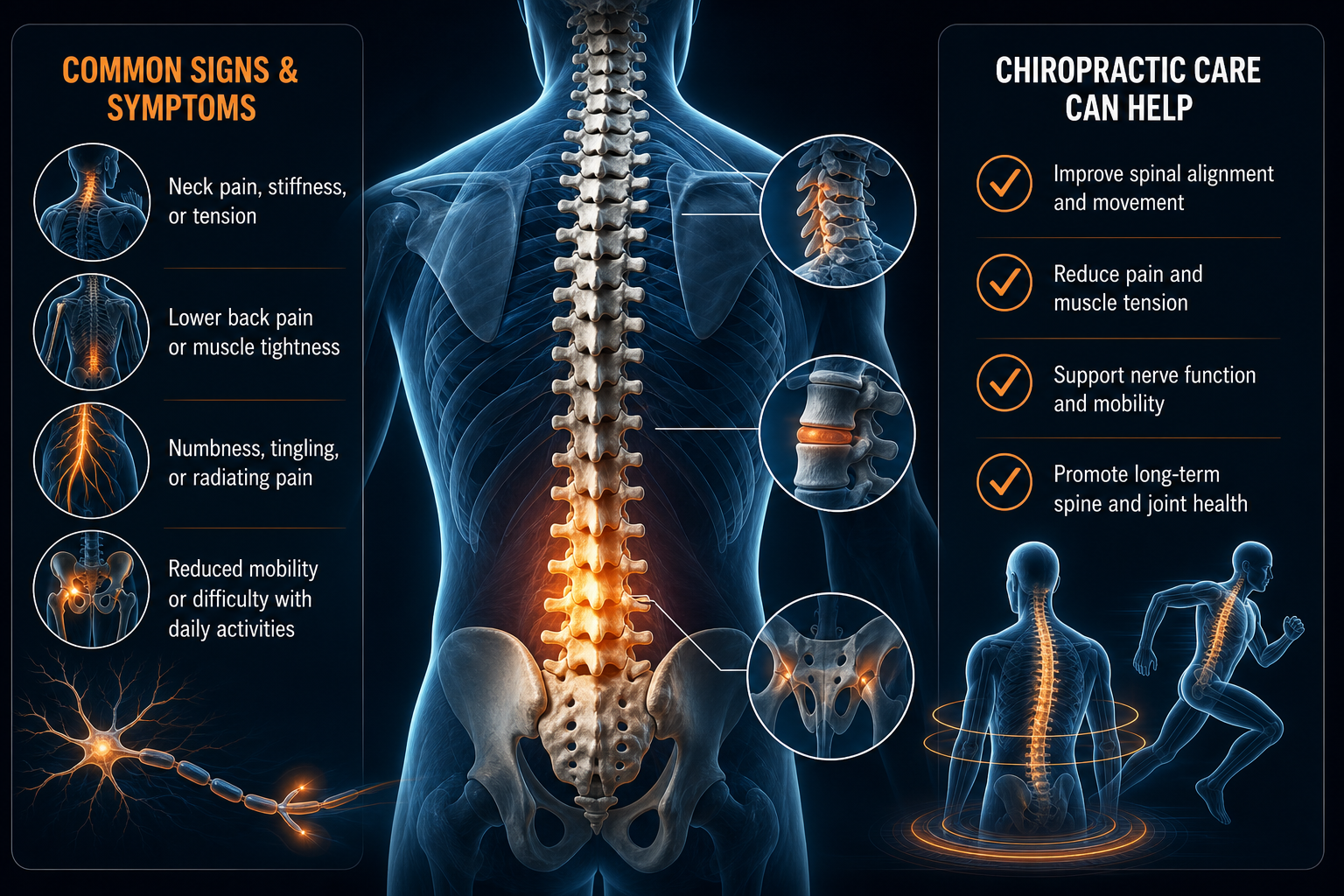
Upper cervical treatment for neck pain usually starts with a targeted exam, not an immediate adjustment. The provider checks cervical ROM, head posture, tenderness around the suboccipital muscles, involvement of the levator scapulae and upper trapezius, and whether rotation is more limited to one side. If your main complaint is a pinch at the top of the neck when turning your head, the exam should try to reproduce that motion safely and identify whether the restriction starts at the upper cervical spine or lower down around C3 to C7.
Upper cervical care without surgery is conservative by design. The plan usually combines precise in-office correction with posture changes, sleep-position advice, and specific mobility work.
Treatment Option What It Targets Expected Outcome Typical Timeline Upper cervical adjustment Atlas-axis alignment, asymmetric joint stress Reduced pain with turning, less upper neck tension, improved head position Often assessed over 2-3 weeks Soft-tissue work Suboccipitals, SCM, upper trapezius Less muscle guarding, easier cervical ROM 1-4 weeks depending on irritability ROM and postural exercises Cervical mobility and endurance Better movement control, fewer flare-ups Daily for 2-6 weeks Desk and sleep modifications Mechanical load during daily life Less recurrence from sustained positions Often noticed within 7-14 daysShort-term progress should be specific. Examples include 10 to 20 degrees more cervical rotation, less pain backing out of a driveway, fewer tension headaches by the second week, or less morning stiffness after changing pillow height and sleep position.
If you are exploring broader symptom patterns linked to upper cervical mechanics, Medximity also covers upper cervical discussions related to anxiety symptoms and upper cervical care and asthma-related questions. These are not substitutes for diagnosis, but they help you understand the range of reasons people search for this specialty.
How Can You Use Ratings to Build a Shortlist That Actually Helps You Choose?
Build a shortlist of three providers. More than three usually slows the decision without improving it. The goal is not to find a perfect listing. The goal is to find the provider whose specialty, reviews, and location best fit your actual symptoms and schedule.
Use this step-by-step screen:
- Start with specialty match. Remove any listing that does not clearly focus on upper cervical care.
- Add review threshold. Prefer at least 20 to 30 written reviews if available in your local market.
- Filter for symptom match. Keep providers whose reviews mention headaches, dizziness, upper neck pain, TMJ/TMD, or stiffness with rotation.
- Check logistics. Same-week appointment availability matters if symptoms are limiting driving, desk work, or sleep.
- Call and ask the six booking questions. The quality of answers often decides the final choice.
This works better than scrolling endless profiles.
A simple comparison sheet helps:
Provider Upper Cervical Focus Review Strength Location Fit Good Match For Provider A Strong High review count, detailed comments Close to work Headaches, neck pain with turning Provider B Moderate Good score, fewer written reviews Closer to home General neck stiffness Provider C Strong Recent reviews mention gentle care Longer drive Dizziness, jaw tension, posture issuesIf one provider clearly wins on symptom match and location, book. If two are close, choose the one who gave the clearest phone answers about exam process, re-check intervals, and home care.
What Home Care Helps While You Compare Providers?
You can reduce upper neck strain before your appointment by improving motion and lowering daily load on the atlas-axis region. This is not a substitute for an exam, but it often helps people with mild to moderate stiffness, tension headaches, or pain when turning the head.
5-minute upper neck reset
- Chin nods: Sit tall. Gently draw your chin straight back without looking down. Hold 3 seconds. Repeat 8 times.
- Supported cervical rotation: Keep your shoulders relaxed. Turn your head right only to the first point of resistance, hold 2 seconds, return to center. Repeat left. Do 6 reps each side.
- Suboccipital unload: Lie on your back with a thin towel under the curve of your neck, not under your head. Rest 2 minutes while breathing slowly.
- Scapular set: Squeeze shoulder blades slightly down and back for 5 seconds. Repeat 10 times. This reduces overload on the upper trapezius and levator scapulae.
- Screen reset: Raise your screen so the top third is at eye level. Keep elbows supported and take a standing break every 30 to 45 minutes.
Do this 1 to 2 times daily for 7 to 10 days. Stop and seek evaluation sooner if movement sharply worsens pain, causes numbness, or triggers dizziness that does not settle quickly.
Sleep position matters too.
- Use one pillow that keeps your nose centered with your sternum.
- Avoid stacking two high pillows that push the head forward.
- If you sleep on your side, fill the space between shoulder and head so the neck stays neutral.
These details often determine whether your upper cervical treatment holds between visits.
What to Do Next
Start by narrowing your search to providers who clearly practice upper cervical chiropractic care in Sarasota or nearby communities you can reach consistently. Your first visit should include a history, neck and posture exam, ROM testing, palpation of the upper cervical region, and a clear explanation of whether your symptoms appear related to the atlas-axis area, muscular overload, or a broader cervical pattern.
Book routine care soon if you have:
- Upper neck pain lasting more than 7 to 14 days
- Headaches that start at the base of the skull
- Pain or stiffness when turning your head while driving
- Jaw tension or facial pressure that worsens with neck stiffness
- Recurring flare-ups from desk work, travel, or poor sleep position
Seek urgent evaluation instead of routine booking if you have new weakness, facial droop, severe sudden headache, major trauma, or fever with neck stiffness.
The fastest next step is to compare local profiles side by side, then call two or three practices and ask how they evaluate upper cervical dysfunction, how often follow-ups are scheduled in the first 2 to 3 weeks, and what home care they assign. Use Medximity to find a upper cervical chiropractor near you, review local listings, and compare Sarasota-area providers by specialty and location fit.
If you want more background before booking, review the related Medximity articles on upper cervical subluxation, headache-focused upper cervical care, and TMJ and TMD symptoms. Those pages make it easier to match your symptoms to the right Sarasota provider.
Frequently Asked Questions
What does “Sarasota upper cervical ratings near me” usually mean?
It usually means you want a local list of upper cervical chiropractors near Sarasota plus ratings, review counts, and enough detail to compare providers. The useful version of this search includes specialty fit, review themes, and drive time, not just star scores.
How do I find the best upper cervical chiropractor Sarasota patients actually recommend?
Look for a provider with a strong upper cervical focus, a healthy number of recent written reviews, and repeated comments about careful exams, gentle adjustments, and measurable improvement in neck ROM, headaches, or posture. Then call and ask how they evaluate C1 and C2 before booking.
Is upper cervical care only for neck pain?
No. People often search it for headaches, dizziness, jaw tension, and stiffness related to the upper neck. A good provider should still determine whether your symptoms actually fit an upper cervical pattern rather than assuming they do.
How quickly should I expect results?
For uncomplicated mechanical neck pain, some people notice changes in 1 to 3 visits over 1 to 2 weeks. More persistent patterns often need 4 to 6 visits over 2 to 3 weeks before you can judge whether ROM, headache frequency, or daily function are improving enough to continue.
What if reviews are good but there are very few of them?
Treat low review volume as incomplete information, not proof of poor care. Call the practice, ask about their upper cervical evaluation process, and compare that answer with one or two other Sarasota-area providers that have stronger review depth.
Should I choose the closest provider or the highest-rated one?
Choose the provider who gives you the best mix of specialty match, trustworthy reviews, and realistic access. A slightly lower-rated practice 10 minutes away may be a better choice than a farther practice if you are likely to need weekly follow-ups during the first month.