Patellar subluxation is a partial displacement of the kneecap (patella) from the trochlear groove — the shallow channel at the front of the femur that normally guides the patella during bending and straightening. Unlike a full dislocation, the kneecap shifts laterally but does not completely leave the groove. It often reduces on its own within seconds, leaving behind instability, swelling, and a distinct sense that something in the knee "slipped."
What Is Patellar Subluxation?
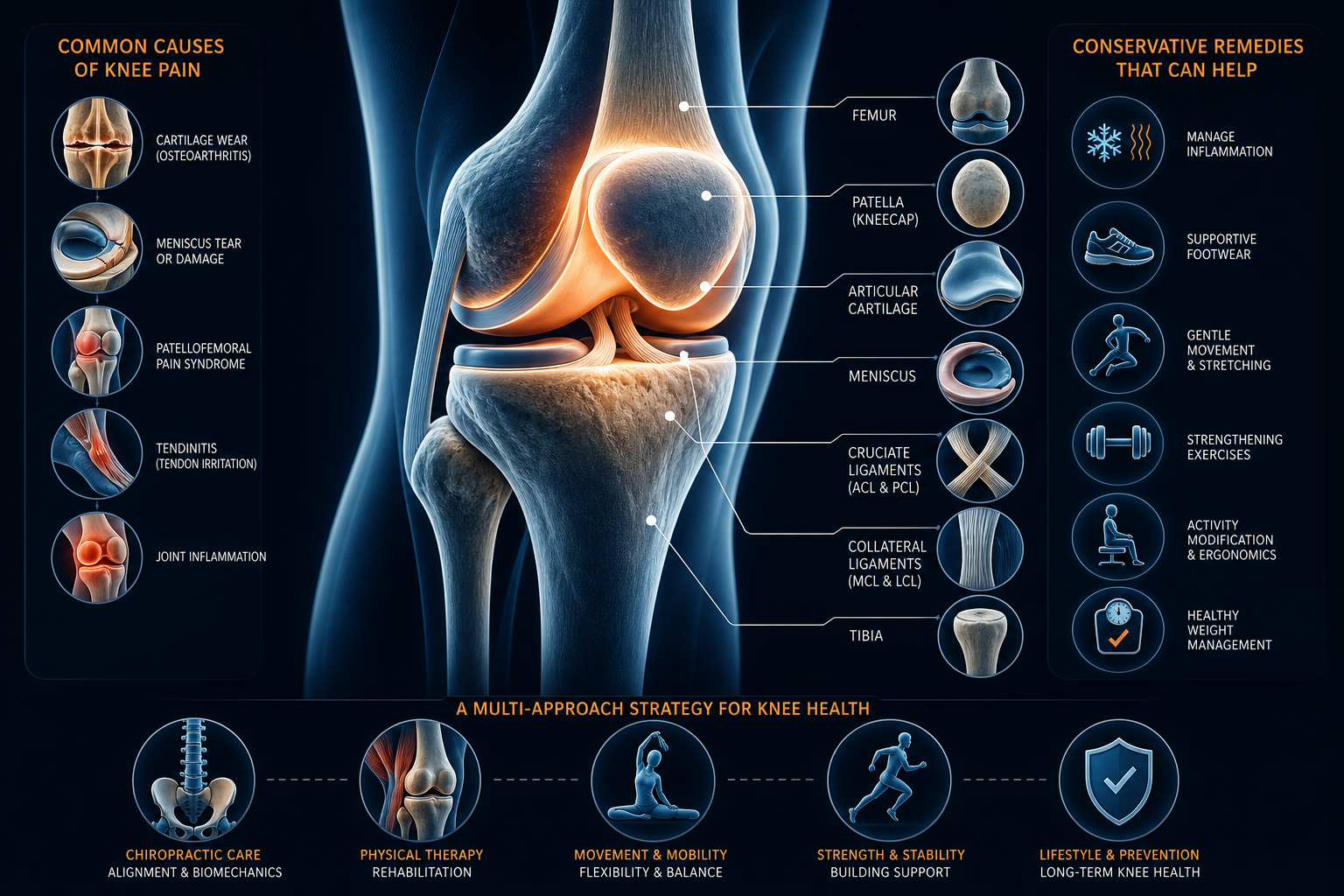
Your patella is a sesamoid bone embedded in the quadriceps tendon. It rides inside the trochlear groove every time you flex or extend your knee, distributing force across the joint and protecting the underlying cartilage. During patellar subluxation, the patella tracks too far laterally — usually toward the outside of the knee — before snapping back into position. The episode can last a fraction of a second, but the tissue damage it leaves behind is real: stretched or micro-torn medial patellofemoral ligament (MPFL), irritated cartilage on the patellar undersurface, and inflammation in the surrounding retinaculum.
Research published in the American Journal of Sports Medicine estimates that up to 40% of first-time patellar subluxation events lead to at least one recurrence when the underlying biomechanical causes go unaddressed. That statistic makes early conservative intervention critical.
Patellar Subluxation vs. Full Dislocation: What's the Difference?
Patients frequently confuse these two conditions, and the distinction matters for treatment planning and recovery expectations.
Feature Patellar Subluxation Full Patellar Dislocation Kneecap position Partially shifts laterally, self-reduces Completely exits the trochlear groove, often requires manual repositioning Visible deformity Rarely visible — may look swollen only Obvious lateral displacement of the kneecap MPFL damage Stretched or partially torn Frequently fully torn Typical recovery 4–8 weeks with targeted rehab 8–16 weeks; higher likelihood of recurrence Cartilage risk Mild surface irritation Possible osteochondral fractureThe patellar subluxation vs dislocation difference comes down to degree. Subluxation is the partial version — the kneecap slides but returns. Both conditions share the same root causes and respond to the same conservative rehabilitation protocols, but full dislocation generally requires longer recovery timelines and closer monitoring for loose cartilage fragments.
The Anatomy Behind the Problem
Three structures determine whether your kneecap tracks properly:
The Trochlear Groove
A shallow depression on the anterior surface of the distal femur. A groove that is too flat (trochlear dysplasia) provides less bony containment for the patella, raising subluxation risk. This is a structural variable you're born with.
The Quadriceps Complex and VMO
The vastus medialis oblique (VMO) — the teardrop-shaped muscle on the inner side of your thigh just above the kneecap — is the primary active stabilizer pulling the patella medially. When the VMO fires weakly or late relative to the vastus lateralis on the outer thigh, the patella drifts laterally with every step. This imbalance is the single most correctable factor in patellar subluxation.
The Medial Patellofemoral Ligament
The MPFL connects the inner edge of the patella to the medial femoral epicondyle and provides roughly 50–60% of the restraining force against lateral patellar translation. Once stretched or torn from a subluxation event, it does not spontaneously regain its original tension — which explains why recurrent episodes are so common without rehabilitation. Targeted strengthening of surrounding musculature effectively compensates for MPFL laxity in the majority of cases.
What Does Patellar Subluxation Feel Like?
Symptoms often confuse patients because the episode itself is brief. Here is what to watch for:
- A sudden "pop" or shift — you feel the kneecap move laterally and then snap back
- The knee gives out suddenly, sometimes without significant pain (a common cause of knee giving out suddenly with no pain)
- Anterior or lateral knee pain that worsens going downstairs, squatting, or sitting with the knee bent for prolonged periods
- Visible swelling around the kneecap within hours of an episode
- Tenderness along the medial retinaculum — the inner border of the kneecap
- A feeling of instability, as though the kneecap could slip again at any moment
- Crepitus — grinding or catching sensations during knee flexion
Some patients report the kneecap slipping out of place when walking on uneven surfaces or pivoting on a planted foot. Others first notice the problem climbing out of a car or twisting to change direction. If you recognize more than two of these symptoms, a biomechanical evaluation with a physical therapist or chiropractor is the logical next step.
Why Does Your Kneecap Keep Slipping Sideways?
Patellar subluxation is rarely caused by a single factor. Most patients have two or more of the following contributors:
- VMO weakness or delayed activation — the most common and most treatable cause
- Increased Q-angle — the angle formed between the quadriceps pull line and the patellar tendon. Q-angles above 15° in men or 20° in women increase lateral patellar tracking force. Women and adolescent girls are disproportionately affected.
- Shallow trochlear groove (dysplasia) — a congenital structural factor reducing bony patellar containment
- Generalized ligamentous laxity or hypermobility — conditions like Ehlers-Danlos syndrome or benign joint hypermobility increase subluxation risk across multiple joints, including the patellofemoral joint
- Prior trauma — a direct blow to the knee, a fall, or a twisting injury can stretch the MPFL and set up a pattern of recurrence
- Tight lateral retinaculum — excessive tightness on the outer side of the kneecap pulls it laterally during movement
- Foot pronation and hip weakness — excessive foot pronation and weak hip external rotators (gluteus medius, piriformis) create a chain of internal rotation from hip to knee that pushes the patella laterally
Understanding why your kneecap keeps slipping sideways requires evaluating the entire kinetic chain — foot, ankle, hip, and core — not just the knee in isolation. This is precisely what a comprehensive physical therapy or chiropractic evaluation for subluxation addresses.
How to Treat Kneecap Subluxation Without Surgery
Conservative treatment for kneecap instability resolves symptoms in 70–80% of first-time patellar subluxation cases, according to data from the Journal of Orthopaedic and Sports Physical Therapy. The rehabilitation approach has three phases:
Phase 1: Acute Management (Weeks 1–2)
- Relative rest — avoid deep squats, lunges, and activities that provoke the slip sensation
- Ice application: 15 minutes on, 45 minutes off, 3–4 times daily to manage swelling
- McConnell taping — adhesive tape applied to the kneecap to manually glide it medially, reducing lateral tracking during daily activities
- Patellar stabilization brace with a lateral buttress for walking and light activity
- Gentle range-of-motion exercises: seated knee flexion/extension within pain-free range
Phase 2: Strengthening and Activation (Weeks 2–6)
- Terminal knee extensions (TKEs) — using a resistance band anchored behind the knee, perform the final 30° of knee extension. This isolates VMO activation and is the single most prescribed physical therapy exercise for patellar subluxation.
- Straight-leg raises with external rotation — lying supine, externally rotate the leg 30° and raise it to 45°. Hold 5 seconds. 3 sets of 15 repetitions.
- Clamshells and lateral band walks for gluteus medius strengthening — hip stability directly reduces internal rotation forces at the knee
- Closed-chain quarter squats progressing to single-leg stance
Phase 3: Functional Return (Weeks 6–10)
- Sport-specific or activity-specific drills: lateral shuffles, step-downs, controlled pivoting
- Proprioceptive training on unstable surfaces (balance board, BOSU ball)
- Progressive loading to confirm the kneecap remains stable under increasing demand
If pain elsewhere in the kinetic chain is contributing — for example, sciatic nerve irritation altering your gait pattern or referred leg pain from the lumbar spine — those issues need to be addressed simultaneously for lasting results.
Recovery: What to Expect
Patellar subluxation recovery time depends on severity, chronicity, and how consistently you follow your rehab program.
A typical first-time patellar subluxation patient requires 8–12 physical therapy visits over 6–10 weeks to achieve full functional stability and return to activity.
Chiropractic care complements PT by addressing joint restrictions in the hip, ankle, and lumbar spine that contribute to abnormal patellar tracking. Expect 4–8 chiropractic visits focused on extremity adjustments, soft-tissue mobilization of the lateral retinaculum, and kinetic chain assessment. Many patients alternate PT and chiropractic appointments within the same week.
Patients with recurrent subluxation episodes — three or more in 12 months — typically need longer rehabilitation cycles (12–16 weeks) and may benefit from custom orthotic assessment if foot pronation is a contributing factor.
Home Exercise You Can Start Today
Isometric VMO Activation (Quad Sets with Ball Squeeze):
- Sit on the floor with your affected leg straight and a small rolled towel or ball (6-inch diameter) under your knee.
- Squeeze the towel by pressing the back of your knee downward. Simultaneously squeeze a tennis ball or rolled sock between your knees to activate the VMO.
- Hold the contraction for 6 seconds. You should see the VMO (the muscle just above and to the inside of your kneecap) visibly tighten.
- Relax for 4 seconds. Perform 20 repetitions, 3 times daily.
This exercise requires zero equipment and produces measurable VMO strength gains within 2 weeks when performed consistently.
Patellar Subluxation and Personal Injury
Patellar subluxation from a car accident, slip-and-fall, or sports collision is a documentable injury with real treatment costs and recovery timelines. Common personal injury scenarios include:
- Dashboard knee injury — the knee strikes the dashboard during a frontal collision, applying direct lateral force to the patella
- Slip-and-fall on a wet surface — the planted foot sticks while the body twists, creating a valgus/rotation force at the knee
- Contact sports collision — a lateral blow to the knee during a tackle, check, or slide
For personal injury cases, documentation is critical. Your provider should record the mechanism of injury, initial presentation, objective findings (patellar apprehension test, J-sign on tracking assessment), and a treatment plan with projected visit counts. If you sustained a knee injury alongside other trauma — such as a concussion from the same accident — make sure each condition is documented separately with its own treatment timeline.
When to See a Provider
Seek same-day evaluation if you experience any of the following after a kneecap slip:
- The kneecap displaced and did not return to its normal position on its own
- You are unable to bear weight on the affected leg
- Significant swelling developed within 1–2 hours (suggesting hemarthrosis — bleeding within the joint)
- You felt or heard a crack during the event (possible osteochondral fracture)
- Numbness or tingling below the knee, indicating possible nerve involvement
Schedule a routine evaluation within 1–2 weeks if your kneecap self-reduced but you continue to feel instability, mild swelling, or pain going downstairs. Can a slipped kneecap cause long-term damage? Yes — repeated subluxation episodes progressively wear down the cartilage on the patellar undersurface, increasing the risk of patellofemoral chondromalacia (cartilage softening) and chronic anterior knee pain. Early conservative intervention prevents this cascade.
What to Do Next
If you recognize the symptoms described above, your next step is a biomechanical evaluation with a physical therapist or chiropractor who treats knee conditions. At your first visit, expect:
- A patellar tracking assessment — the provider will observe your kneecap as you bend and straighten the knee, looking for lateral drift (J-sign)
- A patellar apprehension test — gentle lateral pressure on the kneecap to assess MPFL integrity
- Hip, ankle, and foot screening to identify kinetic chain contributors
- A personalized rehab plan with specific exercises, visit frequency, and milestone targets
Most patients see measurable improvement in stability and confidence within the first 3–4 weeks of consistent treatment. You do not need a referral to start — find a physical therapist near you or find a chiropractor for knee pain and kneecap instability through the Medximity provider directory. You can also explore more condition guides to learn about related musculoskeletal topics.