Chiropractor near me accepting new patients means you need a provider who can evaluate you soon, explain your options clearly, and confirm availability before you book. Start with a directory that shows active new-patient status, review the provider’s focus areas, then verify schedule, insurance, and first-visit requirements before your appointment.
Most new chiropractic visits include intake forms, a history, movement testing, orthopedic or neurologic screening, and a care recommendation. Some patients receive treatment the same day; others need X-rays or referral first when exam findings suggest a higher-risk condition.
Chiropractors Near Me Accepting New Patients: How to Find, Choose, and BookFind a Chiropractor Accepting New Patients Near You
The fastest way to find a chiropractor taking new patients is to search by location, specialty, availability, and patient reviews in one place. On Medximity, you can start with a chiropractor near you and focus on providers who show they are open to new patients.
Availability changes daily in busy metro areas such as Dallas, Phoenix, Tampa, Atlanta, Denver, and Chicago. A provider may have same-week openings for low back pain, neck stiffness, headaches, sports injuries, or auto-related whiplash, but the exact time depends on staffing, exam length, and whether new-patient forms can be completed before arrival.
Use this 5-step search process
- Search your city or ZIP code. Use “chiropractor open to new patients near me” when you need local results.
- Check new-patient status. Prioritize profiles showing active availability or new-patient booking options.
- Review focus areas. Match the provider to your need: lumbar spine pain, neck pain, headaches, sports rehab, auto injuries, or posture-related symptoms.
- Compare ratings and review volume. A 4.9 rating from 300 reviews carries more context than a perfect rating from 4 reviews.
- Confirm by phone or online request. Ask whether the practice can see a new patient this week and whether treatment may be provided at the first visit.
A good directory shortens the search, but the final confirmation should come from the practice. Ask direct questions: “Are you accepting new patients this week?” “How long is the first visit?” “Do you treat my condition often?” “What should I bring?”
If you want a broader checklist before choosing, Medximity’s guide on how to find the right chiropractor for you gives practical criteria for comparing providers.
What Happens at Your First Chiropractic Appointment?
Your first chiropractic appointment typically takes 45-60 minutes because the provider needs enough time to identify the pain source, screen for red flags, and decide whether chiropractic care fits your case. A short visit that skips history, exam, and consent is not a complete new-patient evaluation.
Typical new-patient visit flow
- Intake forms: You list your main complaint, onset date, past injuries, activity limits, health history, and insurance details.
- History: The provider asks what worsens or improves symptoms, whether pain travels into the arm or leg, and whether numbness or weakness is present.
- Movement testing: The exam may check cervical spine rotation, lumbar spine flexion, hip mobility, shoulder ROM, and gait.
- Orthopedic and neurologic screening: Tests may assess reflexes, grip strength, straight-leg raise, sensation, and nerve irritation such as sciatic nerve symptoms.
- Care recommendation: The provider explains the likely diagnosis, expected timeline, visit frequency, home care, and whether imaging is needed.
- First treatment: If appropriate, care may include spinal adjustment, soft-tissue therapy, mobility work, exercise instruction, or ergonomic coaching.
Is chiropractic care safe for first time patients? In most routine musculoskeletal cases, care is considered low risk when the provider screens properly, explains risks and alternatives, and modifies treatment for age, bone health, injury severity, and neurologic findings.
Clinical guidelines commonly support conservative care, movement, manual therapy, and exercise for many cases of acute low back and neck pain when no red flags are present.
Same-day treatment is not automatic. Severe trauma, worsening neurologic symptoms, unexplained weight loss, fever, cancer history, or suspected fracture signs may require urgent medical evaluation before hands-on care.
How Quickly Can I Get a Chiropractic Appointment as a New Patient?
Many practices can schedule a new chiropractic patient within 24-72 hours, and a same week chiropractic appointment for a new patient is common in larger cities. Rural areas or high-demand providers may require 5-10 business days.
Appointment speed depends on the reason for care. Acute neck pain after a collision, severe low back spasm, or work-limiting pain may receive earlier scheduling than wellness or posture visits. Practices often reserve longer blocks for new patients because the exam, documentation, and treatment planning take more time than a follow-up visit.
Typical scheduling windows
Reason for Visit Typical New-Patient Availability First Visit Length Common Early Timeline Acute low back pain without leg weakness 1-3 days 45-60 minutes 2-6 visits over 2-3 weeks, then reassess Neck stiffness or headache pattern 1-5 days 45-60 minutes 4-8 visits over 3-4 weeks when symptoms are moderate Auto-related whiplash Same week when available 60 minutes may be needed 6-12 weeks depending on ROM loss and tissue irritability Sports injury or mobility restriction 2-7 days 45-60 minutes 2-4 weeks for mild strains; longer for recurrent injuriesIf you are asking, “How quickly can I get a chiropractic appointment?” call early in the day and ask to join the cancellation list. Also ask whether forms can be completed online; this can save 10-15 minutes and may make a same-day opening easier to use.
For collision-related neck symptoms, review Medximity’s guide to finding a whiplash trauma specialist near you before booking so you know what documentation and exam details matter.
What Should You Bring to a First Chiropractor Visit?
What to bring to first chiropractor visit: identification, insurance card, relevant imaging reports, prior care notes, a list of current health conditions, and clothing that lets you move. Bring enough detail for the provider to understand what changed, when it changed, and what limits your normal activity.
New-patient checklist
- Photo ID and insurance card if you plan to use benefits.
- Referral information if your plan requires one.
- Recent X-ray, MRI, or CT reports if available; reports are usually more useful than images alone.
- Prior treatment notes from PT, chiropractic care, urgent care, or rehabilitation.
- Accident details for auto or work injuries: date, mechanism, seat position, impact direction, and claim details if applicable.
- Symptom timeline: start date, pain location, radiation pattern, numbness, weakness, and activities that trigger symptoms.
- Comfortable clothing that allows hip, shoulder, and spine movement testing.
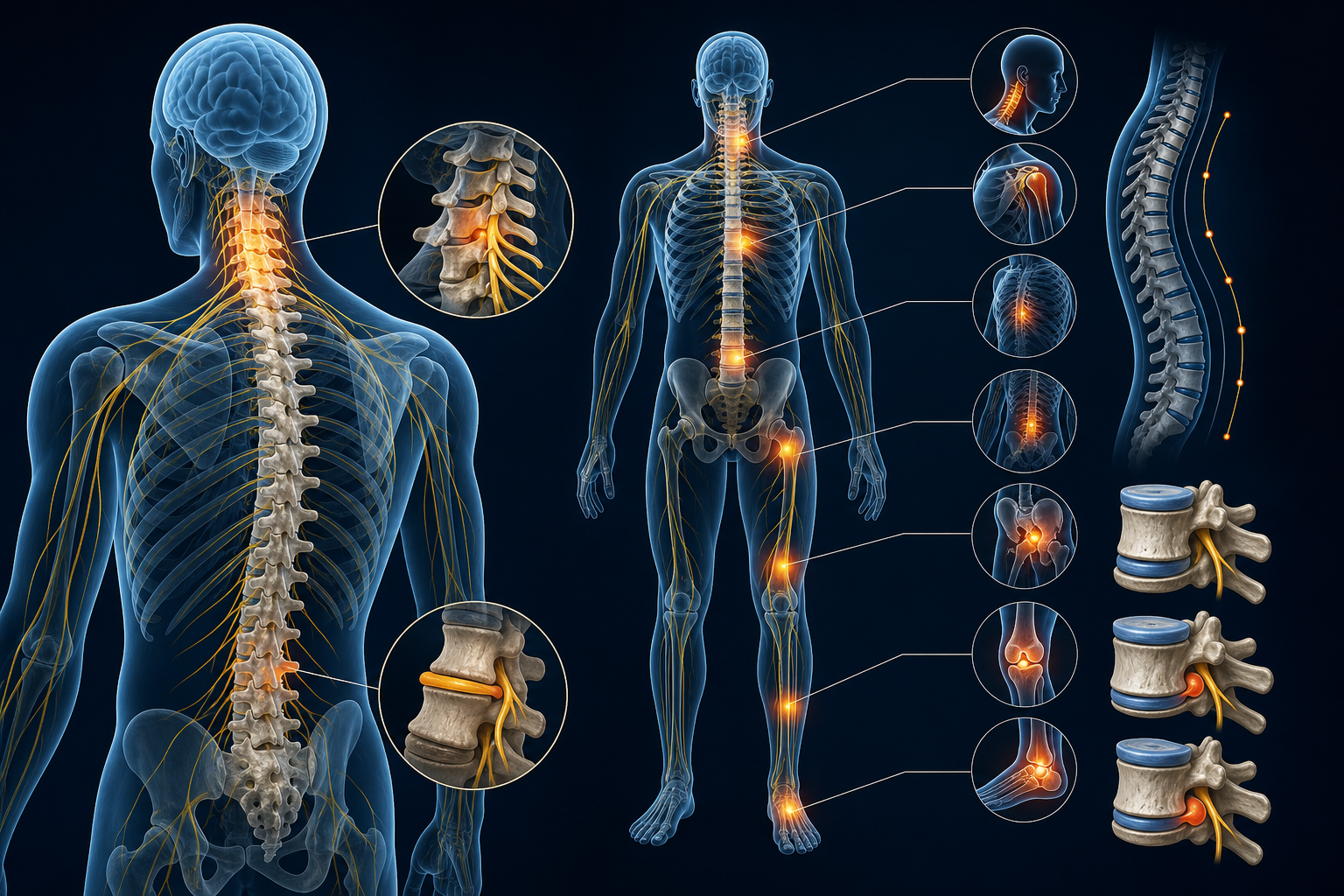
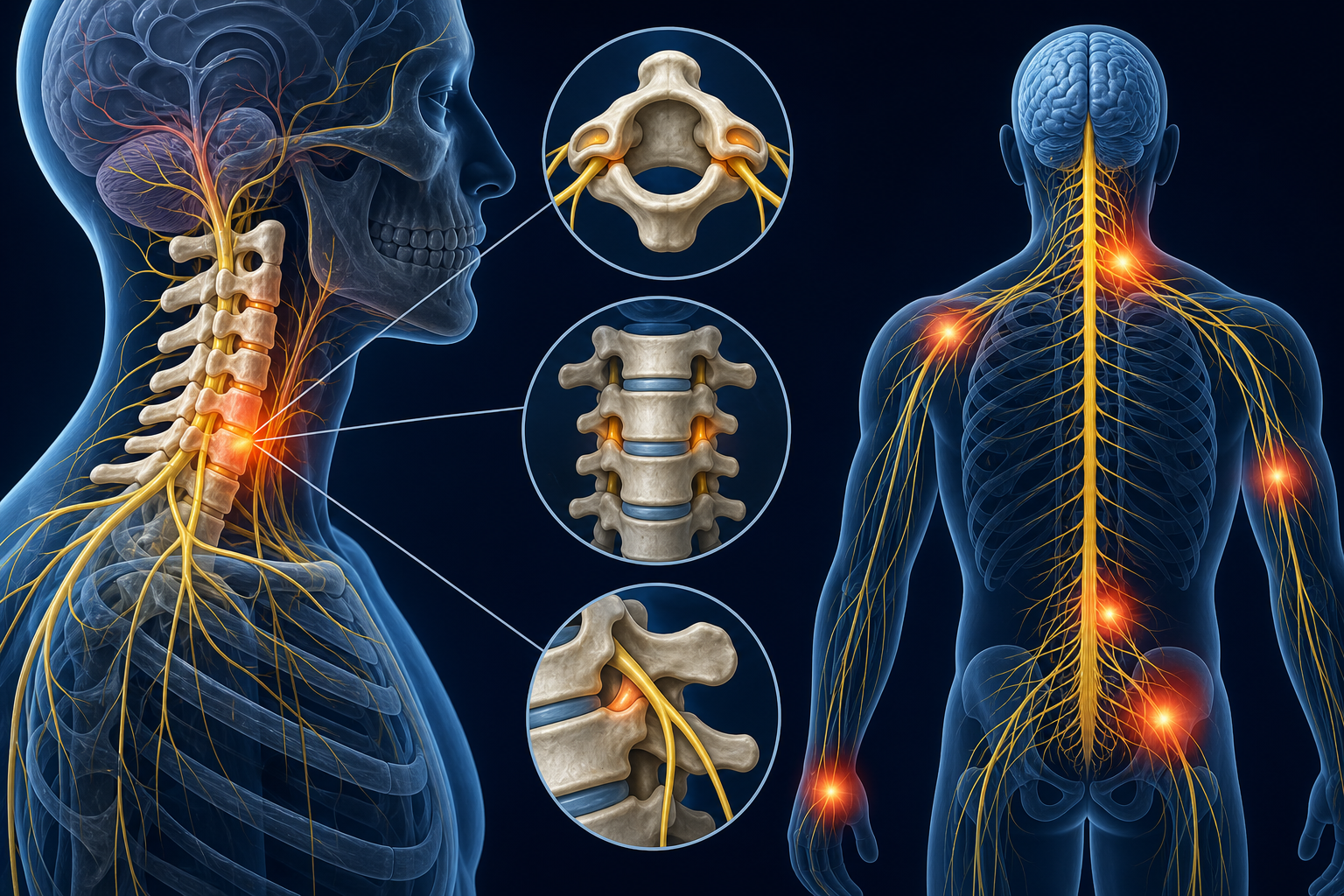
A simple pain map helps. Mark where symptoms start and where they travel. Pain from the sacroiliac joint often stays near the back of the pelvis, while irritated lumbar nerve roots may travel into the buttock, calf, or foot. Neck-related headache patterns can involve the suboccipital muscles, upper cervical joints, and temples.
Step-by-step home care before your visit
- Use gentle walking: Walk 5-10 minutes, 2-3 times daily if it does not increase leg symptoms.
- Try pelvic tilts: Lie on your back with knees bent, flatten the low back slightly into the floor, hold 3 seconds, repeat 10 times.
- Use chin tucks for neck stiffness: Sit tall, glide the head straight back, hold 3 seconds, repeat 8-10 times without forcing range.
- Avoid aggressive stretching early: Sharp pain, spreading numbness, or increased weakness means stop and seek evaluation.
This routine does not replace an exam. It helps maintain gentle motion while you wait for a visit.
How Do You Verify Insurance Before You Book?
Insurance verification works best when you confirm benefits with both the practice and your insurance plan before the first visit. Ask directly: “Does insurance cover chiropractic care new patient evaluations under my plan?” Then confirm visit limits, copay, deductible status, and whether referral approval is required.
Coverage varies widely. Some plans cover chiropractic exams and adjustments but limit the number of visits per year. Others require medical necessity documentation, pre-authorization, or a referral from a primary care provider. Auto-related or work-related cases may use a different billing process than standard health insurance.
Ask these questions before booking
- Is this provider in-network for my exact plan? Network status can differ between plan types from the same insurer.
- Is the new-patient exam covered? Confirm whether exam, adjustment, rehab exercises, and therapies are billed separately.
- What is my expected cost at the first visit? Ask for a range, not a vague answer.
- Do I need a referral? Some plans require it before benefits apply.
- Are there visit limits? Ask how many visits remain in your benefit year.
- What happens if imaging is recommended? Ask where it is performed and how authorization works.
Cost transparency prevents delayed care: patients book more confidently when they know exam cost, expected visit frequency, and benefit limits before arrival.
Do not choose a chiropractor only by coverage. A low copay does not help if the provider does not routinely treat your condition, does not measure outcomes, or cannot explain the care plan.
How Do You Choose the Right Chiropractor for You?
The right chiropractor matches your condition, explains findings clearly, measures progress, and adjusts the care plan when your response changes. If you are asking “how to choose the right chiropractor for me,” start with clinical fit before convenience.
Signs of a strong clinical fit
- Condition-specific experience: The provider regularly treats your issue, such as neck pain, headaches, sciatica-like symptoms, sports injuries, or post-collision stiffness.
- Complete exam: The first visit includes ROM testing, strength checks, neurologic screening, and functional movement assessment.
- Clear timeline: The plan includes a reassessment point, often after 4-6 visits for acute pain or 2-4 weeks for mild to moderate symptoms.
- Active care: The provider uses exercise, mobility work, posture coaching, or rehab progression, not only passive treatment.
- Outcome tracking: Pain score, ROM, sleep tolerance, work tolerance, walking time, and activity return are tracked.
Good chiropractic care often combines manual therapy with exercise. For example, neck pain relief at a chiropractic first visit may include upper thoracic mobility work, soft-tissue treatment to the trapezius and levator scapulae, cervical ROM drills, and education on workstation setup.
Headache cases require careful screening. If your headache pattern involves the base of the skull, upper neck, or nerve-like pain into the scalp, Medximity’s guides on finding a migraine headache specialist near you and neck injuries chiropractors advise patients to take seriously can help you decide what questions to ask.
Treatment comparison: what may be recommended
Treatment Common Use Expected Outcome Typical Timeline Chiropractic adjustment Restricted spinal or pelvic joint motion Improved joint mobility and short-term pain reduction in selected cases Often reassessed after 2-4 visits Soft-tissue therapy Tight trapezius, quadratus lumborum, or hip flexors Less guarding and improved tolerance to movement 1-3 weeks for mild muscle guarding Therapeutic exercise Weak core, poor hip control, limited shoulder or spine stability Better load tolerance and fewer flare-ups 3-8 weeks depending on consistency Ergonomic coaching Desk-related neck, shoulder, or low back irritation Reduced daily mechanical strain Changes may help within 1-2 weeksWhich Conditions Often Bring First-Time Patients to a Chiropractor?
First-time patients commonly see a chiropractor for low back pain, neck pain, headaches, whiplash, muscle knots, sports injuries, and stiffness that limits normal movement. Chiropractic care fits best when symptoms appear mechanical: movement, posture, lifting, rotation, or prolonged sitting changes the pain.
Common reasons to book
- Low back pain: Often involves lumbar facet joints, discs, paraspinal muscles, hips, or sacroiliac joints.
- Neck pain: Often involves cervical joints, upper thoracic stiffness, suboccipital muscles, and shoulder mechanics.
- Headaches: Cervicogenic patterns can start in the upper neck and refer toward the skull or temples.
- Whiplash: Collision forces can irritate cervical ligaments, deep neck flexors, and upper back muscles.
- Muscle knots: Trigger points in the trapezius, rhomboids, glutes, or calves may limit ROM and increase guarding.
- Sports injuries: Repetitive rotation, poor hip control, or limited ankle mobility can overload the spine and extremities.
If muscle tightness is your main complaint, Medximity’s guide on how chiropractors treat muscle knots explains when soft-tissue work, stretching, strengthening, and posture changes are useful.
Warning signs of a bad chiropractor include skipping the exam, promising a fixed number of visits before testing you, discouraging second opinions, using pressure-based sales tactics, or ignoring worsening symptoms. Care should be individualized and reassessed.
Red flags: seek emergency care now
- Loss of bowel or bladder control with new low back or leg symptoms.
- Numbness in the saddle area.
- Progressive leg or arm weakness.
- Severe headache after head or neck trauma.
- Chest pain, shortness of breath, fainting, or sudden trouble speaking.
- Fever with severe spinal pain or unexplained severe night pain.
Routine chiropractic care is appropriate only after urgent causes are ruled out when these signs appear.
FAQ: Chiropractors Accepting New Patients
Quick answers help you book faster and avoid common new-patient mistakes.
- Confirm availability first. New-patient status can change daily.
- Bring records. Imaging reports and prior notes reduce guesswork.
- Expect an exam. Treatment should follow assessment, not replace it.
How do I find a chiropractor taking new patients?
Search your city or ZIP code, filter for chiropractors accepting new patients, compare reviews and focus areas, then confirm availability with the practice. Ask whether the first visit includes an exam, treatment, or both.
Can I get a same-week chiropractic appointment as a new patient?
Same-week appointments are common, especially in larger metro areas. Acute pain, auto-related injuries, and cancellations may open 24-72 hour scheduling windows, but high-demand providers may book 1-2 weeks out.
What happens at your first chiropractic appointment?
Your first visit usually includes intake forms, symptom history, ROM testing, orthopedic tests, neurologic screening, a working diagnosis, and a care recommendation. Treatment may happen the same day if the exam shows it is appropriate.
Should I see a chiropractor for neck pain relief on the first visit?
Yes, if your symptoms appear mechanical and no red flags are present. The provider should screen for trauma signs, neurologic changes, headache risks, and cervical ROM limits before any hands-on treatment.
How many visits will I need?
Mild acute pain may improve over 2-6 visits across 2-3 weeks. Moderate neck, low back, or whiplash-related cases may need 4-12 weeks, with reassessment after the first phase of care.
What to Do Next
Book with a chiropractor who is accepting new patients, treats your condition regularly, and can explain the first-visit process before you arrive. If you also need rehab exercise progression, ask whether the practice provides therapeutic exercise, mobility coaching, or coordination with PT.
- Search locally: Use Medximity to browse providers by area and specialty.
- Confirm new-patient status: Ask whether appointments are available this week.
- Verify cost and coverage: Confirm network status, exam cost, and any referral requirement.
- Bring records: Take imaging reports, prior care notes, and your symptom timeline.
- Expect a real exam: ROM, strength, neurologic screening, and functional testing should guide care.
- Seek urgent care first when red flags are present: New bowel or bladder changes, saddle numbness, progressive weakness, severe headache after trauma, chest pain, or sudden speech changes require immediate evaluation.
For routine back pain, neck stiffness, headaches, muscle tightness, sports-related pain, or post-collision soreness without red flags, schedule a new-patient chiropractic evaluation and ask for a clear plan with timelines, home care, and measurable goals.