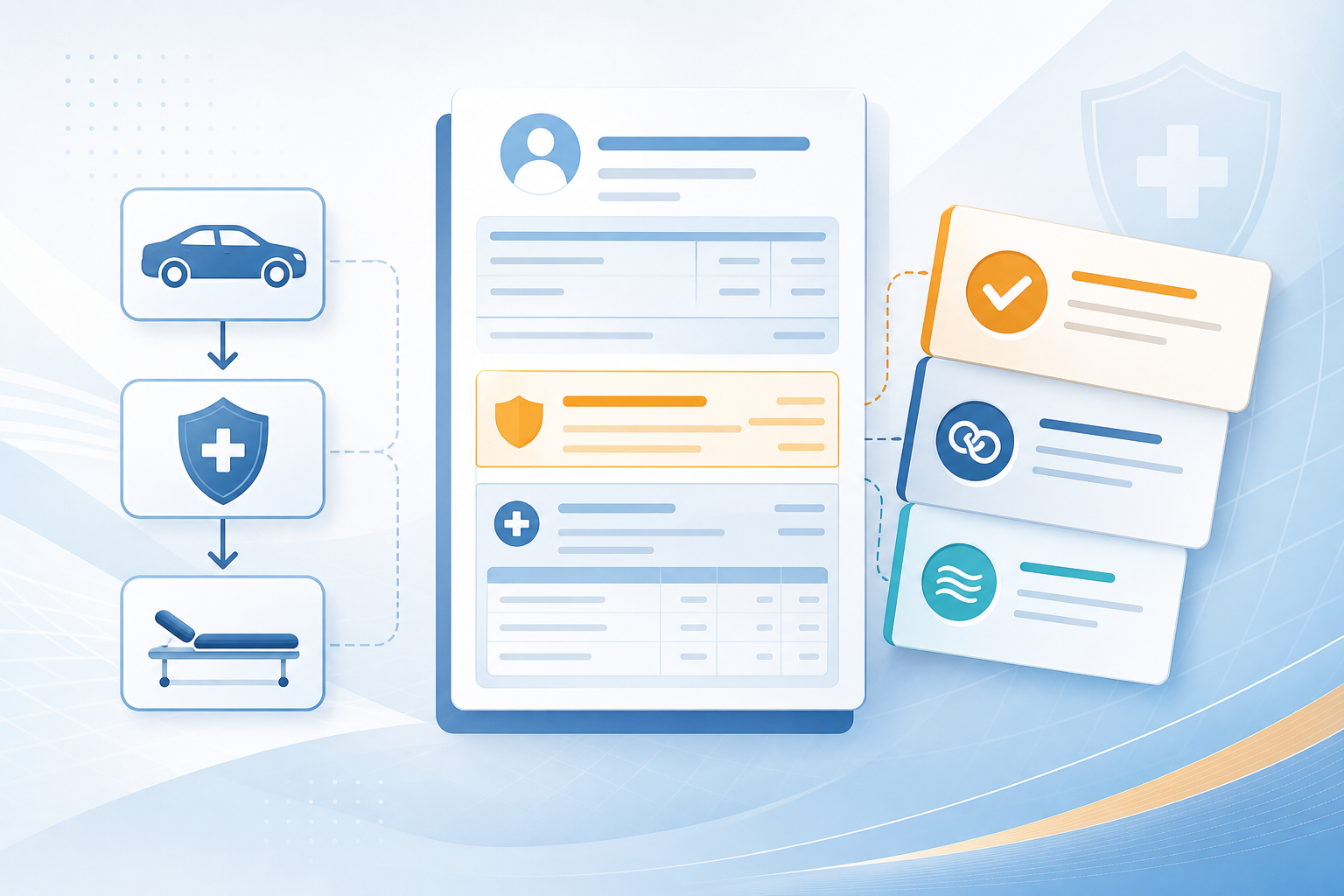
A car accident can turn your life upside down in seconds — and the insurance questions that follow can feel just as disorienting as the collision itself. If Anthem Blue Cross Blue Shield is your health insurer, you may be wondering whether your plan will cover the chiropractic care, physical therapy, or rehabilitation your provider recommends. The short answer is: it depends on your specific plan, your state's laws, and the order in which different coverage sources are applied. This guide walks through what patients typically need to know so you can make informed decisions and get the care you need without unnecessary delay.
Note: Insurance policies vary significantly. Always verify your specific benefits directly with Anthem and consult a licensed attorney about your individual legal situation.
How Health Insurance Works After an Auto Accident
Most people assume their car insurance handles everything after a collision — but the reality is more layered. Multiple coverage sources may apply after an auto accident, and they often interact in a specific sequence that depends on your state's rules and the type of coverage you carry.
Generally speaking, the following sources of coverage may be relevant after a car accident injury:
- Personal Injury Protection (PIP) — available in no-fault states, this pays for medical expenses and sometimes lost wages regardless of fault
- Medical Payments Coverage (MedPay) — an optional add-on available in many states that helps pay medical bills after an accident
- At-fault driver's liability insurance — covers your damages if another driver caused the accident
- Your health insurance (such as Anthem) — may cover treatment costs, often after PIP or MedPay benefits are exhausted
The key question many patients ask is: does health insurance or car insurance pay first after an accident? In most cases, auto insurance coverage — particularly PIP or MedPay — is expected to pay first. Once those benefits are exhausted or unavailable, your health insurance may step in. However, this sequencing varies by state law and by your specific policy language, so verifying your benefits early is essential.
Does Anthem Blue Cross Blue Shield Cover Car Accident Injuries?
Anthem Blue Cross Blue Shield does not categorically exclude auto accident injuries from coverage. In many cases, Anthem plans may cover medically necessary treatment for injuries sustained in a car accident — including visits to a chiropractor, physical therapist, or rehabilitation specialist — once the proper coordination of benefits has been established.
That said, several factors influence whether and how Anthem pays for your accident-related care:
Your Plan Type Matters
Anthem offers many different plan types — HMOs, PPOs, EPOs, and others — each with different rules around referrals, in-network requirements, and covered services. A PPO plan may allow you to see an out-of-network chiropractor with partial coverage, while an HMO plan might require a referral first. Reviewing your Summary of Benefits or calling the member services number on your insurance card before beginning treatment can save you from surprise bills.
Medical Necessity Is a Key Standard
Health insurers including Anthem typically require that treatment be medically necessary — meaning it is clinically appropriate for your diagnosis and supported by documentation. This is one reason why thorough, timely documentation from your treating provider matters so much. If your chiropractor or physical therapist documents your functional limitations, mechanism of injury, and treatment plan carefully, your claim is more likely to be processed smoothly.
Can Health Insurance Deny a Car Accident Claim?
Yes — and it does happen. Anthem, like any insurer, may deny claims for reasons such as lack of medical necessity documentation, coordination-of-benefits disputes with your auto insurer, treatment that falls outside plan coverage, or failure to obtain required prior authorizations. If your claim is denied, you have the right to appeal. Many denials are successfully overturned when additional clinical documentation is submitted. If your appeal is denied and you believe the decision was improper, consulting a licensed attorney who handles insurance disputes may be appropriate.
For guidance on finding a provider who regularly works with accident patients and understands documentation requirements, search for chiropractors and physical therapists near you on Medximity.
PIP vs. MedPay: What Is the Difference?
Understanding these two auto insurance coverages can help you figure out where to turn first for your medical bills.
Personal Injury Protection (PIP)
PIP is required in no-fault states — such as Florida, Michigan, New York, and several others — and is optional in many fault-based states. It typically covers a portion of your medical expenses, lost wages, and sometimes household services after an accident, regardless of who caused the collision. Coverage limits, required deductibles, and what qualifies as a covered expense vary by state and policy.
Medical Payments Coverage (MedPay)
MedPay is an optional add-on available in most states that covers medical expenses for you and your passengers after an accident, regardless of fault. Unlike PIP, MedPay generally does not cover lost wages. It is often available in smaller benefit amounts — sometimes $1,000 to $10,000 — and is designed to cover immediate medical costs.
When both PIP or MedPay and Anthem coverage apply, your providers and insurers will coordinate payment. Understanding this process upfront helps you avoid inadvertently delaying treatment or creating billing complications. Learn more about coordinating insurance benefits after an accident on Medximity.
How to Verify Your Anthem Insurance Benefits After an Accident
Before your first appointment, taking a few proactive steps can help you understand your financial responsibility and avoid claim denials later.
- Call Anthem member services — the number is on the back of your insurance card. Ask specifically about coordination of benefits with auto insurance, any required prior authorizations for chiropractic or physical therapy, and your deductible and out-of-pocket status.
- Contact your auto insurer — confirm what PIP or MedPay coverage you have, the benefit limits, and how to file a claim.
- Inform your treating provider — a practice experienced in accident cases will have a billing team that knows how to handle coordination of benefits and can verify your coverage on your behalf.
- Document everything — keep records of all calls, including dates, representative names, and what was discussed.
Providers listed on Medximity who accept accident patients are familiar with this verification process. Find a chiropractor near you who accepts accident patients to get started.
Does Anthem Cover Chiropractic After a Car Accident?
Many Anthem plans include chiropractic coverage as a covered benefit, though the number of visits, required referrals, and in-network requirements vary. After an auto accident, chiropractic care is among the most commonly recommended conservative treatments for whiplash, cervical sprain, lower back injury, and soft tissue damage — all frequently associated with motor vehicle collisions.
If your Anthem plan covers chiropractic services, those benefits may apply to accident-related treatment once any applicable PIP or MedPay benefits are coordinated. However, as with all post-accident claims, medical necessity documentation and proper billing coding are critical to a successful claim. Read about chiropractic care for whiplash and neck injuries on Medximity.
What Is a Letter of Protection for Medical Treatment?
If you were injured in an accident caused by another driver but your auto insurance coverage is limited or unavailable and you are pursuing a personal injury claim, your attorney may arrange a letter of protection (LOP). This is a written agreement in which your attorney promises to pay the medical provider from the proceeds of any future settlement or judgment, allowing you to receive treatment now without out-of-pocket payment.
LOPs are a legal and common arrangement in personal-injury cases, but they carry important considerations — including the possibility that your treatment bills will be deducted from your settlement before you receive any funds. Whether an LOP is appropriate in your situation is a question for a licensed personal-injury attorney, not your healthcare provider or an insurance company. Laws governing LOPs vary by state.
What Is Subrogation After a Car Accident Settlement?
If Anthem pays for your accident-related medical treatment and you later receive a settlement from the at-fault driver's insurance, Anthem may have the right to be reimbursed for what it paid — a process called subrogation. Most health insurance policies include subrogation clauses, and Anthem is no exception.
This means that if you receive a settlement, a portion of it may need to be used to reimburse Anthem for the claims it paid on your behalf. Subrogation rules, any applicable reductions, and how to negotiate these amounts are complex legal matters. An attorney experienced in personal-injury cases can help ensure that subrogation claims are handled correctly and that any applicable protections under your state's law are applied. Learn more about how subrogation works after an accident on Medximity.
How Long Does Insurance Take to Approve Physical Therapy After an Accident?
Prior authorization timelines for physical therapy vary by insurer and plan. With Anthem, urgent requests are typically processed faster than standard requests — federal regulations require most urgent prior auth decisions within 72 hours, while standard requests may take several business days. However, timelines can extend if documentation is incomplete or additional clinical information is requested.
To minimize delays: ensure your referring provider submits complete clinical notes with the authorization request, respond quickly to any requests for additional information, and follow up proactively with Anthem if you have not received a decision within the expected timeframe. Find a physical therapist near you who accepts accident patients on Medximity.
Do I Need a Lawyer If Insurance Denied My Accident Claim?
A denial is not necessarily the end of the road, but it can signal that professional legal guidance would be valuable. If Anthem denies your accident-related claim, you should first pursue the insurer's internal appeals process — this is your right under your policy and under federal law for most employer-sponsored plans. Submit any additional clinical documentation your provider can supply.
If your appeal is denied, or if you are dealing with a dispute involving an at-fault driver's insurance refusing to cover your treatment, consulting a licensed personal-injury attorney in your state is worth considering. An attorney can evaluate whether your denial was improper, whether additional legal remedies exist, and how to protect your interests going forward. Laws and deadlines — including statutes of limitations on personal-injury claims — vary significantly by state, so acting promptly matters.
Medximity does not provide legal advice. The information above is general and educational only. For advice about your specific situation, consult a licensed attorney in your state.
Finding the Right Provider After a Car Accident
Getting timely, well-documented care from a provider experienced in accident injuries is one of the most important steps you can take for both your recovery and your claim. Providers who routinely treat accident patients understand how to document injuries accurately, work with multiple insurance sources, and coordinate with attorneys when necessary.
Search Medximity's directory to find chiropractors, physical therapists, and rehabilitation specialists near you who accept accident patients. Many providers offer same-week appointments for acute injuries and can assist with insurance verification from your first visit.
Frequently Asked Questions
Does Anthem Blue Cross Blue Shield cover car accident injuries?
Anthem plans may cover medically necessary treatment for car accident injuries, but coverage depends on your specific plan, your state's coordination-of-benefits rules, and whether PIP or MedPay applies first. Always verify your benefits directly with Anthem before beginning treatment.
Does health insurance or car insurance pay first after an accident?
In most cases, auto insurance benefits — particularly PIP or MedPay — are expected to pay first. Once those benefits are exhausted, your health insurance may cover remaining costs. The exact order depends on your state's laws and your specific policies.
What is the difference between PIP and MedPay?
PIP (Personal Injury Protection) is required in no-fault states and may cover medical expenses, lost wages, and other costs regardless of fault. MedPay is an optional add-on that covers medical expenses after an accident but typically does not cover lost wages. Both pay regardless of who caused the accident.
Can Anthem deny my car accident treatment claim?
Yes. Anthem may deny claims for reasons including lack of medical necessity documentation, coordination-of-benefits issues, or missing prior authorizations. You have the right to appeal a denial, and many are successfully overturned with additional documentation.
What is a letter of protection?
A letter of protection (LOP) is a written commitment from your attorney to pay your medical provider out of any future settlement proceeds. It allows you to receive treatment without upfront payment when other coverage is unavailable. Whether an LOP is appropriate depends on your specific circumstances and should be discussed with your attorney.
What is subrogation after a car accident?
Subrogation is the right of your health insurer — including Anthem — to be reimbursed from your settlement if it paid for accident-related treatment caused by another party. Most health insurance policies include subrogation clauses. An attorney can help you navigate subrogation negotiations.
How do I find a chiropractor or physical therapist who accepts accident patients?
Medximity's provider directory allows you to search by specialty and location for providers experienced in treating accident injuries. Many accept multiple insurance types and can assist with benefits verification from your first visit.


