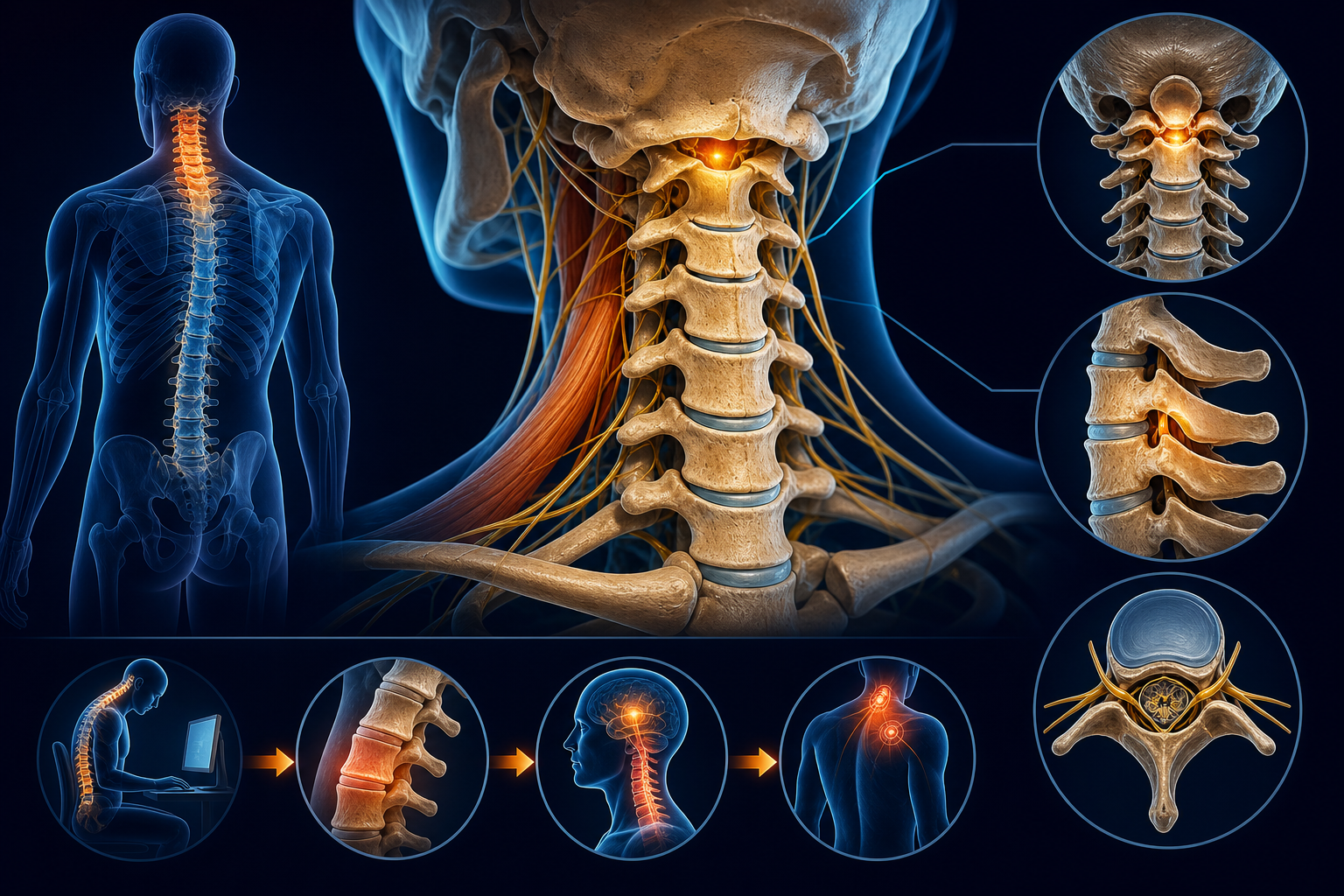
A chiropractor in Manhattan can address the back pain, neck stiffness, and joint dysfunction that come with spending 8-plus hours at a desk, commuting through subway crowds, and carrying stress in your trapezius muscles. Whether you are dealing with acute sciatica or chronic postural imbalance from years of sedentary work, chiropractic care offers a non-invasive, hands-on approach — and Manhattan has one of the densest concentrations of licensed chiropractors in the country. Here is what you actually need to know before booking your first visit.
What Does a Manhattan Chiropractor Actually Do?
A chiropractor is a licensed provider who diagnoses and treats neuromusculoskeletal conditions — problems involving the spine, joints, muscles, and the nerves that run through them. The primary tool is the chiropractic adjustment (also called spinal manipulation): a controlled, high-velocity, low-amplitude thrust applied to a specific vertebral segment to restore joint mobility, reduce nerve irritation, and decrease pain.
But adjustments are only part of the picture. Most Manhattan chiropractors also perform:
- Soft tissue therapy — myofascial release targeting the piriformis, upper trapezius, levator scapulae, and other muscles that lock up from prolonged sitting
- Therapeutic exercise prescription — corrective movements for postural imbalance, core instability, and joint hypomobility
- Ergonomic assessment — workspace modifications specific to your desk setup, monitor height, and chair positioning
- Diagnostic imaging referral — ordering X-rays or MRIs when clinical findings warrant further evaluation
Chiropractor vs. Physical Therapy for Back Pain
This is one of the most common questions patients ask. The short answer: they are complementary, not competing. Chiropractic care focuses on restoring joint mechanics through manual adjustments. Physical therapy emphasizes progressive strengthening and movement re-education. A 2018 study in JAMA Network Open found that patients who received spinal manipulation for acute low back pain had greater improvement in pain and function at 6 weeks compared to usual care alone. For many Manhattan patients with desk-related lumbar pain, a combination of both disciplines produces the fastest results — typically a measurable reduction in pain within 2-4 weeks.
If you are weighing which to try first, consider this: if your pain is driven by joint restriction and stiffness (the "locked up" feeling), start with a chiropractor. If your pain follows a clear muscle weakness or post-injury rehabilitation pattern, a PT may be the better first call. Many providers on Medximity offer both or can refer you directly to the right specialist. You can find a chiropractor near you and compare credentials before booking.
Common Conditions Chiropractors in Manhattan Treat
Manhattan's lifestyle creates a distinct pattern of complaints that chiropractors here see daily. These are not vague "wellness visits" — they are targeted treatment plans for specific, diagnosable conditions.
Condition Typical Cause in Manhattan Patients Chiropractic Approach Expected Timeline Chronic low back pain Prolonged sitting, weak core, lumbar disc degeneration Lumbar adjustments, flexion-distraction, core stabilization exercises 6-12 sessions over 4-6 weeks Cervicogenic headache Forward head posture from screen use Upper cervical adjustments (C1-C2), suboccipital release 4-8 sessions over 2-4 weeks Sciatica / lumbar radiculopathy L4-L5 or L5-S1 disc herniation compressing the sciatic nerve Flexion-distraction, McKenzie protocol, nerve flossing 8-16 sessions over 4-8 weeks Thoracic outlet syndrome Rounded shoulders, heavy bag carrying First rib adjustment, scalene release, postural retraining 6-10 sessions over 3-5 weeks Tech neck / upper cross syndrome Hours on phone and laptop daily Cervicothoracic adjustments, chin tuck exercises, pec stretching 4-8 sessions over 3-4 weeksFor patients searching for chiropractic treatment for herniated disc in Manhattan, know that research supports manipulation as a safe and effective option for most disc herniations — provided there are no progressive neurological deficits. A 2013 study in the Journal of Manipulative and Physiological Therapeutics found that 90% of patients with lumbar disc herniation reported improvement with chiropractic care within 3 months.
If pain when sitting at your desk all day is your primary complaint, you are not alone. Manhattan office workers average 9.5 hours of sitting per day. The resulting anterior pelvic tilt, tight hip flexors (psoas major and iliacus), and deactivated gluteal muscles are a textbook recipe for chronic lower back pain. A natural treatment approach for this — without relying on anything invasive — typically involves adjustments to restore L4-L5 and sacroiliac joint mobility combined with a targeted soft tissue protocol for muscle knots in the quadratus lumborum and piriformis.
How Do You Choose the Right Chiropractor in Manhattan?
Manhattan has hundreds of chiropractors. Figuring out how to choose a good chiropractor in NYC requires evaluating a few specific factors beyond just proximity to your office or apartment.
Credentials and Technique Specialization
- Verify licensure. Every chiropractor in New York must hold a Doctor of Chiropractic (DC) degree and be licensed by the New York State Education Department. Check that their license is active and unrestricted.
- Ask about technique. Not all chiropractic is the same. Diversified, Gonstead, Activator, and flexion-distraction are distinct approaches. If you have a disc issue, a provider trained in Cox flexion-distraction or McKenzie method is a better fit than someone who only performs high-velocity rotational adjustments.
- Look for specialization. If you are an athlete, find a provider with a CCSP (Certified Chiropractic Sports Practitioner) designation. If you have a neck injury, look for someone with upper cervical certification.
Practical Considerations
- Insurance and cost. Many Manhattan chiropractors accept insurance, but coverage varies wildly. Confirm your plan covers chiropractic visits and ask about the per-visit copay. Out-of-pocket rates in Manhattan range from $75-$250 per session depending on the provider and services rendered.
- Availability. You want a provider you can actually get in to see. Look for practices with morning, evening, or weekend hours — critical in a city where your schedule is rarely 9-to-5.
- In-network vs. out-of-network. Some of the most experienced providers in Manhattan are out-of-network. If yours is, ask whether they provide superbills for out-of-network reimbursement.
For a comprehensive guide on vetting providers, see our breakdown on finding the right chiropractor for you.
What Should You Expect at Your First Chiropractic Appointment?
Your first visit to a chiropractor in Manhattan typically runs 45-60 minutes — longer than follow-ups, which are usually 15-30 minutes. Here is the standard sequence:
- Health history intake. You will fill out forms covering past injuries, current symptoms, daily habits, work setup, and medical history. Be specific: "pain shoots from my right glute down to my calf when I sit more than 20 minutes" gives your provider far more to work with than "my back hurts."
- Orthopedic and neurological exam. The provider will test your range of motion (ROM), check reflexes at the patellar tendon and Achilles tendon, perform straight leg raise tests for sciatic involvement, and palpate your spine for areas of fixation.
- Diagnostic imaging (if indicated). Not every first visit requires X-rays. They are appropriate if there is a history of trauma, suspicion of fracture, or a clinical picture that does not add up.
- Treatment plan discussion. A good provider will explain what they found, what they recommend, and how long they expect it to take — before they adjust you. If someone wants to commit you to 36 visits on day one without a clear clinical rationale, consider that a red flag.
- First adjustment. Many providers will perform an initial adjustment on the first visit. You may hear a popping sound — that is cavitation, the release of gas from the joint capsule. It is not bones cracking.
Some soreness in the 24-48 hours after your first adjustment is normal, similar to post-workout muscle tenderness. Apply ice for 15 minutes if needed.
How Often Will You Need to Come In?
This depends entirely on your condition, its severity, and how your body responds. Here are evidence-based ranges:
- Acute pain (onset within last 2 weeks): 2-3 visits per week for 2-4 weeks, then reassess. Most patients notice meaningful improvement within 6-8 visits.
- Chronic pain (lasting 3+ months): 1-2 visits per week for 4-8 weeks, tapering as symptoms improve. Chronic conditions take longer because the body has adapted compensatory movement patterns that need to be retrained.
- Maintenance / prevention: Once per month or every other week for patients who want to stay ahead of recurrence — common among Manhattan desk workers and athletes.
If you are wondering how often you should see a chiropractor for neck pain specifically, research suggests that 2 visits per week for the first 3-4 weeks produces the best outcomes for acute cervical spine pain, with most patients reaching maximum improvement by visit 12. For chronic cervical issues related to occipital neuralgia or persistent cervicogenic headaches, a longer course of 12-16 sessions may be necessary.
How long does it take to see results from chiropractic care? Most patients with uncomplicated musculoskeletal pain report noticeable change within 2-3 visits. If you have completed 6 visits with zero improvement, your provider should modify the treatment plan or refer you for additional evaluation.
When to See a Provider Urgently
Most spinal and joint pain is mechanical and responds well to chiropractic care. But certain symptoms require immediate medical attention — not a scheduled chiropractic appointment.
Go to an emergency room if you experience:
- Sudden loss of bladder or bowel control combined with low back pain (possible cauda equina syndrome)
- Progressive weakness in both legs
- Severe, unrelenting pain that does not change with any position
- Unexplained weight loss combined with back pain
- Back pain following significant trauma (fall from height, car accident)
Is a chiropractic adjustment safe for a herniated disc? In most cases, yes — when performed by a trained provider using appropriate technique. Flexion-distraction and low-force methods are specifically designed for disc patients. The provider should modify or avoid high-velocity rotational manipulation at the level of an acute disc herniation. If you have a known large herniation with progressive neurological deficits (worsening numbness, foot drop), your chiropractor should coordinate with a spine specialist before proceeding.
For patients who also have leg numbness, understanding when it is a mechanical issue versus a neurological emergency is critical — and something a qualified chiropractor can help you distinguish during your exam.
Home Exercise: Seated Lumbar Reset for Desk Workers
This is a protocol you can do at your desk between chiropractic visits. It targets the psoas major, erector spinae, and gluteus medius — the three muscle groups most affected by prolonged sitting.
- Seated pelvic tilt: Sit at the edge of your chair, feet flat on the floor. Roll your pelvis forward (creating a slight arch in your lower back), hold 5 seconds. Roll it backward (flattening your back), hold 5 seconds. Repeat 10 times.
- Seated figure-4 piriformis stretch: Cross your right ankle over your left knee. Keeping your back straight, lean forward from the hips until you feel a stretch deep in your right glute. Hold 30 seconds. Switch sides.
- Standing hip flexor stretch: Stand up, step your right foot back into a lunge. Tuck your pelvis under (posterior tilt) and shift your weight forward until you feel a stretch in the front of your right hip. Hold 30 seconds per side.
- Wall angel: Stand with your back flat against a wall, arms in a "goalpost" position. Slowly slide your arms up and down the wall, keeping your wrists, elbows, and lower back in contact with the wall. 2 sets of 10 repetitions.
Perform this sequence every 2 hours during your workday. It takes under 5 minutes and directly counteracts the postural damage from sitting.
What to Do Next
If you are looking for a chiropractor in Manhattan, New York accepting new patients, start by narrowing your search to providers who specialize in your specific condition — whether that is sciatica, chronic neck pain, or postural correction for desk-related issues.
At your first appointment, expect a thorough exam, a clear explanation of findings, and a treatment plan with a defined timeline. If a provider cannot tell you approximately how many sessions they expect your case to require, keep looking.
- Find a chiropractor in Manhattan and compare providers by specialty, insurance accepted, and patient reviews
- Explore more health and wellness topics on the Medximity blog
- If you are an athlete dealing with performance-related pain, read about how sports therapy chiropractic can improve your game
The best chiropractor for you is one with the right training for your condition, transparent communication about your treatment plan, and availability that fits your Manhattan schedule. Use the Medximity directory to compare your options and book with confidence.