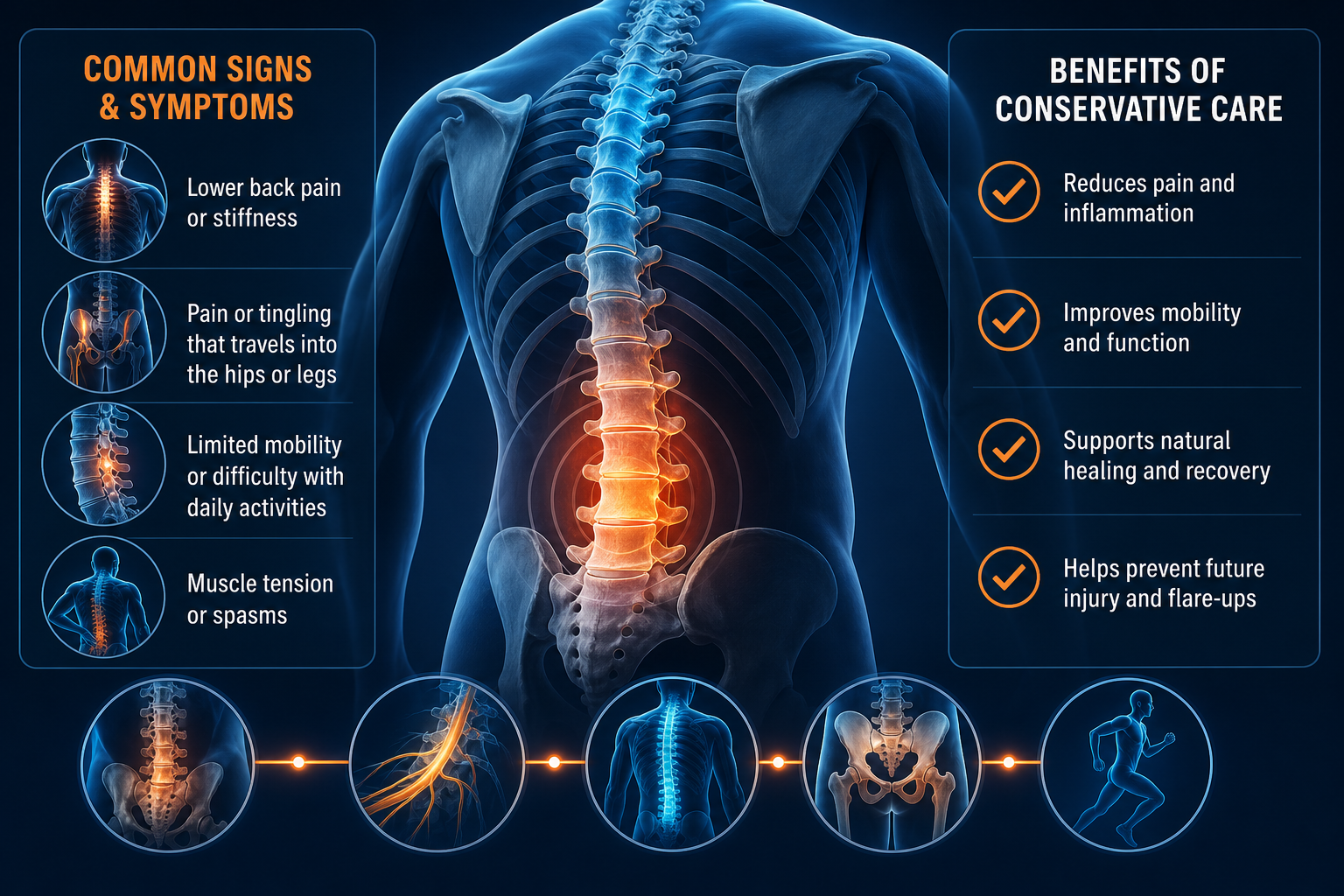
A chiropractor in Beverly Hills, CA provides hands-on spinal adjustments, soft tissue work, and rehabilitative exercises to treat back pain, neck pain, sciatica, and joint dysfunction — without relying on invasive procedures. Whether you're recovering from an auto accident, managing a chronic postural issue from desk work, or dealing with a herniated disc, chiropractic care targets the musculoskeletal system directly. Here's what you need to know before booking your first appointment.
What Does a Chiropractor in Beverly Hills Actually Do?
Chiropractors are licensed providers who diagnose and treat neuromusculoskeletal conditions — problems involving the spine, joints, muscles, and the nerves that run through them. The primary tool is the chiropractic adjustment (also called spinal manipulation), a controlled, quick thrust applied to a specific vertebral segment to restore proper joint motion and reduce nerve irritation.
So what does a chiropractor do for back pain, specifically? They identify which spinal segments are restricted or misaligned — commonly in the lumbar spine (L4-L5 and L5-S1 are the most frequent culprits) — and apply targeted force to restore movement. This reduces local inflammation, decreases muscle spasm in the surrounding paraspinal muscles and quadratus lumborum, and takes mechanical pressure off compressed nerve roots.
Techniques You'll Encounter
- Diversified technique: The most common manual adjustment — high-velocity, low-amplitude thrust to a specific joint
- Flexion-distraction: A gentle, pump-like motion on a segmented table, particularly effective for disc-related pain and stenosis
- Activator method: A spring-loaded instrument delivers a precise, low-force impulse — often used for patients who prefer a gentler approach
- Myofascial release and trigger point therapy: Hands-on soft tissue work targeting muscle knots and fascial restrictions
Most Beverly Hills chiropractors also prescribe corrective exercises, ergonomic modifications, and stretching protocols tailored to your specific dysfunction — not just the adjustment itself.
Common Conditions Treated by Beverly Hills Chiropractors
If you're searching for a chiropractor for neck pain in Beverly Hills, CA, you're in the right lane. Cervical spine dysfunction is one of the top three reasons patients seek chiropractic care, alongside low back pain and headaches. But the scope goes further than most people expect.
Spine-Related Conditions
- Lumbar disc herniation: Can a chiropractor help with a herniated disc? Yes — research published in the Journal of Manipulative and Physiological Therapeutics found that 90% of disc herniation patients reported improvement after chiropractic care. Flexion-distraction technique is the go-to protocol, typically requiring 10-12 sessions over 4-6 weeks.
- Sciatica: Compression of the sciatic nerve at L4-S1, causing pain radiating down the posterior leg. The best chiropractor in Beverly Hills for sciatica will combine lumbar adjustments with piriformis stretching and nerve mobilization drills.
- Upper back pain: Thoracic spine stiffness — extremely common in desk workers. Natural upper back pain treatment in Beverly Hills typically involves thoracic mobilization, postural retraining, and targeted strengthening of the lower trapezius and rhomboids.
- Cervicogenic headaches: Headaches originating from restricted C1-C3 segments. Adjustments to the upper cervical spine combined with neck-specific rehabilitation resolve most cases within 4-6 visits.
Beyond the Spine
- Extremity issues: Shoulder impingement, tennis elbow, carpal tunnel-like symptoms, plantar fasciitis
- Post-concussion symptoms: Emerging evidence supports cervical spine treatment for post-concussion patients with persistent neck-related dizziness and headache
- Sports performance: Sports-focused chiropractic care addresses biomechanical inefficiencies, ROM restrictions, and injury prevention
- Numbness and tingling: Often caused by nerve compression at the spine or extremity. Leg numbness warrants prompt evaluation to rule out serious causes.
What Should You Expect at Your First Chiropractic Appointment?
Knowing what to expect at your first chiropractic appointment reduces anxiety and helps you get better results faster. Here's the typical flow for a Beverly Hills chiropractic visit:
- Health history intake (10-15 minutes): You'll fill out forms covering your current symptoms, past injuries, lifestyle, and any imaging you've had done (MRI, X-ray).
- Examination (15-20 minutes): The chiropractor performs orthopedic and neurological tests — range of motion assessment, palpation of the spine, muscle strength testing, and reflex checks. They're looking for the specific segments causing your symptoms.
- Imaging if needed: Some offices have on-site X-ray. Not every patient needs imaging — it depends on your history, age, and red flag screening.
- Report of findings: The chiropractor explains the diagnosis, shows you what's happening structurally, and lays out a treatment plan with visit frequency and expected timeline.
- First treatment: Many providers adjust on the first visit. Others prefer to review imaging first. Both approaches are standard.
How long does chiropractic treatment take to work? Most patients report noticeable improvement within 2-4 visits for acute conditions. Chronic issues (present for 3+ months) typically require 8-12 sessions over 6-8 weeks before you see significant, lasting change. Your provider should reassess at the 4-week mark and adjust the plan if progress stalls.
How Do You Choose the Right Chiropractor in Beverly Hills, CA?
If you're figuring out how to choose a chiropractor near you, skip the Yelp rabbit hole. Focus on these concrete criteria:
- Credentials and specialization: All chiropractors hold a Doctor of Chiropractic (DC) degree. Look for additional certifications — CCSP (Certified Chiropractic Sports Practitioner), DACBR (radiology), or CCEP (extremities) — that match your condition.
- Technique match: If you want gentle care, look for providers trained in Activator or SOT. If you want traditional manual adjustments, confirm they use Diversified or Gonstead techniques. Ask directly.
- Evidence-based approach: Your chiropractor should prescribe exercises, not just adjustments. If the treatment plan is "come in 3x/week for 6 months" with zero home exercises, that's a red flag.
- Insurance and cost transparency: Looking for an affordable chiropractor in Beverly Hills that accepts insurance? Verify before your first visit. Most PPO plans cover chiropractic. HMO plans typically require a referral. Cash-pay visits in the Beverly Hills area typically run $75-$150 per session.
Use a provider directory to compare credentials, specializations, and accepted insurance plans side by side rather than guessing from Google listings.
Chiropractic Care vs. Other Conservative Treatment Options
When weighing a chiropractic adjustment vs. physical therapy for back pain, the answer often isn't either-or — it's a question of sequencing and emphasis. Here's how the options compare:
Treatment Best For Typical Duration What It Targets Chiropractic adjustment Acute joint restriction, spinal misalignment, nerve impingement 6-12 visits over 3-6 weeks Joint mobility, spinal alignment, nerve function Physical therapy Post-injury rehab, muscle weakness, movement pattern correction 8-16 visits over 4-8 weeks Strength, stability, functional movement Massage therapy Muscle tension, stress-related pain, myofascial restriction Ongoing or 4-6 sessions Soft tissue, circulation, relaxation Acupuncture Chronic pain, inflammation, nerve-related symptoms 6-10 sessions over 3-5 weeks Pain modulation, nervous system regulationIs chiropractic care safe without pursuing invasive procedures? For the vast majority of musculoskeletal conditions, yes. A 2017 study in the Journal of the American Medical Association found spinal manipulation produced clinically meaningful improvements in acute low back pain with minimal adverse effects. The most common side effect is mild soreness for 24-48 hours after an adjustment — similar to post-workout fatigue.
Many patients in Beverly Hills combine chiropractic with PT: chiropractic restores joint motion first, then physical therapy strengthens the surrounding musculature to hold that correction long-term. Your provider can coordinate a combined approach.
When Should You See a Chiropractor for Back Pain?
Routine: if your back pain has persisted for more than 5-7 days without improvement, if you have recurring episodes (3+ times per year), or if over-the-counter strategies like ice, heat, and gentle stretching aren't resolving the issue. Earlier intervention typically means fewer visits overall — a problem that takes 2 weeks to develop is easier to fix than one that's been building for 2 years.
Urgent — see a provider within 24-48 hours:
- Pain radiating below the knee (suggests significant nerve involvement at L4-S1)
- Numbness or weakness in one or both legs
- Pain following an auto accident, fall, or sports collision
Emergency — go to the ER immediately:
- Loss of bowel or bladder control combined with low back pain (possible cauda equina syndrome)
- Progressive bilateral leg weakness
- Severe pain with fever — could indicate spinal infection
A Simple Self-Assessment
Try this at home: stand with your feet hip-width apart and slowly bend forward to touch your toes. If one side of your low back feels significantly tighter, if you can't reach past your knees, or if bending increases leg pain — those are signs of a biomechanical issue that responds well to chiropractic evaluation. Visit this guide on timing your chiropractic visit for more specifics.
What to Do Next
If you're dealing with back pain, neck stiffness, sciatica, or recurring headaches in the Beverly Hills area, start with a proper evaluation. Here's your action plan:
- Search by specialty and location: Find a chiropractor near you on Medximity and compare providers by credentials, techniques offered, and insurance accepted.
- Prepare for your visit: Bring any recent imaging (MRI or X-ray reports), a list of your current symptoms with when they started, and your insurance card.
- Ask at your first appointment: "What's my diagnosis, what's the treatment plan, how many visits do you expect, and what should I be doing at home between visits?" A good chiropractor will answer all four without hesitation.
- Track your progress: You should see measurable improvement (less pain, better ROM, improved function) within the first 2-4 weeks. If you don't, your provider should modify the approach or refer you for further evaluation.
Beverly Hills has a strong concentration of highly trained chiropractic providers. Use that to your advantage — browse providers on Medximity and take the first step toward resolving your pain with a provider who matches your specific needs.