From athletes to ordinary people, anyone is prone to experiencing knee and hip pain. These are the most complex joints in your body and carry your weight everywhere. Most people accept these pains as a sign of aging. Others are trying various remedies with limited results. We believe that chiropractic care for knee and hip pain is the right solution for every patient – from professional athletes to the elderly who wish to maintain an active lifestyle.
Understanding the Complexity of the Knee and Hip Joints
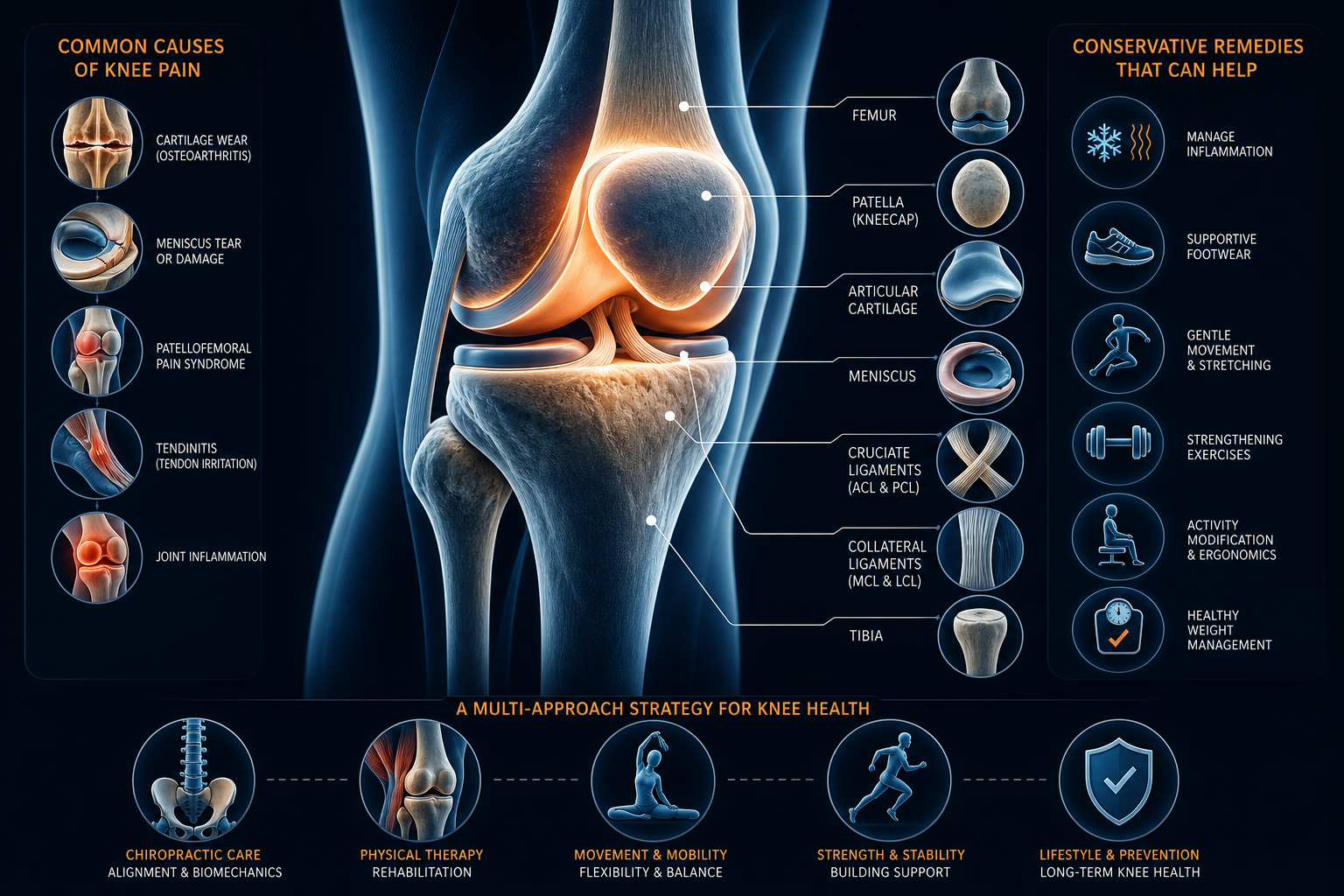
The human body can be compared to highly complex machinery. Joints are true feats of biological engineering. Let us look at the knee, for example. It consists of three different compartments, which are made up of:
• 3 bones
• 4 ligaments
• Cartilages
• Meniscus
• Muscles.
The hip joint is the articulation of the pelvis with the femur muscle, representing the connection between the torso and the legs. It consists of:
• Bones
• The joint capsule
• Ligaments
• Muscles and tendons
• Nerves and blood vessels.
The smallest misalignment in any of these complex mechanisms in your body will lead to discomfort, knee and hip pain, and, ultimately, a limping gait.
Causes of Knee and Hip Pain
In athletes and elderly people, overuse is one of the main causes of knee and hip pain. Strenuous, intensive effort over a long period will damage the complex elements that make up these joints.
However, this is just one of the many potential causes of pain felt in the knee or hip. Other common issues are:
• Lumbar (lower) spine problems
• Osteoarthritis
• Poor posture
• Sudden trauma (slip & fall accident, car crash, sports accident)
• Previous untreated trauma (knee sprain)
• Being overweight and putting extra pressure on these joints.
How Does Upper Cervical Chiropractic Care for Knee and Hip Pain Work?
Upper cervical chiropractic care focuses on correcting misalignments in the upper neck region, specifically the first two vertebrae, the atlas (C1), and the axis (C2). This specialized area of chiropractic care is based on the premise that misalignments in the upper cervical spine can affect the nervous system and lead to various health issues throughout the body, including knee and hip pain. Here's what you need to know about how upper cervical chiropractic care might help with knee and hip pain:
Understanding the Connection
Nervous System Influence: The upper cervical spine is closely linked to the brainstem and central nervous system. Misalignments in this area can disrupt nerve communication, potentially leading to pain and dysfunction in distant parts of the body, including the knees and hips.
Body Balance: Upper cervical adjustments aim to restore proper alignment to the spine, which can help improve the body's balance. A misaligned spine can lead to uneven weight distribution, putting extra stress on the knees and hips.
The Process of Upper Cervical Chiropractic Care
Initial Examination: Chiropractors specializing in upper cervical care often use detailed imaging techniques, like X-rays or MRIs, to precisely understand the misalignment's nature.
Customized Treatment Plan: Treatment is highly individualized, focusing on the specific misalignment of the atlas and axis vertebrae. Adjustments are typically gentle and do not involve the twisting motions sometimes associated with general chiropractic care.
Holistic Approach: Upper cervical chiropractors may also advise on lifestyle adjustments, dietary changes, and exercises to support overall health and prevent further pain.
Potential Benefits for Knee and Hip Pain
Pain Relief: By correcting spinal misalignments, upper cervical care can reduce nerve interference, potentially alleviating pain in the knees and hips.
Improved Mobility: Aligning the spine can improve joint mobility and function, possibly leading to enhanced movement in the knees and hips.
Preventative Care: Regular adjustments may help prevent future issues by maintaining spinal health and proper nerve function.
Upper cervical chiropractic care offers a unique approach to addressing knee and hip pain by focusing on the relationship between the upper cervical spine and the body's overall health. If you're considering this type of care, it's crucial to consult with a qualified practitioner who can assess your specific needs and develop a tailored treatment plan. Collaboration with other healthcare providers can also ensure a comprehensive approach to managing your knee and hip pain.