Bone Cysts of the Shoulder: What Patients Need to Know starts with this: a shoulder bone cyst is usually a benign fluid-filled or blood-filled space inside bone, most often near the proximal humerus, the upper arm bone that forms the ball of the shoulder joint. Many are found by accident on X-ray or MRI, but any cyst near the shoulder should be evaluated because size, location, and bone thinning affect fracture risk and activity choices.
A bone cyst does not automatically mean cancer, and it does not always explain shoulder pain. The main job after discovery is to confirm the type of cyst, check the strength of the surrounding bone, and restore safe shoulder motion if the rotator cuff, scapula, or neck mechanics are contributing to symptoms.
What Is a Bone Cyst of the Shoulder?
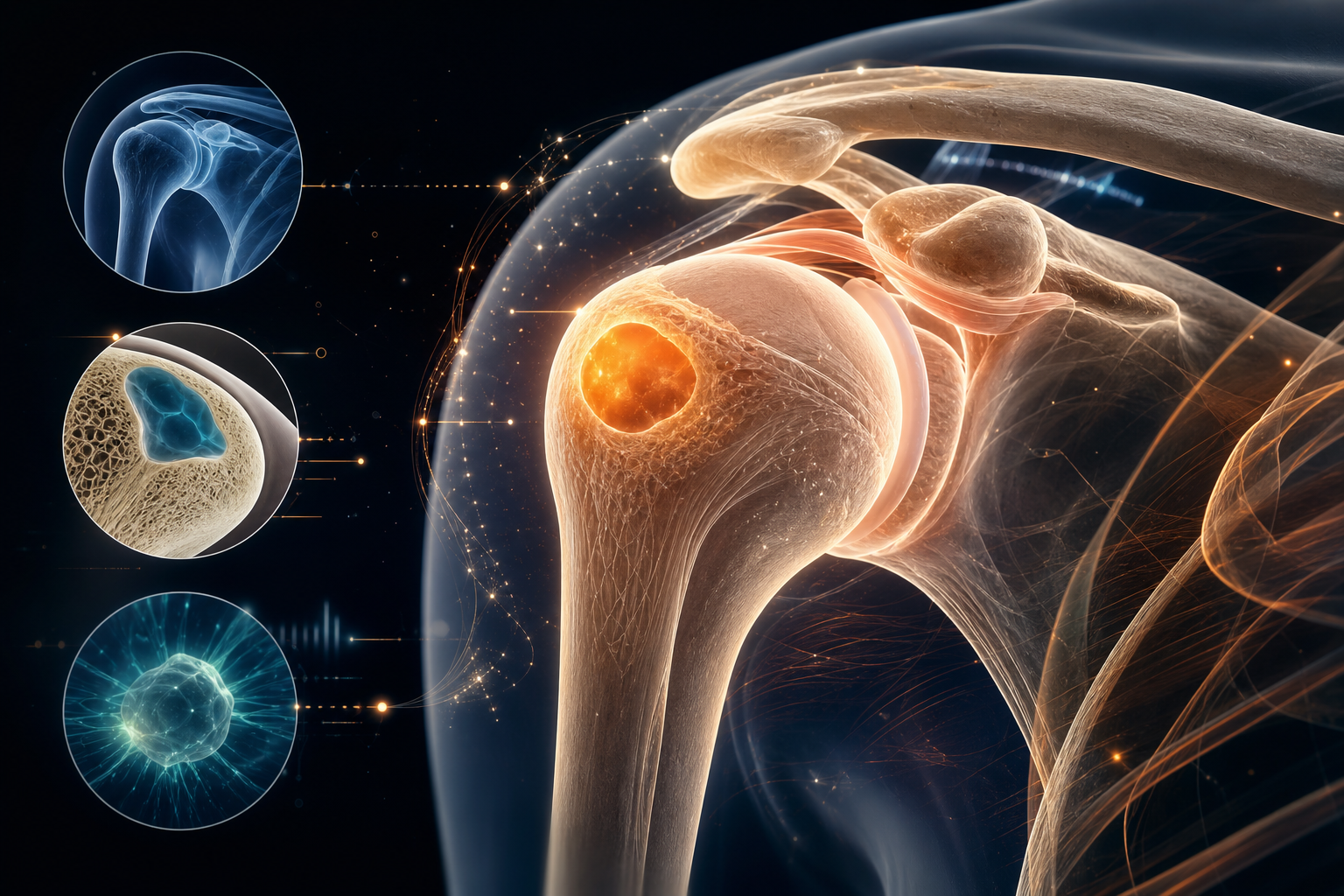
A shoulder bone cyst is a pocket-like area inside bone that contains fluid, blood, or fibrous tissue instead of normal hard bone. In the shoulder region, cysts most often involve the proximal humerus, but they can also appear near the glenoid of the shoulder blade or less commonly around the clavicle.
What is a bone cyst in the shoulder in plain language? It is a hollowed-out area in bone. The cyst itself may not hurt, but it can weaken the bone wall if it grows large enough. A cyst near the humeral head may also show up when imaging is ordered for shoulder pain, a fall, sports injury, or reduced ROM.
- Small cysts may only need monitoring if the bone remains strong.
- Larger cysts may increase the chance of a pathologic fracture, meaning a break through weakened bone.
- Cysts near the growth plate in children need closer tracking because the bone is still developing.
- Cysts found with pain need evaluation of nearby muscles, tendons, joints, and nerves, not just the cyst.
Imaging studies of benign bone lesions show that many shoulder-region cysts are found incidentally, meaning the scan was ordered for another reason and the cyst was an unexpected finding.
Two Types of Shoulder Bone Cysts: What Is the Difference?
The simple vs aneurysmal bone cyst shoulder difference matters because the two cyst types behave differently. A unicameral bone cyst, also called a simple bone cyst, is usually a single fluid-filled space. An aneurysmal bone cyst is typically blood-filled, more expansile, and more likely to enlarge or thin the surrounding bone.
Unicameral or Simple Bone Cyst
A simple cyst is more common in children and teens, especially in the upper humerus. It may shrink as a child reaches skeletal maturity. A bone cyst in child shoulder humerus natural healing pattern is possible, but repeat imaging is usually used to confirm that the cyst is stable.
Aneurysmal Bone Cyst
An aneurysmal cyst can expand the bone and may cause visible swelling, aching, warmth, or pain with activity. These cysts require a more careful imaging review because they can mimic other bone conditions.
Feature Simple Bone Cyst Aneurysmal Bone Cyst Typical contents Clear or yellowish fluid Blood-filled spaces Common age group Children and teens Children, teens, and young adults Typical shoulder site Proximal humerus Proximal humerus or nearby shoulder bones Usual concern Bone thinning and fracture risk Expansion, pain, bone thinning, growth patternHow Is a Shoulder Bone Cyst Diagnosed?
A shoulder bone cyst is identified with imaging, most often an X-ray first and MRI when more detail is needed. If your report says “shoulder bone cyst found on X-ray what now,” the next step is usually to compare the image finding with your symptoms, exam, activity level, and fracture risk.
X-ray shows the shape, size, and location of the cyst. MRI shows fluid, blood, marrow changes, nearby soft tissue irritation, and whether the lesion has features that need closer review. CT may be used when the provider needs a sharper look at the bone wall, especially in the humeral head or glenoid.
What Your Provider Checks During the Exam
- Active ROM: how far you can raise, rotate, and reach with the arm.
- Passive ROM: how far the shoulder moves when the provider moves it for you.
- Rotator cuff strength: especially the supraspinatus, infraspinatus, and subscapularis.
- Scapular control: whether the shoulder blade tilts, wings, or hikes during lifting.
- Nerve screen: sensation and strength related to the axillary nerve and cervical nerve roots.
If your shoulder pain started after a fall, collision, or sudden pop, the evaluation should happen promptly. Severe deformity, loss of pulse, new numbness, or inability to lift the arm after trauma requires urgent medical care.
What Symptoms Can a Shoulder Bone Cyst Cause?
Many shoulder bone cysts cause no symptoms. A shoulder bone cyst no pain symptoms pattern is common, especially when the cyst is small and discovered during imaging for another issue such as neck pain, a sports strain, or shoulder stiffness.
Symptoms are more likely when the cyst is large, near a high-stress area, or associated with bone thinning. Bone cyst shoulder pain when lifting arm overhead may come from the cyst, but it may also come from rotator cuff tendinopathy, biceps tendon irritation, AC joint stress, or poor scapular mechanics.
- Deep ache: pain felt inside the upper arm or shoulder joint area.
- Pain with loading: discomfort during push-ups, throwing, overhead work, or contact sports.
- Weakness: reduced force from guarding, pain, or rotator cuff inhibition.
- Stiffness: limited external rotation, abduction, or reaching behind the back.
- Swelling or warmth: more concerning when paired with night pain or rapid change.
Shoulder pain is often multi-factorial. A cyst on imaging may be real, but the pain generator can still be the rotator cuff, capsule, cervical spine, or scapulothoracic joint.
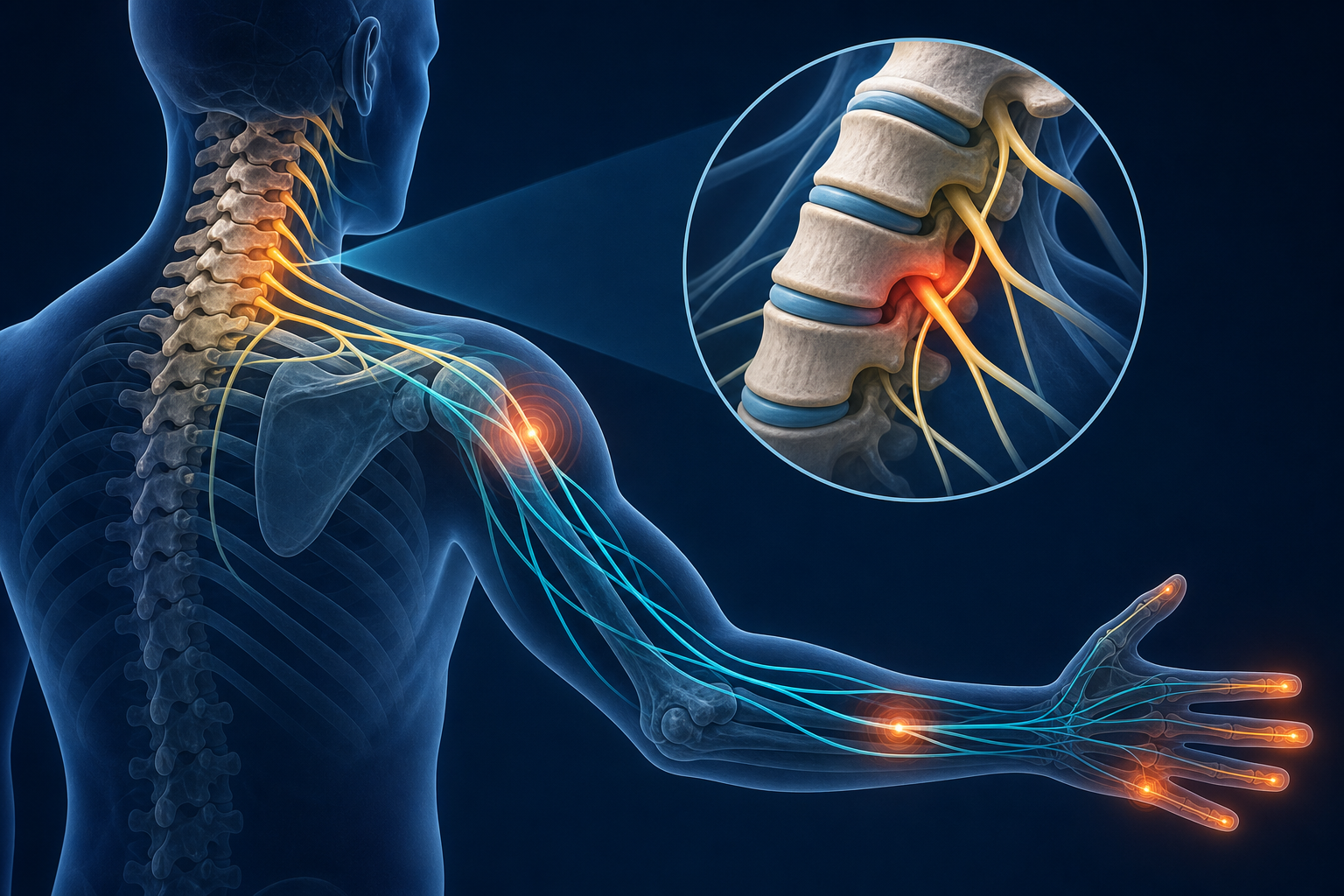
Neck and shoulder symptoms often overlap because cervical joints and nerves can refer pain toward the shoulder. For more context on spine-related symptoms, see what you need to know about neck injuries and upper cervical subluxation.
How Can Bone Cysts Affect Shoulder Function?
A bone cyst can affect shoulder function by changing how safely the arm tolerates load. The cyst does not move the joint by itself, but pain, guarding, and activity restriction can reduce strength in the rotator cuff, alter scapular timing, and limit overhead ROM.
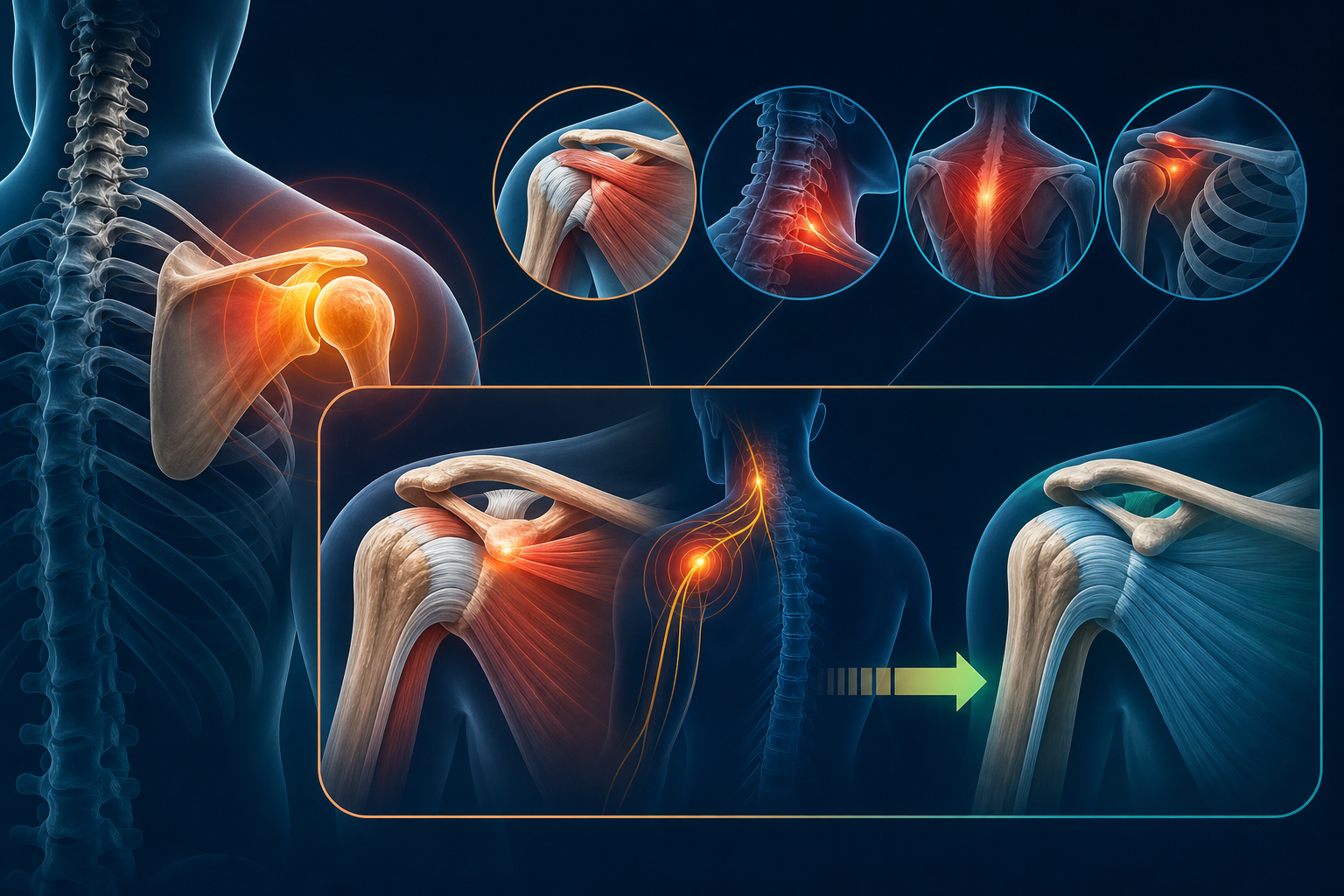
Bone cyst causing shoulder weakness and stiffness usually involves more than the cyst alone. The supraspinatus may test weak because raising the arm hurts. The serratus anterior and lower trapezius may underperform if the shoulder blade does not rotate upward well. The posterior capsule can stiffen if you avoid reaching or sleeping positions for several weeks.
Common Movement Changes
- Arm elevation drops: you stop before full overhead motion because the shoulder pinches or aches.
- Scapular shrugging increases: the upper trapezius substitutes when the rotator cuff is inhibited.
- External rotation tightens: the back of the shoulder stiffens and affects throwing or reaching.
- Grip or carrying tolerance drops: the shoulder may guard during loaded tasks.
What Conservative Care Helps Shoulder Function?
Conservative care does not “remove” a bone cyst, but it can improve shoulder mechanics, reduce avoidable strain, and help you move safely while the cyst is monitored. Non-operative treatment for shoulder bone cyst concerns usually combines imaging follow-up, activity modification, and rehab when motion or strength is limited.
A chiropractor or physical therapy for shoulder bone cyst plan should start with imaging review and clear activity guidelines from the evaluating provider. Chiropractic care may help assess cervical, thoracic, rib, and scapular mechanics. Physical therapy may focus on ROM, rotator cuff loading, scapular control, and safe return to work or sport.
Home Exercise: Pain-Free Scapular Wall Slide
- Stand with your back near a wall, feet 6 inches forward.
- Gently flatten your ribs without forcing the low back into the wall.
- Place forearms on the wall with elbows bent to 90 degrees.
- Slide arms upward only through pain-free range.
- Keep shoulder blades rotating upward, not shrugging toward the ears.
- Perform 2 sets of 8 reps, once daily, for 2 weeks.
Stop the drill if pain rises above 3 out of 10, if symptoms linger longer than 24 hours, or if the shoulder feels unstable. For provider-guided rehab, you can find a physical therapist near you or find a chiropractor near you.
Conservative care works best when exercises match the actual exam findings. For another example of condition-specific conservative care, see chiropractic care for plantar fasciitis.
Children vs. Adults: Does It Present Differently?
Bone cysts in children are more often related to growth and are commonly found in the proximal humerus. In adults, a cyst-like shoulder finding may represent a different process, including degenerative bone change near the rotator cuff attachment, a geode near an arthritic joint surface, or an old benign lesion that never caused symptoms.
A child with a simple humeral cyst may need repeat X-rays every 3-6 months at first, depending on size and fracture risk. Activity limits may be recommended for contact sports, gymnastics, climbing, or heavy overhead loading until the bone wall looks safer. Some simple cysts become less active as skeletal maturity approaches.
- Children: more growth-related cysts, higher concern for fracture through a weakened bone.
- Teens: symptoms may appear during sports, weight training, or rapid growth.
- Adults: cyst-like findings may relate to tendon insertion stress, joint wear, or prior injury.
- Older adults: imaging should be interpreted carefully if there is unexplained night pain, weight loss, or rapidly worsening function.
A child who has sudden shoulder pain after a minor fall should be checked for fracture if a known humeral cyst is present.
Head, neck, and shoulder complaints can overlap after trauma. If symptoms followed a hit, fall, or collision, review concussion next steps and seek appropriate evaluation.
Frequently Asked Questions About Shoulder Bone Cysts
Most shoulder bone cyst questions come down to risk: what it is, whether it is dangerous, and what activity is safe. Imaging and clinical exam answer those questions better than symptoms alone.
Are shoulder bone cysts dangerous?
Most shoulder bone cysts are benign, but some can weaken bone enough to raise fracture risk. Larger cysts, expanding cysts, painful cysts, and cysts near a growth plate need closer follow-up.
Can a bone cyst in shoulder go away on its own?
Some simple bone cysts in children may shrink or become inactive as growth slows. Adults are less likely to have a true growth-related cyst disappear, but small stable cysts may never need active care beyond monitoring.
Can a shoulder bone cyst be cancer?
Most shoulder bone cysts are not cancer. Imaging features such as aggressive bone destruction, soft tissue mass, rapid growth, or unexplained systemic symptoms require prompt medical review.
Should I exercise with a shoulder bone cyst?
Exercise should stay pain-free and match your fracture risk. Avoid heavy overhead lifting, contact impact, and loaded end-range positions until your provider confirms the bone is strong enough.
What red flags need urgent care?
Seek urgent medical care for severe pain after trauma, visible deformity, new numbness, loss of pulse, fever with shoulder swelling, night pain that rapidly worsens, or sudden inability to raise the arm.
- Routine evaluation: mild pain, stiffness, incidental cyst, stable symptoms.
- Prompt evaluation: increasing pain, enlarging swelling, sports injury, limited ROM.
- Urgent evaluation: trauma with severe pain, deformity, numbness, or circulation changes.
What to Do Next
Schedule an evaluation if a shoulder bone cyst was found on imaging, if pain limits overhead use, or if weakness and stiffness last longer than 2 weeks. The first visit should include imaging review, shoulder ROM testing, rotator cuff strength testing, scapular movement assessment, and a clear plan for activity limits.
Choose the provider type based on the main problem. A medical imaging review is needed to classify the cyst and assess fracture risk. A physical therapist can rebuild ROM, strength, and load tolerance. A chiropractor can evaluate shoulder, cervical, thoracic, and rib mechanics that may contribute to pain or poor movement.
- Bring your imaging report: include X-ray, MRI, or CT notes if available.
- Ask about fracture risk: size and bone wall thickness matter more than pain alone.
- Clarify activity limits: get specific guidance for lifting, sport, work, and overhead tasks.
- Start rehab if function is limited: most plans run 6-8 weeks before reassessment.
- Track symptoms weekly: note ROM, pain with lifting, sleep disruption, and strength changes.
Seek urgent care now for severe post-injury pain, deformity, numbness, coldness in the hand, or inability to move the shoulder. For routine shoulder rehab and functional assessment, browse providers or find a shoulder rehabilitation provider near you. To keep learning about musculoskeletal conditions and recovery options, explore more health topics.