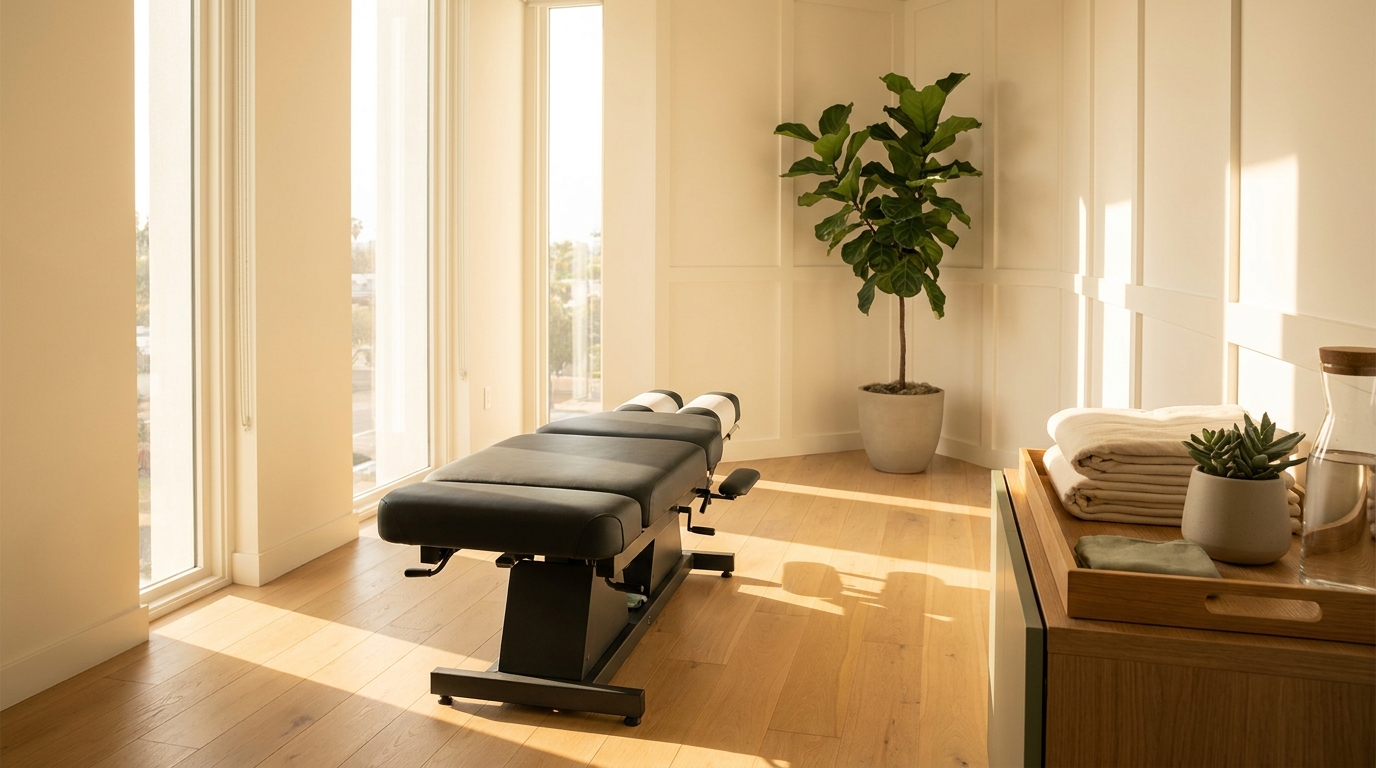
A Beverly Hills chiropractor specializes in diagnosing and treating musculoskeletal conditions — particularly those involving the spine, pelvis, and surrounding soft tissue. Whether you're dealing with chronic low back pain, recovering from a car accident, or managing tension headaches tied to cervical misalignment, chiropractic care offers a non-invasive, hands-on approach to restoring function and reducing pain. Here's what to know before you book your first appointment.
What a Beverly Hills Chiropractor Actually Does
So what does a chiropractor do for back pain — or any musculoskeletal complaint? The core of chiropractic care is spinal manipulation (also called a chiropractic adjustment): a controlled, high-velocity thrust applied to a specific vertebral segment to restore mobility in joints restricted by tissue injury, inflammation, or postural stress.
That's the foundation, but it's not the whole picture. A chiropractor in Beverly Hills typically also provides:
- Soft tissue therapy — myofascial release, trigger point work, and instrument-assisted techniques targeting the paraspinal muscles, upper trapezius, and piriformis
- Rehabilitative exercises — corrective movement patterns to stabilize the lumbar spine or cervical spine after adjustment
- Ergonomic and postural assessment — especially relevant for Beverly Hills professionals spending 8+ hours at a desk or behind the wheel
- Nutritional guidance — anti-inflammatory dietary strategies to support recovery
Chiropractic Care vs Physical Therapy for Back Pain
Both disciplines treat overlapping conditions, but they approach them differently. A chiropractor focuses on joint manipulation and spinal alignment; a physical therapist emphasizes progressive exercise and functional movement retraining. Many patients benefit from both — and in Beverly Hills, practices increasingly co-manage patients across these specialties. For a deeper comparison, see how chiropractors integrate with sports therapy protocols.
Factor Chiropractic Care Physical Therapy Primary method Spinal manipulation, manual adjustments Therapeutic exercise, stretching Best for Joint restriction, acute spinal pain, headaches Post-injury rehab, strength deficits, balance Typical visit length 15–30 minutes 30–60 minutes Average treatment course 6–12 visits over 3–6 weeks 8–16 visits over 4–8 weeks Referral required No (direct access in CA) No (direct access in CA)Common Conditions Treated by Chiropractors in Beverly Hills
If you're searching for a chiropractor for neck and back pain in Beverly Hills, you're in the majority — spinal pain accounts for roughly 60–70% of chiropractic visits nationwide. But the scope extends well beyond the spine.
Spinal Conditions
- Lumbar disc herniation — Is chiropractic adjustment safe for a herniated disc? In most cases, yes. Flexion-distraction technique and Cox decompression gently stretch the lumbar spine without high-velocity thrusting, reducing intradiscal pressure on the L4-L5 or L5-S1 segments. Research published in the Journal of Manipulative and Physiological Therapeutics shows 90% of disc herniation patients report improvement within 3 months of chiropractic care.
- Sciatica — Natural treatment for sciatica without surgery typically combines lumbar adjustments with piriformis stretching and nerve glide exercises targeting the sciatic nerve. Most patients see meaningful pain reduction within 4–6 weeks.
- Cervicogenic headaches — originating from dysfunction at the C1-C3 vertebrae and the suboccipital muscles. If you deal with headaches radiating from the base of your skull, learn how chiropractors treat occipital neuralgia.
Extremity and Soft Tissue Issues
- Shoulder impingement and rotator cuff tendinopathy
- Lateral epicondylitis (tennis elbow) — chiropractors treat tennis elbow with joint mobilization, soft tissue work, and corrective exercises
- Chronic muscle knots (myofascial trigger points) in the upper trapezius, rhomboids, and levator scapulae — here's how providers address them
Red flag: If you experience sudden loss of bowel or bladder control, progressive leg weakness in both legs, or severe unrelenting pain that wakes you from sleep, skip the chiropractor and go to an emergency room. These signs may indicate cauda equina syndrome, which requires immediate medical evaluation.
How Do You Choose the Right Chiropractor Near You?
Knowing how to choose the right chiropractor near you comes down to five concrete criteria — not just Yelp ratings.
- Licensure and credentials — Confirm an active California chiropractic license (DC). Specializations like DACBSP (sports) or CCSP add relevant expertise for specific conditions.
- Technique match — Ask what techniques they use. Diversified, Gonstead, Activator, and flexion-distraction each suit different conditions. A provider who only uses one approach for every patient is a yellow flag.
- Diagnostic approach — Your provider should perform orthopedic and neurological testing before adjusting. X-rays when clinically indicated, not as a routine upsell.
- Treatment planning transparency — A credible provider gives you an expected visit count and measurable goals. Be cautious of open-ended plans requiring 3 visits per week for months.
- Insurance and billing clarity — If you need a chiropractor that accepts insurance in Beverly Hills, verify your plan before the first visit. Many Beverly Hills practices accept PPO plans, workers' comp, and personal injury liens. Ask about out-of-network benefits too.
For a more detailed breakdown, read the full guide to finding the right chiropractor.
What Should You Expect at Your First Chiropractic Appointment?
Here's what to expect at a first chiropractic appointment in Beverly Hills, typically lasting 45–60 minutes:
- Health history intake — Prior injuries, current symptoms, daily activities, and any imaging you've already had
- Physical examination — Range of motion testing (cervical, thoracic, lumbar), orthopedic tests like the straight leg raise for sciatic involvement, and palpation of spinal segments
- Diagnosis and treatment plan — Your chiropractor should explain findings, propose a specific plan (e.g., "8 visits over 4 weeks, re-evaluate after visit 4"), and discuss expected outcomes
- First adjustment — Many providers treat on the first visit if the exam findings are clear
How long does chiropractic treatment take to work? For acute low back pain, most patients report noticeable improvement within 2–4 visits. Chronic conditions — those present longer than 3 months — typically require 6–12 visits before meaningful change. If you're not progressing after 4 weeks, a good provider will reassess and potentially refer you for imaging or co-management.
Chiropractic Care and Personal Injury Recovery
Beverly Hills sees a high volume of auto accidents along Wilshire Boulevard, Santa Monica Boulevard, and the surrounding corridors. If you need a chiropractor for a car accident injury in Beverly Hills, here's what matters:
- Whiplash (cervical acceleration-deceleration injury) affects the C4-C6 segments, the sternocleidomastoid, and the anterior scalene muscles. Symptoms often appear 24–72 hours after impact — not immediately.
- Documentation is critical — Chiropractic records serve as evidence for personal injury claims. Your provider should document mechanism of injury, objective findings, and functional progress at every visit.
- Lien-based care — Many Beverly Hills chiropractors offer treatment on a lien basis for auto accident cases, meaning you pay nothing out-of-pocket until your case settles.
Treatment for whiplash typically involves 12–16 visits over 6–8 weeks, combining cervical adjustments, soft tissue mobilization, and graduated strengthening of the deep cervical flexors. Neck injuries deserve prompt attention — delaying care beyond 2 weeks correlates with longer recovery timelines.
When Should You See a Chiropractor for Back Pain?
The short answer: sooner than most people do. Research suggests that patients who begin conservative care within the first 4 weeks of symptom onset recover faster than those who wait. Specific triggers that warrant a visit:
- Back or neck pain lasting more than 3–5 days without improvement
- Pain radiating into an arm or leg (radiculopathy)
- Stiffness or reduced range of motion that limits daily activities
- Recurring headaches originating from the neck or base of the skull
- Numbness or tingling in the extremities — find out when leg numbness requires professional evaluation
A Simple Self-Assessment You Can Do Now
Stand with your back against a wall, heels 2 inches from the baseboard. Check three contact points: your sacrum, thoracic spine (mid-back), and occiput (back of skull). If your head doesn't touch the wall without tilting it back, you likely have forward head posture — a common driver of cervical pain and tension headaches. Bring this observation to your first visit.
What to Do Next
If you're dealing with back pain, neck stiffness, post-accident symptoms, or chronic headaches in the Beverly Hills area, a licensed chiropractor can evaluate your condition and build a targeted treatment plan — typically within the first visit.
Here's how to move forward:
- Search by specialty and location — Find a chiropractor near you through Medximity's provider directory, filtered by location, specialty, and insurance accepted.
- Prepare for your visit — Bring any existing imaging (MRI, X-ray), a list of current symptoms with onset dates, and your insurance card.
- Ask the right questions — What technique do you use? How many visits do you recommend? What measurable outcomes should I expect by visit 4?
Chiropractic care works best when you find a provider whose approach matches your condition. Browse Beverly Hills providers on Medximity and start your search today.


