Find a chiropractor near me works best when you compare more than distance and star ratings. The right local provider should match your reason for care, offer the visit type you need, explain their exam process clearly, and provide conservative options such as rehab, exercise therapy, or soft-tissue work when appropriate.
If you want to know how to find a chiropractor near me, start with a directory that shows provider type, same-day availability, techniques, rehab services, auto-injury experience, hours, and neighborhood-level location details. That gives you a faster way to screen for fit before you request an appointment.
How to Find a Chiropractor Near You and Compare Local OptionsHow to Find a Chiropractor Near Me
The fastest way to find a chiropractor nearby is to search by your exact need, not just your zip code. A provider who focuses on wellness maintenance may not be the best match for low back pain, cervical spine stiffness after a car crash, or return-to-sport rehab involving the rotator cuff and scapula.
Start with four filters: condition, visit urgency, location, and service mix. If your main issue is desk-related neck tension, headaches, or restricted ROM, look for profiles that mention spinal manipulation, mobility work, posture correction, and exercise instruction. If your problem started after a collision, choose a provider who documents injury findings and builds a rehabilitation plan instead of offering adjustment-only care.
Search by need before you search by convenience
- Back pain: Look for lumbar and pelvic evaluation, exercise therapy, and functional rehab.
- Neck pain or headaches: Look for cervical assessment, upper back mobility work, and soft-tissue treatment for the suboccipitals and trapezius.
- Sports strain: Look for movement screening, return-to-activity planning, and performance rehab.
- Auto injury: Look for whiplash documentation, rehab progression, and follow-up scheduling.
- Wellness visits: Look for maintenance care, mobility support, and preventive exercise guidance.
Use a local directory page rather than a general search result when possible. Structured provider cards save time because they show practical fields side by side. You can find a chiropractor near you, compare profiles, and then browse providers if you want a wider view across specialties.
Directories are most useful when they show verifiable details such as hours, appointment request options, languages, services, and care focus instead of relying only on reviews.
If you want a broader checklist before narrowing your options, see Simple Steps to Find the Right Chiropractor for You.
What to Look for When Comparing Local Chiropractors
The best chiropractor near me for back pain is usually the one whose evaluation and treatment style matches your condition, not the one with the shortest profile or the most generic reviews. Low back pain can come from the lumbar spine, sacroiliac joint, gluteal weakness, hip stiffness, or nerve irritation. You need a provider who looks at all of those contributors.
Compare providers using specifics you can verify from their profile and appointment information.
Comparison factors that matter more than a star rating
- Condition focus: neck pain, headaches, sports injuries, auto injury, prenatal care, pediatric care, wellness care.
- Services offered: adjustment, spinal manipulation, exercise therapy, stretching, soft-tissue work, rehab, massage, acupuncture referral network.
- Visit logistics: same-day visits, evening hours, Saturday hours, walk-in availability, online request form.
- Practice access: parking, elevator access, ground-floor entry, public transit proximity, languages spoken.
- Care plan style: short-term symptom care, active rehab, performance care, maintenance care.
A profile that mentions headaches should still be checked for detail. If you are comparing providers for upper neck pain or occipital symptoms, review Occipital Neuralgia Chiropractic Doctor and Finding a Migraine Headache Specialist near you to understand how condition-specific care differs from a general wellness visit.
Which Visit Type Should You Choose?
Your visit type should match symptom timing, injury mechanism, and how much evaluation you need. Searching for a walk in chiropractor near me today makes sense for a recent strain, sudden neck stiffness, or low back spasm when you want prompt conservative care. It is less useful when your problem is complex and likely needs a longer intake, imaging review, or a rehab-based plan.
Common visit types
- Same-day acute visit: best for recent flare-ups, simple strains, or mechanical neck and back pain without red flags.
- New patient comprehensive exam: best for recurring pain, numbness, headache patterns, postural issues, or symptoms lasting more than 2-6 weeks.
- Auto-injury evaluation: best after a collision, especially with delayed neck pain, thoracic tightness, headaches, or reduced cervical ROM.
- Sports or performance visit: best for overuse problems involving the shoulder, elbow, hip, or ankle plus return-to-activity goals.
- Wellness or maintenance visit: best when you already know your baseline pattern and are not dealing with a new injury.
Expected timelines vary. A simple mechanical low back flare-up often improves over 2-4 weeks with 4-6 visits plus home mobility work. A more involved neck strain after travel, workstation overload, or lifting may need 6-8 visits over 3-6 weeks if the upper trapezius, levator scapulae, and thoracic spine are all restricted.
For athletic overuse issues, condition-specific care matters. Tennis elbow, for example, may involve the common extensor tendon, wrist extensor loading, shoulder mechanics, and grip training rather than elbow treatment alone. See Can a Chiropractor Help with Tennis Elbow Pain? or Sports Therapy – Can a Chiropractor improve my game? if your search is tied to exercise or sport.
Acute visits are for speed. Comprehensive visits are for pattern recognition, functional testing, and a clearer plan.
What Questions Should You Ask Before You Request an Appointment?
The best questions to ask a new chiropractor are practical and condition-specific. You are not interviewing for personality. You are checking whether the provider evaluates the right structures, offers the right services, and can see you on a schedule that matches your condition.
- Do you commonly treat my issue? Ask specifically about low back pain, headaches, sciatica, sports strain, or collision-related neck pain.
- What does the first visit include? Look for history, orthopedic testing, ROM, neurological checks when indicated, and a treatment discussion.
- Do you provide rehab or home exercises? This matters for lumbar instability, scapular weakness, recurrent neck pain, and return-to-activity planning.
- Do you offer same-day or Saturday appointments? Useful if you searched for a chiropractor near me open saturday or need urgent but non-emergency care.
- How long is the new patient visit? A rushed first visit may be a poor fit for a complex case.
- What are the payment and plan options? Ask about cash pay, accepted plan types, and whether they discuss visit frequency before care starts.
- Do you coordinate with related conservative care? That matters if you may benefit from PT, massage, or acupuncture alongside chiropractic care.
You can also ask how they decide between adjustment, soft-tissue work, and exercise therapy. A useful answer should mention exam findings. For example, reduced hip internal rotation and weak glute medius support a different plan than isolated thoracic stiffness and myofascial tightness.
If your symptoms include radiating pain, read Chiropractors on Leg Numbness: Should You Worry When It Happens?. If upper neck symptoms are part of the picture, What You Need to Know about Neck Injuries adds context before you book.
What Happens at a First Chiropractic Visit?
What happens at first chiropractic visit is usually straightforward: history, movement testing, physical exam, explanation of findings, and a recommendation for care. The first appointment often takes 30-60 minutes. Follow-up visits are commonly shorter, around 10-20 minutes, depending on whether rehab exercises or soft-tissue work are included.
Typical first-visit sequence
- History: where the pain is, when it started, what movements provoke it, whether symptoms travel, and what makes it better or worse.
- Observation and posture: standing alignment, gait, shoulder level, pelvic tilt, and guarded movement.
- ROM testing: neck rotation, lumbar flexion, extension, side bending, hip motion, and functional patterns like squat or step-down when needed.
- Orthopedic and neurological checks: reflexes, strength, sensation, nerve tension tests, and joint provocation tests when indicated.
- Care discussion: whether conservative care is appropriate, what techniques may be used, and what the home plan should be.
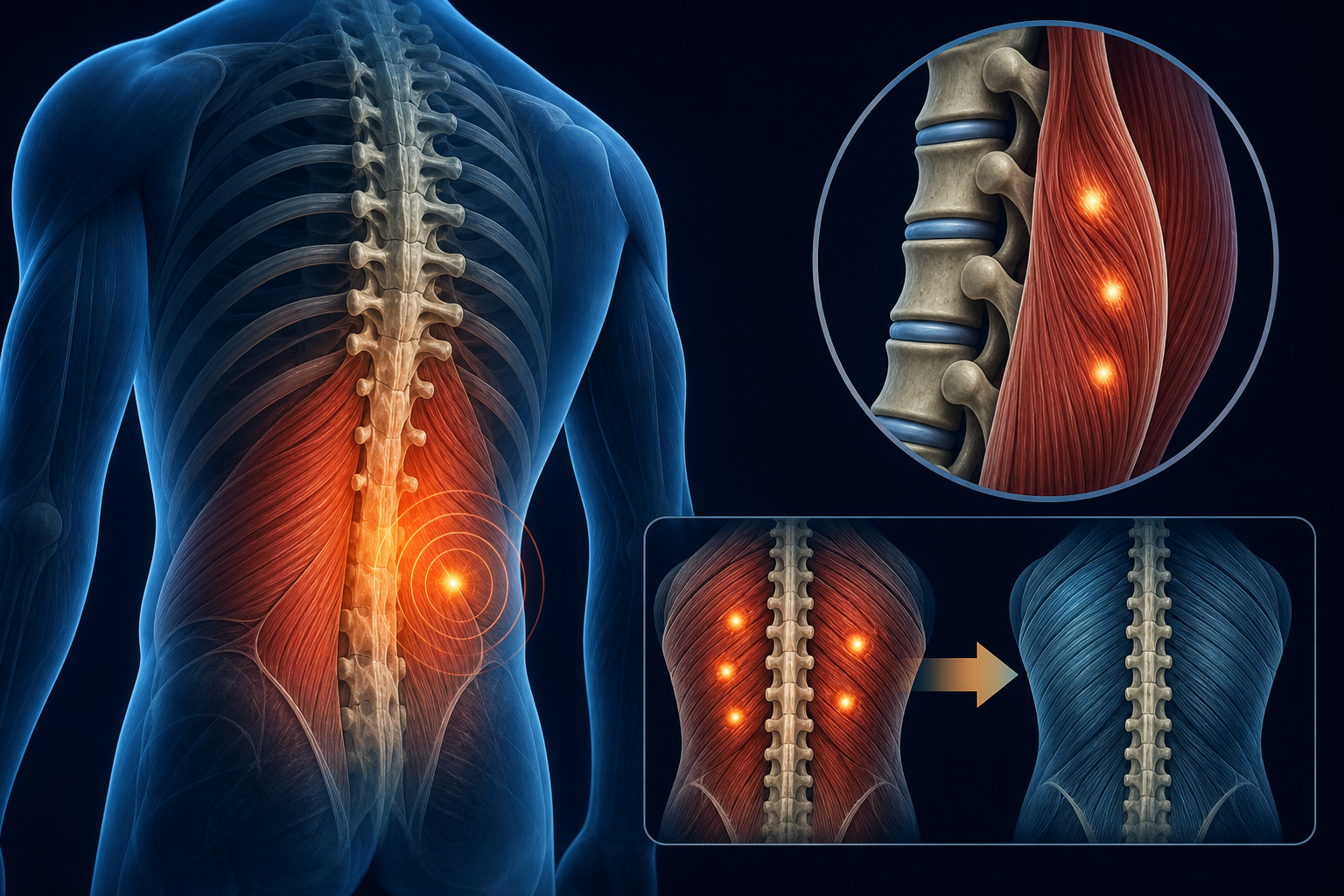
A first visit for neck pain may include palpation of the suboccipital muscles, sternocleidomastoid, and levator scapulae, plus thoracic mobility checks. A low back exam may assess the quadratus lumborum, gluteus medius, hamstrings, and sacroiliac joint mechanics. If your symptoms suggest sciatica, providers often examine the lumbar spine, piriformis region, and neural tension patterns in the posterior leg.
Some first visits include treatment the same day if the exam supports it. Others reserve treatment for the next visit after a longer evaluation. Either approach can be reasonable if the provider explains why.
Visit Component What It Helps Identify Typical Time History Injury pattern, symptom triggers, timeline 10-15 minutes ROM and Functional Exam Joint restriction, mobility loss, movement compensation 10-20 minutes Orthopedic/Neurological Testing Nerve irritation, muscular weakness, red-flag screening 5-15 minutes Initial Conservative Care Pain reduction and movement improvement 5-15 minutes Home Exercise Instruction Carryover between visits 5-10 minutesSoreness for 24-48 hours after a first treatment can happen, especially if stiff joints and tight soft tissue were both treated. Sharp worsening, progressive weakness, or new bowel or bladder changes are not typical and need urgent evaluation.
When Should You Choose Chiropractic, Physical Therapy, Massage, or Acupuncture?
Chiropractor or physical therapy for sciatica is the wrong question if you treat them as interchangeable. They overlap, but they are not identical. Chiropractic care often helps when spinal joint restriction, posture-related loading, or mechanical neck and back pain are dominant. PT is often the better fit when strength deficits, gait changes, post-injury weakness, or movement retraining drive the problem. Massage can reduce tone in muscles like the piriformis, upper trapezius, and paraspinals. Acupuncture may be considered when pain modulation is the main short-term goal.
For neck pain chiropractor near me without surgery, conservative care usually starts with an exam that separates mechanical restriction from nerve-related symptoms. If your pain is local and movement-triggered, chiropractic plus mobility work may be reasonable. If you also have arm weakness, hand numbness, or major ROM loss, you may need a more rehab-heavy plan and closer monitoring.
How to choose the right conservative option
- Choose chiropractic first if your main issue is joint restriction, posture-related pain, recurrent stiffness, or headaches linked to neck and upper back mechanics.
- Choose PT first if you have weakness, balance changes, poor movement control, or need structured exercise progression.
- Add massage if soft-tissue tone is limiting motion in the calf, hamstrings, glutes, thoracic paraspinals, or neck.
- Consider acupuncture if you want another conservative option focused on symptom reduction and tissue relaxation.
Many patients do best with combined conservative care. For example, lumbar pain with sciatica-like symptoms may improve with chiropractic care for spinal and pelvic mechanics plus PT-style nerve glides and hip strengthening. Upper back and neck headaches may respond to cervical and thoracic treatment plus home work for deep neck flexors and scapular stabilizers.
To continue comparing options, explore more health topics across chiropractic, rehab, and wellness care.
How Do You Find the Right Chiropractor for Auto Injury and Rehabilitation?
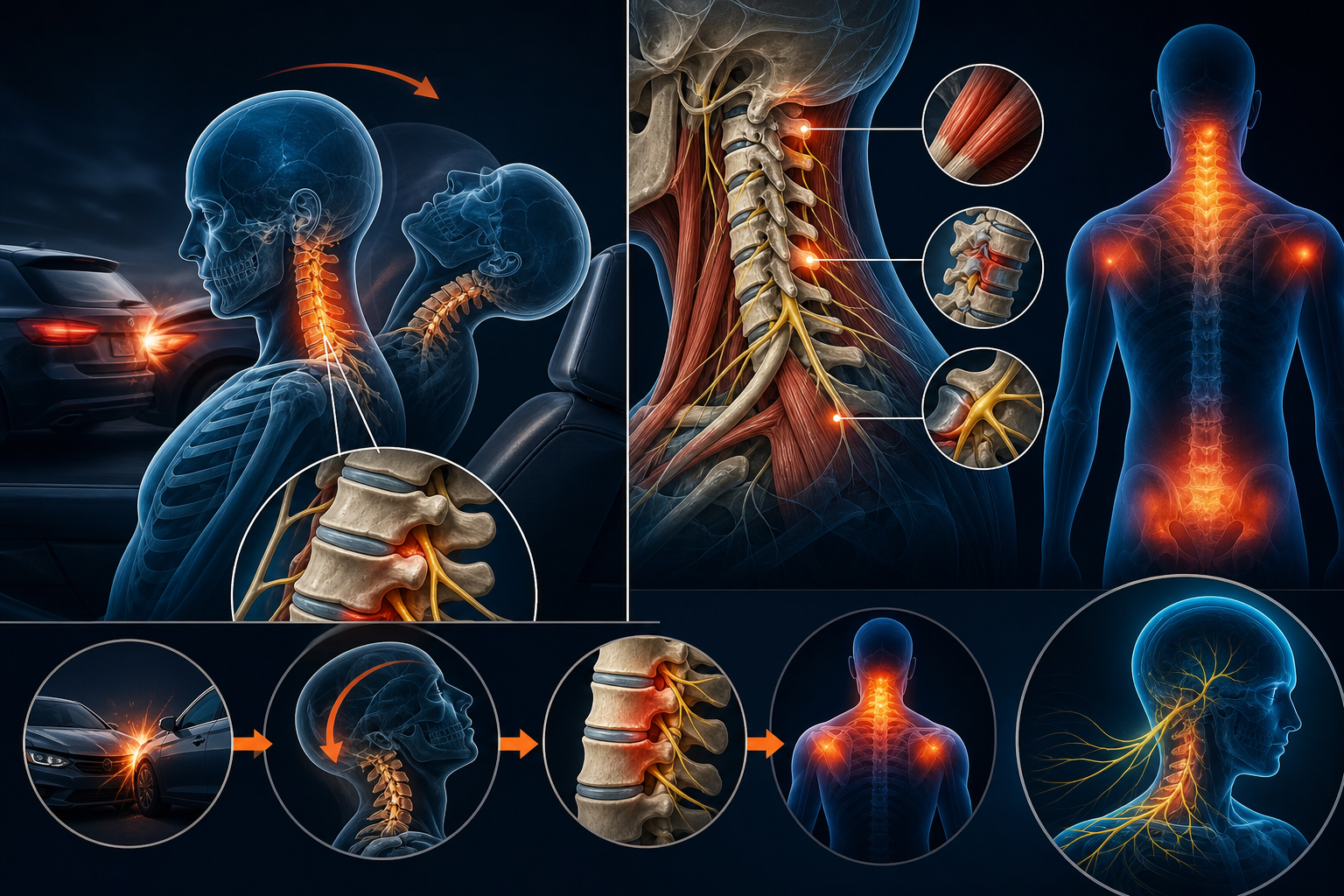
If you are searching car accident chiropractor near me, prioritize documentation, reassessment, and rehab progression. Collision-related symptoms often involve the cervical spine, thoracic spine, rib mechanics, and soft-tissue irritation in the upper trapezius, scalenes, and paraspinals. Pain may not peak on day one. Stiffness and headache often increase over the first 24-72 hours.
Auto-injury care should be more structured than a general wellness visit.
- Early phase: pain pattern mapping, ROM testing, neurological screen, sleep-position advice, light mobility, and gentle conservative care as tolerated.
- Middle phase: repeat ROM measurements, postural correction, scapular stabilization, thoracic mobility, and graded exercise.
- Later phase: strength, endurance, work tolerance, and return-to-activity progression.
Typical recovery timelines vary by severity. Mild whiplash-type stiffness may improve in 2-6 weeks. More persistent cases with headache, dizziness during movement, or marked ROM loss can require 6-12 weeks of conservative care and rehab progression.
Look for providers who explain how they monitor progress. Useful signs include objective ROM checks, pain pattern changes, activity tolerance, and fewer flare-ups between visits. If the profile only says “pain relief” and does not mention rehab, exercise therapy, or follow-up structure, keep comparing.
For condition-specific context, read Whiplash Trauma Specialist near me. That article helps you separate general chiropractic care from post-collision management.
Which Search Filters Actually Matter on Local Directory Pages?
The most useful local filters are the ones that remove bad-fit providers quickly. If you searched for a chiropractor near me open saturday, the filter matters because scheduling friction lowers follow-through. The same goes for same-day requests, cash-pay visibility, and neighborhood search.
Use these filters first
- Same-day availability: best for recent flare-ups that do not need emergency care.
- Weekend or evening hours: useful if you cannot do standard weekday visits.
- Auto injury: narrows results for collision-related documentation and rehab.
- Rehab focus: better for repeat strains, sciatica patterns, or return-to-activity goals.
- Languages spoken: reduces communication errors during history and home-care instruction.
- Accessibility and parking: practical details matter when you are limiting bending, walking, or sitting tolerance.
Do not ignore service combinations. A provider offering adjustment plus exercise therapy and myofascial work may be a better fit than one offering adjustment alone, especially for recurrent low back pain or office-related neck tension.
Here is a simple self-care protocol you can start while comparing providers, as long as you do not have red flags. For a basic neck stiffness flare-up:
- Sit tall with your shoulders relaxed.
- Tuck your chin slightly, as if making a small double chin.
- Rotate your head 30-45 degrees to the right, then back to center.
- Rotate left the same way.
- Repeat 8-10 reps each side, 2-3 times per day.
- Then perform 10 shoulder blade squeezes, holding each for 3 seconds.
For low back stiffness, try 5-10 gentle pelvic tilts on your back with knees bent, followed by 5 slow knees-to-chest alternations per side. Stop if leg numbness worsens or pain travels further down the leg.
Red flags that need urgent evaluation include major trauma, progressive arm or leg weakness, new bowel or bladder changes, saddle numbness, or severe unrelenting pain that does not change with position.
What to Do Next
Use a local directory page to narrow your search by condition, visit type, and schedule. If you need routine neck or back care, start with providers who list chiropractic evaluation, adjustment, and rehab services. If you need post-collision care, choose a provider who documents injury findings and includes a rehabilitation plan. If your symptoms are more exercise- or weakness-driven, compare chiropractic with PT-oriented conservative care.
At your first visit, expect a history, ROM testing, exam, and a clear explanation of whether conservative care fits your presentation. Ask how often they reassess progress, whether they prescribe home exercises, and whether they offer same-day or Saturday follow-ups if needed.
- Seek urgent care now if you have major trauma, progressive weakness, new bowel or bladder changes, saddle numbness, or rapidly worsening neurological symptoms.
- Book routine chiropractic care soon if you have mechanical neck pain, low back pain, posture-related stiffness, headaches linked to neck tension, or an uncomplicated flare-up that limits normal movement.
- Choose a rehab-focused provider if your problem keeps returning, includes leg symptoms, follows a collision, or affects sport or work function.
To start comparing local options, find a chiropractor near you. If you want to widen your search across conservative care categories, browse providers or explore more health topics on Medximity.
FAQ About Finding a Chiropractor Near You
How do I find the best chiropractor near me for back pain?
Search by condition and service mix, not distance alone. For back pain, look for providers who mention lumbar evaluation, sacroiliac assessment, exercise therapy, and follow-up planning. A good profile should describe how they handle ROM loss, recurring flare-ups, and functional rehab.
Is it normal to feel sore after adjustment?
Mild soreness for 24-48 hours can happen, especially after a first visit or when stiff joints and tight muscles were treated together. Use light walking, gentle ROM work, and hydration. Seek prompt evaluation if soreness becomes sharp, severe, or is paired with progressive weakness, new numbness, or bowel or bladder changes.
How long does chiropractor appointment take?
New patient visits commonly take 30-60 minutes. Follow-up visits are often 10-20 minutes, though rehab-based visits may run longer if exercise instruction, soft-tissue work, or reassessment is included.
Should I choose a walk-in chiropractor near me today or schedule a full evaluation?
Choose a walk-in or same-day visit for a simple recent flare-up without red flags. Schedule a longer evaluation if symptoms have lasted more than a couple of weeks, recur often, radiate into an arm or leg, or started after a collision.
What if I want a chiropractor by neighborhood near me instead of by city?
Neighborhood search is often more useful than city-wide search because traffic, parking, and repeated follow-up visits matter. Compare providers by neighborhood if you expect multiple visits over 2-6 weeks, need easy lunch-break access, or want a practice close to work or home.
Can chiropractic care be combined with other conservative care?
Yes. Chiropractic care is commonly paired with PT-style exercise progression, massage for soft-tissue restriction, acupuncture, stretching, and ergonomic changes. Combined care is often useful for sciatica patterns, sports overuse, recurrent neck tension, and post-collision rehabilitation.