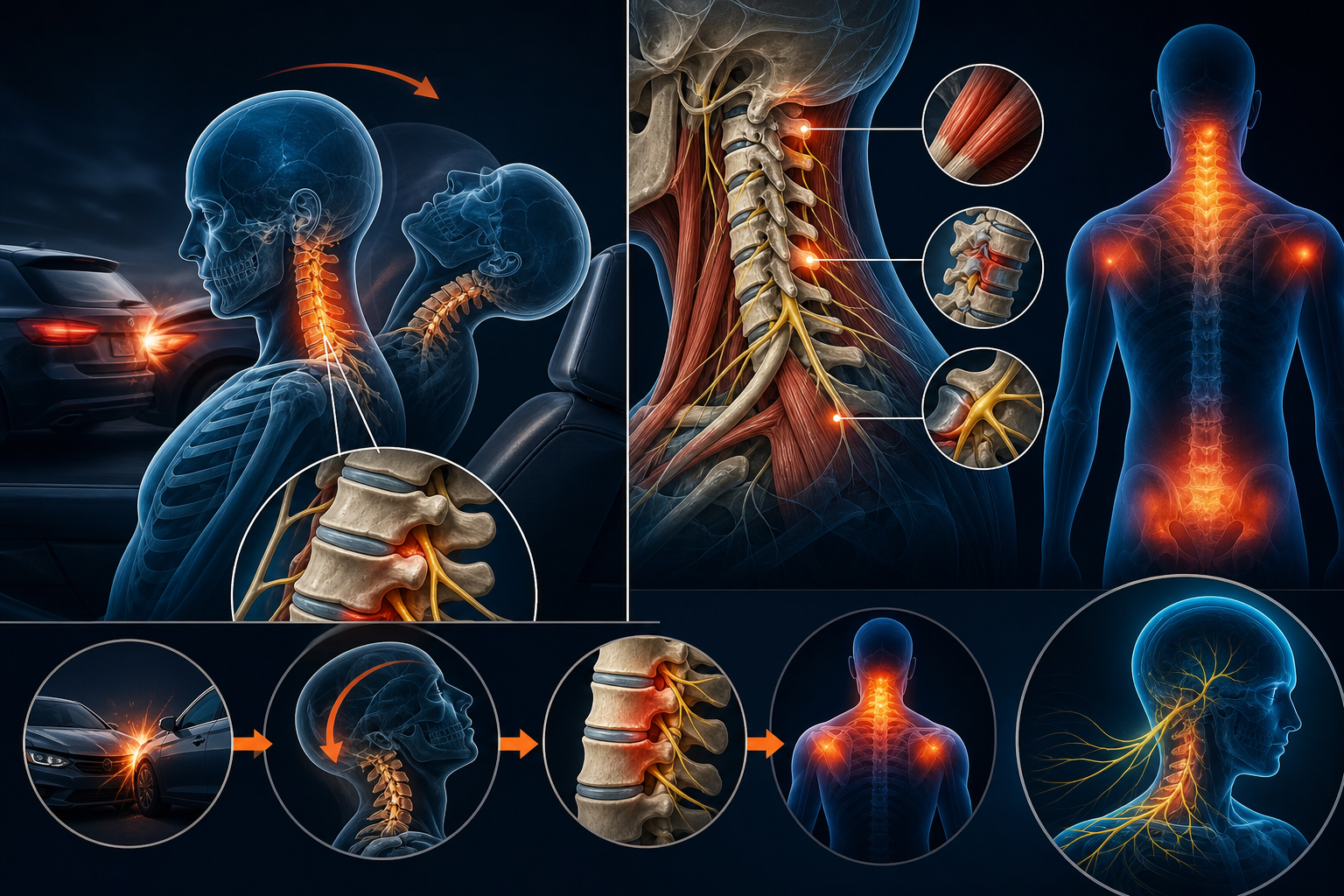
After a car crash, it is common to feel shaken, stiff, sore, or unsure whether your symptoms are serious. Some people notice pain immediately. Others feel relatively fine at the scene and develop neck pain, headaches, back tightness, or shoulder discomfort hours or days later. An auto accident chiropractor is a chiropractic provider who evaluates and treats musculoskeletal injuries that may occur after a collision, especially injuries involving the spine, joints, muscles, ligaments, and movement patterns.
Chiropractic care after an accident is usually conservative and non-surgical. It may include a physical exam, range-of-motion testing, spinal or joint adjustments when appropriate, soft tissue therapy, therapeutic exercises, posture and activity guidance, and documentation of the care provided. If you are searching for a chiropractor for car accident injuries near me, the goal is to find a provider who can evaluate your symptoms carefully, explain your options, and coordinate referrals when your condition requires additional medical assessment.
This article is educational only and is not a diagnosis, medical advice, or legal advice. If you have severe symptoms after a crash, seek urgent medical care. For questions about insurance, claims, or legal deadlines, speak with your insurer or a licensed attorney in your state.
What Is an Auto Accident Chiropractor?
An auto accident chiropractor focuses on conservative care for injuries that may follow a motor vehicle collision. These injuries often involve the neck, mid-back, low back, shoulders, hips, and surrounding soft tissues. A crash can place sudden force on the body, even at lower speeds. The spine and supporting tissues may be strained by rapid acceleration, deceleration, twisting, bracing, or impact.
Common reasons people seek chiropractic care after a crash include:
- Neck pain or stiffness after an accident
- Whiplash-associated symptoms
- Low back pain or tightness
- Mid-back or rib-area discomfort
- Headaches that may be related to neck tension
- Shoulder, hip, or jaw discomfort
- Reduced range of motion
- Muscle spasms or guarded movement
Chiropractors do not treat every type of injury, and they should screen for warning signs that may need medical imaging, emergency care, or referral to another specialist. A careful evaluation matters because not every post-accident symptom is appropriate for spinal manipulation or exercise on day one.
How Soon to See a Chiropractor After a Car Accident
Many patients ask, how soon to see chiropractor after car accident? In general, it is reasonable to be evaluated promptly if you develop pain, stiffness, headaches, numbness, tingling, weakness, dizziness, or difficulty moving after a crash. Some people schedule a chiropractic evaluation within a few days, while others first visit an urgent care clinic, emergency department, or primary care provider depending on the severity of their symptoms.
You should seek urgent medical attention right away if you have chest pain, shortness of breath, fainting, confusion, severe headache, loss of consciousness, worsening neurological symptoms, loss of bowel or bladder control, suspected fracture, severe abdominal pain, or any symptom that feels dangerous or rapidly worsening.
If your symptoms are mild but persistent, a chiropractor may help assess whether your pain appears related to joints, muscles, ligaments, posture, or movement restrictions. Early evaluation may also help establish a baseline for your range of motion, pain levels, and functional limitations.
Can a Chiropractor Help With Neck Pain After an Accident?
Many people wonder, can chiropractor help with neck pain after accident? Chiropractic care may help some patients with neck pain related to joint stiffness, muscle tension, soft tissue strain, or movement limitations after a collision. Care is typically based on the exam findings, symptom irritability, and the patient’s tolerance.
For example, a provider may use gentle mobilization rather than a faster adjustment if the neck is highly sensitive. They may combine hands-on care with home exercises, ergonomic advice, and gradual return-to-activity guidance. If symptoms suggest nerve involvement, concussion, fracture risk, vascular concerns, or another condition outside routine chiropractic care, referral for medical evaluation may be appropriate.
For more patient-friendly information, Medximity’s article on neck pain after a car accident explains common symptom patterns and when to seek care.
Whiplash Treatment Without Surgery After a Crash
Whiplash is a common term for neck injury associated with rapid back-and-forth movement of the head and neck. It may involve muscles, ligaments, joints, discs, and nerves. Symptoms can include neck pain, stiffness, headaches, shoulder discomfort, upper back soreness, jaw tension, or difficulty turning the head.
Whiplash treatment without surgery after crash often begins with conservative care. Depending on the patient, this may include gentle chiropractic techniques, soft tissue therapy, progressive mobility exercises, strengthening work, heat or ice guidance, and education about safe movement. Many whiplash-related symptoms improve over time, but the pace varies from person to person.
If you are asking, how long does whiplash take to heal with chiropractic? there is no single timeline. Some patients notice improvement within a few weeks, while others need a longer rehabilitation plan, especially if symptoms are more intense, daily activities are limited, or the injury involves multiple body regions. Recovery can also be influenced by age, prior injuries, general health, stress, sleep, work demands, and consistency with recommended exercises.
Read more in Medximity’s guide to whiplash after a car accident.
Back Pain After Car Accident: Natural Treatment Options
Back pain after a crash may come from muscle strain, joint irritation, disc-related irritation, ligament sprain, altered movement, or guarded posture. A chiropractor may evaluate how your spine, hips, pelvis, and surrounding muscles are moving and whether conservative care is appropriate.
Back pain after car accident natural treatment options may include:
- Spinal or pelvic adjustments when clinically appropriate
- Gentle joint mobilization
- Soft tissue techniques for tight or tender muscles
- Stretching and mobility exercises
- Core and hip strengthening
- Walking or graded activity plans
- Posture, lifting, and sleep-position guidance
The best plan depends on the type of back pain, how recently the crash occurred, and whether there are symptoms such as radiating leg pain, numbness, tingling, weakness, or severe pain. If you have new or worsening neurological symptoms, a prompt medical evaluation is important.
Medximity’s article on back pain after a car accident offers a deeper look at common causes and conservative care options.
What Does an Auto Accident Chiropractor Do First Visit?
A common search question is, what does auto accident chiropractor do first visit? Your first appointment is usually focused on evaluation, safety screening, and building a care plan. Treatment may or may not happen at the first visit, depending on your symptoms and exam findings.
Health History and Crash Details
The chiropractor may ask when the crash occurred, how the collision happened, whether you were wearing a seatbelt, whether airbags deployed, where your pain started, and how your symptoms have changed. They may also ask about prior injuries, surgeries, medications, work duties, daily activities, and whether you have already had X-rays or other imaging.
Physical Examination
The exam may include posture assessment, range-of-motion testing, orthopedic tests, neurological screening, muscle strength checks, reflexes, sensation testing, palpation, and functional movements such as bending, turning, or walking. The provider is looking for patterns that may explain your pain and signs that suggest referral is needed.
Care Plan and Treatment Options
If chiropractic care appears appropriate, your provider may recommend a plan that includes hands-on care, rehabilitation exercises, activity modifications, and follow-up visits. A strong plan should explain the goals of care, what symptoms to monitor, how progress will be measured, and when the plan may need to change.
If you are new to chiropractic visits, Medximity’s guide on what to expect at the chiropractor can help you feel more prepared.
Is It Normal to Feel Worse After a Chiropractic Adjustment?
Some patients ask, is it normal to feel worse after chiropractic adjustment? Mild soreness, temporary stiffness, or a tired feeling may occur after an adjustment or soft tissue work, especially if the area was already irritated. This is often similar to how muscles can feel after a new workout. It should usually be short-lived.
However, severe pain, worsening neurological symptoms, new numbness or weakness, dizziness, fainting, severe headache, trouble walking, or loss of bowel or bladder control should not be ignored. Contact a qualified healthcare provider promptly or seek urgent care if symptoms feel serious or concerning.
A good chiropractor should adjust the care plan if your symptoms are not responding as expected. More force is not always better. After an accident, gentle and progressive care is often more appropriate than aggressive treatment.
Accident Injury Rehabilitation: What a Good Plan Includes
The best chiropractor for accident injury rehabilitation plan is not simply the one who offers the most visits or the quickest adjustment. A better indicator is whether the provider performs a careful exam, explains the reasoning behind care, tracks functional progress, and updates the plan as you improve.
A rehabilitation-focused chiropractic plan may include:
- Pain and movement assessment at regular intervals
- Short-term goals, such as turning the neck more comfortably
- Functional goals, such as sitting, driving, working, or lifting with less limitation
- Progressive home exercises
- Coordination with physical therapy when appropriate
- Referral when symptoms suggest care outside chiropractic scope
Some patients benefit from combining chiropractic care with physical therapy, especially when strength, balance, endurance, or return-to-work demands are part of recovery. You can also search Medximity for physical therapists near you if your provider recommends rehabilitation support.
Chiropractic Care, Car Insurance, PIP, and Letters of Protection
Patients often have practical questions about payment after a collision, including chiropractic care covered by car insurance PIP and letter of protection chiropractic treatment car accident. Coverage depends on your state, policy, insurer, accident circumstances, and provider billing practices. Personal Injury Protection, often called PIP, may cover certain medical expenses after a motor vehicle accident in some states or policies, but rules vary widely.
A letter of protection, sometimes called an LOP, is a legal and billing arrangement that may allow treatment to proceed while payment is deferred until a claim resolves. Not every provider accepts LOPs, and not every case qualifies. Because this can affect your financial and legal responsibilities, it is wise to speak with your insurance carrier and, when appropriate, a licensed attorney in your jurisdiction. This article is not legal advice.
From the healthcare side, many accident-focused chiropractors can provide itemized bills, visit notes, treatment plans, and progress documentation. The provider’s role is to document care accurately, not to promise or determine the outcome of any claim.
Chiropractic Documentation for a Personal Injury Claim
Chiropractic documentation for personal injury claim may include the patient’s history, exam findings, diagnoses or clinical impressions, treatment provided, response to care, functional limitations, referrals, missed work notes when clinically appropriate, and discharge or progress summaries. Accurate documentation can help create a clear record of what was evaluated and treated.
Documentation should be factual and clinically grounded. It should not exaggerate symptoms, guarantee causation, or predict legal results. Personal-injury laws, claim procedures, and deadlines such as statutes of limitations vary by jurisdiction. If you have questions about a claim, consult a licensed attorney about your specific situation.
Medximity’s overview of medical documentation after a personal injury explains why clear records may matter in accident-related care.
When to See a Provider After a Crash
Consider scheduling an evaluation if you have pain, stiffness, headaches, reduced motion, numbness, tingling, muscle spasms, difficulty sleeping due to discomfort, or trouble with normal activities after a crash. You do not need to know whether your symptoms are from whiplash, a back strain, or another condition before asking for help. That is part of the evaluation process.
You should seek urgent care first for severe or alarming symptoms, including weakness, confusion, fainting, chest pain, severe headache, trouble breathing, suspected broken bones, or rapidly worsening pain. If symptoms are less urgent but not improving, a chiropractor may help determine whether conservative care is a reasonable next step.
How to Find an Auto Accident Chiropractor Near You
When comparing providers, look for clear communication, experience with post-accident evaluation, a rehabilitation mindset, and willingness to refer when needed. Ask whether the office treats car accident injuries, what the first visit includes, whether they provide exercise-based rehab, and how they handle records or insurance paperwork.
You can begin your search through Medximity’s chiropractor directory and review provider profiles in your area. If your symptoms involve complex rehabilitation needs, you may also consider whether a coordinated plan with chiropractic care and physical therapy makes sense.
Key Takeaway
An auto accident chiropractor may help evaluate and manage neck pain, back pain, whiplash-associated symptoms, and movement limitations after a crash using conservative care. The right timing and treatment plan depend on your symptoms, exam findings, medical history, and safety screening. If you are unsure where to start, seek a qualified evaluation and ask clear questions about diagnosis, treatment goals, expected progress, and when referral may be needed.


