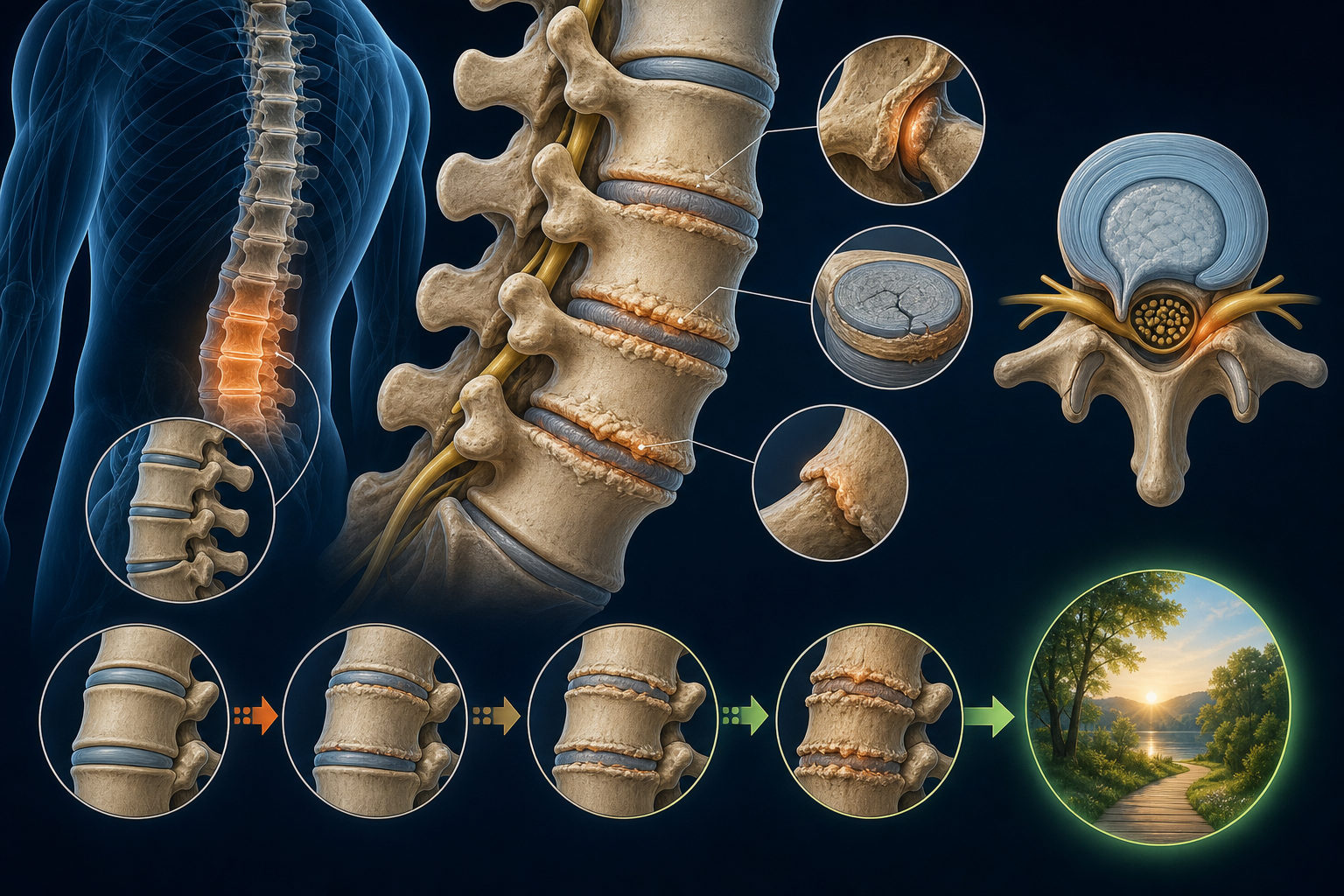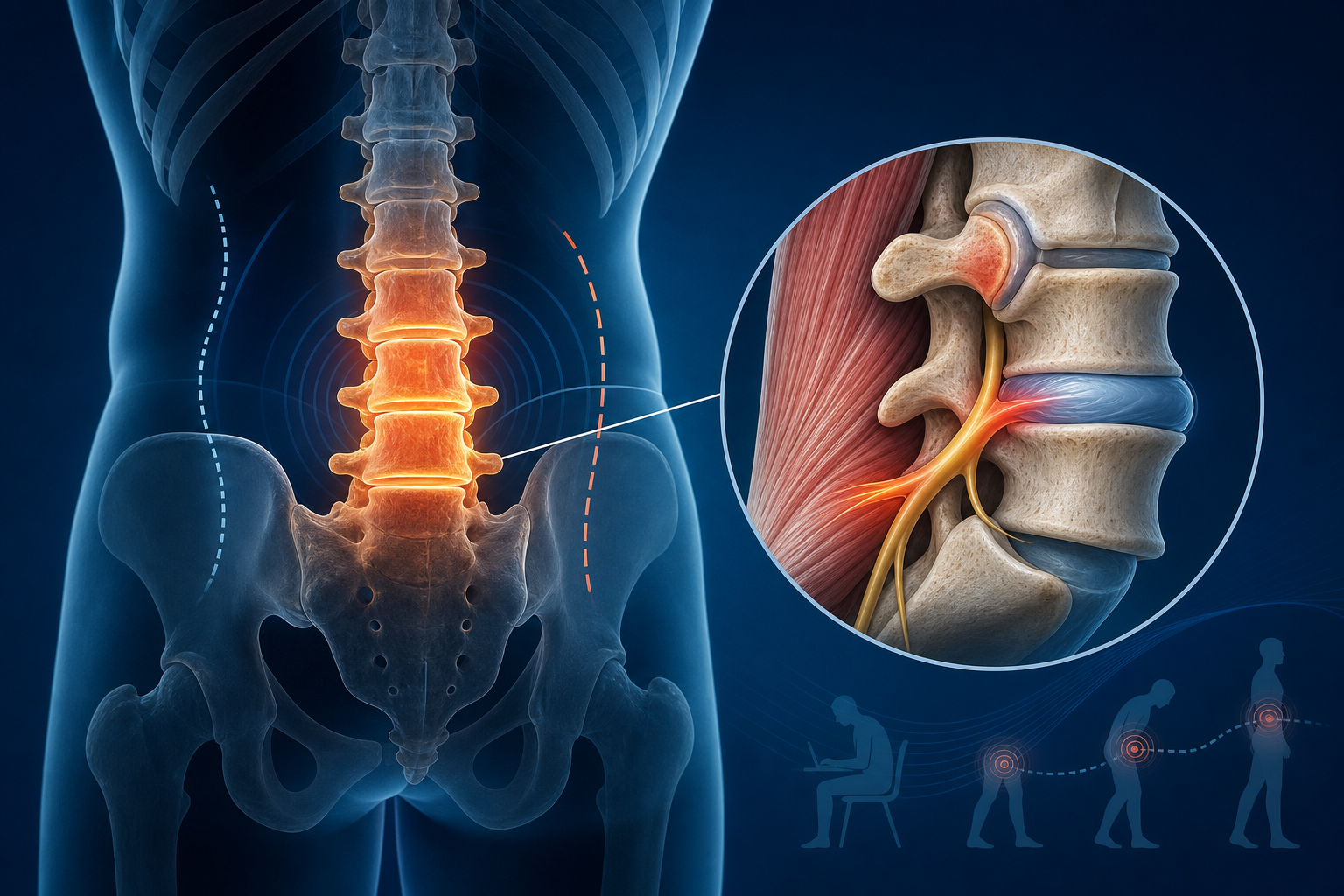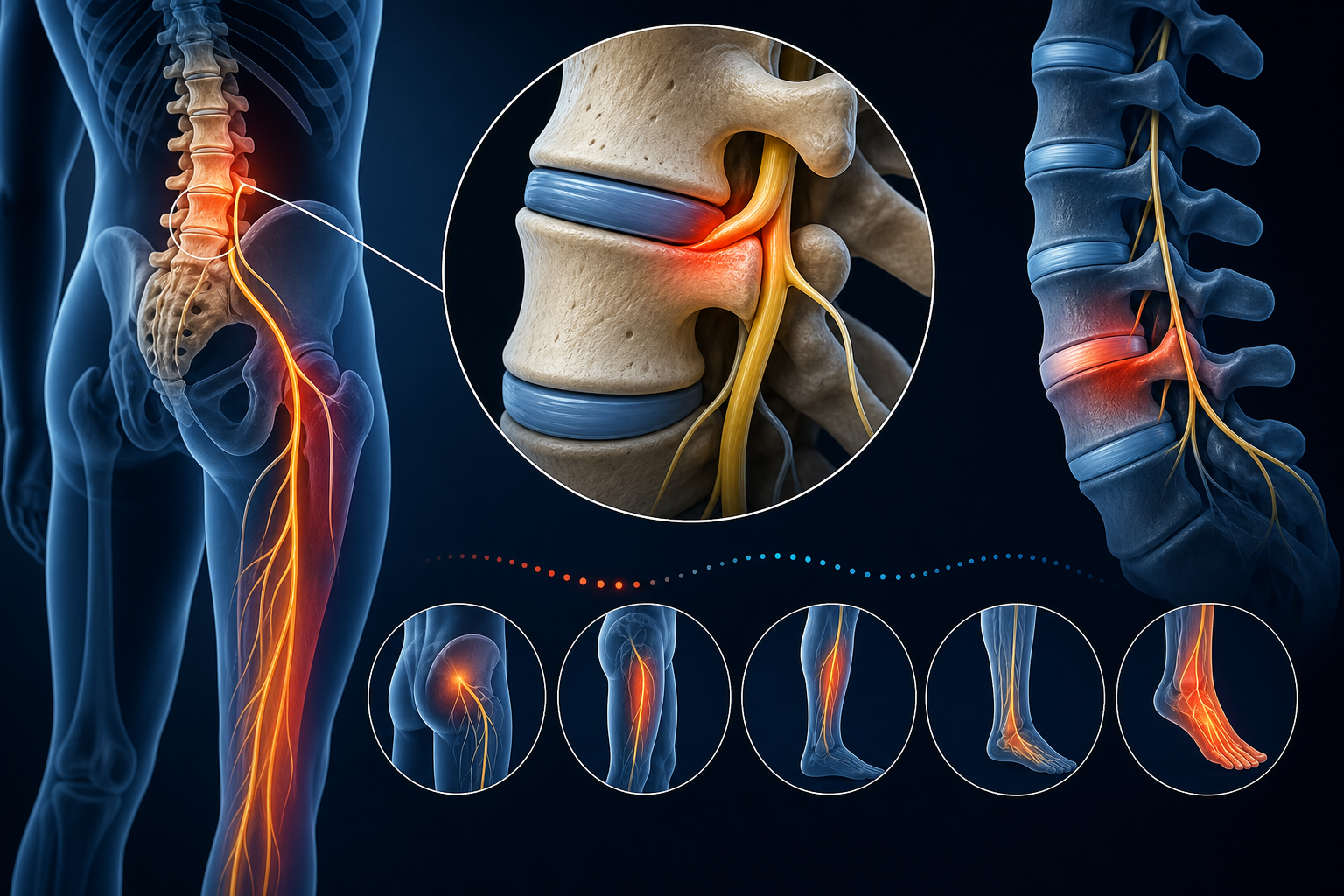
Chiropractor for lower back pain without surgery is a common search when you want conservative care for lumbar pain, sciatica-like symptoms, stiffness, or pain that returns with bending, lifting, or standing. Chiropractic care may help lower back pain by improving lumbar joint motion, reducing mechanical irritation, restoring hip and core function, and teaching you how to load your spine safely.
Most uncomplicated lower back pain improves with conservative care in 2–6 weeks, but disc irritation, chronic stiffness, and recurrent flare-ups often need a structured plan over 6–12 weeks. Seek urgent care now if you have loss of bladder or bowel control, numbness in the groin or saddle area, fever with back pain, recent major trauma, or progressive leg weakness.
Can a Chiropractor Help Lower Back Pain Without Surgery?
A chiropractor can help many cases of mechanical lower back pain without surgery when the pain comes from irritated joints, tight muscles, disc-related stiffness, or poor movement patterns rather than a serious medical condition. The exam should identify whether your pain is mainly from the lumbar facet joints, sacroiliac joints, L4-L5 or L5-S1 discs, hip flexors, multifidus, quadratus lumborum, or nerve irritation such as the sciatic nerve.
Evidence-based conservative care usually starts with movement, manual therapy, and exercise. The American College of Physicians has listed spinal manipulation, exercise, heat, and other non-operative options as appropriate early care for many people with low back pain. That does not mean every back problem fits chiropractic care, but it does support using conservative treatment before more invasive options when no red flags are present.
Most acute lower back pain episodes improve substantially within 4 weeks, but recurrence is common when strength, hip mobility, and lifting mechanics are not corrected.
A chiropractor should not only adjust your spine. A strong plan also measures ROM, pain with repeated movement, hip strength, core endurance, and nerve tension signs. For more context on conservative back care, review low back pain and natural healing strategies.
- Best fit: mechanical low back pain, mild disc irritation, SI joint dysfunction, stiffness after sitting, and recurrent lifting-related pain.
- Possible fit with monitoring: sciatica, spinal stenosis symptoms, chronic pain over 12 weeks, and pain with leg numbness that is not worsening.
- Not a routine chiropractic case: progressive weakness, bowel or bladder changes, unexplained fever, cancer history with new back pain, or major trauma.
What Causes Lower Back Pain When Bending or Standing?
Pain with bending often points to disc sensitivity, hamstring tension, poor hip hinge mechanics, or strain in the lumbar extensor muscles. Pain in lower back when standing up often involves facet joint compression, sacroiliac joint irritation, hip flexor tightness, or poor endurance in the gluteus medius and deep core stabilizers.
Common mechanical pain patterns
What causes lower back pain when bending depends on when the pain starts. Pain at the beginning of a bend often involves guarding in the erector spinae or quadratus lumborum. Pain at the bottom of the bend can reflect disc loading at L4-L5 or L5-S1, especially if sitting also worsens symptoms. Pain while returning to standing can indicate poor glute activation or facet irritation.
Symptom Pattern Common Structure Involved Typical Conservative Focus Pain bending forward Lumbar disc, hamstrings, lumbar extensors Hip hinge training, flexion control, decompression-based positioning Pain standing upright after sitting Facet joints, hip flexors, sacroiliac joint Hip mobility, pelvic control, lumbar mobilization Pain traveling into buttock or leg Sciatic nerve, L5 or S1 nerve root Nerve mobility, repeated movement testing, flexion-distraction when appropriate Pain after lifting Multifidus, annulus of lumbar disc, SI joint Core endurance, lifting mechanics, graded loadingLeg symptoms need clearer tracking than back-only pain. Numbness, tingling, or pain below the knee may involve nerve root irritation. Read sciatica treatment and symptom patterns if your lower back pain travels into the buttock, calf, or foot.
How Does Chiropractic Care Address Lower Back Pain Conservatively?
Lower back pain treatment without surgery works best when the provider combines pain reduction, movement restoration, and progressive loading. A chiropractic plan should connect the exam findings to the treatment choices instead of using the same adjustment for every patient.
The conservative care sequence
- Reduce threat: Use gentle mobilization, positioning, soft tissue work, or flexion-distraction to calm painful lumbar segments.
- Restore motion: Improve restricted lumbar, pelvic, and hip ROM with manipulation, mobilization, stretching, or assisted movement.
- Build tolerance: Add core endurance, glute strengthening, walking, and graded return to lifting.
- Prevent recurrence: Correct work posture, sitting breaks, sleep position, and lifting mechanics.
Spinal manipulation may help short-term pain and function in selected low back pain cases. Soft tissue therapy can reduce guarding in the quadratus lumborum, iliopsoas, gluteus medius, and thoracolumbar fascia. Corrective exercise helps keep the improvement from fading after the visit.
Lower back pain relief without relying on pills requires daily work between visits. A provider may use chiropractic adjustments for joint mobility, then prescribe 5–10 minutes of home exercise so the spine tolerates normal loading again.
Conservative care works best when pain scores, ROM, walking tolerance, sleep interruption, and sitting tolerance are measured every 2–4 weeks.
Workstation setup matters for recurring pain. If your pain increases during desk work, review back pain prevention at work and bring your sitting, lifting, and break schedule to your first visit.
Which Non-Surgical Chiropractic Techniques Are Used?
Non-surgical chiropractic techniques for lower back pain include spinal manipulation, mobilization, flexion-distraction, decompression-style positioning, soft tissue therapy, corrective exercise, and ergonomic coaching. The right technique depends on whether your symptoms are joint-dominant, disc-dominant, muscle-dominant, or nerve-related.
Treatment Best Used For Expected Outcome Typical Timeline Lumbar spinal manipulation Facet stiffness, mechanical low back pain, restricted ROM Improved motion and short-term pain reduction Often assessed over 2–4 visits Flexion-distraction Disc-related lower back pain, stenosis-like symptoms, sciatica-like irritation Reduced loading sensitivity and improved bending tolerance Typically 4–8 sessions over 2–4 weeks Spinal decompression-style positioning Symptoms worse with compression, sitting, or forward bending Less leg irritation and improved position tolerance Often trialed for 2–3 weeks before reassessment Soft tissue therapy Quadratus lumborum, glute, hip flexor, or piriformis guarding Less muscle guarding and better movement quality Usually paired with exercise for 3–6 weeks Corrective exercise Recurrent episodes, weak core endurance, poor hip control Better lifting tolerance and fewer flare-ups Usually 6–12 weeks for durable changeHome exercise protocol: McGill-style core endurance starter
Use this protocol only if it does not increase leg pain, numbness, or sharp back pain. Stop and contact a provider if symptoms travel farther down the leg.
- Modified curl-up: Lie on your back with one knee bent and hands under the low back. Lift head and shoulders slightly for 8–10 seconds. Do 5 reps.
- Side plank from knees: Keep shoulders, hips, and knees in one line. Hold 8–10 seconds per side. Do 3 reps each side.
- Bird dog: From hands and knees, extend one leg and the opposite arm without rotating the pelvis. Hold 8–10 seconds. Do 5 reps each side.
- Walking reset: Walk 5–10 minutes at an easy pace after the exercises if symptoms remain central in the back.
Athletes and active adults often need sport-specific loading after pain calms. Read how chiropractic care supports sports therapy if your back pain limits training, running, lifting, or rotation-based sports.
Acute vs Chronic Lower Back Pain: What Changes in Care?
Acute vs chronic lower back pain changes the pace, goals, and visit frequency. Acute pain means symptoms have usually been present less than 4 weeks. Chronic pain means symptoms have lasted more than 12 weeks or keep returning in repeated flare-ups.
Acute lower back pain care focuses on calming irritation while keeping you active. Bed rest usually slows recovery. A typical acute plan may use 2–3 visits per week for 1–2 weeks, then taper as pain decreases and walking, bending, and sleep improve.
Chronic lower back pain needs more measurement. Your provider should test hip extension, lumbar ROM, single-leg balance, core endurance, and repeated bending tolerance. Chronic cases often require 6–12 weeks of progressive exercise because tissues and movement habits need time to adapt.
- Acute goal: reduce pain intensity, restore normal walking, and prevent guarding within 1–3 weeks.
- Subacute goal: rebuild bending, lifting, and sitting tolerance over 4–8 weeks.
- Chronic goal: improve strength, confidence with loading, and flare-up control over 8–12 weeks or longer.
Back pain lasting longer than 12 weeks is less likely to resolve with passive care alone; exercise progression and activity modification become the main treatment drivers.
Chronic symptoms sometimes overlap with leg pain, hip restriction, and recurrent flare-ups. If your pain follows the sciatic nerve path, compare your symptoms with common sciatic pain treatment options.
What Should You Expect From Visit Frequency, Cost, and Insurance?
How long does chiropractic care take depends on symptom duration, leg involvement, job demands, sleep quality, and whether you do the home plan. Simple mechanical lower back pain may improve within 2–4 weeks. Disc-related or chronic recurrent pain often needs 6–12 weeks of structured care.
Typical visit frequency
- Mild acute pain: 1–2 visits per week for 2–3 weeks, then reassess.
- Moderate acute pain with limited ROM: 2–3 visits per week for 1–2 weeks, then taper over the next 2–4 weeks.
- Leg symptoms or disc sensitivity: 2 visits per week for 3–4 weeks, with progress checks on leg pain location and nerve tension.
- Chronic recurrent pain: 1–2 visits per week for 4–6 weeks, then transition toward exercise-based maintenance and self-management.
Progress should be measurable. Good signs include pain moving out of the leg and back toward the spine, improved walking time, better sleep, increased lumbar ROM, and fewer pain spikes with bending or standing. If you are not improving after 2–4 weeks, your provider should change the plan, coordinate imaging when appropriate, or refer you for another opinion.
Does insurance cover chiropractor for back pain?
Insurance coverage for chiropractic lower back pain care varies by plan, state, deductible, visit limits, referral rules, and diagnosis codes. Many plans cover chiropractic evaluation and spinal manipulation for back pain, but coverage for therapies, exercise instruction, decompression-style care, or maintenance visits may differ.
- Ask whether your plan covers chiropractic manipulation for low back pain.
- Ask how many visits are allowed per year.
- Ask whether a referral is required.
- Ask what your copay, coinsurance, or deductible responsibility is.
- Ask whether the practice offers self-pay rates for non-covered services.
Bring insurance details, prior imaging reports, and a list of previous treatments to the first visit. The provider can match your care plan to both clinical needs and coverage limits.
Frequently Asked Questions
Can a chiropractor help lower back pain from a disc problem?
A chiropractor may help disc-related lower back pain when symptoms are stable, strength is intact, and positions or movement change the pain. Flexion-distraction, decompression-style positioning, nerve mobility work, walking progressions, and core endurance exercises are commonly used. Progressive leg weakness, loss of bladder or bowel control, or saddle numbness needs urgent medical evaluation.
What is the best natural treatment for lower back pain?
The best natural treatment for lower back pain usually combines movement, manual therapy, progressive exercise, walking, sleep positioning, and ergonomic changes. Passive care alone rarely prevents recurrence. A practical plan should include daily walking, hip mobility, core endurance, and safer lifting mechanics.
How many chiropractic visits are needed for lower back pain?
Many uncomplicated acute cases are reassessed after 4–6 visits over 2–3 weeks. Chronic or recurrent pain often needs 8–12 visits over 6–12 weeks, especially when the plan includes strength, mobility, and work modifications. The number should change based on measurable progress, not a fixed package.
When should I see a provider for back pain?
See a provider when back pain lasts more than a few days, limits walking or work, returns repeatedly, travels into the leg, or worsens with bending, coughing, or standing. Seek urgent care for bowel or bladder changes, groin numbness, fever, unexplained weight loss, major trauma, or progressive leg weakness.
How do I find the best chiropractor for lower back pain near me?
Look for a chiropractor who evaluates the lumbar spine, hips, SI joints, nerve signs, posture, strength, and daily movement demands. The best chiropractor for lower back pain near me should explain the diagnosis, give a timeline, measure progress, and include home exercises rather than relying only on adjustments.
What to Do Next
Start with a provider who treats lower back pain conservatively and can explain whether your symptoms look joint-related, disc-related, muscle-related, or nerve-related. A chiropractor, physical therapist, or rehabilitation-focused provider should perform a movement exam, neurological screen, orthopedic testing, posture and gait assessment, and a review of any X-ray or MRI reports you already have.
Your first visit should include clear answers to three questions: what structure is likely irritated, what activities should you modify for the next 1–2 weeks, and what objective signs will show progress. Expect hands-on care when appropriate, but also expect home work such as walking, hip mobility, core endurance, or lifting retraining.
- Seek urgent care: bladder or bowel changes, saddle numbness, fever, major trauma, unexplained weight loss, or progressive weakness.
- Schedule routine care: pain lasting more than several days, recurrent flare-ups, stiffness after sitting, or pain with bending and standing.
- Use conservative care first when appropriate: mechanical low back pain, mild sciatica-like symptoms, posture-related pain, and recurring stiffness often respond to structured non-operative treatment.
Use Medximity to find a chiropractor near you, compare local providers, and choose a practice that treats lower back pain with conservative care, exercise, and measurable progress. You can also find a physical therapist near you or browse providers who focus on rehabilitation, mobility, and long-term spine health.