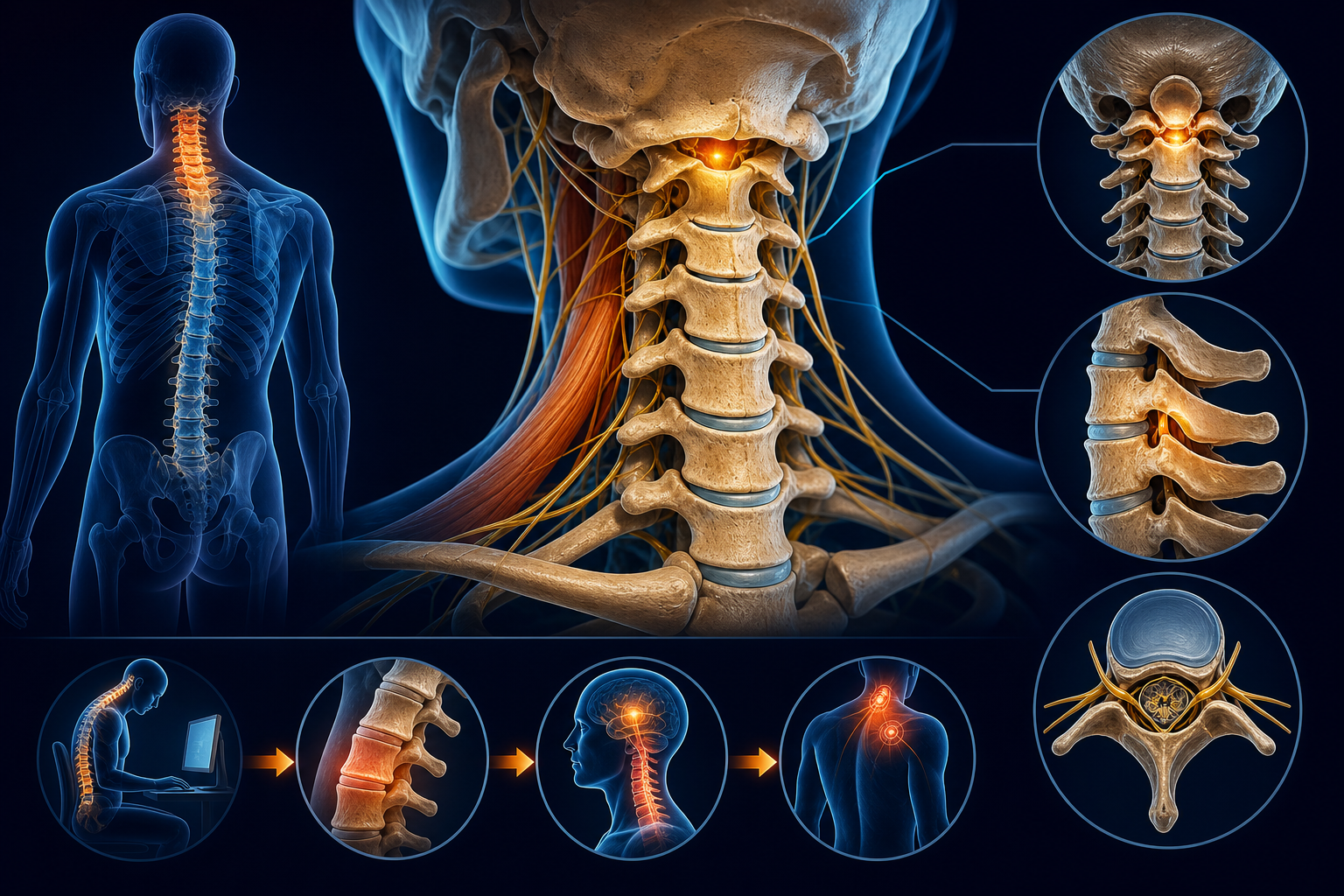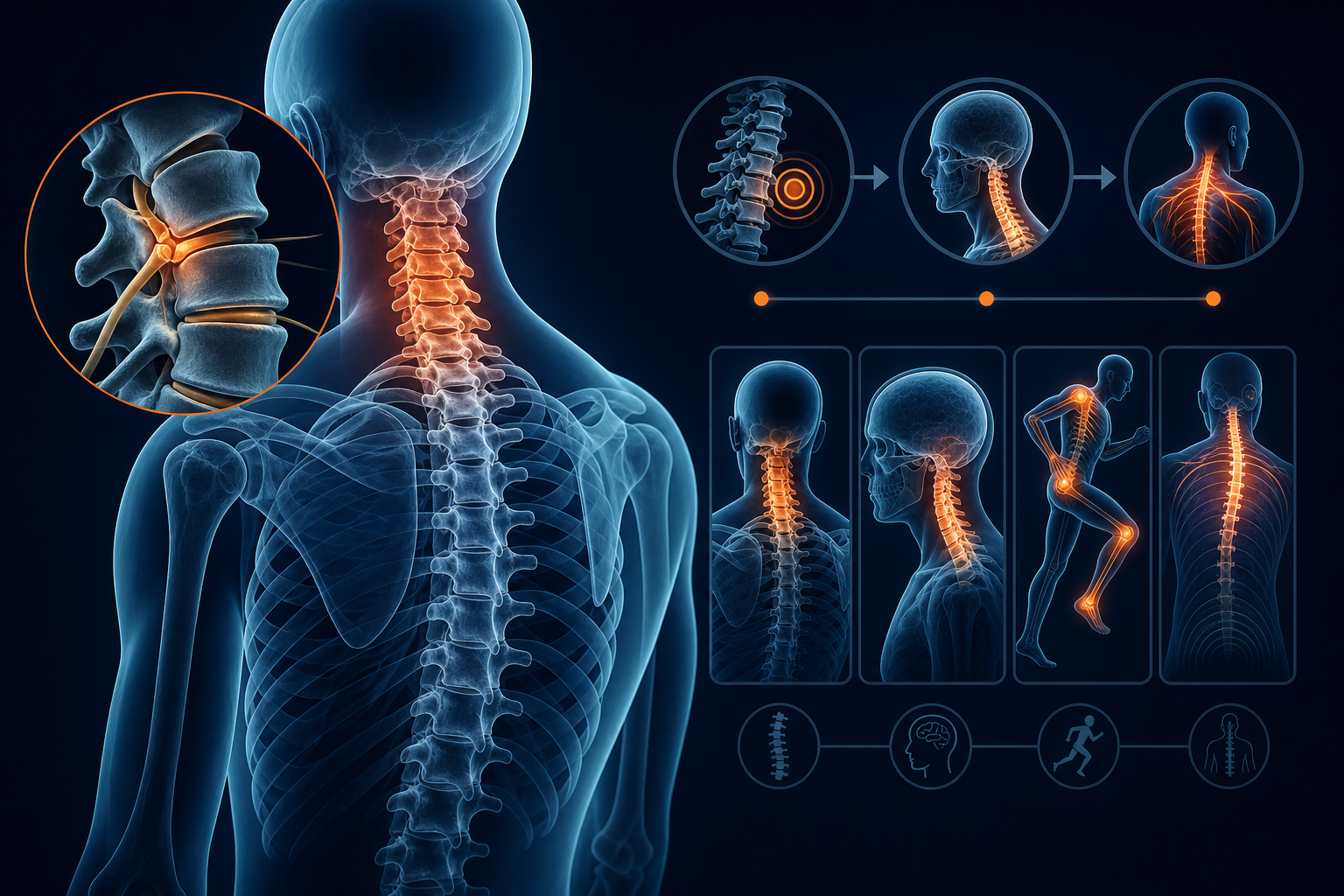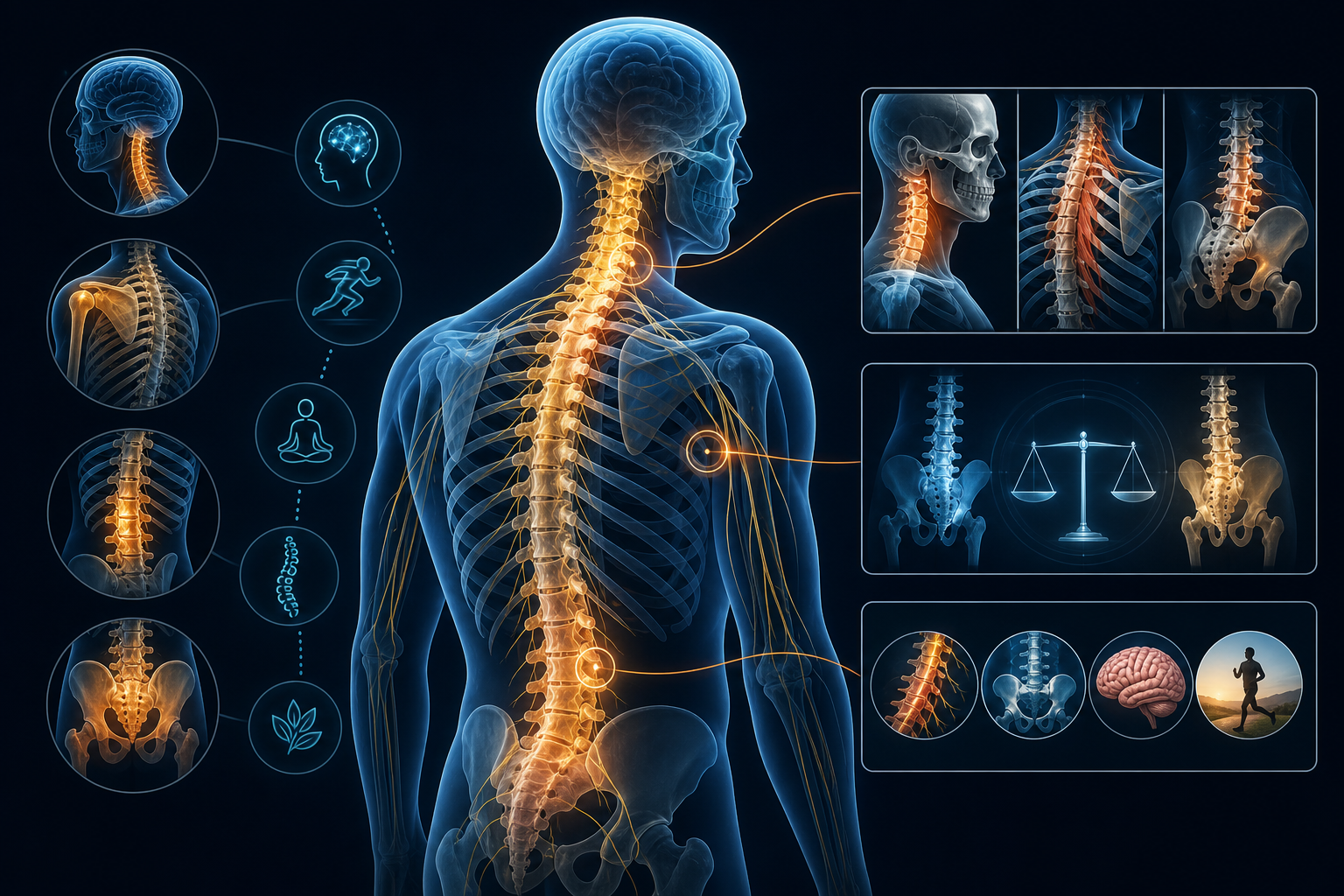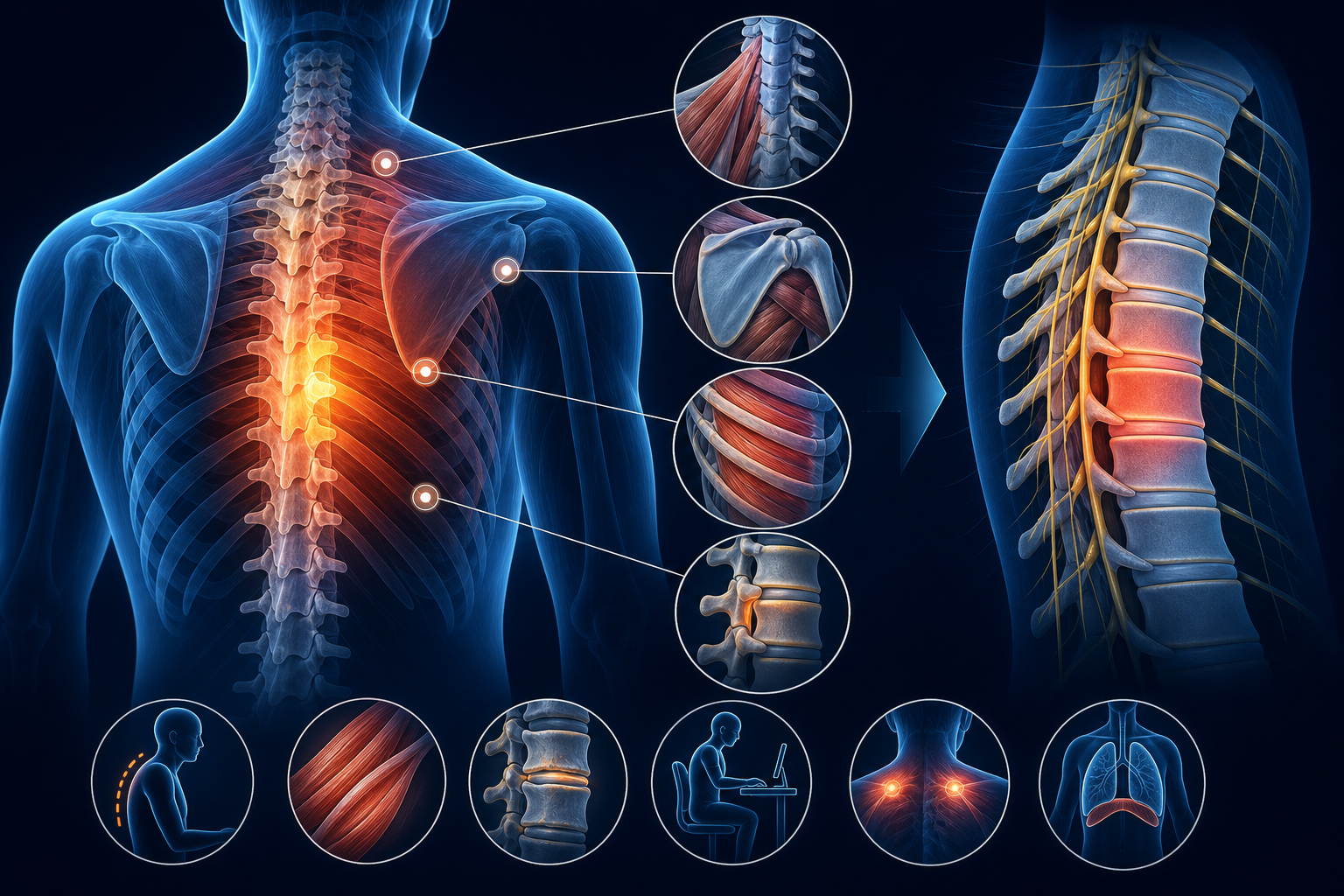
Understanding Upper Back Pain: Symptoms, Causes, and Treatment starts with knowing where the pain is coming from and when it needs professional attention. Upper back pain often involves the thoracic spine, shoulder blade area, ribs, neck muscles, and soft tissues that help you breathe, sit upright, lift, turn, and reach. In many cases, symptoms improve with conservative care, movement changes, and time, but some patterns deserve prompt evaluation.
If you are searching for upper back pain treatment near me, it helps to understand what a provider may look for during an exam, what symptoms can point to different causes, and which treatment options may help without surgery. This article is educational and should not replace a diagnosis from a qualified healthcare professional.
What Is Upper Back Pain?
Upper back pain usually refers to discomfort from the base of the neck down through the middle back, especially around the shoulder blades. Clinicians often call this the thoracic region. It includes the thoracic vertebrae, ribs, spinal joints, muscles, ligaments, nerves, and the shoulder blade stabilizers.
The thoracic spine is built for support and rotation more than large bending movements. Because it connects to the rib cage, pain in this area may feel different from lower back pain. Some people describe a dull ache between the shoulder blades, while others feel sharp pain with twisting, reaching, deep breathing, or turning the head.
Upper back pain is not always a spine problem. It can be influenced by the neck, shoulders, ribs, posture, breathing mechanics, work setup, stress-related muscle tension, or an injury. A careful exam can help separate upper back pain vs shoulder pain and identify whether symptoms appear to be musculoskeletal or may need additional medical evaluation.
Common Symptoms of Upper Back Pain
Upper back symptoms vary depending on the tissues involved and how the pain started. Common symptoms may include:
- Aching, tightness, or stiffness between the shoulder blades
- Sharp pain with twisting, reaching, coughing, or deep breathing
- Muscle spasms in the upper back or neck
- Reduced ability to turn the neck or upper body
- Pain that worsens after sitting, driving, or computer work
- Tenderness along the ribs, shoulder blades, or upper spine
- Headache or neck tension that occurs with upper back tightness
- Pain that travels toward the shoulder, chest wall, or arm in some cases
Some symptoms can overlap with neck or shoulder conditions. For example, someone who says they cannot move their neck and has upper back pain may have muscle guarding, cervical joint irritation, a strain, or another condition that should be evaluated if it is severe, sudden, or not improving.
What Causes Upper Back Pain?
Patients often ask, what causes upper back pain? The answer depends on timing, location, activity, injury history, and associated symptoms. The most common causes are musculoskeletal, meaning they involve muscles, joints, ligaments, ribs, or movement patterns. Less commonly, upper back pain may be related to a medical condition that requires urgent care.
Muscle strain or overuse
Muscle strain is one of the most common explanations for upper back pain. It may happen after lifting, carrying, rowing, yard work, intense exercise, sudden twisting, or spending long hours in one position. The muscles around the shoulder blades and thoracic spine can become irritated when they are overloaded or held under tension for too long.
Poor posture and prolonged sitting
Posture does not have to be perfect to be healthy, but staying in one position for hours can contribute to stiffness and muscle fatigue. Forward head posture, rounded shoulders, low monitor height, laptop use, and long driving periods may all place extra demand on the upper back and neck. If posture seems related to your symptoms, you may find Medximity’s guide to posture and back pain helpful.
Thoracic joint or rib irritation
The joints of the thoracic spine and ribs move each time you rotate, bend, or breathe. Irritation in these joints may cause localized tenderness, sharp pain with certain motions, or discomfort near the shoulder blade. When someone notices pain when breathing in the upper back, a rib or thoracic joint issue may be one possible musculoskeletal explanation, but breathing-related pain should be taken seriously if it is new, severe, or paired with chest symptoms.
Neck-related pain
The neck and upper back work together. Tightness or irritation in the cervical spine can refer discomfort into the upper back, shoulders, or shoulder blade region. If you have upper back pain with neck stiffness, headaches, arm symptoms, or pain that changes with neck movement, a provider may assess both the cervical and thoracic regions. For more background, see Medximity’s article on neck pain causes and treatment options.
Shoulder mechanics
The shoulder blade, also called the scapula, sits on the rib cage and depends on coordinated movement from the shoulder, neck, and upper back. Rotator cuff irritation, shoulder impingement-type symptoms, or scapular muscle weakness may feel like upper back pain between shoulder blades or along one side of the upper back. A movement exam can help clarify whether the primary issue appears to be shoulder-driven, spine-driven, or both.
Stress and muscle tension
Stress does not mean pain is imaginary. Many people hold tension in the neck, jaw, shoulders, and upper back when they are under pressure, sleeping poorly, or sitting for long periods. This can contribute to muscle guarding and tenderness. Conservative care may include breathing strategies, mobility work, ergonomic changes, and strengthening to reduce the load on irritated tissues.
Injury or trauma
A fall, sports collision, car crash, or direct blow can cause upper back pain from sprains, strains, rib injuries, or other tissue irritation. After trauma, especially if pain is severe, worsening, or associated with breathing difficulty, neurological symptoms, or chest pain, a medical evaluation is important.
Upper Back Pain Between the Shoulder Blades
Upper back pain between shoulder blades is a common complaint. It may feel like a knot, burning ache, pressure, or sharp pinch. This area includes the rhomboids, trapezius, levator scapulae, thoracic joints, ribs, and nerve pathways from the neck.
Common triggers include computer work, lifting with the arms extended, carrying a heavy bag, poor sleep position, weak shoulder blade stabilizers, or thoracic stiffness. Pain in this area may also be influenced by neck movement. If turning your head increases pain between the shoulder blades, the neck may be part of the pattern.
Because pain between the shoulder blades can occasionally overlap with non-musculoskeletal issues, it is wise to seek prompt medical care if the pain is severe, comes with chest pressure, shortness of breath, sweating, dizziness, fever, unexplained weight loss, or pain after significant trauma.
Pain When Breathing in the Upper Back
Pain when breathing in the upper back can be unsettling. Sometimes it is related to a strained intercostal muscle, rib joint irritation, thoracic stiffness, or muscle guarding. These types of pain often change with position, pressure on the area, twisting, or certain movements.
However, breathing-related pain should not be ignored. Seek urgent medical attention if upper back pain with breathing occurs with chest pain, shortness of breath, fainting, coughing blood, fever, recent surgery, recent long travel, or a sudden unexplained onset. A conservative care provider can help with musculoskeletal causes, but urgent symptoms need medical evaluation first.
Is Upper Back Pain Serious?
Many episodes of upper back pain are not serious and may improve with conservative treatment, activity modification, and gradual movement. Still, the question is upper back pain serious depends on the full symptom picture.
Consider seeking prompt medical care if upper back pain is accompanied by:
- Chest pain, pressure, or shortness of breath
- Sudden severe pain that is unlike anything you have felt before
- Weakness, numbness, or loss of coordination
- Loss of bowel or bladder control
- Fever, chills, or signs of infection
- Unexplained weight loss or history of cancer
- Pain after a significant fall, crash, or trauma
- Pain that wakes you at night and does not change with position
If symptoms are mild to moderate, clearly related to movement or posture, and gradually improving, a conservative provider may be an appropriate first step. If you are unsure, contact a qualified healthcare professional for guidance.
How Long Does Upper Back Pain Last?
How long upper back pain lasts can vary. Mild muscle irritation may improve over several days. More persistent strains, joint irritation, or posture-related pain may take several weeks to settle, especially if the aggravating activity continues. Pain related to a crash, repetitive job demands, or multiple contributing areas such as the neck and shoulder may take longer and may benefit from a structured treatment plan.
Duration also depends on sleep quality, stress, activity level, general health, ergonomics, and whether you are gradually restoring movement. If pain is not improving, keeps returning, or limits work, sleep, breathing, or normal activities, it is reasonable to schedule an evaluation.
Upper Back Pain vs Shoulder Pain
Upper back pain vs shoulder pain can be difficult to tell apart because the regions share muscles and movement patterns. A shoulder condition may cause pain around the shoulder blade, while a neck or thoracic issue may refer pain toward the shoulder.
Clues that symptoms may be more shoulder-related include pain with overhead reaching, lifting the arm, putting on a jacket, or lying on the affected shoulder. Clues that symptoms may be more upper-back-related include pain with spinal rotation, deep breathing, prolonged sitting, or pressure along the thoracic joints and ribs. Neck-related pain may worsen when looking up, turning the head, or sitting with the head forward.
A provider may assess posture, neck range of motion, shoulder strength, rib mobility, thoracic rotation, and nerve-related signs. If shoulder symptoms are part of your concern, Medximity’s resource on shoulder pain vs neck pain may help you prepare for a more informed visit.
Conservative Treatment for Upper Back Pain
Conservative treatment for upper back pain focuses on reducing irritation, improving movement, restoring strength, and helping you return to normal activity without surgery when appropriate. Treatment should be based on an exam rather than a one-size-fits-all plan.
Chiropractic care
Chiropractic care may help some patients with upper back pain related to thoracic joint stiffness, rib mechanics, neck involvement, or movement limitations. A chiropractor may use spinal manipulation or mobilization, soft tissue techniques, mobility exercises, posture coaching, and home-care recommendations. Care should be adapted to your comfort level and medical history. You can learn more through Medximity’s overview of chiropractic care.
Physical therapy
Physical therapy may help patients improve mobility, strength, endurance, breathing mechanics, and shoulder blade control. A physical therapist may prescribe targeted exercises for the thoracic spine, neck, shoulders, and core, along with manual therapy and education about activity modification. For many people, strengthening the muscles that support the shoulder blades and upper back is an important part of reducing recurring symptoms. See Medximity’s guide to physical therapy for more information.
Rehabilitation exercises
Exercises for upper back pain are usually chosen based on the exam. Common examples may include thoracic extension mobility, open-book rotations, scapular retractions, gentle neck mobility, doorway stretches, rows, and breathing drills. These exercises are not appropriate for every person, especially after trauma or with red-flag symptoms, so a provider can help determine what is safe for your situation.
Ergonomic and activity changes
Small changes may reduce repeated irritation. These may include raising a monitor, using a separate keyboard with a laptop, changing positions more often, adjusting car-seat posture, taking short movement breaks, or splitting heavy loads between both sides of the body. Ergonomics should support movement, not lock you into a rigid posture all day.
Natural treatment for upper back pain
Many patients ask about natural treatment for upper back pain. Conservative options may include gentle movement, heat or cold if tolerated, stretching, strengthening, breathing exercises, sleep-position adjustments, hydration, stress management, massage therapy, chiropractic care, or physical therapy. These approaches may help some people manage musculoskeletal upper back pain, but persistent or worsening symptoms should be evaluated by a qualified provider.
Upper Back Pain Without Surgery
Most musculoskeletal upper back pain is initially managed without surgery. Upper back pain without surgery may involve a combination of hands-on care, exercise, education, and gradual return to activity. The goal is not only to reduce pain but also to improve how the neck, thoracic spine, ribs, and shoulders work together.
Surgery is not usually part of conservative upper back pain management, and many common causes of upper back discomfort do not require invasive care. If a provider suspects a condition outside the conservative-care lane, they may refer you for appropriate medical evaluation.
When to See a Provider for Upper Back Pain
You may want to see a provider if upper back pain lasts more than a few days without improvement, keeps returning, affects breathing or sleep, limits work or exercise, follows an injury, or is associated with neck stiffness, shoulder symptoms, numbness, tingling, or weakness. You should seek urgent medical care for red-flag symptoms such as chest pain, shortness of breath, fever, severe trauma, or sudden severe pain.
If you are comparing options and searching for the best provider for upper back pain, consider a clinician who evaluates the neck, thoracic spine, ribs, shoulders, posture, strength, and daily activity demands rather than focusing on only one painful spot. Medximity can help you find a chiropractor for upper back pain or a physical therapist for upper back pain in your area.
What to Expect at an Upper Back Pain Appointment
A first visit typically begins with a conversation about your symptoms, when they started, what makes them better or worse, and whether you have had an injury or previous spine, shoulder, or rib problems. The provider may ask about work setup, exercise, sleep position, headaches, breathing pain, and arm symptoms.
The exam may include checking posture, spinal movement, shoulder range of motion, rib mobility, muscle tenderness, strength, reflexes, sensation, and nerve-related signs. If symptoms suggest a non-musculoskeletal issue or a need for imaging or medical testing, the provider may recommend referral to an appropriate medical professional.
Your treatment plan may include manual therapy, mobility drills, strengthening exercises, ergonomic coaching, activity modifications, and a home program. A good plan should explain what the provider thinks is contributing to your pain, what signs to monitor, and how progress will be measured.
How to Prepare for Your Visit
Before your appointment, write down when the pain started, where you feel it, whether it is sharp or dull, and what movements trigger it. Note whether you have pain when breathing in the upper back, pain between the shoulder blades, neck stiffness, shoulder pain, arm symptoms, or symptoms after a fall or collision. Bring a list of medications, relevant medical history, and any prior imaging reports if available.
If your symptoms change suddenly before the appointment or you develop red-flag symptoms, seek medical care promptly rather than waiting for a routine visit.
Finding Upper Back Pain Treatment Near You
Upper back pain can be frustrating, especially when it affects breathing, sleep, desk work, driving, or exercise. The right next step depends on your symptoms and health history. For many musculoskeletal causes, conservative care may help improve mobility, reduce irritation, and build strength so the upper back is better supported.
Use Medximity to search for conservative providers, compare profiles, and find care that fits your needs. You can start with the Medximity back pain resource or search directly for upper back pain treatment near you.
Frequently Asked Questions
What causes upper back pain?
Upper back pain may be caused by muscle strain, prolonged sitting, thoracic joint stiffness, rib irritation, neck-related pain, shoulder mechanics, stress-related tension, or injury. Less commonly, it can be related to a medical condition that needs prompt care.
Is upper back pain between the shoulder blades common?
Yes. Pain between the shoulder blades is common and often involves the muscles, joints, ribs, neck, or shoulder blade stabilizers. If it is severe, sudden, linked with chest symptoms, or follows trauma, seek medical evaluation.
Why does my upper back hurt when I breathe?
Pain with breathing may come from musculoskeletal causes such as rib joint irritation, intercostal muscle strain, or thoracic stiffness. However, because breathing-related pain can sometimes signal a more serious issue, urgent symptoms such as shortness of breath, chest pain, fever, fainting, or sudden severe pain should be evaluated promptly.
How long does upper back pain last?
Mild upper back pain may improve within days, while more persistent irritation may last several weeks. Pain that is worsening, recurring, or interfering with work, sleep, or normal movement should be assessed by a qualified provider.
What is the best provider for upper back pain?
The best provider depends on the likely cause. Chiropractors and physical therapists commonly treat musculoskeletal upper back pain with conservative care. A medical provider may be needed first if symptoms suggest trauma, infection, neurological changes, chest symptoms, or another urgent concern.
Can upper back pain be treated without surgery?
In many cases, musculoskeletal upper back pain is managed without surgery through conservative care such as physical therapy, chiropractic care, mobility work, strengthening, ergonomic changes, and activity modification. A provider can help determine what is appropriate for your situation.