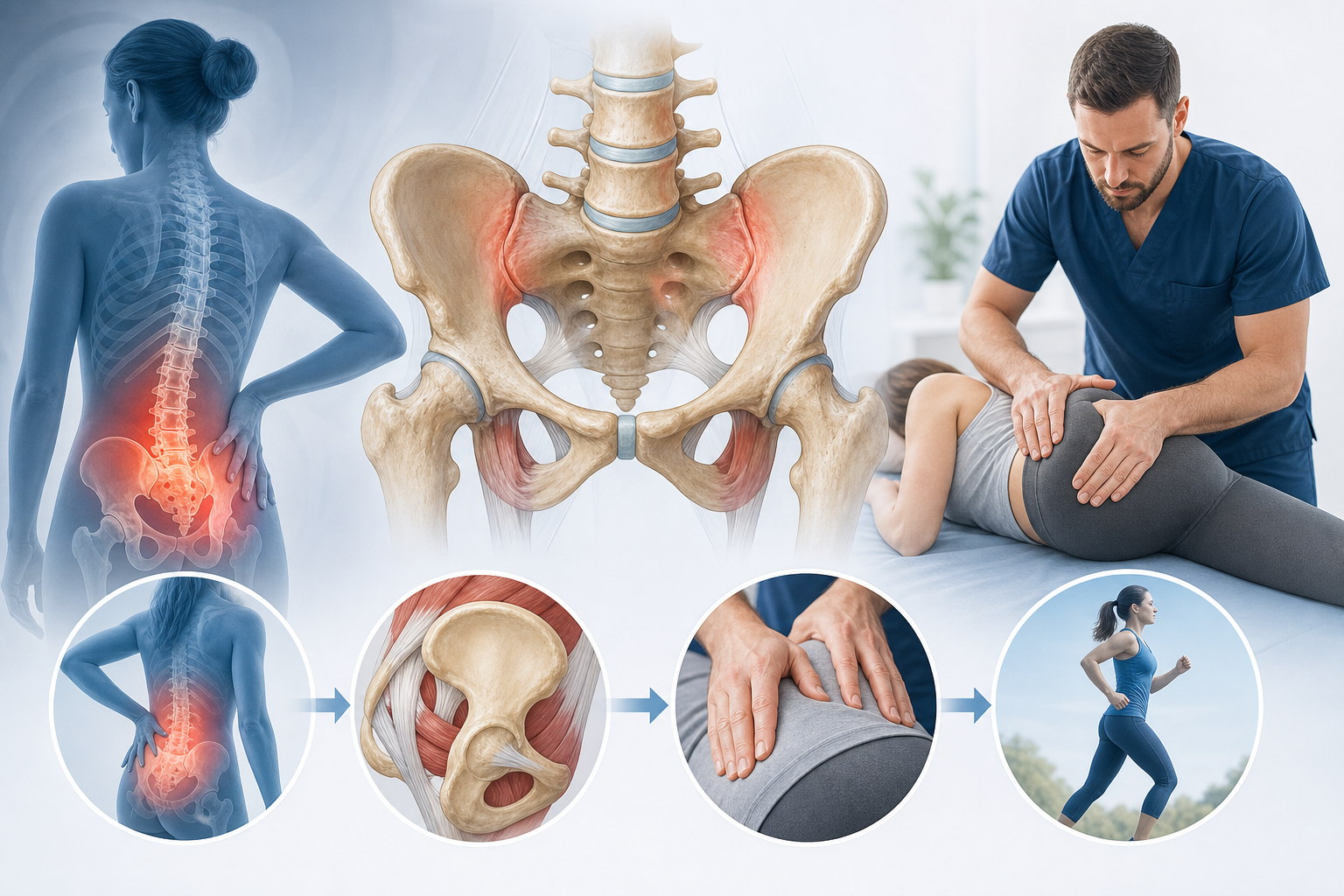
Understanding Segmental and somatic dysfunction of pelvic region: Symptoms, Causes, and Treatment starts with a simple idea: parts of your pelvis and low back stop moving normally, and your muscles and connective tissue tighten to protect the area. That mix of joint restriction and soft-tissue guarding can drive pelvic pain, low-back pain, hip pain, tailbone pain, and even pain that refers into the groin or buttock. Most cases improve with conservative care that restores motion at the sacroiliac (SI) joint, lumbar spine, and pelvic soft tissues, plus a specific home program.
What “segmental and somatic dysfunction” means in the pelvic region
Somatic dysfunction is impaired or altered function of the body framework (joints, muscles, fascia, related nerves and blood flow) that you can often reproduce with movement or pressure and that a trained provider can detect with hands-on testing. Osteopathic medicine commonly describes it using the “TART” findings: Tissue texture changes, Asymmetry, Restricted motion, and Tenderness. The American Osteopathic Association describes somatic dysfunction as a functional problem identified by palpation and motion testing, often addressed with manual care such as OMT. (American Osteopathic Association)
Segmental dysfunction means the restriction is organized by “segments,” typically spinal levels (like L4–L5 or L5–S1) and their linked muscle/fascial patterns. In the pelvis, that often shows up as coupled restrictions across:
- L5–S1 (lumbosacral junction)
- Sacroiliac joints (right, left, or both)
- Pubic symphysis (front of pelvis)
- Coccyx (tailbone) and sacrococcygeal joint
- Pelvic floor muscles (levator ani group) and obturator internus
When these structures lose normal glide and rotation, your body compensates with altered gait, reduced hip rotation, and increased tone in muscles like the gluteus medius, piriformis, iliopsoas, and adductors. That compensation is often the reason symptoms “move around” between low back, hip, and pelvic regions.
Clinical takeaway: Pelvic somatic dysfunction is a movement problem first. Pain is often the output, not the root cause.
Which symptoms fit pelvic somatic dysfunction (and which usually don’t)?
Pelvic somatic dysfunction typically causes pain patterns that change with posture, walking, bending, rolling in bed, prolonged sitting, or single-leg loading. Symptoms often cluster around the SI joint and pelvic floor rather than staying in one pinpoint spot.
Common symptom patterns
- SI joint region pain: one-sided pain just below the belt line, often worse with stairs or standing on one leg
- Buttock pain that can refer toward the lateral hip (greater trochanter area)
- Tailbone (coccyx) pain with sitting, especially on hard surfaces
- Groin or inner-thigh discomfort linked to adductor guarding or pubic symphysis stress
- Reduced hip rotation (harder to cross legs, squat, or pivot)
- Pelvic floor overactivity signs: difficulty relaxing the pelvic floor during breathing, gripping through lower abdominals, pain with prolonged sitting
Findings providers often see on exam
- Asymmetry in pelvic landmarks (ASIS/PSIS height differences) during standing and gait
- Restricted SI motion tests and pain provocation clusters
- Trigger points in obturator internus, piriformis, quadratus lumborum, and adductors
- Limited lumbar segmental mobility at L4–L5 or L5–S1
Pelvic pain has many causes. NIAMS notes pelvic pain can come from musculoskeletal sources as well as other systems, so the exam needs to rule in/out non-musculoskeletal contributors. (NIAMS)
Symptoms that usually don’t fit a simple somatic dysfunction include constant, unrelenting pain that does not change with position, progressive neurologic weakness, or systemic symptoms. Use the red flags section below to decide when to escalate care.
Why does pelvic somatic dysfunction develop and persist?
Pelvic somatic dysfunction develops when normal joint motion and soft-tissue glide are disrupted, then “locked in” by protective muscle tone. The pelvis is a ring; restriction at one point often forces compensation at another (SI joint, pubic symphysis, hip, lumbar spine).
- Repetitive asymmetrical loading: carrying a child on one hip, single-sided sport patterns, uneven work postures
- Prolonged sitting: sustained hip flexion can shorten the iliopsoas and increase anterior pelvic tilt, stressing L5–S1 and SI mechanics
- Falls or minor trauma: a slip that “seems fine” can still irritate SI ligaments and provoke guarding
- Pregnancy/postpartum mechanics: changes in load, abdominal wall control, and pelvic floor demand can increase strain (even when delivery was uncomplicated)
- Prior ankle or knee injury: altered gait reduces hip extension and shifts load into the pelvis
The mechanics that keep it going
Three systems commonly reinforce each other:
- Joint restriction: SI joint or lumbosacral segments lose normal micro-motion
- Myofascial tightness: fascia around the thoracolumbar fascia, pelvic floor, and hip rotators becomes less extensible
- Motor control changes: gluteal inhibition and overuse of lumbar extensors/adductors during walking and lifting
Conventional imaging (X-ray/MRI) can be normal because somatic dysfunction is primarily functional. That does not mean “nothing is wrong.” It means your exam needs motion testing, palpation, and load-transfer assessment.
Manual diagnosis and treatment are core components of osteopathic care for somatic dysfunction. (American Osteopathic Association)
How is pelvic somatic dysfunction diagnosed?
Diagnosis comes from a structured musculoskeletal exam that identifies restricted motion and pain provocation patterns, then matches them to the pelvic ring and lumbar segments. A good exam also screens for non-musculoskeletal causes when the symptom pattern does not behave like a movement problem.
What a thorough evaluation includes
- History of load triggers: sitting tolerance, stairs, rolling in bed, single-leg stance, lifting
- Gait and single-leg control: Trendelenburg pattern (gluteus medius weakness), pelvic drop, stride asymmetry
- Hip ROM: internal rotation, extension, and adductor length (often limited on the symptomatic side)
- SI provocation cluster: tests that load the SI joint; clusters have better diagnostic value than any single test
- Lumbar segmental mobility: end-feel and symptom reproduction at L4–L5 and L5–S1
- Pelvic floor screen: breathing mechanics, ability to relax pelvic floor with diaphragmatic breathing; referral to pelvic health PT when indicated
When imaging is used
Imaging can help rule out fracture, inflammatory disease, or other structural problems, but it often does not “show” somatic dysfunction. Providers typically reserve X-ray or MRI for red flags, significant trauma, progressive neurologic findings, or lack of improvement after a reasonable trial of conservative care.
NIAMS emphasizes that pelvic pain evaluation may include physical exam and tests depending on suspected cause; musculoskeletal sources require a movement-based assessment. (NIAMS)
If you want a starting point before your visit, you can check your symptoms to organize what worsens or relieves your pain and what red flags apply.
What treatments actually work for pelvic somatic dysfunction?
Effective treatment restores motion in the pelvic ring and lumbar segments, reduces myofascial guarding, and retrains load transfer through hips and trunk. The best results come from combining hands-on care with a precise home program.
Manual care options used in conservative treatment
- Osteopathic Manipulative Treatment (OMT): techniques may include muscle energy, myofascial release, balanced ligamentous tension, and gentle mobilization to improve SI and lumbosacral mechanics. Evidence reviews and clinical literature describe OMT as a noninvasive approach used for somatic dysfunction and pain conditions. (J Am Osteopath Assoc / osteopathic literature indexed in PubMed Central)
- Chiropractic adjustments: targeted spinal manipulation/mobilization can improve segmental motion at L4–S1 and reduce mechanical pain when appropriately selected.
- Myofascial release: focuses on fascia and trigger points in the piriformis, obturator internus, adductors, and quadratus lumborum.
- Pelvic health physical therapy: addresses pelvic floor overactivity/underactivity, breathing mechanics, hip strength, and graded exposure to sitting/walking loads.
- Craniosacral therapy: sometimes used as an adjunct for down-regulating protective tone; treat it as supportive care, not a stand-alone fix.
Rehab priorities that prevent recurrence
- Hip extension and glute strength (gluteus maximus/medius) to offload lumbar extensors
- Hip internal rotation mobility to reduce torsion through the SI joint during gait
- Core timing: abdominal wall + diaphragm coordination, not aggressive bracing all day
- Load management: step count, sitting breaks, and lifting strategy
Chronic pelvic pain is multifactorial; musculoskeletal contributors respond best to coordinated manual therapy plus exercise-based rehabilitation. (NIAMS)
To find the right conservative provider mix, start with browse providers and look for clinicians who list pelvic/SI expertise and pelvic health rehab.
Treatment options and expected timelines (comparison table)
Most people need both “reset” (manual work) and “retain” (exercise + ergonomics). The table below shows typical roles and timelines when pelvic somatic dysfunction is the primary driver.
Treatment Best for What you should notice Typical timeline OMT (muscle energy, myofascial, mobilization) SI/lumbosacral restriction, pelvic asymmetry, protective tone Improved ROM, easier walking/rolling, reduced localized tenderness Often 2–6 visits over 3–6 weeks, then spaced out as you stabilize Physical therapy (pelvic/hip/core rehab) Motor control, strength deficits, recurrence prevention Better single-leg control, longer sitting tolerance, less flare after activity Typically 6–12 sessions over 6–10 weeks plus home program Chiropractic care (manipulation/mobilization) Segmental stiffness (L4–S1), mechanical low-back/SI pain Faster “unlocking” of motion, improved bend/rotation tolerance Commonly 4–8 visits over 2–6 weeks depending on irritability Myofascial release (manual soft-tissue work) Trigger points in piriformis, obturator internus, adductors Less buttock/groin referral, improved hip rotation Often 3–8 sessions over 3–8 weeks, paired with stretching Home program (mobility + strength + ergonomics) Everyone with pelvic somatic dysfunction Fewer flare-ups, steadier week-to-week improvement Daily for 2–6 weeks, then 3–4x/week for maintenanceA step-by-step home program to start today (10–12 minutes)
This starter protocol targets the most common drivers: limited hip mobility, poor pelvic load transfer, and pelvic floor over-gripping. Stop and get evaluated if any step causes sharp, escalating pain, numbness, or leg weakness.
-
90/90 diaphragmatic breathing (2 minutes)
- Lie on your back with hips and knees at 90° (feet on a chair).
- One hand on lower ribs, one hand on lower abdomen.
- Inhale through your nose for 4 seconds, expand ribs sideways and into your back.
- Exhale for 6 seconds and let your pelvic floor “drop,” not tighten.
- Do 6–8 breaths.
-
Hip flexor stretch (iliopsoas bias) (2 minutes)
- Half-kneel with the back knee down (pad under knee).
- Tuck pelvis slightly (posterior pelvic tilt) before you shift forward.
- Hold 30 seconds each side, repeat once.
- You should feel the stretch in the front of the hip, not the low back.
-
Piriformis / posterior hip stretch (2 minutes)
- Lie on your back, cross ankle over opposite knee (figure-4).
- Pull the uncrossed thigh toward you until you feel the stretch deep in the buttock.
- Hold 30 seconds each side, repeat once.
-
Glute bridge with belt squeeze (3 minutes)
- Place a loop band around knees (or squeeze a pillow between knees if no band).
- Feet hip-width, ribs down, exhale as you lift hips.
- Hold 2 seconds at top, lower slowly.
- Do 2 sets of 8–10 reps. You should feel glutes, not hamstrings cramping.
-
Side-lying hip abduction (gluteus medius) (3 minutes)
- Lie on your side, bottom knee bent, top leg straight.
- Rotate top toes slightly down (prevents hip flexor takeover).
- Lift top leg 12–18 inches, pause 1 second, lower.
- Do 2 sets of 8 reps each side.
Progression rule: Increase reps before adding load. If symptoms flare and last longer than 24 hours, cut volume by 30–50% and re-check technique.
Your recovery timeline: what to expect
Most pelvic somatic dysfunction improves on a predictable curve when you restore motion and then build capacity. Expect changes in function before pain fully settles: longer walking tolerance, easier transitions, better hip ROM.
-
Phase 1: Calm the system and restore motion (2–4 weeks)
- Typical frequency: 1–2 visits/week (manual care and/or PT) plus daily home program.
- Goal: reduce guarding around the SI joint, normalize hip ROM, improve sleep positioning and sitting mechanics.
- Milestone: fewer “catching” episodes with rolling in bed or standing from a chair.
-
Phase 2: Rebuild load transfer (4–12 weeks)
- Typical frequency: weekly to every other week visits, progressive strengthening 3–4x/week.
- Goal: glute strength (gluteus medius/maximus), hip extension tolerance, single-leg control.
- Milestone: stairs and longer sits improve without next-day flare.
-
Phase 3: Stabilize and prevent recurrence (3–6 months)
- Typical frequency: as-needed check-ins, maintenance mobility/strength 2–3x/week.
- Goal: keep SI/lumbosacral motion, maintain pelvic floor relaxation with breathing under load, return to sport/gym progressively.
- Milestone: you tolerate your normal work and exercise week with minimal symptom variability.
Musculoskeletal pelvic pain often responds to conservative care over weeks to months, especially when exercise and movement retraining are consistent. (NIAMS)
Two practical time anchors: you should usually notice at least one measurable functional gain (ROM, walking tolerance, sitting tolerance) within 10–21 days of consistent care, and more stable improvement by 6–12 weeks when strength and motor control catch up.
When is pelvic pain a red flag?
Get urgent medical evaluation the same day (ER/urgent care) if pelvic or low-back pain comes with neurologic or systemic warning signs. Somatic dysfunction does not cause progressive neurologic loss or severe systemic illness.
- New bowel or bladder control problems, or numbness in the saddle region
- Progressive leg weakness or foot drop
- Fever, unexplained weight loss, or night sweats with severe pain
- Major trauma (fall from height, car crash) with inability to bear weight
- Constant, unrelenting pain that does not change with position or activity
If you have red flags, do not try to “stretch it out.” Get evaluated urgently to rule out serious causes.
If symptoms are stable but persistent, conservative pelvic/SI-focused care is appropriate to start.
FAQ: pelvic somatic dysfunction
-
What causes pelvic somatic dysfunction?
It commonly follows repetitive asymmetrical loading, prolonged sitting, minor trauma, or pregnancy/postpartum load changes. These factors can restrict SI and lumbosacral motion and increase guarding in muscles like the piriformis, obturator internus, iliopsoas, and pelvic floor. -
How is pelvic somatic dysfunction diagnosed?
A provider uses hands-on palpation and motion testing to identify TART findings and restricted segments at L4–S1, SI joints, pubic symphysis, and coccyx, plus hip ROM and gait assessment. Imaging is often normal because the problem is functional rather than structural. The AOA describes somatic dysfunction as a palpatory diagnosis often treated with OMT. (AOA) -
What conservative treatments help restore pelvic mobility?
The most effective plans combine manual therapy (OMT, chiropractic manipulation/mobilization, myofascial release) with PT that retrains hip strength, pelvic floor coordination, and load transfer. NIAMS lists physical therapy as a common approach for musculoskeletal contributors to pelvic pain. (NIAMS) -
How long does it take to recover?
Many people notice measurable functional improvement within 2–4 weeks of consistent conservative care. More complete stabilization typically takes 3–6 months, especially when strength, gait mechanics, and sitting tolerance need rebuilding. -
Should you rest or keep moving?
Relative rest helps during flares, but full inactivity often prolongs stiffness. Use graded activity: short walks, frequent position changes, and a daily 10–12 minute mobility/strength routine. Your provider should adjust volume based on next-day response.
What to Do Next
Start with a provider who evaluates SI mechanics, hip ROM, and pelvic floor contribution, then gives you a written home plan with measurable goals (ROM targets, sit/walk tolerance, strength benchmarks).
- Best provider types: pelvic health physical therapy, chiropractic providers with SI/pelvic expertise, and osteopathic-trained manual therapy providers where available.
- What to expect at the first visit: gait and hip ROM testing, SI provocation cluster, lumbar segmental mobility assessment (L4–S1), soft-tissue exam of gluteals/piriformis/adductors, and a starter home program you can perform correctly.
- Seek care urgently: bowel/bladder changes, saddle numbness, progressive weakness, fever, major trauma, or constant unrelenting pain.
- Seek care routinely (this week): pain that persists beyond 10–14 days, recurring SI “catching,” tailbone pain with sitting, or activity-limited hip/lumbar ROM.
find a physical therapy near you or find a chiropractic near you to get an exam focused on pelvic mechanics. For related guides, explore more health topics.