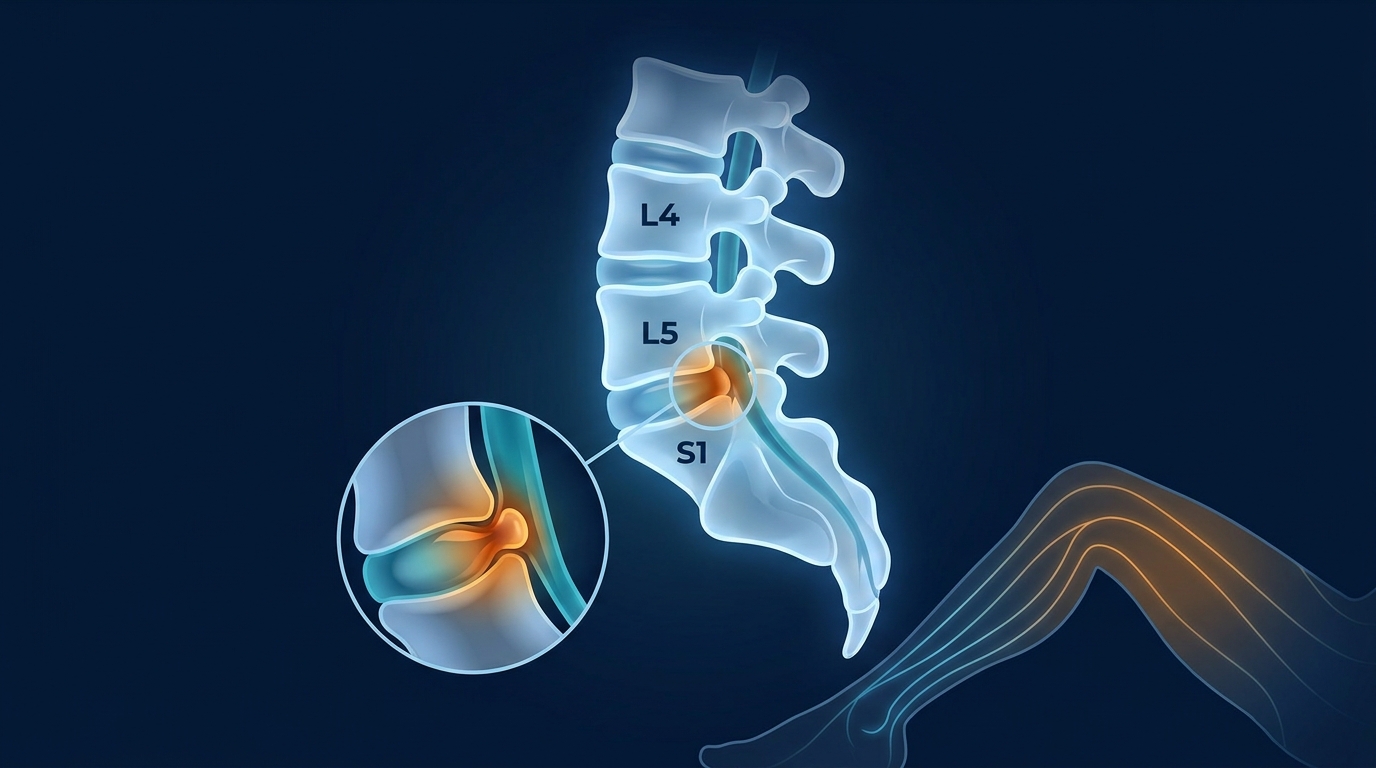
That sharp, electric sensation that starts in your lower back and shoots down through your buttock, thigh, and sometimes all the way to your foot has a clinical name: lumbar radiculopathy. It is one of the most common reasons people visit a chiropractor or physical therapist, and it is also one of the most misunderstood. Many patients assume they simply have a bad backache. Others worry they are dealing with something far more serious than a pinched nerve. The truth usually sits somewhere between those two extremes — and knowing where your symptoms fit on that spectrum can make all the difference in getting appropriate care.
This article walks through what lumbar radiculopathy is, how it differs from ordinary low back pain, what causes nerve compression in the lumbar spine, what conservative treatment may look like, and the warning signs that require prompt medical attention. If you are ready to connect with a qualified provider in your area, you can search for a chiropractor or physical therapist near you on Medximity.
What Is Lumbar Radiculopathy and How Does It Feel?
The term radiculopathy comes from the Latin radix (root) and the Greek pathos (suffering). It describes a condition in which one or more nerve roots exiting the lumbar — or lower — portion of the spine become compressed, inflamed, or chemically irritated. Because those nerve roots travel down the leg to supply sensation and motor control, any disruption to them is felt not just at the source but along the entire length of the nerve's path.
Patients often describe the experience in vivid terms: a burning or searing line of pain from the low back through the glute and down the leg, an electrical "zap" that arrives without warning, or a persistent deep ache accompanied by surface tingling. Some patients report that one area of the leg feels numb, as though a patch of skin has been mildly anesthetized. Others notice muscle weakness — difficulty raising the foot off the floor (a pattern called foot drop), or a leg that simply feels unreliable when walking.
The precise distribution of symptoms depends on which nerve root is affected. The lumbar spine contains five vertebral levels (L1–L5), and two additional nerve roots emerge from the sacral spine (S1–S2) just below. Each level supplies a different strip of the leg:
- L3–L4 compression may produce pain and numbness across the front of the thigh and into the inner shin, sometimes accompanied by weakness when straightening the knee.
- L4–L5 compression commonly sends symptoms down the outer thigh and calf and into the top of the foot; weakness lifting the foot upward (dorsiflexion) is characteristic.
- L5–S1 compression typically runs pain and tingling down the back of the thigh and calf, into the heel or outer edge of the foot; reduced ankle reflex and calf weakness may be present.
Symptoms are usually one-sided, though bilateral involvement is possible. They often worsen with sitting, prolonged standing, or certain postures that increase pressure on the affected disc or joint, and may improve temporarily with walking or changing position.
Lumbar Radiculopathy vs. Low Back Pain: Understanding the Difference
This distinction matters because the two conditions have different origins and often respond to different management strategies. Nonspecific low back pain — the kind most adults experience at some point — typically stays local. The discomfort is centered in the lumbar muscles, the sacroiliac joints, or the facet joints, and while it can be severe, it does not travel meaningfully into the limb.
Lumbar radiculopathy, by contrast, is a nerve-mediated condition. The pain, numbness, or tingling that radiates beyond the knee is the nervous system's signal that a nerve root is under stress. A clinician examining a patient will test deep tendon reflexes, sensation in specific dermatomes, and muscle strength in key movements — findings that help distinguish radiculopathy from a purely musculoskeletal backache.
It is also worth noting that the two conditions frequently coexist. A herniated disc can simultaneously cause local inflammatory back pain and compress the adjacent nerve root. Addressing both components is part of why comprehensive evaluation matters before beginning treatment.
For a broader look at how nerve-related back pain fits into the spectrum of lower back conditions, see our related article on low back pain causes and conservative care.
Common Causes of Lumbar Nerve Root Compression
Several structural changes can narrow the space a nerve root occupies as it exits the spinal canal. The most frequently encountered causes include:
Intervertebral Disc Herniation
Each lumbar disc is a shock-absorbing cushion with a tough outer ring (annulus fibrosus) and a gel-like center (nucleus pulposus). When the outer ring develops a tear or bulge — through aging, mechanical stress, or sudden trauma — the inner material can press directly against a nearby nerve root. Disc herniations at L4–L5 and L5–S1 are especially common, which is why symptoms involving the foot are so frequently reported.
Degenerative Disc Disease and Foraminal Stenosis
As discs lose height over time, the openings (foramina) through which nerve roots exit the spine can narrow. Bone spurs (osteophytes) that form in response to joint degeneration may also encroach on this space. Foraminal stenosis tends to develop gradually, so symptoms often build slowly rather than appearing overnight.
Spondylolisthesis
This is a condition in which one vertebra shifts forward relative to the one below it. The resulting misalignment can stretch or compress a nerve root at that level. Some degree of spondylolisthesis is relatively common and may be asymptomatic; it becomes clinically significant when it contributes to nerve irritation or instability.
Trauma and Injury
A car accident, a fall, or a sports injury can herniate a previously healthy disc, fracture a vertebra, or shift spinal alignment in ways that immediately compress a nerve root. Lumbar radiculopathy after a car accident is particularly important to document carefully, because the onset of leg symptoms is a clinically and — in personal-injury contexts — medically significant event. If you were injured in a motor vehicle collision and are now experiencing leg pain or numbness, connecting with a provider who understands injury documentation is important. You can find chiropractors experienced with auto-injury care on Medximity.
Piriformis Syndrome and Peripheral Nerve Irritation
Occasionally, what feels like radiculopathy originates not at the spinal nerve root but further along the nerve's path — most notably where the sciatic nerve passes through or near the piriformis muscle in the hip. This is sometimes called piriformis syndrome and is technically a peripheral nerve entrapment rather than true radiculopathy. The distinction matters for treatment planning.
Sciatica vs. Lumbar Radiculopathy: Are They the Same Thing?
The word "sciatica" is used so frequently — in waiting rooms, on health websites, by patients describing their pain — that it is worth addressing directly. Sciatica is not a diagnosis; it is a symptom descriptor. It refers to pain that travels along the path of the sciatic nerve, which is formed by the L4, L5, S1, S2, and S3 nerve roots and runs down the back of each leg.
Lumbar radiculopathy is the clinical diagnosis that most often explains sciatic-distribution symptoms. Put simply: when a clinician confirms that nerve root compression is causing your leg pain, you have lumbar radiculopathy. When you describe shooting leg pain before a formal evaluation, you might say you have sciatica. The two terms overlap considerably, but radiculopathy is the more precise term and carries more clinical specificity.
Not every radiating leg pain is sciatica or radiculopathy. Referred pain from the sacroiliac joint or the hip joint can mimic sciatic symptoms. This is another reason a thorough examination — not a self-diagnosis — is the appropriate starting point.
Lumbar Radiculopathy Treatment Without Surgery: What Conservative Care Involves
The encouraging news for most patients is that lumbar radiculopathy often responds well to conservative, non-surgical treatment. Research consistently suggests that a large proportion of patients with disc-related nerve root compression experience meaningful improvement over weeks to months without surgical intervention. Individual results vary, and no outcome can be guaranteed, but conservative management is typically the appropriate first course of action.
Chiropractic Care
Chiropractors who specialize in spinal conditions may use a combination of spinal manipulation, mobilization, flexion-distraction techniques, and soft-tissue therapies to address the mechanical factors contributing to nerve compression. Flexion-distraction, in particular, applies a gentle rhythmic decompression to the disc and foramen, which some patients find helpful for reducing nerve root pressure. A chiropractor will also assess posture, gait, and movement patterns that may be aggravating the condition. If you are searching for a chiropractor near you for sciatica nerve pain, Medximity's provider directory allows you to filter by specialty and location.
Physical Therapy
Physical therapists design individualized rehabilitation programs that typically address both the immediate symptoms and the underlying contributors to nerve compression. Common approaches include:
- Neural mobilization (nerve gliding) exercises — gentle movements intended to help the nerve move more freely through surrounding tissues, which may reduce irritation over time.
- Lumbar stabilization and core strengthening — building endurance in the deep muscles that support spinal alignment, reducing mechanical stress on discs and facet joints.
- McKenzie Method assessment and exercises — a directional preference approach that identifies positions and movements that centralize or reduce radiating pain; many patients with disc-related radiculopathy respond to extension-based movements.
- Traction and manual therapy — hands-on techniques to improve segmental mobility and reduce protective muscle guarding.
Physical therapy exercises for a pinched nerve in the lower back should always be guided by a qualified clinician. The wrong exercise performed at the wrong stage of healing can temporarily worsen symptoms, which is why a professional assessment before beginning a home program is worthwhile. Search for physical therapists on Medximity to find providers experienced in spine rehabilitation.
Activity Modification and Ergonomics
Certain postures and activities dramatically increase intradiscal pressure — prolonged sitting, forward bending under load, and sustained lumbar flexion are common offenders. A clinician can guide patients on how to modify daily activities, set up workstations, and move in ways that allow the affected nerve to recover rather than being repeatedly provoked.
Pain Management Within Conservative Care
While this guide focuses on conservative musculoskeletal care, it is worth noting that a primary care physician or physiatrist may recommend over-the-counter anti-inflammatory medications or other approaches as part of a broader conservative plan. Those decisions are best made with the prescribing provider, not based on general health content.
For more information on what a spine-focused rehabilitation program may look like, see our article on physical therapy for lower back pain.
How Long Does Lumbar Radiculopathy Take to Heal?
This is one of the most common questions patients ask, and it deserves an honest answer: recovery timelines vary considerably, and predicting any individual's course is not possible from general information alone.
That said, clinical experience and research suggest the following general patterns:
- Many patients with acute disc-related radiculopathy begin to notice meaningful improvement within four to six weeks of beginning conservative treatment.
- A substantial proportion of patients experience significant reduction in symptoms over three to four months, even with disc herniations visible on imaging.
- Some patients — particularly those with more severe nerve compression, longer symptom duration before treatment, or significant neurological deficits — may require six months or longer, and a minority do not achieve full resolution with conservative care alone.
Factors that influence recovery include the degree and duration of nerve compression, the patient's overall health and activity level, adherence to the treatment program, ergonomic habits, and whether the underlying cause (such as an ongoing mechanical stress) is being addressed.
The key point: most patients should not interpret slow early progress as failure. Nerve tissue recovers more slowly than muscle or soft tissue, and patience — combined with active participation in the treatment plan — is often part of the prescription.
Numbness and Tingling in the Leg: When Is It Serious?
Numbness and tingling in the leg are extremely common symptoms of lumbar radiculopathy and, while uncomfortable and sometimes alarming, they do not by themselves constitute a medical emergency. They reflect the nerve root's diminished ability to transmit normal sensory signals — the same mechanism that makes your hand "fall asleep" when you sleep on it, just more persistent and often more intense.
However, there are specific combinations of symptoms that require prompt medical evaluation. If you cannot feel your foot or have noticed significant weakness after a lower back injury, that warrants assessment relatively soon rather than a "wait and see" approach. More urgently, the following symptoms should be treated as potential emergencies:
Cauda Equina Syndrome: A Red Flag That Cannot Be Ignored
The cauda equina is the bundle of nerve roots at the base of the spinal canal that controls bladder, bowel, and sexual function, as well as sensation in the groin and inner thighs. When a massive disc herniation, fracture, or other event severely compresses this bundle, the result is cauda equina syndrome — a rare but serious condition that constitutes a surgical emergency.
Sudden bowel or bladder problems combined with back pain — such as an inability to urinate or defecate, or the opposite, loss of control of either function — along with saddle anesthesia (numbness in the area that would contact a saddle: the inner thighs, perineum, and genitals) are the defining warning signs. If these symptoms develop, especially rapidly, emergency evaluation is required immediately. Do not wait for a scheduled appointment.
Other neurological red flags that warrant prompt evaluation include rapidly progressing leg weakness, symptoms that appear in both legs simultaneously, or any neurological symptoms following significant trauma.
Documenting Lumbar Radiculopathy After a Car Accident
When lumbar radiculopathy develops after a motor vehicle collision or other traumatic event, consistent and thorough clinical documentation becomes medically and practically important. Nerve root symptoms that appear or worsen in the days following an accident — a known pattern given that inflammation and swelling can develop gradually after injury — need to be evaluated and recorded by a qualified provider.
From a healthcare standpoint, early evaluation establishes the clinical baseline, guides treatment, and ensures that any worsening is caught. Patients involved in personal-injury matters should be aware that laws and procedures vary by state and jurisdiction, and that working with both a qualified healthcare provider and a licensed attorney who understands their specific situation is the appropriate path. The content here is general information, not legal advice.
Chiropractic and physical therapy providers who routinely work with auto-injury patients understand how to document findings, functional limitations, and treatment progress in ways that accurately reflect the patient's clinical picture. Find providers on Medximity experienced with auto-injury documentation and conservative care.
For more on what conservative care after a car accident may involve, see our guide on chiropractic care after a car accident.
When to See a Provider for Lumbar Radiculopathy
You do not need to wait until symptoms are unbearable to seek evaluation. Early assessment can clarify what is actually causing your symptoms, rule out conditions that need more urgent attention, and begin a treatment approach before nerve irritation becomes entrenched. Consider scheduling an evaluation when:
- Leg pain, numbness, or tingling has persisted for more than a week or two without clear improvement.
- Symptoms are interfering with sleep, work, or normal daily activity.
- You noticed foot weakness, difficulty walking, or a foot that "slaps" when you walk.
- Symptoms began after a fall, accident, or significant physical event.
- Over-the-counter measures have not provided meaningful relief after a reasonable trial.
Again, sudden bowel or bladder changes, saddle numbness, or rapidly worsening bilateral leg weakness warrant emergency evaluation, not a routine appointment.
Search Medximity's provider directory to find a chiropractor or physical therapist near you who specializes in lumbar spine conditions and nerve-related pain.
Frequently Asked Questions About Lumbar Radiculopathy
What is lumbar radiculopathy and how does it feel?
Lumbar radiculopathy occurs when a nerve root in the lower spine is compressed or irritated, causing pain, tingling, numbness, or weakness that radiates from the lower back into the buttock, thigh, calf, or foot. Many patients describe it as a burning, shooting, or electric sensation that travels down the leg. The exact distribution depends on which nerve root is affected.
What is the difference between sciatica and lumbar radiculopathy?
Sciatica is a colloquial term for pain that follows the sciatic nerve's path down the leg. Lumbar radiculopathy is the clinical diagnosis that most often explains those symptoms — specifically, compression or irritation of one or more lumbar or sacral nerve roots. In everyday use the terms overlap substantially, but radiculopathy is the more precise clinical label.
How long does lumbar radiculopathy take to heal?
Many patients notice meaningful improvement within four to six weeks of beginning conservative treatment, and a significant portion experience substantial relief within three to four months. Some cases take longer, particularly when nerve compression has been present for an extended period or when there are underlying degenerative changes. Recovery varies by individual and cannot be predicted from general information alone.
Can lumbar radiculopathy be treated without surgery?
For most patients, yes. Conservative care — including chiropractic treatment, physical therapy, activity modification, and ergonomic guidance — is the appropriate and often effective first line of management. Research suggests that many disc herniations reduce in size over time through a natural resorption process, which may contribute to symptom resolution. Surgical consultation is typically reserved for cases where neurological deficits are severe or progressive, or when conservative care over an appropriate trial period has not produced sufficient improvement.
Is numbness and tingling in the leg serious?
Numbness and tingling are common features of lumbar radiculopathy and, by themselves, are not a medical emergency. They should be evaluated by a provider, especially if persistent or accompanied by weakness. However, numbness in the groin or inner thighs combined with sudden loss of bladder or bowel control is a warning sign of cauda equina syndrome, which requires emergency care.
Can a chiropractor help with lumbar radiculopathy?
Chiropractors who specialize in spinal conditions may offer techniques such as spinal manipulation, flexion-distraction therapy, and soft-tissue treatment that address mechanical contributors to nerve compression. Many patients with lumbar radiculopathy seek chiropractic care as part of a conservative management plan. A thorough examination is needed first to confirm that spinal manipulation is appropriate for the specific presentation.
What exercises help a pinched nerve in the lower back?
Exercises such as nerve gliding (neural flossing) movements, lumbar stabilization work, and direction-specific movements based on McKenzie Method principles may help reduce nerve irritation and support recovery. However, exercise prescription for lumbar radiculopathy should be guided by a qualified physical therapist or chiropractor, as the wrong movement at the wrong time can temporarily worsen symptoms.
What are the warning signs that back pain needs emergency care?
Seek emergency evaluation if you develop sudden loss of bowel or bladder control, inability to urinate, numbness in the saddle region (inner thighs and groin), or rapidly progressing weakness in both legs. These may indicate cauda equina syndrome, a rare but serious condition requiring urgent surgical attention. Any neurological symptoms following significant trauma also warrant prompt evaluation.
", "faq_data": [ { "q": "What is lumbar radiculopathy and how does it feel?", "a": "Lumbar radiculopathy occurs when a nerve root in the lower spine is compressed or irritated, causing pain, tingling, numbness, or weakness that radiates from the lower back into the buttock, thigh, calf, or foot. Many patients describe it as a burning, shooting, or electric sensation that travels down the leg. The exact distribution depends on which nerve root is affected." }, { "q": "What is the difference between sciatica and lumbar radiculopathy?", "a": "Sciatica is a colloquial term for pain that follows the sciatic nerve's path down the leg. Lumbar radiculopathy is the clinical diagnosis that most often explains those symptoms — specifically, compression or irritation of one or more lumbar or sacral nerve roots. In everyday use the terms overlap substantially, but radiculopathy is the more precise clinical label." }, { "q": "How long does lumbar radiculopathy take to heal?", "a": "Many patients notice meaningful improvement within four to six weeks of beginning conservative treatment, and a significant portion experience substantial relief within three to four months. Some cases take longer, particularly when nerve compression has been present for an extended period or when there are underlying degenerative changes. Recovery varies by individual and cannot be predicted from general information alone." }, { "q": "Can lumbar radiculopathy be treated without surgery?", "a": "For most patients, yes. Conservative care — including chiropractic treatment, physical therapy, activity modification, and ergonomic guidance — is the appropriate and often effective first line of management. Research suggests that many disc herniations reduce in size over time through a natural resorption process. Surgical consultation is typically reserved for cases where neurological deficits are severe or progressive, or when conservative care has not produced sufficient improvement after an appropriate trial period." }, { "q": "Is numbness and tingling in the leg serious?", "a": "Numbness and tingling are common features of lumbar radiculopathy and, by themselves, are not a medical emergency. They should be evaluated by a provider, especially if persistent or accompanied by weakness. However, numbness in the groin or inner thighs combined with sudden loss of bladder or bowel control is a warning sign of cauda equina syndrome, which requires emergency care." }, { "q": "Can a chiropractor help with lumbar radiculopathy?", "a": "Chiropractors who specialize in spinal conditions may offer techniques such as spinal manipulation, flexion-distraction therapy, and soft-tissue treatment that address mechanical contributors to nerve compression. Many patients with lumbar radiculopathy seek chiropractic care as part of a conservative management plan. A thorough examination is needed first to confirm that spinal manipulation is appropriate for the specific presentation." }, { "q": "What exercises help a pinched nerve in the lower back?", "a": "Exercises such as nerve gliding movements, lumbar stabilization work, and direction-specific movements based on McKenzie Method principles may help reduce nerve irritation and support recovery. However, exercise prescription for lumbar radiculopathy should be guided by a qualified physical therapist or chiropractor, as the wrong movement at the wrong time can temporarily worsen symptoms." }, { "q": "What are the warning signs that back pain needs emergency care?", "a": "Seek emergency evaluation if you develop sudden loss of bowel or bladder control, inability to urinate, numbness in the saddle region (inner thighs and groin), or rapidly progressing weakness in both legs. These may indicate cauda equina syndrome, a rare but serious condition requiring urgent surgical attention. Any neurological symptoms following significant trauma also warrant prompt evaluation." } ], "key_takeaways": [ "Lumbar radiculopathy is a nerve root condition — not simply back pain — that causes shooting pain, numbness, tingling, or weakness that radiates from the lower back into the leg.", "The most common causes include disc herniation, foraminal stenosis from degenerative changes, and traumatic injuries such as those sustained in a car accident.", "Sciatica is a symptom description; lumbar radiculopathy is the clinical diagnosis — the two terms overlap but are not interchangeable.", "Conservative care including chiropractic treatment and physical therapy is appropriate and often effective as a first-line approach for most patients.", "Many patients experience meaningful improvement within four to six weeks of beginning conservative treatment, though full recovery may take several months.", "Sudden bowel or bladder changes, saddle numbness, or rapidly progressing bilateral leg weakness are emergency warning signs that require immediate medical evaluation.", "Patients whose radiculopathy developed after a car accident or injury should seek prompt evaluation both for proper care and accurate clinical documentation.", "A qualified chiropractor or physical therapist can assess your specific presentation and develop a treatment plan appropriate to your condition — provider search is available through Medximity." ], "tags": [ "lumbar radiculopathy", "sciatica", "lower back pain", "pinched nerve", "chiropractic care", "physical therapy", "spine health", "nerve pain", "disc herniation", "auto injury", "cauda equina syndrome", "conservative care", "foot drop", "leg numbness", "spinal stenosis" ], "schema_markup": { "@context": "https://schema.org", "@type": "Article", "headline": "Understanding Lumbar Radiculopathy: Symptoms, Causes, and Treatment", "description": "A comprehensive guide to lumbar radiculopathy covering symptoms, causes including disc herniation and trauma, conservative treatment options such as chiropractic and physical therapy, recovery timelines, and emergency warning signs.", "url": "https://www.medximity.com/blog/understanding-lumbar-radiculopathy-symptoms-causes-treatment", "publisher": { "@type": "Organization", "name": "Medximity", "url": "https://www.medximity.com" }, "mainEntityOfPage": { "@type": "WebPage", "@id": "https://www.medximity.com/blog/understanding-lumbar-radiculopathy-symptoms-causes-treatment" }, "speakable": { "@type": "SpeakableSpecification", "cssSelector": ["h1", "h2", ".excerpt"] }, "about": [ { "@type": "MedicalCondition", "name": "Lumbar Radiculopathy", "alternateName": "Sciatica", "associatedAnatomy": { "@type": "AnatomicalStructure", "name": "Lumbar Spine" } } ], "FAQPage": { "@type": "FAQPage", "mainEntity": [ { "@type": "Question", "name": "What is lumbar radiculopathy and how does it feel?", "acceptedAnswer": { "@type": "Answer", "text": "Lumbar radiculopathy occurs when a nerve root in the lower spine is compressed or irritated, causing pain, tingling, numbness, or weakness that radiates from the lower back into the buttock, thigh, calf, or foot." } }, { "@type": "Question", "name": "What are the warning signs that back pain needs emergency care?", "acceptedAnswer": { "@type": "Answer", "text": "Seek emergency evaluation if you develop sudden loss of bowel or bladder control, inability to urinate, numbness in the saddle region, or rapidly progressing weakness in both legs. These may indicate cauda equina syndrome." } } ] } } }