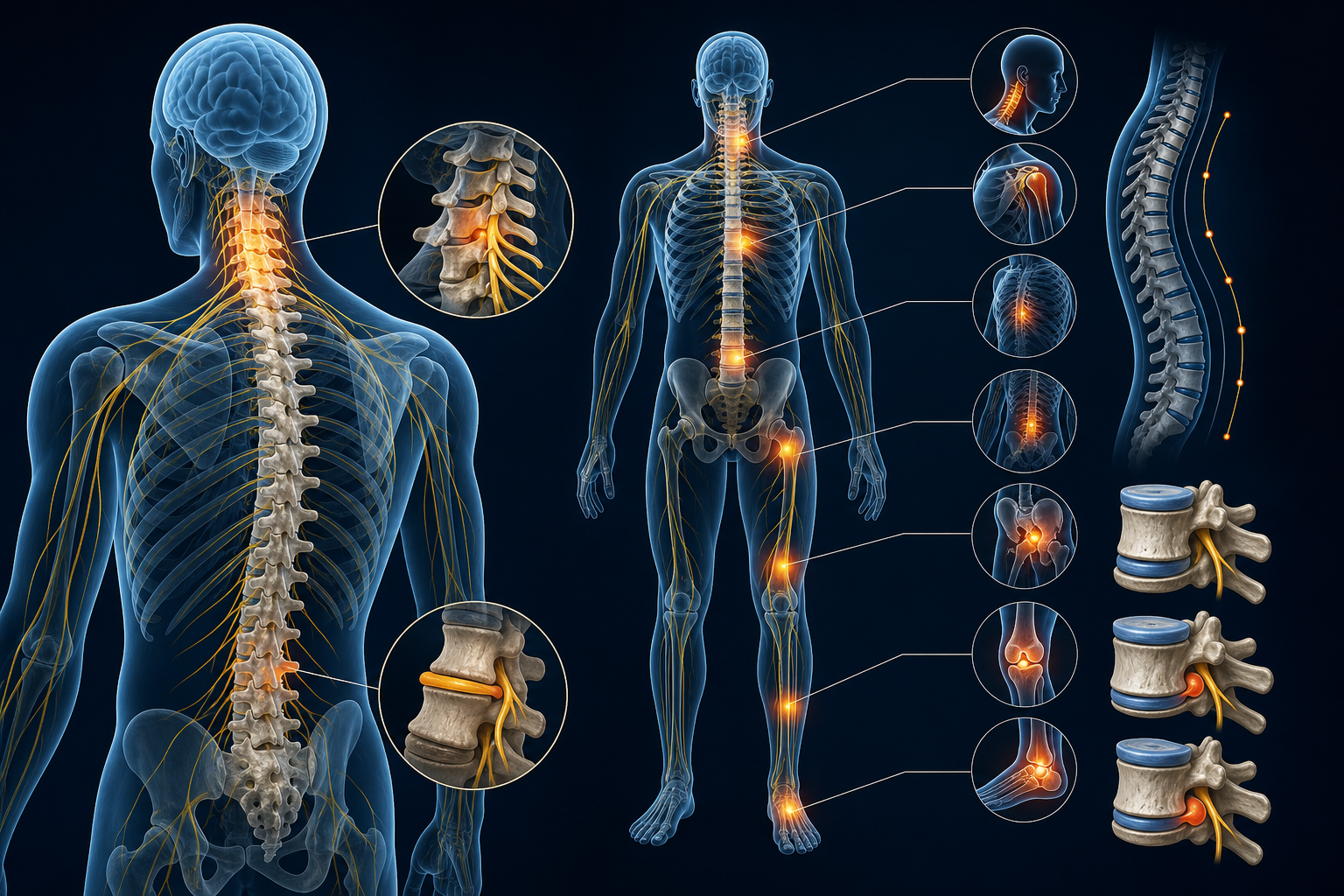
If you've found yourself rubbing the back of your neck after hours at a desk, catching your reflection and noticing your head juts forward, or waking up with stiffness between your shoulder blades, you're not alone. Posture-related discomfort has become one of the most common complaints providers hear — and posture correction apps like Posture Flow have stepped into that gap, promising guided movement exercises that you can do on your own schedule.
But can an app really fix bad posture? What do chiropractors and physical therapists actually think about these tools? And when does self-care stop being enough? This guide covers all of it.
What Is the Posture Flow App?
Posture Flow is a mobile application designed to guide users through structured movement sequences — often a blend of stretching, mobility work, and low-load strengthening — aimed at reducing common postural imbalances. The app targets patterns like forward head posture (where the head sits in front of the shoulders rather than directly above them), rounded or protracted shoulders, and thoracic kyphosis, the exaggerated curve of the upper back that many desk workers develop over time.
The general approach behind posture flow apps is to lengthen muscles that have adaptively shortened from sustained positions — think chest and anterior neck muscles — while reactivating muscles that have become underused, such as the deep cervical flexors, lower trapezius, and serratus anterior. Done consistently, these kinds of exercises are associated with improvements in postural awareness and may help reduce the muscular tension that contributes to neck and upper back discomfort.
How Does a Posture Correction App Work?
Most posture improvement apps, including Posture Flow, operate on a few core principles:
- Guided exercise sequences: Short, repeatable routines that walk users through specific movements with visual or audio cues.
- Progressive loading: Exercises that increase in difficulty or duration as the user builds baseline mobility and strength.
- Habit prompting: Reminders and streaks designed to build consistency, which matters more than intensity for postural change.
- Postural awareness coaching: Some apps include reminders to check and adjust position throughout the day.
The underlying logic is sound — postural habits are largely neuromuscular, meaning the nervous system has learned to default to certain positions. Repeated, intentional movement can help retrain those defaults. However, an app works with the information you give it. It cannot assess joint mobility restrictions, identify nerve involvement, evaluate asymmetry, or account for the structural factors that a trained clinician would catch in a physical examination.
Is It Normal to Have Upper Back Pain From Posture?
Upper back pain, neck stiffness, and headaches are frequently associated with sustained postural strain — and yes, they are extremely common. Spending long hours with the head forward of the spine increases the effective load on the cervical and upper thoracic structures significantly, and over time this can contribute to muscular fatigue, joint irritation, and discomfort that feels like it radiates through the shoulders or into the base of the skull.
So if you're experiencing these symptoms, you're not imagining it — and it does make sense to address your posture. What matters is choosing the right level of care for what you're experiencing. Mild stiffness and awareness of poor habits? An app may be a reasonable place to start. Persistent pain, numbness, tingling, or symptoms that aren't improving? That's a signal to consult a provider rather than push through more exercises alone.
Learn more about neck pain and its conservative treatment options on Medximity.
What Chiropractors Say About Posture Apps
Most chiropractors view posture apps as a reasonable complement to professional care — not a replacement for it. The exercises recommended in apps like Posture Flow often align with what clinicians already prescribe as part of a home exercise program. The issue is sequencing and appropriateness: an app recommends the same routine to everyone, while a chiropractor or physical therapist tailors exercises to what they find in your specific examination.
Chiropractors also address the joints themselves, not just the muscles around them. If a segment of the cervical or thoracic spine has restricted mobility, no amount of stretching is going to restore that range of motion — and continuing to load a restricted area may actually cause more discomfort. Manual adjustments, soft tissue work, and targeted rehabilitation are designed to work on the underlying mechanics, with exercises then reinforcing the changes made in the office.
The most effective approach, in clinical terms, tends to be a combination: chiropractic care for posture to address joint and soft tissue restrictions, and home exercises — including app-guided routines — to reinforce better movement patterns between visits.
Posture App vs. Physical Therapy: Which Is Better?
This is one of the more common questions people have when they're trying to decide how to handle posture-related discomfort. The honest answer is that it depends on what's actually going on.
When an App May Be Enough
- You have mild postural awareness issues with no significant pain
- You sit at a desk for long hours and want a structured movement break routine
- You've already been evaluated by a provider and received a home exercise prescription you want to supplement
- You're focused on prevention and general mobility maintenance
When Physical Therapy or Chiropractic Care Is the Better Choice
- You have persistent or worsening neck, upper back, or shoulder pain
- You've been using an app consistently but aren't seeing results after several weeks
- You experience headaches, tingling, numbness, or radiating symptoms
- You've had a recent injury or have a history of spine-related conditions
- You're unsure which exercises are appropriate for your specific situation
Find a physical therapist near you or search for a chiropractor in your area through the Medximity provider directory.
Guided Movement Exercises for Rounded Shoulders: What Actually Helps
Whether you're using an app or working with a provider, the exercises most commonly associated with improving rounded shoulder posture share a few themes. Research generally supports approaches that combine thoracic extension and rotation mobility work, scapular retraction and depression strengthening, cervical deep flexor activation, and chest and pectoral lengthening.
Posture Flow and similar apps tend to incorporate these elements in a sequence designed to first open restricted areas and then activate stabilizing muscles — a reasonable flow that mirrors what rehabilitation professionals often recommend. The key is performing them with proper form, which is harder to self-monitor without a clinician's eye.
Read more about exercises for forward head posture and what providers look for when building a rehabilitation plan.
How Long Does It Take to See Results From Posture Exercises?
Postural change is a process, not an event. Most clinicians suggest that with consistent daily effort — typically 10 to 20 minutes of targeted movement — some people begin to notice improved awareness and reduced muscular tension within two to four weeks. More meaningful structural and neuromuscular changes may take several months of sustained practice.
The timeline varies based on how long poor posture has been present, whether there are underlying joint restrictions, age, activity level, and how consistently the exercises are performed. If you're several weeks in with no improvement — or if discomfort is increasing — that's a reasonable point to consult a provider rather than continuing to guess.
When to See a Chiropractor for Posture Problems
A posture app is a tool, not a diagnosis. There are clear signals that suggest professional evaluation is the right next step:
- Pain that has lasted more than two to three weeks without improvement
- Symptoms that spread into the arms, hands, or cause tingling or numbness
- Headaches that seem related to neck tension or position
- Visible asymmetry that concerns you — one shoulder noticeably higher, head tilting to one side
- Significant stiffness that limits your ability to turn your head or move comfortably
Chiropractors are trained to evaluate the cervical and thoracic spine, identify movement restrictions, and recommend a care plan that may include spinal manipulation, soft tissue therapy, and a progressive home exercise program. Physical therapists bring a similar comprehensive lens with a focus on movement rehabilitation. Either can give you a far more accurate picture than any app can provide.
Search for a chiropractor on Medximity to find a provider who specializes in posture and spine care near you.
The Bottom Line on Posture Flow and Posture Apps
Posture correction apps like Posture Flow can be a practical, low-barrier way to build daily movement habits — and for people with mild postural concerns and no significant pain, they may offer real value. The exercises they guide users through are generally consistent with what rehabilitation professionals recommend for common postural imbalances.
What apps can't do is examine you, assess your joints, identify nerve involvement, or adapt to what they find in your body on a given day. For those reasons, they work best as part of a broader approach — ideally one that includes at least one evaluation from a qualified chiropractor or physical therapist who can tell you whether an app-based routine is appropriate, sufficient, or just the beginning of what you need.
Explore chiropractic care vs. physical therapy to understand which type of provider may be the right fit for your posture concerns.
Frequently Asked Questions
What is the Posture Flow app?
Posture Flow is a mobile app that guides users through structured movement sequences designed to address common postural imbalances like forward head posture and rounded shoulders. It typically combines mobility, stretching, and low-load strengthening exercises.
Can an app really fix bad posture?
Apps can support postural improvement by building movement habits and reinforcing awareness, but they can't assess joint restrictions, nerve involvement, or the structural factors a clinician would evaluate in person. They may be helpful for mild cases but are not a substitute for professional care when pain or significant limitation is present.
How does a posture correction app work?
Most posture apps use guided exercise sequences, progressive difficulty, habit reminders, and postural awareness prompts to help users retrain movement patterns over time. The goal is to lengthen shortened muscles and activate underused stabilizers associated with better posture.
How long does it take to see results from posture exercises?
Some people notice reduced tension and improved awareness within two to four weeks of consistent daily effort. More significant postural changes typically take several months. Results vary based on the duration of poor posture, underlying restrictions, and consistency of practice.
Is posture app use better than physical therapy?
For mild postural awareness concerns with no significant pain, an app may be sufficient. For persistent pain, worsening symptoms, or cases where exercises alone aren't helping, physical therapy or chiropractic care provides a more thorough, individualized approach.
When should I see a chiropractor for posture problems?
Consider seeing a chiropractor if you have pain lasting more than two to three weeks, symptoms spreading into the arms or hands, recurring headaches tied to neck tension, noticeable postural asymmetry, or significant stiffness that limits your range of motion.
Is it normal to have upper back pain from posture?
Yes, upper back and neck discomfort are very commonly associated with sustained postural strain, particularly in people who spend long hours at a desk or looking at screens. While common, persistent or worsening pain warrants evaluation by a provider.
Can I use a posture app alongside chiropractic care?
Yes — and many chiropractors encourage this. App-guided exercises can reinforce the work done in the office between visits, as long as the exercises are appropriate for your specific condition. Your chiropractor can help you identify which routines are safe and beneficial for your situation.