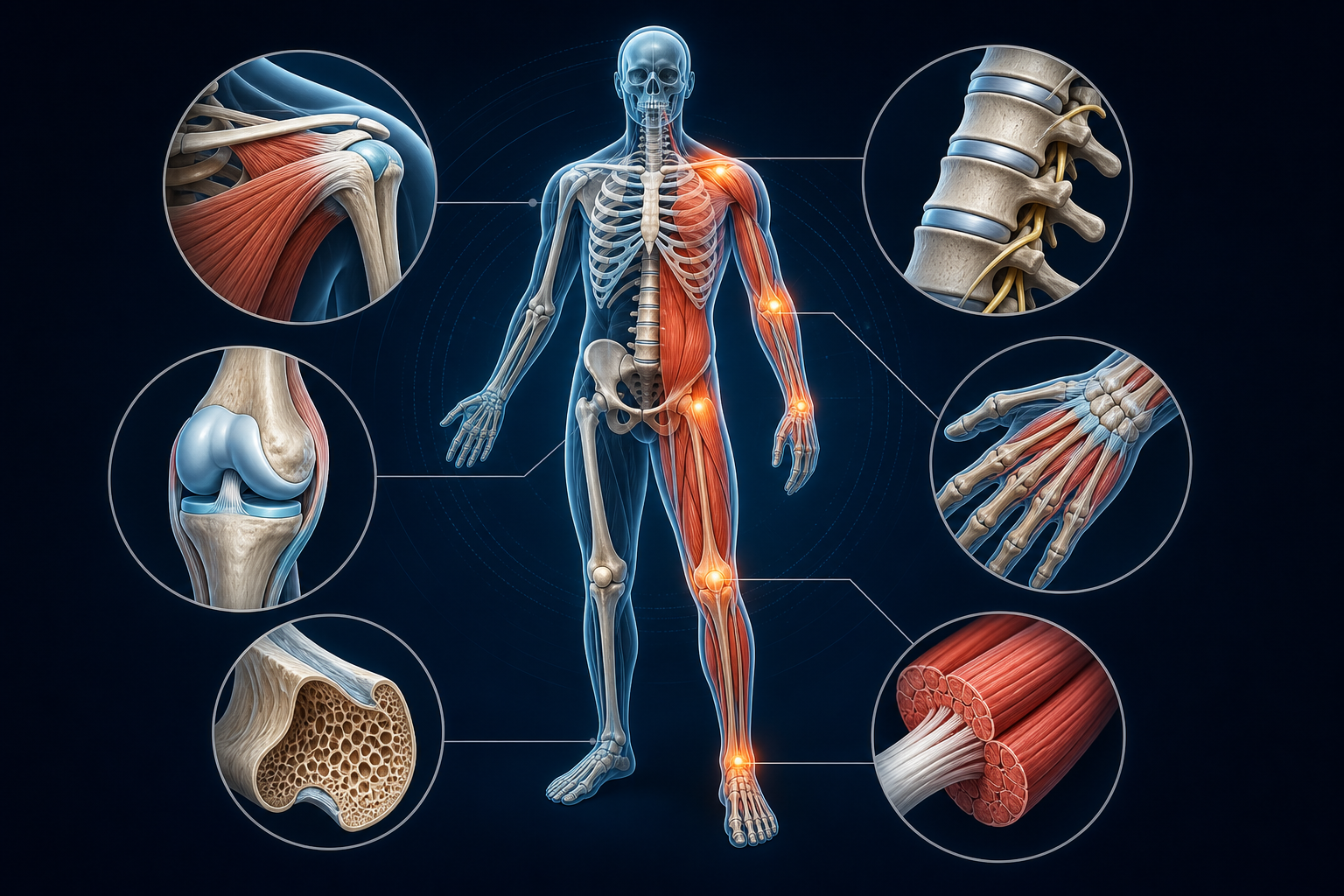
Musculoskeletal health refers to the condition and function of your muscles, bones, joints, tendons, ligaments, cartilage, and related soft tissues. When these structures work well together, they help you move, maintain posture, absorb impact, and perform daily activities with less discomfort.
If you are searching questions like what is musculoskeletal health, why musculoskeletal health matters daily, or treatment for musculoskeletal pain without surgery, you are likely trying to understand whether your pain, stiffness, or soreness is part of normal strain or a sign that you should be evaluated. In many cases, conservative care such as chiropractic care, physical therapy, therapeutic exercise, posture training, and activity modification may help improve movement and reduce stress on irritated tissues.
This article is educational and should not replace care from a qualified provider. If symptoms are severe, worsening, or affecting your daily life, consider scheduling an evaluation with a clinician who can assess your specific situation.
What Is Musculoskeletal Health?
Musculoskeletal health is the overall ability of your movement system to support your body, protect your joints, and allow coordinated motion. It includes strength, flexibility, joint mobility, balance, posture, tissue recovery, and the way your body handles repetitive tasks.
Good musculoskeletal health does not mean you never feel soreness or stiffness. Many people experience temporary aches after exercise, long periods of sitting, heavy lifting, or changes in routine. The bigger concern is when pain becomes persistent, limits function, or keeps returning despite rest and basic self-care.
For a deeper look at common symptoms, you can review Medximity’s guide to musculoskeletal pain.
Main Parts of the Musculoskeletal System
The main parts of the musculoskeletal system work as an integrated unit. A problem in one area can influence another, which is why knee pain, back pain, hip stiffness, or neck tension may sometimes involve more than one tissue type.
Bones
Bones provide structure, protect organs, store minerals, and serve as attachment points for muscles. Bone health is influenced by age, activity level, nutrition, hormonal factors, and certain medical conditions.
Joints and Cartilage
Joints are where two or more bones meet. Cartilage helps cushion joint surfaces and supports smoother motion. Joint irritation may contribute to stiffness, swelling, or discomfort with movement.
Muscles
Muscles create movement and help stabilize joints. Weakness, overuse, poor conditioning, or sudden increases in activity may contribute to soreness, tightness, or altered mechanics.
Tendons and Ligaments
Tendons connect muscles to bones, while ligaments connect bones to other bones. These tissues help transmit force and stabilize movement. Sprains and strains often involve these structures.
Nerves and Supporting Soft Tissue
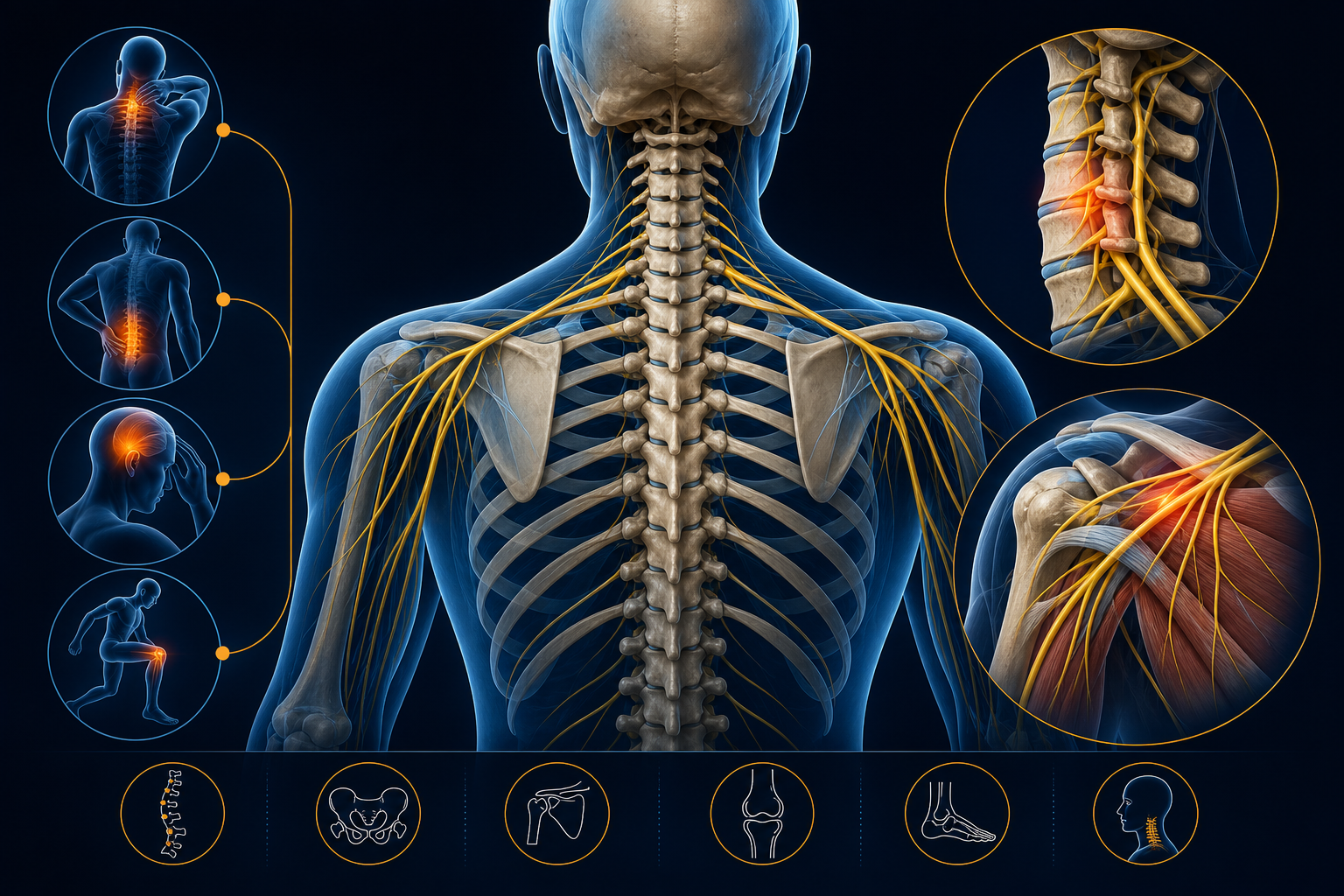
Although nerves are not always listed as part of the musculoskeletal system, they affect muscle control, sensation, and pain signals. Fascia and other connective tissues also help support movement and load transfer.
Why Musculoskeletal Health Matters Daily
Musculoskeletal health matters daily because nearly every routine activity depends on your ability to move and stabilize your body. Sitting at a desk, carrying groceries, climbing stairs, getting in and out of a car, sleeping comfortably, exercising, and working all place demands on the musculoskeletal system.
When movement patterns are inefficient or tissues are overloaded, discomfort may gradually build. For example, prolonged sitting can contribute to hip tightness, neck tension, and low back discomfort. Repetitive work may stress the shoulders, wrists, or elbows. Sudden training changes may irritate muscles, tendons, or joints before your body has time to adapt.
Improving musculoskeletal health naturally often involves a combination of regular movement, strength training, mobility work, ergonomic adjustments, sleep, hydration, and timely evaluation when symptoms do not improve.
Musculoskeletal Pain When Sitting Too Long
Musculoskeletal pain when sitting too long is common, especially for people who work at computers, drive for long periods, or study for extended hours. Sitting is not automatically harmful, but staying in one position can reduce circulation, increase stiffness, and place sustained load on the low back, hips, neck, and shoulders.
Some people notice aching across the low back, tight hip flexors, rounded shoulders, or tension headaches after long sitting periods. These symptoms may be associated with posture, workstation setup, muscle endurance, or limited movement breaks.
Helpful strategies may include changing positions often, standing briefly every 30 to 60 minutes, setting your monitor at eye level, keeping feet supported, and using gentle mobility exercises. If posture-related pain persists, a provider may assess spinal mobility, muscle strength, joint motion, and work habits. You can learn more in Medximity’s article on posture and back pain.
If you are searching for a chiropractor for posture problems near me, Medximity can help you explore chiropractors near you who may evaluate posture, spinal movement, and conservative treatment options.
Is It Normal to Have Joint Stiffness?
Occasional joint stiffness can be normal, especially after inactivity, unfamiliar exercise, or long periods in one position. Morning stiffness that improves quickly with movement may occur in many people. However, stiffness that is severe, lasts a long time, is associated with swelling, follows an injury, or progressively worsens should be evaluated.
Joint stiffness may be associated with muscle tightness, joint irritation, reduced mobility, inflammation, overuse, or age-related changes. It can also reflect conditions that require medical assessment, particularly when stiffness affects multiple joints or is accompanied by redness, warmth, fever, unexplained weight loss, or significant weakness.
Gentle range-of-motion exercise, walking, stretching, and strengthening may help many people maintain healthy joint motion. Medximity’s resource on stretching for joint stiffness explains how gradual mobility work may support comfort and function.
How Long Does Muscle Soreness Last?
Muscle soreness after activity often develops within 12 to 24 hours and may peak around 24 to 72 hours, especially after a new workout or heavier-than-usual activity. This type of soreness is often related to the body adapting to exercise stress. It usually improves with time, light movement, hydration, sleep, and gradual return to activity.
However, soreness is not always the same as injury. Pain that is sharp, sudden, worsening, associated with swelling or bruising, or accompanied by loss of strength may need evaluation. You should also consider seeing a provider if muscle pain does not improve after several days, keeps returning, or interferes with walking, work, sleep, or exercise.
Musculoskeletal Pain vs Nerve Pain
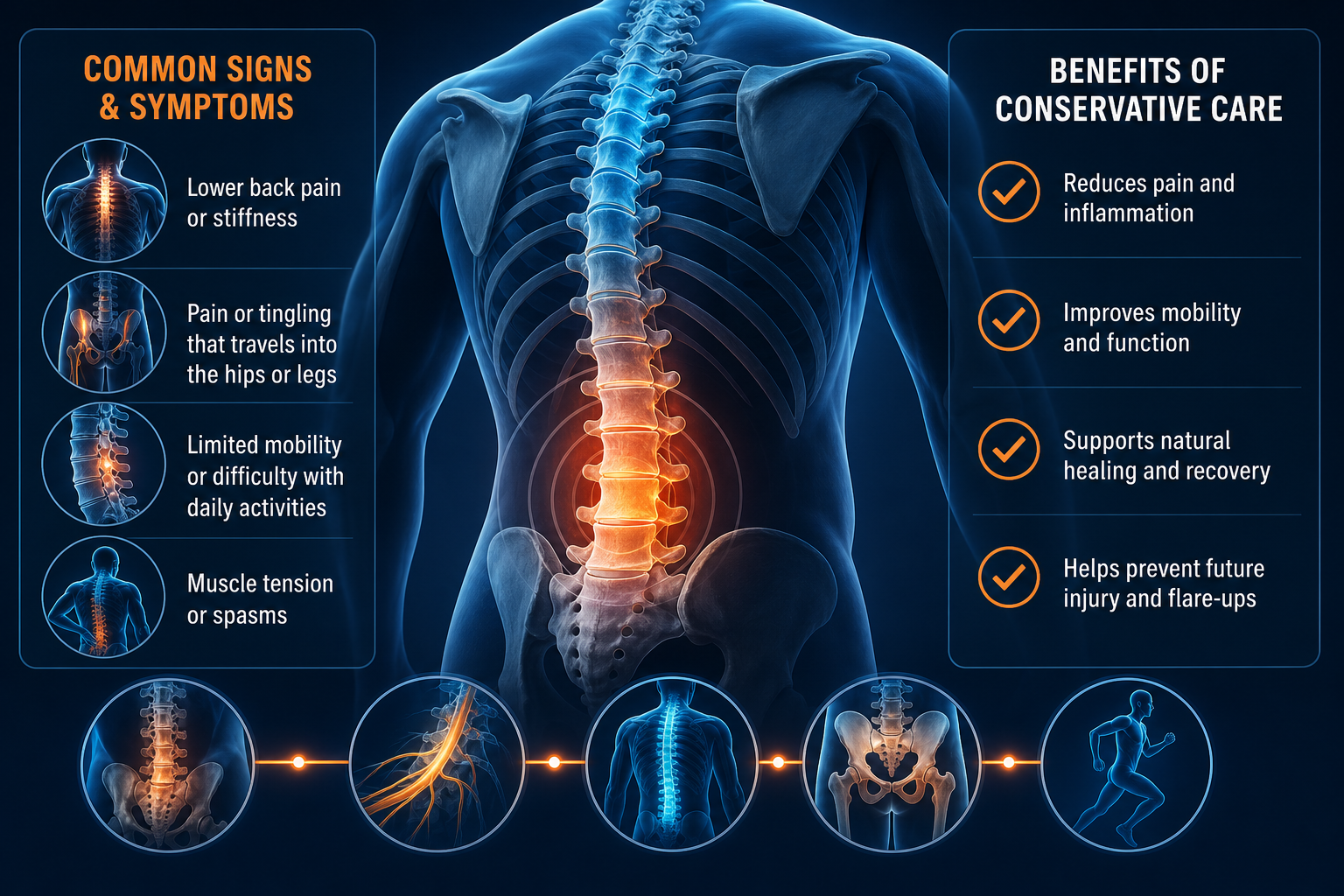
Understanding musculoskeletal pain vs nerve pain can help you describe symptoms more clearly to a provider. Musculoskeletal pain is often described as aching, tight, sore, stiff, or tender. It may change with posture, movement, pressure on the area, or activity level.
Nerve-related pain may feel burning, electric, shooting, tingling, numb, or radiating. For example, symptoms that travel down an arm or leg, or symptoms associated with weakness or numbness, may involve nerve irritation. These signs do not confirm a diagnosis on their own, but they are important to discuss during an evaluation.
A qualified provider may review your history, perform movement and neurological screening, and determine whether conservative care is appropriate or whether additional medical evaluation is needed.
Treatment for Musculoskeletal Pain Without Surgery
Many musculoskeletal concerns are initially managed with conservative care. Treatment for musculoskeletal pain without surgery may include movement-based rehabilitation, chiropractic care, physical therapy, strengthening, mobility work, manual therapy, posture and ergonomic education, and a gradual return-to-activity plan.
Chiropractic Care
Chiropractic care may help some patients with spine-related pain, joint mobility restrictions, posture concerns, and movement limitations. A chiropractor may use spinal or joint manipulation, mobilization, soft-tissue techniques, exercise instruction, and lifestyle guidance depending on the person’s condition and clinical findings. Learn more about chiropractic care on Medximity.
Physical Therapy and Rehabilitation
Physical therapy often focuses on improving strength, mobility, balance, coordination, and functional movement. A physical therapist may assess how you move, identify contributing limitations, and guide exercises for healthy joints and muscles. Medximity’s physical therapy overview explains what patients commonly experience during conservative rehabilitation.
Exercise and Activity Modification
Exercises for healthy joints and muscles often include a mix of low-impact aerobic activity, resistance training, balance work, and mobility drills. Examples may include walking, cycling, bodyweight strengthening, hip and shoulder mobility, calf raises, squats to a comfortable depth, wall push-ups, and gentle core exercises. The right plan depends on your symptoms, fitness level, and medical history.
If an exercise increases pain significantly or causes symptoms such as numbness, radiating pain, dizziness, or weakness, stop and consult a qualified provider.
How to Improve Musculoskeletal Health Naturally
Improving musculoskeletal health naturally usually means building sustainable habits rather than chasing a quick fix. The following strategies may support healthier movement over time:
- Move frequently: Break up long sitting periods with short walks, standing, or gentle mobility.
- Strengthen major muscle groups: Gradual resistance exercise may support joint stability and function.
- Practice mobility: Controlled range-of-motion work may help reduce stiffness and improve comfort.
- Prioritize posture variety: No single posture is perfect all day. Changing positions often is usually more helpful than holding one rigid position.
- Increase activity gradually: Sudden jumps in mileage, weight, or intensity may increase soreness or irritation.
- Support recovery: Sleep, hydration, balanced nutrition, and rest days all contribute to tissue recovery.
- Address symptoms early: Persistent pain is often easier to manage when evaluated before it becomes a long-term limitation.
If you are searching for the best musculoskeletal specialist near me, consider the type of care you need. A chiropractor may be appropriate for spine, posture, and joint mobility concerns. A physical therapist may be appropriate for rehabilitation, strength, mobility, and return-to-activity goals. You can search Medximity for physical therapists near you or browse providers by specialty and location.
When to See a Provider for Musculoskeletal Symptoms
Consider seeing a provider if pain, stiffness, or soreness lasts longer than expected, keeps returning, limits work or exercise, affects sleep, or follows a fall, collision, or lifting injury. You should seek prompt medical evaluation for severe pain, visible deformity, inability to bear weight, progressive weakness, numbness, loss of bowel or bladder control, fever, unexplained weight loss, or pain associated with chest pressure or shortness of breath.
Even when symptoms seem mild, an evaluation may help identify movement patterns, strength deficits, mobility restrictions, or ergonomic factors that could be contributing to discomfort.
What to Expect at a Musculoskeletal Evaluation
During a musculoskeletal evaluation, a provider will usually ask about your symptoms, health history, daily activities, work demands, exercise routine, and goals. They may assess posture, walking, range of motion, strength, joint mobility, flexibility, balance, and areas of tenderness. If nerve symptoms are present, they may perform basic neurological screening such as reflex, sensation, or strength checks.
Based on the findings, the provider may discuss a conservative care plan. This may include hands-on care, guided exercises, home strategies, activity modifications, and follow-up visits to monitor progress. If symptoms suggest a condition outside the scope of conservative care, the provider may recommend further medical evaluation.
FAQ: Musculoskeletal Health
What is musculoskeletal health?
Musculoskeletal health is the condition and function of your muscles, bones, joints, tendons, ligaments, cartilage, and related tissues. It affects movement, posture, strength, flexibility, and daily comfort.
Why does musculoskeletal health matter daily?
It matters because everyday tasks such as sitting, walking, lifting, working, and exercising depend on healthy movement. Poor mobility, weakness, or repeated strain may contribute to pain or reduced function over time.
Is joint stiffness normal?
Occasional joint stiffness can be normal after inactivity or unfamiliar activity. Stiffness that is severe, persistent, worsening, swollen, or associated with injury should be evaluated by a qualified provider.
How long does muscle soreness last?
Typical post-exercise muscle soreness may last a few days and often improves with light movement and recovery. Pain that is sharp, worsening, or associated with weakness, swelling, or bruising may need professional evaluation.
Can musculoskeletal pain be treated without surgery?
Many musculoskeletal problems are managed conservatively with chiropractic care, physical therapy, therapeutic exercise, manual therapy, posture changes, and activity modification. The right approach depends on your symptoms and evaluation findings.
How can I tell musculoskeletal pain from nerve pain?
Musculoskeletal pain often feels aching, sore, tight, or stiff and may change with movement or pressure. Nerve pain may feel burning, electric, tingling, numb, or radiating. A provider can help assess the likely source.