Find a provider 社区论坛
For providers 面向律师
登录 律师

背部疼痛缓解伸展运动:温和活动指南,助您拥有更健康的脊椎

背部疼痛缓解伸展运动:温和活动指南,助您拥有更健康的脊椎

要点摘要

  • Targeted stretching may help reduce back tension, improve spinal mobility, and support recovery when practiced consistently and safely.
  • Lower back stretches such as the knee-to-chest, child's pose, and lumbar rotation address the most common areas of discomfort in adults.
  • Hip flexor and glute stretches are often underemphasized but may play a meaningful role in relieving lumbar strain by reducing tension on the pelvis and sacrum.
  • Stretching alone is not always sufficient — persistent, worsening, or radiating back pain warrants evaluation by a chiropractor or physical therapist.
  • A supervised conservative care plan that incorporates stretching alongside chiropractic adjustment or physical therapy may produce better long-term outcomes than self-directed stretching alone.

背痛会让一切都变得更加困难——从床上起身、久坐办公桌前,甚至深呼吸都成问题。如果您正在寻找今天就能开始的背痛缓解拉伸动作,您并不孤单。每年有数百万成年人饱受各种形式的背部不适困扰,而针对性拉伸是保守非手术治疗中最广泛推荐的起始方法之一。

本文将介绍拉伸为何有助于缓解背痛、哪些动作对腰背部和上背部最为有效、拉伸的适宜频率,以及——至关重要的——何时单纯拉伸已不足够,需要将脊椎指压治疗师或物理治疗师纳入您的治疗方案。

拉伸为何有助于缓解背痛?

短缩、紧绷或过度使用的肌肉、肌腱和结缔组织会以各种方式牵拉脊柱,从而产生或加重疼痛。长期不良姿势、长时间久坐以及重复性动作模式,都会随着时间推移加剧这种紧绷状态。

拉伸通过逐步延长这些组织发挥作用,可能有助于减轻脊柱关节的机械负荷、改善局部血液循环,并缓解过度活跃的肌肉防御性收缩——这种反射性收缩往往在损伤或劳损后出现。肌肉骨骼健康领域的研究持续表明,规律、温和的活动度训练与许多人腰痛强度和功能障碍的显著改善存在关联,尤其是在结合专业指导的情况下效果更为明显。

值得注意的是,并非所有背痛的病因都相同。拉伸对于肌肉紧张、不良姿势和活动受限最为有效。对于椎间盘突出、神经压迫或关节退变等结构性问题,单靠拉伸往往难以解决——这正是为什么了解何时寻求专业诊治与了解如何拉伸同等重要。

腰痛时拉伸是否安全?

对于大多数轻至中度的肌源性背痛,温和拉伸被认为是安全的,且通常受到医疗提供者的积极推荐。尽管如此,在某些情况下,若未经专业指导擅自拉伸,可能会加重潜在的问题。

若出现以下任何情况,请谨慎对待拉伸——并在开始前咨询医疗提供者:

  • 单侧或双侧下肢出现尖锐、放射性或串痛感
  • 下肢或足部麻木、刺痛或无力
  • 疼痛剧烈,或随活动明显加重
  • 跌倒、意外事故或直接外伤后出现背痛
  • 背痛持续超过六周且无改善
  • 有骨质疏松症、脊柱骨折或近期脊柱手术史

如有疑问,可先向脊椎指压治疗师物理治疗师进行简短咨询,以便在开始拉伸前了解哪些动作适合您的具体情况。

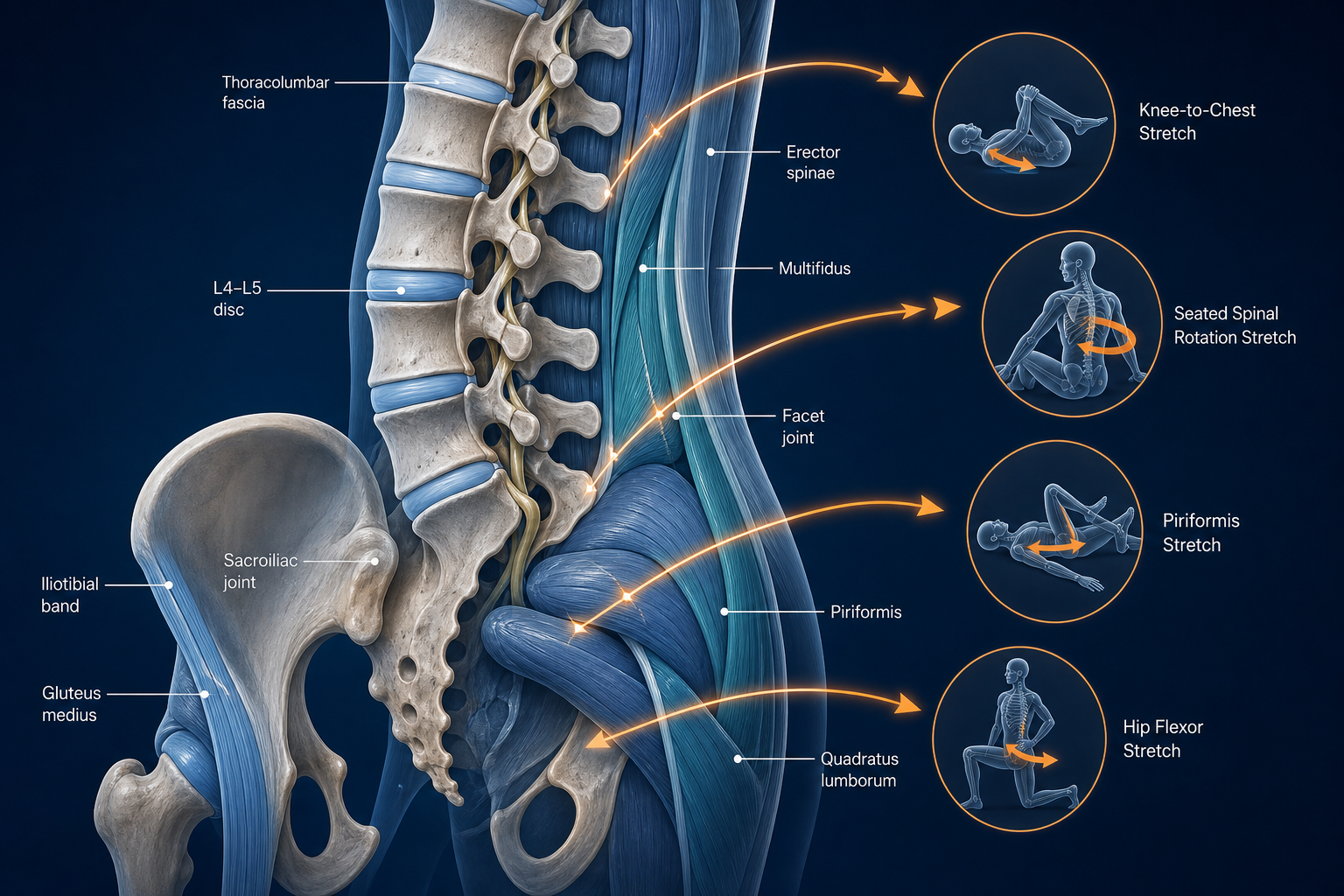
缓解腰痛的最佳拉伸动作

以下动作常见于脊椎指压治疗和物理治疗环境中,用于无需手术的腰痛缓解。进入每个体位时动作要缓慢,保持均匀呼吸,切勿在出现尖锐或放射性疼痛时强行继续。

屈膝贴胸伸展

仰卧,屈膝,双脚平放于床面。轻柔地将一侧膝盖拉向胸部,双手扶于大腿后侧。保持20至30秒,然后换另一侧。此拉伸针对腰椎伸肌群,可能有助于减轻腰椎压力。由于起始时几乎不需要活动范围,它是慢性背痛晨间温和拉伸的良好选择。

婴儿式

从跪姿开始,将臀部向后坐向脚跟,双臂向前伸展于地面。让腰部自然拉长并放松,保持30至60秒。婴儿式是一个源自瑜伽的基础性拉伸动作,能拉伸腰椎并缓解整个背部的紧张感。

仰卧脊柱扭转

仰卧,将一侧膝盖拉向胸部,然后轻柔地将其引导向身体对侧,同时保持双肩贴于地面。每侧保持20至30秒。旋转性拉伸有助于恢复脊柱活动度,并可改善腰痛常伴随的侧向僵硬感。

猫牛式活动

四肢撑地,交替进行背部缓慢向上拱起(猫式)和向下沉落(牛式)的动作,保持缓慢而有节律的连续进行。这一动态动作是最为一致推荐的晨间僵硬缓解练习之一,有助于恢复多个脊柱节段的流畅活动。

髋屈肌拉伸缓解背痛

紧绷的髋屈肌——连接髋关节前侧与腰椎的肌群——是腰痛的一个常被忽视的诱因,在久坐人群中尤为常见。一个简单的站立式或跪式髋屈肌拉伸动作为:一脚向前迈成弓步,后膝向地面放低,身体重心缓慢前移,直到感受到后侧髋部前方的拉伸感。每侧保持30秒。改善髋屈肌紧绷通常是全面背痛拉伸方案的重要组成部分。

如何拉伸紧绷的上背部肌肉

上背部和胸椎紧绷在长期使用电脑、频繁驾驶或肩部容易积聚压力的人群中十分常见。上背部对针对性拉伸和姿势矫正反应良好。

泡沫轴胸椎伸展

将泡沫轴横向置于背部中段,双手托住头部,身体轻柔地向后伸展,越过泡沫轴。逐步将泡沫轴从中背部移向上背部。此技术有助于打开胸椎,纠正许多人每天长时间保持的前屈姿势。

穿针式拉伸

从四点跪姿开始,将一侧手臂穿过身体下方,掌心朝上,同时将胸部向地面旋转。每侧保持20至30秒。此拉伸针对胸椎旋转肌群及肩胛骨周围肌肉,这些部位通常是上背部酸痛的常见原因。

门框或墙壁胸部拉伸

站立于门框处,双侧前臂抵住门框,轻缓地将胸部向前倾,直至感受到胸部前侧和肩部的拉伸感。紧张的胸大肌会将肩膀向前牵拉,加重胸椎后凸——即圆背姿势——因此改善胸部紧张往往与缓解上背部疼痛密不可分。

背痛拉伸应多久进行一次?

坚持规律往往比单次时长更重要。对于大多数有背痛困扰的人而言,每天拉伸一至两次——哪怕每次仅10至15分钟——与偶尔进行的长时间拉伸相比,通常能带来更好的效果。晨间拉伸有助于缓解经过一夜相对静止后常见的晨僵感,而晚间拉伸则有助于释放白天积累的肌肉紧张。

就背部拉伸缓解疼痛所需时间而言,许多人在坚持练习两至四周后便能察觉到灵活性的改善和轻度不适的减轻。慢性疼痛模式的显著改变通常需要更长时间,且往往需要在家庭练习的基础上结合专业人员的指导。

拉伸无法缓解背痛时

如果您已坚持拉伸三至四周却几乎没有改善,甚至疼痛加重,这是一个重要信号。拉伸是有价值的手段,但不能替代诊断和个性化治疗。

某些情况可能限制单纯拉伸的效果:

  • 椎间盘受累,某些动作可能加重而非缓解症状
  • 骶髂关节功能障碍,可能需要手法治疗或针对性稳定性训练
  • 神经源性疼痛,通常需要不同的临床处理方法
  • 肌肉失衡,需要进行力量训练,而不仅仅是柔韧性练习

脊椎指压治疗师可评估脊柱排列、关节活动度及神经功能,并可结合脊柱手法治疗与软组织技术,处理单纯拉伸难以完全触及的问题。物理治疗师可进行动作分析,制定循序渐进的康复方案,超越被动拉伸,涵盖力量训练与神经肌肉再训练。欲了解更多保守治疗背痛的相关内容,请参阅我们的脊椎指压治疗背痛指南及关于背痛物理治疗的文章。

脊椎指压治疗还是物理治疗:哪种更适合您?

两个专科在背痛管理方面均有充分的循证依据,许多患者从同时接受两种治疗中获益——有时甚至同步进行。脊椎指压治疗师通常侧重于脊柱排列、关节功能及神经系统健康,常采用徒手手法治疗;物理治疗师则通过以运动为基础的康复训练,着力恢复活动能力、肌肉力量与整体功能。最合适的选择往往取决于疼痛的性质与持续时间、您的既往病史以及个人偏好。

最重要的一步不是在二者之间做出选择,而是接受具备资质的专业人员对您具体情况的评估。您可以通过Medximity医疗服务提供者目录搜索附近的脊椎指压治疗师查找您所在地区的物理治疗师。如果您不确定从何入手,欢迎参阅我们对脊椎指压治疗与物理治疗的比较分析,以协助您做出决策。

即刻开始行动

背痛缓解拉伸是有意义的第一步——易于实践、成本低廉,并得到肌肉骨骼健康研究中大量证据的支持。从上述较为温和的动作开始,以规律性为先、强度为次,并留意身体的反应。如果您的疼痛剧烈、向远端放射,或对保守的自我护理毫无响应,请勿拖延就医。专业医疗人员能够帮助您了解病情,并为您量身制定治疗方案,而非采用千篇一律的通用方法。

浏览Medximity医疗服务提供者目录,与您附近专注于背痛治疗的脊椎指压治疗师和物理治疗师建立联系。
医疗免责声明: 本文仅供参考,不构成医疗建议、诊断或治疗。请务必咨询合格的医疗服务者以获得个性化的医疗指导。如果您正在经历医疗紧急情况,请立即拨打 911 或您当地的紧急电话。

Frequently asked questions

What stretches help lower back pain?
Several stretches are commonly recommended for lower back pain relief, including the knee-to-chest stretch, child's pose, lumbar rotation, and the cat-cow movement. These movements target muscles along the lumbar spine, hips, and sacrum that often become tight or restricted. Consistency matters more than intensity — gentle, sustained holds of 20 to 30 seconds are generally more beneficial than aggressive stretching. A chiropractor or physical therapist can help identify which stretches are most appropriate for your specific situation.
Is it safe to stretch when your back hurts?
In many cases, gentle movement and stretching may be appropriate even during mild to moderate back discomfort, and research generally supports early, careful movement over complete rest. However, stretching is not appropriate for everyone at every stage of back pain. If your pain is severe, accompanied by numbness or tingling, or the result of a recent injury or known structural condition, you should consult a provider before beginning any stretching routine. Sharp or worsening pain during a stretch is a signal to stop immediately.
How often should you stretch for back pain relief?
Most providers suggest that back pain relief stretches are most effective when performed daily or near-daily, particularly in the morning when muscles tend to be stiff after rest. Short sessions of 10 to 15 minutes performed consistently may produce more noticeable results than longer, infrequent sessions. Starting with once daily and gradually increasing frequency based on how your body responds is a reasonable approach. Your chiropractor or physical therapist can recommend a stretching schedule tailored to your condition and recovery goals.
Why do hip flexor stretches help with back pain?
The hip flexors — a group of muscles connecting the lumbar spine to the femur — can become shortened and tight from prolonged sitting or physical imbalance. When these muscles are chronically tight, they may pull the pelvis into an anterior tilt, increasing the curve in the lower back and placing added stress on lumbar structures. Stretching the hip flexors, including the iliopsoas and rectus femoris, may help restore pelvic alignment and reduce the muscular tension that contributes to lower back discomfort.
When should I see a provider instead of just stretching?
Stretching is a useful tool for mild to moderate back discomfort, but it is not a substitute for professional care when symptoms suggest something more complex. You should consult a chiropractor or physical therapist if your back pain has lasted more than a few weeks, is getting progressively worse, radiates into your leg or foot, causes weakness or numbness, or follows a specific injury or fall. These symptoms may indicate a disc herniation, nerve involvement, or another condition that benefits from clinical assessment and a structured treatment plan.
Can stretching help with both upper and lower back pain?
Yes — different stretches target different spinal regions, and both the lower and mid-to-upper back can benefit from appropriate movement. Lower back stretches tend to focus on the lumbar spine, hips, and sacroiliac region, while upper back stretches commonly address the thoracic spine, rhomboids, and posterior shoulder muscles. A well-rounded routine that includes both regions, along with neck and hip mobility work, may help address the interconnected muscular patterns that contribute to back pain throughout the spine.

来源

  1. Spinal Manipulation and Exercise for Low Back Pain in Primary Care: A Randomized Clinical Trial — Annals of Internal Medicine (2018)
  2. Exercise Therapy for Low Back Pain: Cochrane Systematic Review — Cochrane Database of Systematic Reviews (2005)
  3. Clinical Practice Guidelines for the Management of Non-Specific Low Back Pain in Primary Care — European Spine Journal (2018)
  4. Hip Flexor Muscle Activity and Lumbopelvic Alignment in Adults with Chronic Low Back Pain — Journal of Orthopaedic and Sports Physical Therapy (2016)

我们使用第一方 Cookie 来运行本网站并了解患者如何找到我们。 隐私