Dr David Pascal chiropractor reviews usually matter for one reason: you want to know whether the provider has a consistent reputation for communication, punctuality, conservative care, and a clear exam process before you book. The best way to evaluate any chiropractor review page is to separate verified rating signals from marketing copy, confirm current practice details, and compare review themes against what you need help with, whether that is neck pain, low back pain, muscle spasm, or reduced ROM.
If you are searching for dr david pascal chiropractor patient reviews or asking is dr david pascal chiropractor good, focus on patterns, not one standout comment. A useful review page should tell you where ratings come from, what patients commonly mention, what services are typically offered, what happens at a first visit, and how to compare nearby chiropractors if this practice is not the right fit.
Review Summary for Dr David Pascal, Chiropractor
Dr David Pascal chiropractor reviews are most useful when they answer four practical questions: does the provider explain findings clearly, does the practice run on time, does the staff handle scheduling well, and does the care plan stay conservative and specific. That framework matters more than a single star count because patient review quality often depends on the number of reviews, how recent they are, and whether multiple reviewers mention the same strengths or limitations.
When people search what do patients say about dr david pascal, they are usually trying to judge fit, not just popularity. Reviews that repeatedly mention clear exam findings, straightforward explanations of the cervical spine, lumbar spine, or sacroiliac joint, and a plan that includes home care tend to be more meaningful than short comments that only say “great visit.”
A balanced review summary should separate likely trust signals from weaker signals.
- Stronger trust signals: recent reviews, consistent mentions of communication, specific comments about follow-up, and details about exam thoroughness.
- Neutral signals: comments about parking, front desk style, or room aesthetics.
- Weaker signals: one-word praise, duplicate wording across platforms, or ratings with no written context.
For branded searches like dr david pascal chiropractor patient reviews, the most helpful interpretation is this: a provider with stable review themes over time usually offers a more predictable patient experience than a provider with scattered reviews and no pattern.
Review pages help most when they summarize trends such as communication, wait time, and treatment clarity instead of dumping raw snippets with no context.
If you are still early in your search, Simple Steps to Find the Right Chiropractor for You gives a practical framework for choosing a provider beyond star ratings alone.
What makes a review summary credible
A credible summary tells you what is known, what is unclear, and what still needs confirmation. For example, if a listing shows ratings but no timestamp, you should confirm whether the information is current. If comments mention treatment for trapezius tightness, occipital headache patterns, or thoracic spine stiffness, that is more informative than generic praise because it reflects real visit content.
- Look for the total number of reviews.
- Check whether reviews are spread across months or years.
- See whether patients mention explanations of findings, not just friendliness.
- Notice whether reviewers describe a structured first visit with exam, posture checks, ROM testing, and care recommendations.
Where the Ratings and Review Information Come From
Ratings are only as useful as their source, recency, and consistency. If you are searching dr david pascal chiropractor ratings near me, the right next step is to confirm where the score appears, whether the platform verifies that the listing belongs to the correct provider, and when the profile was last updated.
Large directory sites often merge provider names, old addresses, outdated phone numbers, and stale review counts on one page. That creates a common problem: a patient thinks they are evaluating one chiropractor but is actually reading an incomplete or mixed record. A strong review-focused page separates provider identity data from review interpretation so you can verify the correct location and contact details before you call.
What to verify before trusting any rating
- Provider identity: confirm the spelling of the name and specialty.
- Practice location: make sure the address matches the current listing.
- Contact method: check whether online booking, phone scheduling, or contact forms are active.
- Review volume: a 5-star average based on 3 reviews tells you much less than a slightly lower rating based on 80 reviews.
- Update timestamp: a recently updated profile is usually more reliable for scheduling details.
This matters because chiropractic practices change. Hours shift. Staff changes affect scheduling. Some providers focus more on sports rehab, while others mainly handle spinal pain and posture-related complaints. Ratings without context cannot tell you that.
Review Signal What It Tells You How Useful It Is What to Confirm Star rating only General satisfaction trend Moderate Total number of reviews and recency Written comments about exam and communication How the provider explains findings and care plans High Whether similar themes appear across multiple reviews Comments on wait time and scheduling Practice operations and front desk consistency High Current hours and appointment options Old reviews with no recent activity Past reputation only Low to moderate Whether provider details are still currentWhen you compare ratings, do not ignore relevance. A chiropractor with strong feedback for sports mobility work may not be the best match if you need evaluation for radiating pain into the arm or leg. If your main complaint is neck-related, review patterns about headaches, upper cervical stiffness, and desk-posture strain are more useful than broad “excellent service” comments. For that topic, see What You Need to Know about Neck Injuries: Chiropractors Advise to Take Them Seriously.
What Patients Commonly Mention
Patients usually mention the same few categories in chiropractor reviews: communication, hands-on treatment style, staff efficiency, wait time, and whether they were given practical self-care. If you are asking what do patients say about dr david pascal, read for repeated themes instead of isolated praise or criticism.
The most useful written reviews often mention whether the provider explained why a symptom might be coming from the facet joints, paraspinal muscles, levator scapulae, or sciatic nerve irritation pattern instead of speaking in vague terms. That does not mean every patient needs technical language. It means a good review often reflects clear reasoning.
- Communication: Did the provider explain findings in plain language?
- Exam quality: Were posture, ROM, joint restriction, and soft-tissue tension assessed?
- Care style: Did the visit involve spinal manipulation, mobilization, stretching, myofascial work, or exercise instruction?
- Practice flow: Was the visit on time, organized, and easy to schedule?
- Self-care advice: Did the patient leave with exercises, ergonomic changes, or activity modifications?
Good reviews often include small but meaningful details. A patient may mention that the provider checked neck rotation before and after treatment, or explained how tight suboccipital muscles can contribute to head and upper neck symptoms. Those specifics help you understand how the provider thinks.
Neutral limitations also matter. If several reviewers mention short follow-up visits, that is not automatically bad; many chiropractic follow-ups last 10 to 20 minutes. But if multiple people say the treatment plan was not clearly explained, that deserves attention.
Short, specific comments about exam quality and home care are often more useful than long reviews that mostly discuss atmosphere.
Patterns that usually signal a stronger patient experience
A stronger review profile usually includes the following themes across multiple comments:
- Clear explanation of findings after the first exam.
- Practical advice for posture, work setup, or exercise.
- Reasonable scheduling and manageable wait times.
- A care plan with a timeline, not open-ended visits with no milestones.
If your symptoms involve headache that starts at the base of the skull, look for mentions of upper cervical work and nerve-related symptoms. For related education, see Occipital Neuralgia Chiropractic Doctor. If the issue is arm overuse or elbow pain, a more relevant comparison is Can a Chiropractor Help with Tennis Elbow Pain?.
Provider Details and Practice Information to Confirm
Before you trust any review page, confirm the provider details separately from the review content. If you are searching for dr david pascal chiropractor phone number, do not rely on copied directory text alone. Confirm the current practice name, city, address, scheduling method, and hours before you book.
Patients often skip this step and end up calling an old number or showing up at the wrong location. That is common on broad directories that do not clearly separate profile updates from review content. A strong provider page should tell you whether the listing was recently updated and what appointment options are available.
- Name and credentials: verify you are looking at the correct chiropractor, not another provider with a similar name.
- Practice location: confirm city, suite number, and whether there are multiple locations.
- Phone and booking: check whether calls, online forms, or direct scheduling are offered.
- Visit type: ask whether new-patient evaluations differ from follow-up visits.
- Hours: confirm evening or same-week availability if timing matters.
Also confirm whether the practice treats the kind of complaint you have. Some chiropractors mostly see spinal pain and tension-type headache patterns. Others focus more on sports rehab, mobility, and performance. If you need a provider with movement-based rehab for training or overuse issues, Sports Therapy – Can a Chiropractor improve my game? gives a useful background on that care model.
For families, scope matters too. Not every chiropractor sees children, and technique style may differ by age. If that is your question, review Should my child get adjusted by a Chiropractor? before booking.
A clean way to assess fit is to call and ask for three facts only:
- Do you treat my main complaint regularly?
- What does the first visit include?
- How long does the first appointment usually take?
If the practice cannot answer those clearly, the reviews may not tell the whole story.
What conservative services may be listed in chiropractor reviews?
Most chiropractor review pages reference conservative services rather than a single treatment type. If you are looking at chiropractor reviews for back pain treatment or chiropractor treatment for neck pain reviews, you will usually see some combination of spinal manipulation, joint mobilization, soft-tissue work, stretching, posture correction, and exercise instruction.
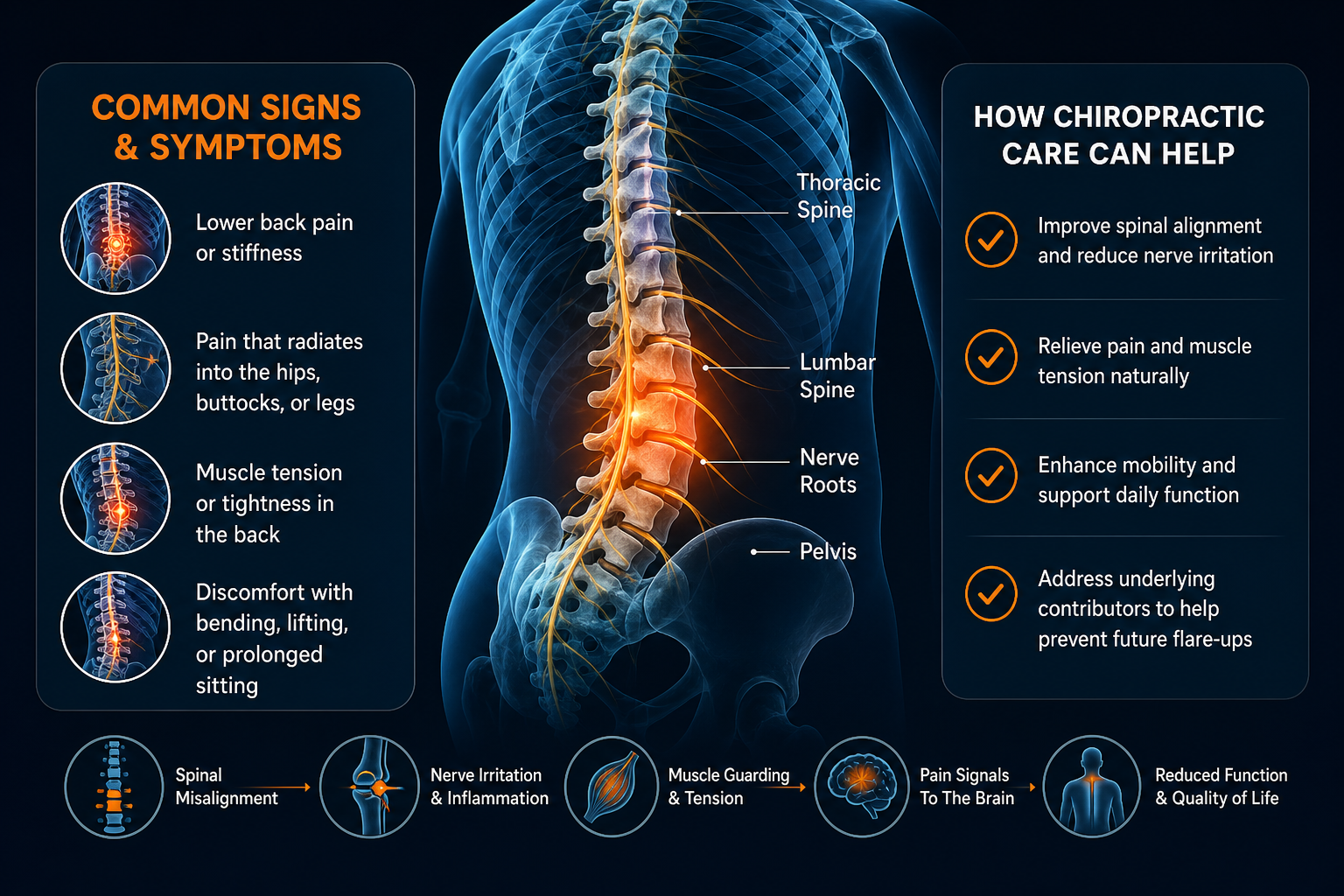
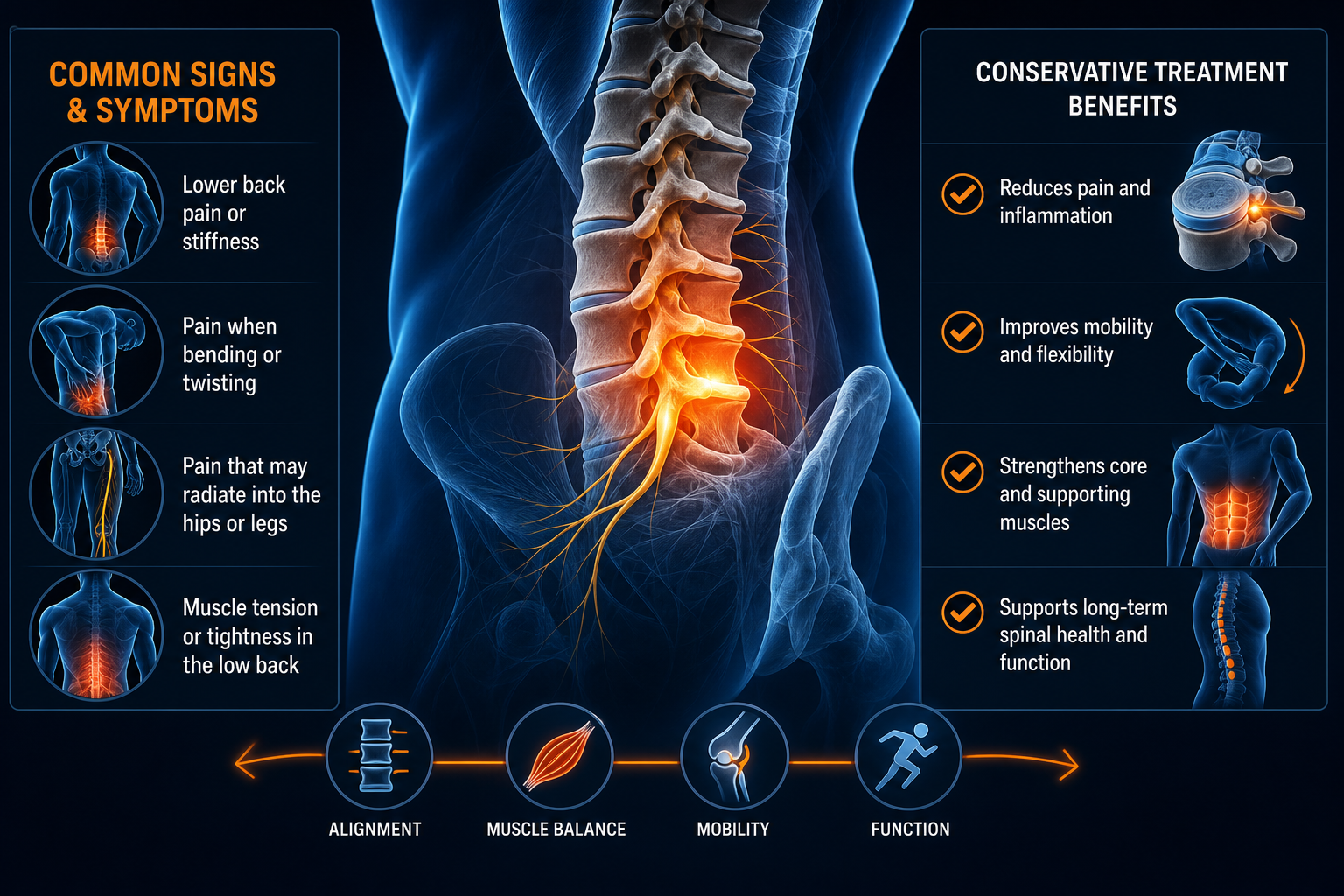
Those services are typically used for mechanical problems involving joints, muscles, and movement patterns. Common targets include the lumbar paraspinals, gluteus medius, piriformis, scalenes, sternocleidomastoid, and thoracolumbar fascia. A good review page should mention that conservative care is meant to improve mobility, reduce mechanical irritation, and support function, not just provide a temporary crack-and-go visit.
Common services and what patients often notice
Service What It Targets Expected Short-Term Outcome Typical Timeline Spinal manipulation Restricted motion in the cervical, thoracic, or lumbar spine Improved ROM and reduced stiffness Often noticeable after 1-3 visits Joint mobilization Less forceful movement of stiff joints Gradual mobility gains Commonly 2-6 visits Soft-tissue therapy Muscle knots in the upper trapezius, QL, piriformis, or calf Less tension and better movement tolerance Often 1-4 sessions Exercise therapy Weakness, poor motor control, posture-related strain More durable function change Usually 2-8 weeks of consistent practice Posture/ergonomic coaching Desk strain, repetitive loading, lifting mechanics Reduced recurrence triggers Daily changes, often within 1-2 weeksReviewers often describe results in timelines. Acute stiffness after a workout or awkward sleep position may improve over 1 to 3 visits in 7 to 14 days. More persistent low back pain with hip weakness or repeated flare-ups often needs a broader plan, commonly 6 to 8 visits over 3 to 6 weeks plus home exercise.
That distinction matters. A review that says “felt better after one visit” may be accurate for a simple mobility restriction, but it should not set your expectation for every condition.
Step-by-step home protocol commonly paired with chiropractic care
If you have desk-related neck and upper back tightness, this basic self-care sequence is often used alongside in-practice treatment:
- Chin tuck: sit tall, draw your head straight back without looking down, hold 5 seconds, repeat 10 times.
- Scapular set: gently pull your shoulder blades back and down, hold 5 seconds, repeat 10 times.
- Doorway pectoral stretch: forearms on the door frame, step through until you feel a stretch in the chest, hold 20 to 30 seconds, repeat 3 times.
- Thoracic extension over chair back: support your head, extend gently over the chair, repeat 8 to 10 reps.
- Walking reset: take a 5-minute walk every 60 to 90 minutes of desk work.
Done daily for 10 to 14 days, that routine often improves posture tolerance and reduces recurrent upper trapezius and cervicothoracic tightness. If you mainly deal with persistent trigger points, Ask a Chiropractor: How to Treat Muscle Knots? covers the mechanics in more detail.
What questions should you ask before booking?
The best questions to ask a chiropractor before booking are short and specific. You are trying to find out whether the provider treats your complaint regularly, uses an exam-based plan, explains timelines, and gives self-care instead of vague repeat visits.
Ask questions that reveal process. A clear answer usually reflects a clear practice style.
- Do you commonly evaluate my type of problem, such as neck pain, low back pain, headaches from the base of the skull, or leg numbness?
- What does the first visit include: history, ROM testing, orthopedic tests, posture exam, and treatment if appropriate?
- How long is the first visit, and how long are follow-up visits?
- Do you provide home exercises or ergonomic guidance?
- How do you decide whether someone is a good fit for conservative care?
- When would you tell a patient to seek urgent evaluation instead of routine chiropractic care?
Those last two questions matter more than most patients realize. A chiropractor should be able to identify red flags. Urgent evaluation is warranted if you have major trauma, progressive arm or leg weakness, saddle numbness, loss of bowel or bladder control, severe unrelenting headache with neurologic changes, or rapidly worsening numbness. Those symptoms go beyond a routine mechanical complaint.
Clear triage is a trust signal. A provider should know when conservative care fits and when urgent medical assessment is needed.
If you have numbness, a review page alone is not enough. Symptom location matters. Numbness in the thumb and index finger can follow a different pattern than numbness down the back of the leg. For a practical overview of leg symptoms, see Chiropractors on Leg Numbness: Should You Worry When It Happens?.
Questions that help you compare two similar providers
If Dr David Pascal and another nearby chiropractor both have solid ratings, use these tie-breaker questions:
- How often do you combine manual care with exercise therapy?
- Do you reassess ROM and function at follow-up visits?
- What is the typical timeline for my type of complaint?
- What can I start doing at home the same day?
A provider who answers with concrete timelines such as “acute neck strain often needs 2 to 4 visits over 2 weeks” gives you more actionable information than one who only says “it depends.”
What should you expect at a first chiropractor visit?
What to expect at first chiropractor visit depends on the complaint, but the best visits follow a simple structure: history, exam, explanation, and a conservative care plan. If you are also asking how long does a chiropractor visit take, a new-patient appointment commonly lasts 30 to 60 minutes, while many follow-up visits last 10 to 20 minutes.
A solid first visit is not just treatment. It should identify which tissues and movements reproduce symptoms, which positions reduce them, and whether your pattern looks mechanical. For neck complaints, the exam may include cervical rotation, extension, side bending, shoulder screen, and palpation of the upper trapezius, levator scapulae, and suboccipital region. For low back pain, the provider may assess lumbar flexion, extension, hip mobility, SI joint provocation, glute activation, and hamstring length.
- History: onset, aggravating movements, relieving factors, work setup, training load, sleep position, prior episodes.
- Exam: posture, ROM, joint motion, muscle tone, orthopedic testing, basic neurologic screening when needed.
- Explanation: what seems to be driving the symptoms and what the first 1 to 2 weeks should look like.
- Care plan: in-practice treatment plus home advice.
Typical first-visit timeline
Visit Phase What Happens Typical Time Intake and history Review symptoms, health background, triggers, goals 10-15 minutes Physical exam ROM, posture, joint motion, soft-tissue findings, functional tests 10-20 minutes Initial treatment if appropriate Manipulation, mobilization, soft-tissue work, stretching, exercise setup 10-20 minutes Home plan and follow-up instructions Exercises, movement modification, scheduling 5-10 minutesCommon recovery timelines also come up at the first visit. Simple mechanical neck stiffness may settle in 1 to 2 weeks with 2 to 4 visits. Recurrent low back pain with poor hip control and sitting intolerance may need 4 to 8 weeks of combined care and exercise.
If your symptoms followed a recent head or neck impact, ask directly whether the provider evaluates concussion-related neck dysfunction and whether another provider should also be involved. For background, see Can a Chiropractor Help with Post Concussion Syndrome?.
Timing matters too. Early evaluation often works better than waiting through repeated flare-ups that change your movement patterns. If you are unsure when to book, What Is the Best Time to See a Chiropractor? explains how symptom duration changes the plan.
How to compare nearby chiropractors when reviews look similar
If you are also searching best chiropractor reviews near me or chiropractor reviews without surgery options, compare providers by fit, not by rank alone. The right comparison is not “who has the highest stars.” It is “who most clearly matches my problem, explains the plan, and gives measurable next steps.”
Many nearby chiropractors will have acceptable ratings. The difference usually comes down to three things: whether the provider treats your complaint often, whether they pair hands-on care with exercise and self-management, and whether reviews mention lasting function change instead of one-day relief.
- Best match for desk-related neck pain: look for reviews mentioning posture correction, upper thoracic mobility, and home exercise.
- Best match for sports strain: look for movement testing, rehab progressions, and return-to-activity guidance.
- Best match for recurrent low back flare-ups: look for core control, hip mobility work, and repeated reassessment.
- Best match for headaches from neck tension: look for upper cervical exam, suboccipital treatment, and trigger-point work.
Reviews should help you answer one practical question: will this chiropractor give you a plan you can follow between visits? If the answer is not clear, the page is missing the most useful part of patient decision support.
The best review pages reduce uncertainty by showing fit: complaint type, visit style, communication quality, and timeline expectations.
Also compare convenience factors that affect follow-through:
- Location close to home or work.
- Appointment times that match your schedule.
- Online booking or easy phone scheduling.
- A practice style that explains care in plain language.
That is often more predictive of a good experience than a tiny difference in star rating.
What to Do Next
If you searched dr david pascal chiropractor reviews, your next step is to verify current provider details, read for repeated review themes, and ask two or three direct booking questions before scheduling. Focus on whether the provider appears to offer a clear exam, conservative care, practical home advice, and a timeline that fits your complaint.
Book routine care if your symptoms are mechanical and stable, such as neck stiffness, low back tightness, posture-related pain, or recurrent muscle spasm that changes with movement. Seek urgent evaluation instead of routine chiropractic booking if you have progressive weakness, loss of bowel or bladder control, saddle numbness, severe neurologic change, or symptoms after major trauma.
At your first visit, expect a history, ROM testing, hands-on exam, explanation of findings, and a basic home plan. Bring a short symptom timeline, note what movements trigger pain, and write down how long the problem has been present. That saves time and improves the exam.
- Use reviews to identify communication and care-style patterns.
- Confirm location, scheduling method, and current contact details before calling.
- Ask what the first visit includes and how long it takes.
- Choose the provider whose review themes best match your complaint.
When you are ready to compare options, find a chiropractor near you, browse providers, or explore more health topics on Medximity.