A chiropractor in Sioux Falls, SD can help you address back pain, neck stiffness, sciatica, and auto-accident injuries through hands-on spinal adjustments and rehabilitative techniques — without relying on invasive procedures. Sioux Falls has a strong network of chiropractic providers, but knowing how to evaluate them, what your first visit looks like, and which conditions respond best to chiropractic care makes the difference between a productive recovery and wasted time.
What Chiropractic Care Actually Involves
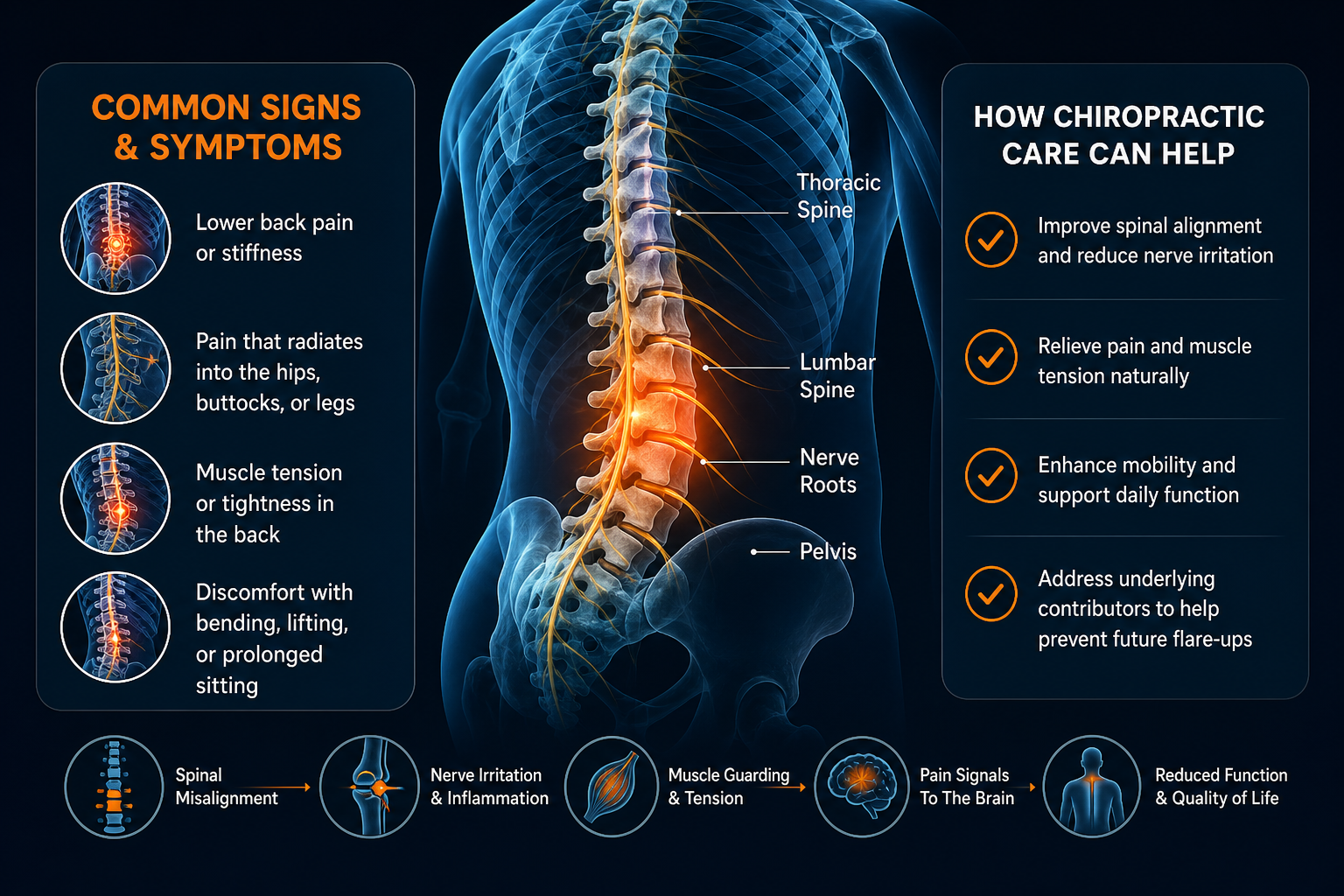
Chiropractic treatment centers on detecting and correcting vertebral subluxations — misalignments in your spine that restrict joint mobility and irritate surrounding nerves. Your chiropractor uses controlled, targeted force applied to specific spinal segments (most commonly the lumbar vertebrae L4-L5, the cervical spine C5-C7, and the thoracic junction T12-L1) to restore normal range of motion.
The most common technique is high-velocity, low-amplitude (HVLA) thrust manipulation. You may hear an audible pop — that is nitrogen gas releasing from the joint capsule, not bone cracking. Other approaches include:
- Flexion-distraction: A gentle, pump-like motion on a segmented table, particularly effective for disc-related problems in the lumbar spine
- Activator Method: A handheld spring-loaded instrument delivers a precise impulse — useful for patients who prefer lighter force
- Drop-table technique (Thompson): Sections of the treatment table drop slightly during the thrust, reducing the force needed
- Soft tissue mobilization: Manual work on the paraspinal muscles, piriformis, and upper trapezius to release tension patterns that pull vertebrae out of alignment
Is chiropractic treatment safe for neck pain? Research published in the Journal of Manipulative and Physiological Therapeutics shows that cervical manipulation carries a serious adverse event rate of approximately 1 per 1 million adjustments. For context, that makes a chiropractic neck adjustment statistically safer than taking over-the-counter anti-inflammatory products. Providers in Sioux Falls trained in cervical-specific techniques will screen you with orthopedic tests and, when indicated, X-rays before adjusting your neck.
What Conditions Do Chiropractors in Sioux Falls Treat?
Chiropractic care for back pain in Sioux Falls is the most common reason patients book appointments, but the scope extends well beyond the low back. Here is what responds well to chiropractic intervention, along with typical timelines.
Spine and Disc Conditions
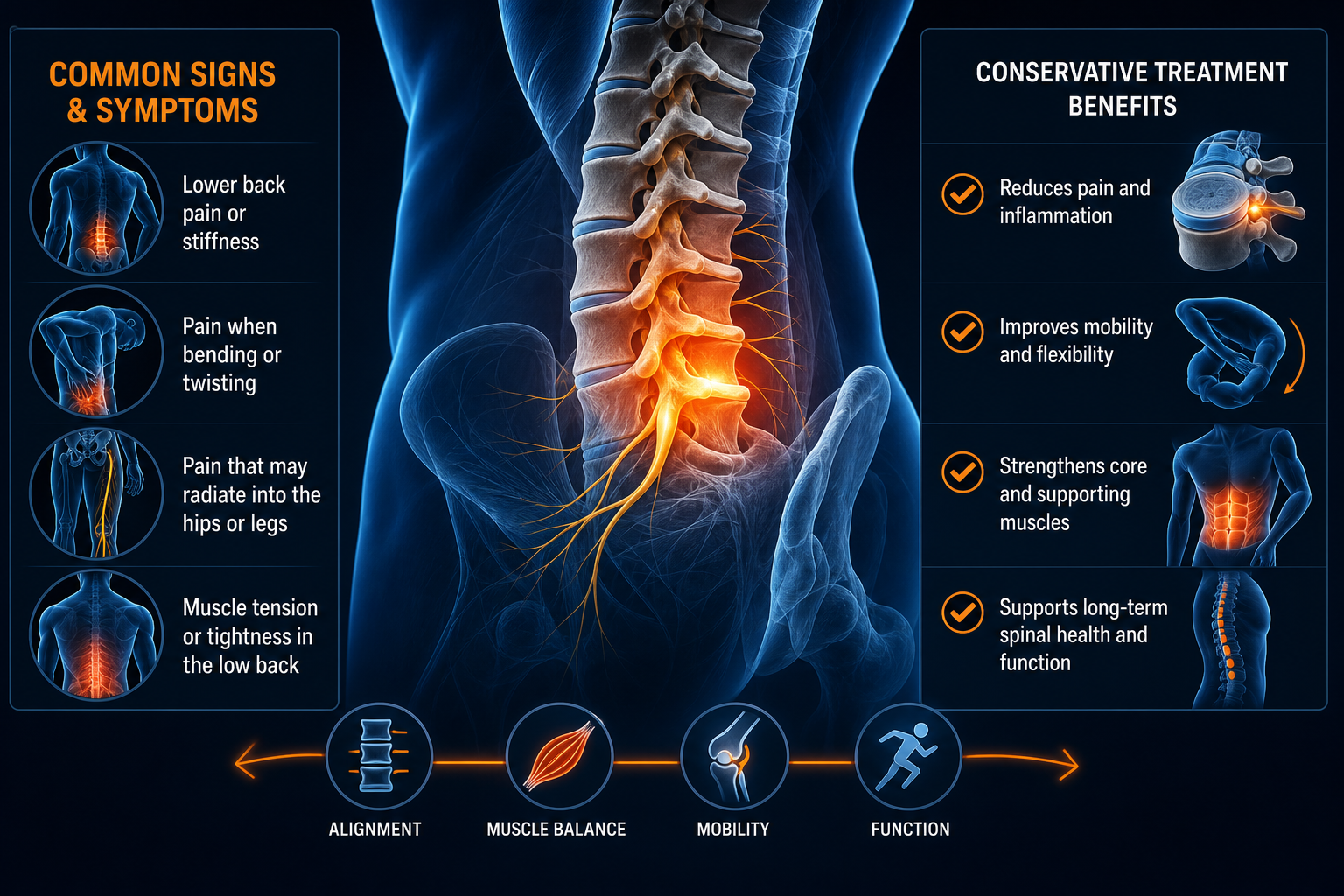
If you are searching for the best chiropractor for sciatica in Sioux Falls, SD, look for a provider experienced with lumbar disc herniation at the L4-L5 or L5-S1 levels — these two segments account for roughly 95% of lumbar disc herniations. Chiropractic care for herniated disc without surgery typically involves flexion-distraction technique combined with McKenzie directional preference exercises. Most patients see measurable improvement in radiating leg symptoms within 4-6 weeks of consistent care, averaging 2-3 visits per week initially.
Headaches and Neck-Related Pain
Cervicogenic headaches originate from dysfunction in the upper cervical spine — specifically the C1-C2 (atlas-axis) and C2-C3 segments. These respond particularly well to chiropractic adjustment combined with targeted neck rehabilitation protocols. Patients with occipital neuralgia also frequently find relief through upper cervical care.
Extremity Complaints
Chiropractors also treat peripheral joint problems — tennis elbow, frozen shoulder, and SI joint dysfunction. If you are experiencing leg numbness, that warrants prompt evaluation to determine whether it stems from a spinal nerve root compression or a peripheral issue like piriformis syndrome.
Condition Primary Technique Typical Timeline Sessions Before Reassessment Acute low back pain HVLA manipulation, ice therapy 2-4 weeks 6-8 sessions Sciatica (disc-related) Flexion-distraction, nerve flossing 4-8 weeks 10-12 sessions Cervicogenic headaches Upper cervical adjustment, soft tissue 3-6 weeks 6-10 sessions Whiplash (auto injury) Graded mobilization, rehab exercises 6-12 weeks 12-18 sessions Chronic mid-back stiffness Thoracic HVLA, postural correction 3-5 weeks 6-8 sessions SI joint dysfunction Side-posture adjustment, stabilization 3-6 weeks 6-10 sessionsHow to Choose a Chiropractor in Sioux Falls, SD
Knowing how to choose a good chiropractor near you comes down to five verifiable factors — not just online star ratings.
- Licensure and credentials: Every chiropractor in South Dakota must hold a Doctor of Chiropractic (DC) degree and an active state license. Look for additional certifications like DACBSP (sports), CCSP (certified chiropractic sports physician), or DABCO (orthopedics) if your condition is specialized.
- Technique match: Ask which techniques the provider uses. If you want low-force care, seek out Activator or SOT practitioners. If you want traditional manual adjustments, confirm the provider uses HVLA diversified technique.
- Diagnostic capability: Practices with on-site X-ray and functional assessment tools (ROM testing, posture analysis) can make faster, more accurate treatment decisions.
- Transparent care plans: A reputable chiropractor will outline expected visit frequency, estimated total sessions, and clear outcome benchmarks at the end of your first or second visit. Avoid any provider who recommends a 6-month prepaid care plan before examining you.
- Rehabilitation integration: The best outcomes happen when adjustments are paired with targeted soft tissue work and corrective exercises you perform at home.
For a broader framework on selecting the right provider, read our guide on finding the right chiropractor for you.
What Does a Chiropractor Do During Your First Visit?
Your initial appointment in Sioux Falls will typically last 45-60 minutes — considerably longer than follow-ups, which run 15-20 minutes. Here is the sequence.
Health history intake: You will fill out paperwork covering current symptoms, onset date, past injuries, and family medical history. Be specific about symptom location — "right-sided low back pain radiating to the posterior thigh" gives your provider far more to work with than "my back hurts."
Physical examination: Your chiropractor will assess spinal range of motion (ROM), perform orthopedic tests (straight leg raise for lumbar disc involvement, Spurling's test for cervical nerve compression), check reflexes, and palpate your spine for segmental restriction.
Imaging if indicated: X-rays are not automatic. They are warranted when there is a history of trauma, suspicion of fracture, patients over 65, or progressive neurological symptoms.
First treatment: Many Sioux Falls chiropractors will perform your first adjustment on day one if the exam findings are straightforward. Others may wait until visit two if X-rays are needed.
How long does chiropractic treatment take to work? For acute complaints, most patients notice reduced pain intensity within the first 3-5 visits. Chronic conditions that have been present for months or years typically require 4-8 weeks of consistent care before meaningful functional improvement — meaning you can bend, lift, or sit longer without symptoms, not just pain reduction on a scale.
A 2018 study in JAMA Network Open found that patients with acute low back pain who received spinal manipulation reported clinically meaningful pain improvement at 6 weeks compared to sham treatment, with the greatest gains occurring in the first 2 weeks of care.
Chiropractic Care for Auto Injuries and Personal Injury Cases
Sioux Falls sees significant vehicle traffic along I-90 and I-29, and rear-end collisions remain the most common mechanism for whiplash-associated disorders (WAD). A chiropractic adjustment for car accident injuries in South Dakota is often the first line of conservative care, and for good reason — whiplash damages the cervical facet joints, anterior longitudinal ligament, and sternocleidomastoid muscles in patterns that respond directly to manual therapy.
What Makes Auto Injury Care Different
- Documentation standards: A personal injury chiropractor in Sioux Falls after an accident must generate detailed clinical notes that connect your specific injuries to the collision mechanism. This documentation directly affects your insurance claim or legal case.
- Treatment pacing: South Dakota's PIP (Personal Injury Protection) coverage varies by policy. Your provider should verify your auto insurance benefits before starting care and communicate with your adjuster regarding medical necessity.
- Delayed symptom onset: Whiplash symptoms often appear 24-72 hours post-collision. If you were in an accident within the past week and have not been evaluated, get seen now — waiting weeks creates gaps in your medical record that insurers will use against your claim.
Red flag — seek emergency care immediately: If you experience severe headache with stiff neck after a car accident, loss of consciousness, difficulty speaking, weakness in both arms or legs, or loss of bladder/bowel control, go to the emergency department. These suggest possible cervical spinal cord injury or intracranial hemorrhage and are beyond the chiropractic scope.
Questions to Ask Before Your First Appointment
These questions to ask a chiropractor before starting treatment will tell you more in 5 minutes than a dozen online reviews:
- "What technique do you use most, and why would it apply to my condition?"
- "How many visits do you anticipate before my first progress evaluation?"
- "Do you prescribe home exercises, and will you show me how to do them correctly?"
- "What objective measures will you use to track my progress — ROM, pain scales, functional tests?"
- "Do you coordinate care with physical therapists or other providers if my case requires it?"
- "Are you experienced with auto-injury documentation and insurance coordination?" (if applicable)
A provider who answers these clearly and specifically is worth your time. A provider who deflects with vague reassurance or pushes you toward a long-term prepaid plan before examining you — keep looking.
When Should You See a Chiropractor vs. a Physical Therapist?
The chiropractor vs. physical therapist for lower back pain question comes up constantly, and the honest answer is: it depends on what is driving your symptoms.
Factor Chiropractor Physical Therapist Best for Joint restriction, spinal misalignment, acute onset pain Muscle weakness, movement dysfunction, post-operative rehab Primary method Spinal manipulation and mobilization Progressive exercise, manual therapy, modalities Typical visit length 15-20 min (follow-up) 30-45 min (follow-up) Referral needed in SD No — direct access No — direct access Ideal for auto injuries Yes — especially acute whiplash Yes — especially post-acute rehab phaseMany patients benefit from both simultaneously. A chiropractor restores joint motion; a physical therapist strengthens the muscles that maintain that motion. In Sioux Falls, several practices integrate both under one roof, which simplifies scheduling and keeps your providers communicating.
For athletes dealing with performance-related pain, sports-focused chiropractic care may be the better starting point.
A Simple Home Exercise for Lumbar Mobility
Between chiropractic visits, this cat-cow stretch sequence helps maintain spinal mobility through the lumbar and thoracic regions:
- Start on hands and knees — wrists directly under shoulders, knees under hips.
- Cat phase: Exhale and round your spine toward the ceiling. Tuck your chin toward your chest. Hold 3 seconds.
- Cow phase: Inhale and drop your belly toward the floor. Lift your head and tailbone upward. Hold 3 seconds.
- Alternate between positions for 10 repetitions, twice daily.
- Move slowly and stop if any repetition produces sharp pain or radiating symptoms into your legs.
This activates the multifidus and erector spinae muscles while gently mobilizing each vertebral segment. It is not a substitute for professional care, but it supports what your chiropractor is doing in the office.
What to Do Next
If you are dealing with back pain, neck stiffness, headaches, or post-accident symptoms in the Sioux Falls area, start by getting evaluated. A single visit will tell you whether chiropractic care is appropriate for your specific situation or whether you need a different type of provider.
Find a chiropractor in Sioux Falls, SD accepting new patients through the Medximity directory. You can filter by specialty focus, accepted insurance, and patient ratings to match with a provider who fits your needs.
If your symptoms include any of the emergency red flags mentioned above — especially after a motor vehicle collision — bypass the chiropractor and go directly to the nearest emergency department.
For more condition-specific guidance, explore more health topics on the Medximity blog.