If you've been told you have cervical disc degeneration, you're not alone. It's one of the most frequently diagnosed spinal conditions in adults, and it ranges from a mild, manageable ache to pain that radiates down the arms and disrupts daily life. Understanding what is happening in your neck — and what you can do about it without jumping to surgery — is the first step toward feeling better.
What Is Cervical Disc Degeneration in the Neck?
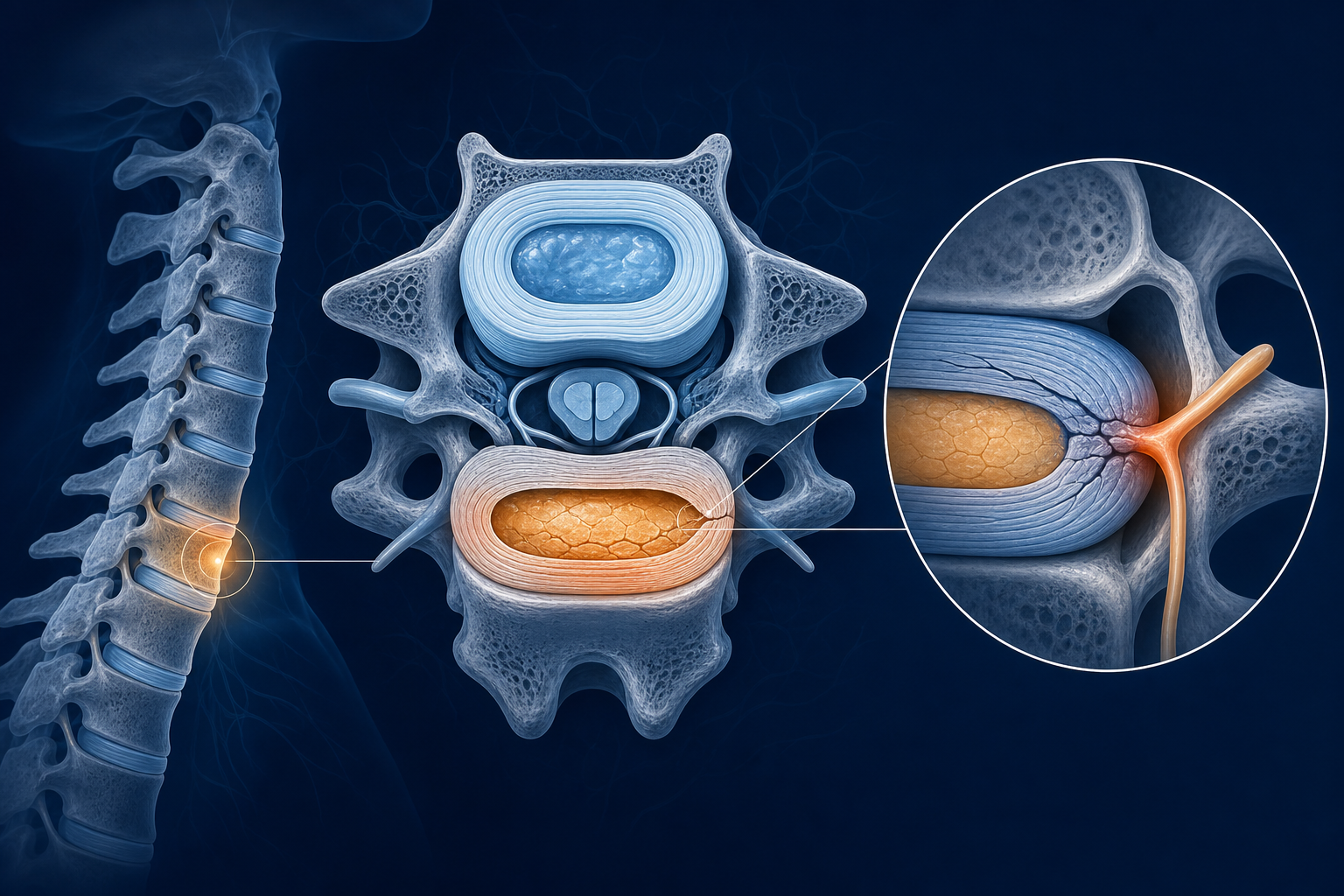
Your cervical spine is the seven-vertebra column that runs through your neck, and between each pair of vertebrae sits a disc — a round cushion with a tough outer shell (the annulus fibrosus) and a soft, gel-like center (the nucleus pulposus). These discs absorb shock, allow movement, and keep the vertebrae from grinding against each other.
Cervical disc degeneration occurs when one or more of these discs gradually lose height, moisture, and elasticity over time. The disc essentially dries out and flattens, reducing the cushioning space between vertebrae. As the space narrows, the surrounding joints, ligaments, and nerves can become irritated or compressed. In many cases, the body responds by forming small bony outgrowths called osteophytes, which can further crowd the spinal canal or nerve roots.
This process is a normal part of aging — research consistently shows that disc changes are detectable on imaging in a large proportion of adults over 40, many of whom have no pain at all. That said, degeneration can accelerate due to injury, repetitive strain, poor posture, or genetics, and when symptoms do appear, they deserve attention.
Cervical Disc Degeneration vs. Herniated Disc: What's the Difference?
Patients frequently ask about the difference between cervical disc degeneration and a herniated disc, and the distinction matters for understanding your care options.
Degeneration describes the gradual breakdown of disc material — a slow process that unfolds over months or years. The disc loses integrity but does not necessarily rupture.
A herniated disc occurs when the inner nucleus material pushes through a crack or tear in the outer annulus. It can happen suddenly (after a trauma) or develop over time on top of existing degeneration. A herniated disc is more likely to cause sharp, acute nerve compression with pronounced arm symptoms.
The two conditions can coexist, and a disc that has undergone degeneration is generally more susceptible to herniation. If you have imaging results you'd like help interpreting in the context of your symptoms, a qualified provider is the right resource — not a website alone.
Cervical Disc Degeneration Symptoms: Neck Pain, Radiating Arms, and More
Symptoms vary considerably depending on which discs are affected and how much the surrounding structures are irritated. Common experiences include:
- Axial neck pain — a dull, aching, or stiff discomfort centered in the neck, often worse after prolonged sitting or sleeping in an awkward position
- Radiating arm pain — when a nerve root is compressed or irritated, pain, tingling, or numbness may travel from the neck into the shoulder, arm, or hand along a predictable path called a dermatome
- Neck stiffness — reduced range of motion, especially rotation and side-bending, is very common with disc degeneration and the associated joint changes
- Muscle weakness — some patients notice difficulty gripping objects or lifting the arm when nerve function is affected
- Headaches — degeneration in the upper cervical spine (C1–C3) may contribute to cervicogenic headaches that originate in the neck and refer pain to the base of the skull or behind the eyes
Can Cervical Disc Degeneration Cause Headaches and Dizziness?
Yes, in some cases. Cervicogenic headaches — headaches that originate from structures in the neck — are a recognized phenomenon associated with upper cervical joint and disc changes. Dizziness is less straightforward: some patients with cervical spine conditions report a sensation of unsteadiness or lightheadedness, which researchers think may relate to disrupted proprioceptive signaling from the cervical joints or irritation of structures near the upper spine. However, dizziness has many possible causes, and it is important to have a thorough evaluation rather than attributing it to neck degeneration without ruling out other sources. Always mention dizziness symptoms to your provider at your first appointment.
Is It Normal to Have Neck Stiffness With Disc Degeneration?
Stiffness is one of the most consistently reported symptoms, and yes, it is a typical feature of this condition. As disc height decreases and the facet joints that share load with the discs become stressed, the muscles surrounding the cervical spine often tighten as a protective response. Morning stiffness that eases with gentle movement is particularly common. Persistent or worsening stiffness — especially if accompanied by weakness, bladder or bowel changes, or difficulty walking — warrants prompt evaluation.
How Long Does Cervical Disc Degeneration Take to Heal?
This is one of the most common questions patients ask, and it deserves an honest answer: disc degeneration itself does not reverse. The structural changes to the disc are largely permanent. However, that does not mean permanent pain. Many patients experience significant symptom improvement with consistent conservative care over weeks to months, and some achieve long-term relief without surgery.
A realistic timeline depends on the severity of degeneration, the specific symptoms involved, your activity levels, and how consistently you follow a treatment plan. Acute flare-ups may settle within a few weeks with appropriate management; longer-standing or more complex cases often require several months of rehabilitation. The goal is not to restore the disc to its original state — it's to reduce inflammation, restore function, build supporting muscle strength, and interrupt the pain cycle.
Cervical Disc Degeneration After a Car Accident or Whiplash
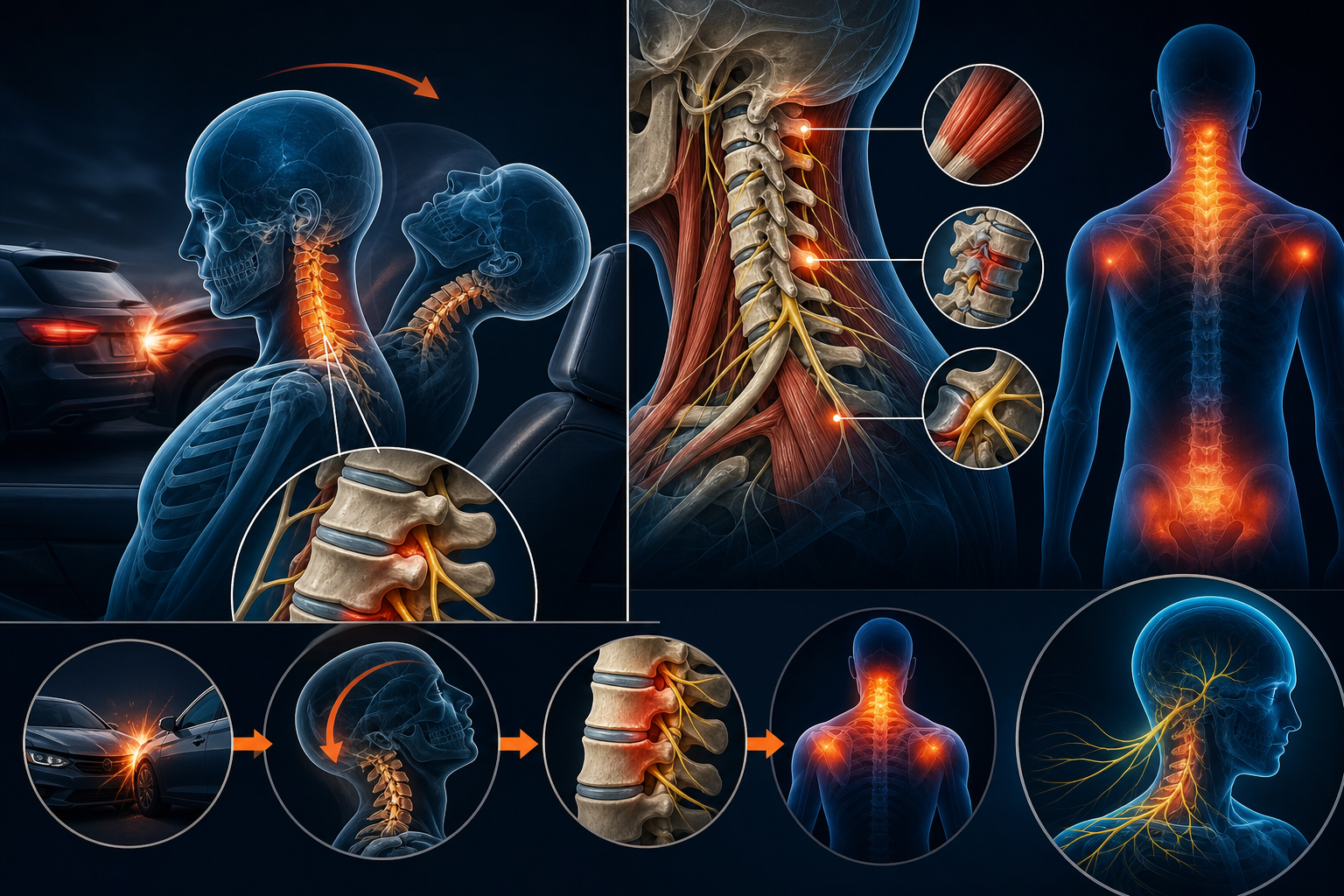
Trauma is a recognized accelerant of disc degeneration. A car accident — particularly one involving a rear-end collision and the rapid flexion-extension mechanism known as whiplash — can injure disc structures that were previously asymptomatic or only mildly affected. The forces involved can cause micro-tears in the annulus, accelerate fluid loss from the disc, and trigger an inflammatory response that makes previously quiet degeneration symptomatic.
If your neck symptoms began after a vehicle collision or other trauma, early evaluation is especially important. Documenting the connection between your injury and your symptoms supports both your clinical care and any related personal-injury process. Conservative care initiated early is associated with better functional outcomes in post-trauma cervical conditions. Search for chiropractors experienced in auto-injury care on Medximity to find a provider familiar with post-accident cervical rehabilitation.
Conservative Treatment Options for Cervical Disc Degeneration Without Surgery
For most patients, conservative (non-surgical) care is the appropriate first-line approach, and it is where the evidence most consistently supports meaningful improvement. Surgery is generally considered only when conservative care has been genuinely exhausted and there is significant neurological compromise that isn't resolving.
Chiropractic Care for Cervical Disc Degeneration
Chiropractors are trained to assess and treat cervical spine conditions using a range of manual and instrument-assisted techniques. Chiropractic adjustments to the cervical and upper thoracic spine may help restore segmental motion, reduce joint irritation, and alleviate muscle tension associated with disc degeneration. In cases where traditional high-velocity manipulation is not appropriate — for example, in more advanced degeneration or significant nerve compression — chiropractors frequently use gentler mobilization techniques, traction, soft-tissue work, and therapeutic modalities instead.
Many patients find that regular chiropractic care helps manage flare-ups and maintain function over the long term. Find a chiropractor near you who treats cervical disc conditions through the Medximity provider directory.
Physical Therapy Exercises for Cervical Disc Degeneration
A physical therapist can design an individualized exercise program targeting the deep cervical flexors, cervical extensors, and upper thoracic muscles that support the spine. Research suggests that targeted strengthening and stabilization exercises are among the most effective long-term strategies for managing cervical degeneration pain. Common approaches include:
- Deep cervical flexor activation exercises (such as chin tucks) to improve postural control
- Scapular retraction and thoracic extension work to reduce forward-head posture loading
- Gentle range-of-motion exercises to reduce stiffness without aggravating inflamed tissue
- Neural mobilization techniques if nerve root irritation is present
A physical therapist will also assess your movement patterns and identify compensations that may be contributing to symptoms. Browse physical therapists on Medximity to find one specializing in cervical rehabilitation.
Natural Treatment for Cervical Disc Degeneration Pain Relief
In addition to professional care, several self-management strategies may support relief between appointments:
- Heat and cold therapy — ice can help reduce acute inflammation; heat may ease chronic muscle tension. Alternating the two is a common approach that many patients find helpful.
- Gentle movement — prolonged rest is rarely beneficial. Gentle walks and prescribed mobility exercises keep circulation to the cervical structures and reduce stiffness.
- Sleep positioning — a supportive pillow that maintains natural cervical curvature can significantly affect morning symptoms. A provider can advise on appropriate pillow type for your specific curve.
- Stress management — chronic pain is meaningfully influenced by the nervous system's stress state. Practices such as diaphragmatic breathing, mindfulness, or yoga may help dampen the pain experience.
- Anti-inflammatory diet — while no diet cures disc degeneration, some evidence associates Mediterranean-style eating patterns with lower systemic inflammation markers.
Ergonomic Tips for Cervical Disc Degeneration When Working at a Desk
For patients who spend significant time at a computer, workstation setup can meaningfully affect symptom load throughout the day:
- Position your monitor so the top of the screen is at or slightly below eye level, reducing the tendency to look down
- Keep the keyboard and mouse close enough that your elbows remain near a 90-degree angle
- Use a chair with adjustable lumbar support and armrests so the arms don't drag on the shoulder muscles
- Set a timer to stand, stretch, or walk briefly every 45–60 minutes — sustained static posture is a significant driver of cervical muscle tension
- Consider a standing desk or a sit-stand converter to vary your posture across the workday
- Position your phone at eye level or use a headset — prolonged phone cradle between shoulder and ear is a well-known cervical stressor
For more specific guidance on posture and ergonomics tailored to your degree of degeneration, ask your physical therapist or chiropractor for a posture assessment. You can also explore Medximity's guide to neck pain ergonomics for desk workers for additional strategies.
When Should You See a Provider?
Not every episode of neck stiffness requires a provider visit. But you should schedule an evaluation if:
- Neck pain has persisted for more than two to three weeks without improvement
- You have pain, numbness, or tingling radiating into the arm or hand
- You notice weakness in the arm, hand, or grip
- Your symptoms began after a trauma such as a car accident or fall
- You are experiencing headaches or dizziness alongside neck pain
- Your symptoms are interfering with sleep, work, or daily activities
Seek emergency care immediately if you experience sudden severe weakness in the arms or legs, loss of bladder or bowel control, or difficulty walking — these may signal spinal cord involvement requiring urgent attention.
Ready to find care? Search Medximity's provider directory to connect with chiropractors, physical therapists, and rehabilitation specialists experienced in cervical spine conditions near you.
Frequently Asked Questions
What is cervical disc degeneration in the neck, exactly?
Cervical disc degeneration refers to the gradual breakdown of the intervertebral discs in the neck (cervical spine). Over time, discs lose moisture and height, reducing their ability to absorb shock. This can place increased stress on nearby joints, ligaments, and nerve roots, potentially leading to pain, stiffness, or radiating arm symptoms.
Is cervical disc degeneration the same as a herniated disc?
No. Degeneration describes the slow deterioration of disc material over time. A herniated disc occurs when the inner disc material pushes through a tear in the outer wall, often causing more acute nerve compression. The two can occur together, as degenerating discs are more vulnerable to herniation.
Can cervical disc degeneration cause headaches and dizziness?
It may, in some cases. Upper cervical degeneration is associated with cervicogenic headaches that refer pain to the head and base of the skull. Dizziness is less directly linked but has been reported alongside cervical spine conditions. Because dizziness has many possible causes, a thorough evaluation is important before attributing it to disc changes.
How long does it take to feel better with cervical disc degeneration?
Symptom improvement timelines vary. Mild flare-ups may ease within a few weeks of conservative care, while more established or complex presentations may require several months of consistent treatment. The structural changes in the disc do not reverse, but many patients achieve meaningful, long-term pain reduction without surgery.
What are the best non-surgical treatment options for cervical disc degeneration?
Evidence supports a combination of chiropractic care, physical therapy, targeted exercise, ergonomic modification, and self-care practices such as heat/ice therapy and improved sleep positioning. Treatment should be individualized based on your specific symptoms, imaging findings, and functional limitations.
Can a car accident make cervical disc degeneration worse?
Yes. Trauma such as whiplash from a rear-end collision can accelerate degeneration in discs that were previously asymptomatic or mildly affected. The rapid forces involved can damage disc structures and trigger inflammation, making previously quiet degeneration painful. Early evaluation and conservative treatment after an accident is recommended.
Should I stop exercising if I have cervical disc degeneration?
In most cases, no. Appropriate movement is beneficial — it supports disc nutrition, maintains muscle function, and can reduce pain over time. The key is exercising in ways that don't aggravate your specific symptoms. A physical therapist or chiropractor can guide you on which activities are safe and therapeutic for your condition.