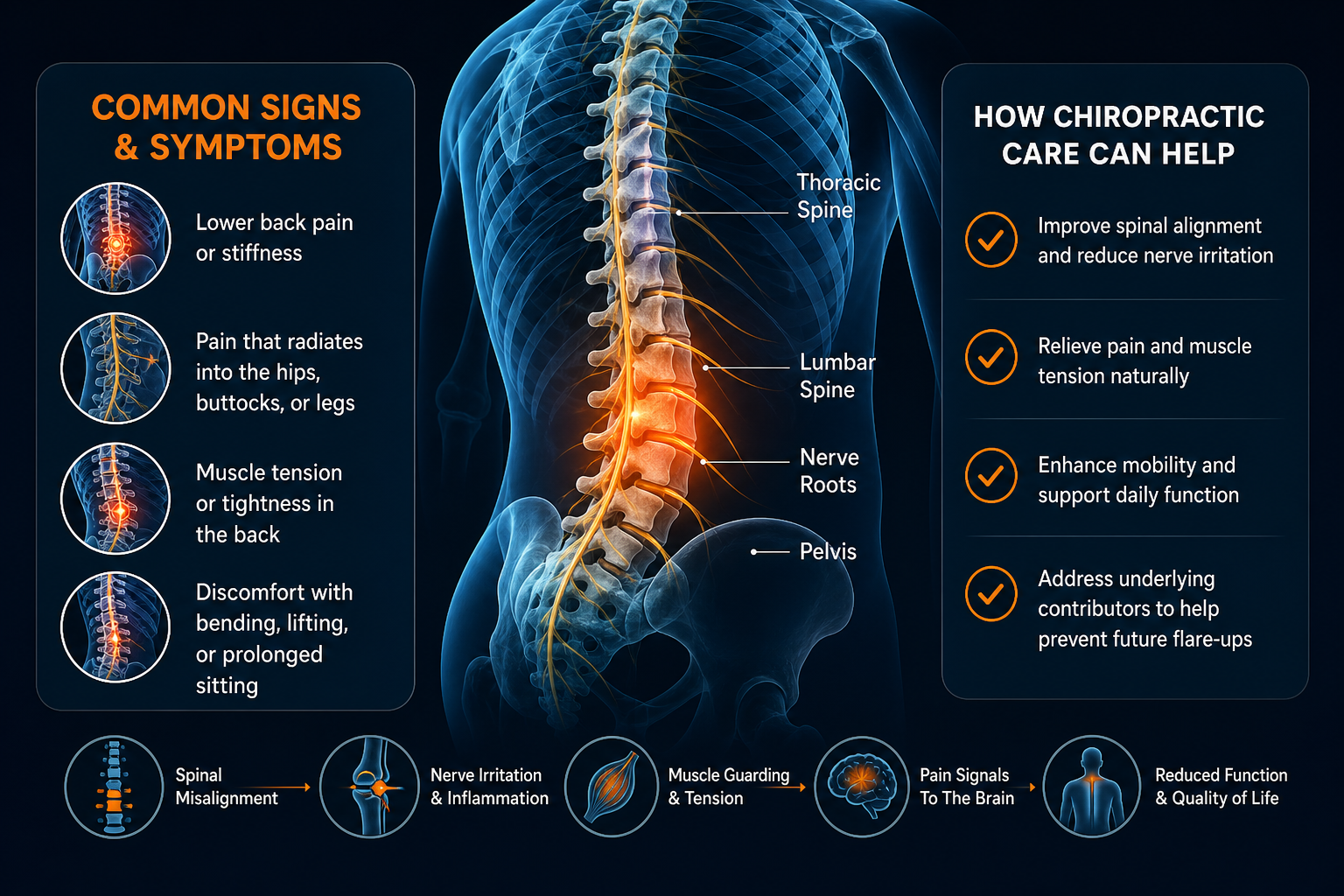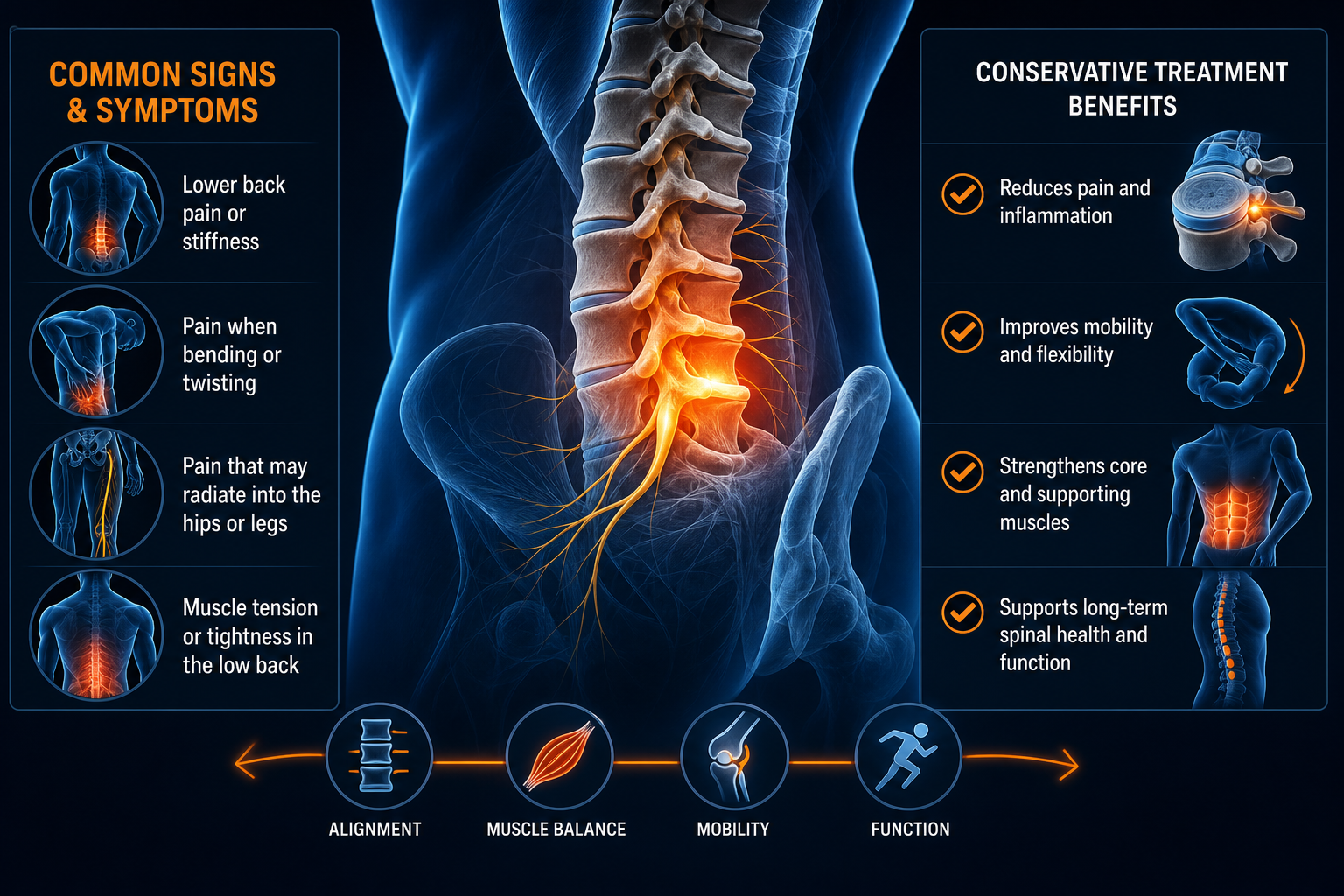
Back pain has a way of making everything harder — getting out of bed, sitting at a desk, even taking a deep breath. If you are looking for back pain relief stretches you can start today, you are not alone. Millions of adults deal with some form of back discomfort each year, and targeted stretching is one of the most widely recommended starting points for conservative, non-surgical care.
This article covers why stretching helps, which movements are most useful for the lower and upper back, how often to stretch, and — critically — when stretching alone is not enough and a chiropractor or physical therapist should be part of your plan.
Why Does Stretching Help Back Pain?
Muscles, tendons, and connective tissue that are short, tight, or overworked pull on the spine in ways that can create or worsen pain. Sustained poor posture, long hours of sitting, and repetitive movement patterns all contribute to this tightening over time.
Stretching works by gradually lengthening these tissues, which may reduce the mechanical load on spinal joints, improve circulation to the area, and calm down overactive muscle guarding — the reflex tightening that often follows an injury or strain. Research in the area of musculoskeletal health consistently suggests that regular, gentle mobility work is associated with meaningful reductions in low back pain intensity and disability for many people, particularly when combined with professional guidance.
It is worth noting that not all back pain has the same cause. Stretching is most clearly helpful for muscular tension, poor posture, and movement restriction. It is less likely to resolve structural issues like disc herniation, nerve compression, or joint degeneration on its own — which is why knowing when to seek care matters just as much as knowing which stretches to do.
Is It Safe to Stretch With Lower Back Pain?
For most mild to moderate muscular back pain, gentle stretching is considered safe and is often actively encouraged by providers. That said, there are situations where stretching without professional guidance could aggravate an underlying problem.
Approach stretching cautiously — and check with a provider first — if you experience any of the following:
- Sharp, shooting, or radiating pain down one or both legs
- Numbness, tingling, or weakness in the legs or feet
- Pain that is severe or that significantly worsens with movement
- Back pain following a fall, accident, or direct trauma
- Pain that has lasted more than six weeks without improvement
- Any history of osteoporosis, spinal fracture, or recent spinal surgery
If you are unsure, a brief consultation with a chiropractor or physical therapist can help you understand which movements are appropriate for your specific situation before you begin.
Best Stretches for Lower Back Pain Relief
The following movements are commonly used in chiropractic and physical therapy settings for lower back pain relief without surgery. Move slowly into each position, breathe steadily, and never push through sharp or shooting pain.
Knee-to-Chest Stretch
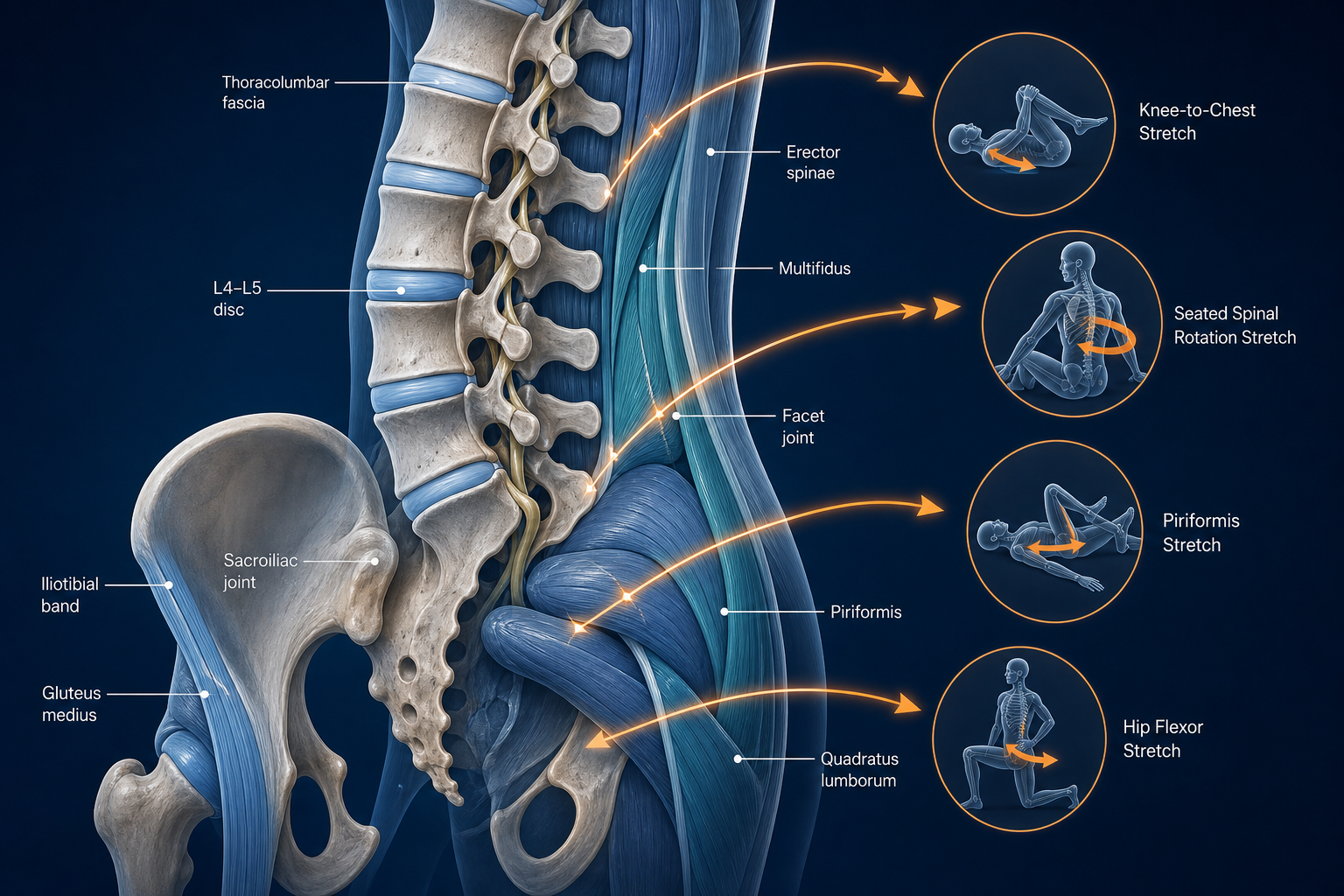
Lie on your back with knees bent and feet flat. Gently draw one knee toward your chest, holding behind the thigh. Hold for 20–30 seconds, then switch sides. This stretch targets the lumbar extensors and may help decompress the lower spine. It is a good choice as a gentle morning stretch for chronic back pain, since it requires almost no range of motion to start.
Child's Pose
From a kneeling position, sit your hips back toward your heels and extend your arms forward on the floor. Allow your lower back to lengthen and relax. Hold for 30–60 seconds. Child's pose is a foundational yoga-derived stretch that elongates the lumbar spine and eases tension across the entire back.
Supine Spinal Twist
Lying on your back, draw one knee to your chest, then gently guide it across your body while keeping both shoulders on the floor. Hold 20–30 seconds per side. Rotational stretching helps restore spinal mobility and can address the side-to-side stiffness that often accompanies lower back pain.
Cat-Cow Mobilization
On all fours, alternate between gently arching your back toward the ceiling (cat) and letting it sag toward the floor (cow) in a slow, rhythmic sequence. This dynamic movement is one of the most consistently recommended exercises for morning stiffness and helps restore fluid movement across multiple spinal segments.
Hip Flexor Stretches for Back Pain Relief
Tight hip flexors — the muscles connecting the front of the hip to the lumbar spine — are a frequently overlooked contributor to lower back pain, especially in people who sit for long periods. A simple standing or kneeling hip flexor stretch involves stepping one foot forward into a lunge position, keeping the back knee lowered toward the floor, and gently shifting weight forward until you feel a stretch at the front of the back hip. Hold 30 seconds per side. Addressing hip flexor tightness is often an important part of a comprehensive back pain stretching program.
How to Stretch Tight Upper Back Muscles
Upper back and thoracic spine tightness is common in people who work at computers, drive frequently, or carry tension in their shoulders. The upper back responds well to targeted stretching and postural correction.
Thoracic Extension Over a Foam Roller
Place a foam roller horizontally across your mid-back, support your head with your hands, and gently extend backward over the roller. Move it incrementally from the mid to upper back. This technique helps open the thoracic spine and counteract the forward-flexed posture that many people hold for hours each day.
Thread the Needle
From all fours, slide one arm underneath your body, palm facing up, rotating your chest toward the floor. Hold for 20–30 seconds per side. This stretch targets the thoracic rotators and the muscles surrounding the shoulder blade, which commonly contribute to upper back aching.
Doorway or Wall Chest Stretch
Stand in a doorframe with both forearms against the frame and gently lean your chest forward until you feel a stretch across the front of the chest and shoulders. Tight pectoral muscles pull the shoulders forward and increase thoracic kyphosis — a rounded-upper-back posture — so addressing chest tightness is often inseparable from relieving upper back pain.
How Often Should You Stretch for Back Pain?
Consistency tends to matter more than duration. For most people dealing with back pain, stretching once or twice daily — even for just 10 to 15 minutes — is associated with better outcomes than longer, infrequent sessions. Morning stretching may help reduce the stiffness that commonly peaks after a night of relative immobility, while an evening session can help release the tension accumulated during the day.
In terms of how long until back stretches reduce pain, many people notice some improvement in flexibility and mild reduction in discomfort within two to four weeks of consistent practice. Meaningful changes in chronic pain patterns typically take longer and often benefit from supervised guidance alongside a home routine.
When Stretching Is Not Helping Your Back Pain
If you have been stretching consistently for three to four weeks and notice little to no change — or if your pain is worsening — that is an important signal. Stretching is a valuable tool, but it is not a substitute for diagnosis and individualized treatment.
Several conditions may limit the effectiveness of stretching alone:
- Intervertebral disc involvement, where certain movements may aggravate rather than relieve symptoms
- Sacroiliac joint dysfunction, which may require manipulation or targeted stabilization exercises
- Nerve-related pain, which often needs a different clinical approach
- Muscle imbalances that require strengthening, not just flexibility work
A chiropractor can assess spinal alignment, joint mobility, and nerve function, and may use spinal manipulation alongside soft tissue techniques to address issues that stretching cannot fully reach. A physical therapist can conduct a movement analysis and design a progressive rehabilitation program that goes beyond passive stretching to include strengthening and neuromuscular retraining. Learn more about what to expect from conservative back pain care in our guide to chiropractic care for back pain and our article on physical therapy for back pain.
Chiropractor or Physical Therapy for Back Pain: Which Is Right for You?
Both disciplines have strong evidence bases for back pain management, and many patients benefit from seeing both — sometimes concurrently. Chiropractors tend to focus on spinal alignment, joint function, and nervous system health, often using hands-on manipulation. Physical therapists focus on restoring movement, strength, and function through exercise-based rehabilitation. The right choice often depends on the nature and duration of your pain, your history, and your personal preferences.
The most important step is not choosing between them — it is getting evaluated by someone qualified to assess your specific situation. You can search for a chiropractor near you or find a physical therapist in your area through the Medximity provider directory. If you are unsure where to start, explore our comparison of chiropractic and physical therapy for back pain to help inform your decision.
Getting Started Today
Back pain relief stretches are a meaningful first step — accessible, low-cost, and supported by a broad body of evidence in musculoskeletal health research. Begin with the gentler movements described above, prioritize consistency over intensity, and pay attention to how your body responds. If your pain is severe, radiating, or simply not responding to conservative self-care, do not wait. A qualified provider can help you understand what is happening and build a plan designed for your body, not a generic one.
Browse the Medximity provider directory to connect with chiropractors and physical therapists who specialize in back pain near you.