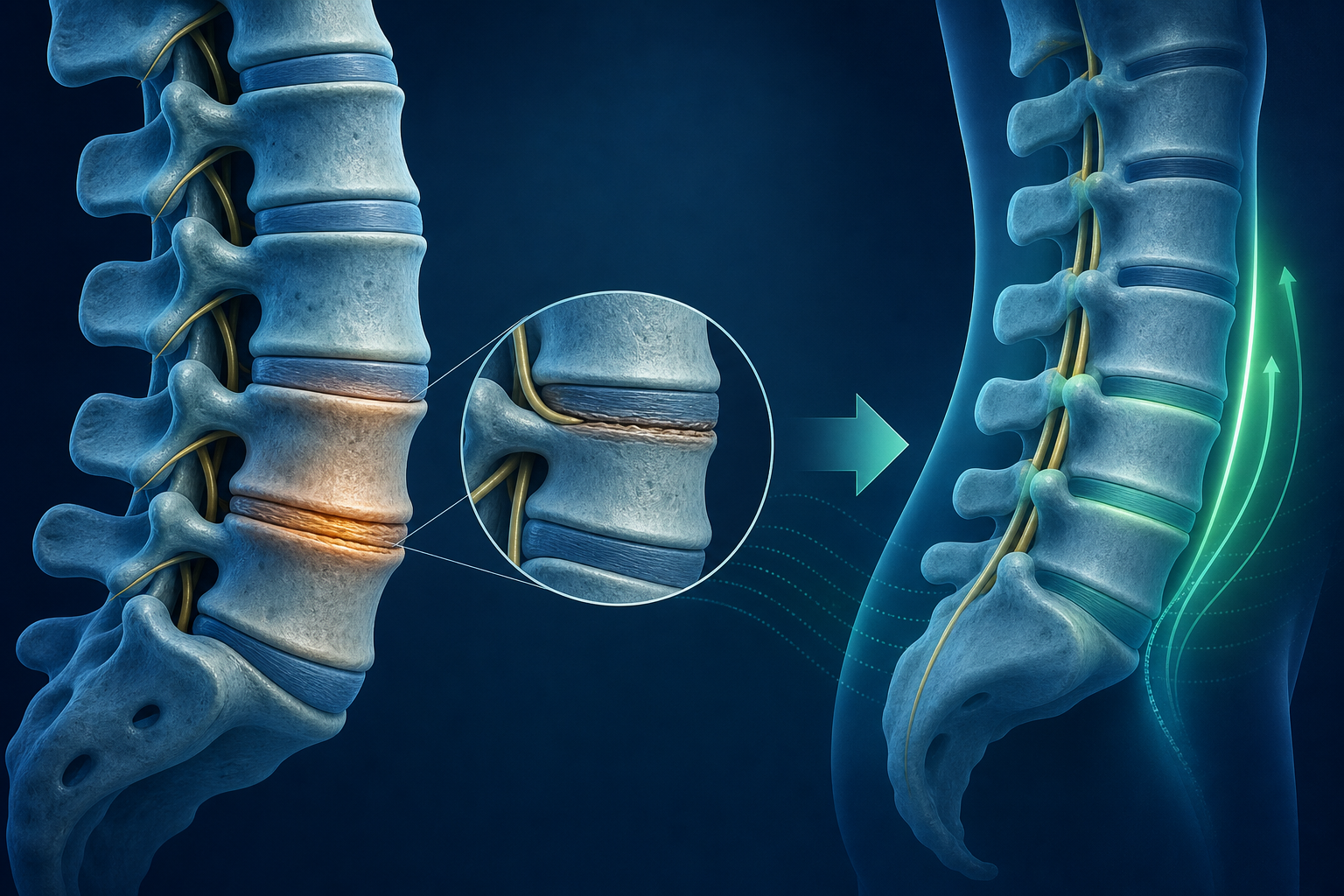
Understanding Lumbar Disc Degeneration: Symptoms, Causes, and Treatment can help you make sense of lower back pain, stiffness, and changes in movement that may develop over time. Lumbar disc degeneration, often called degenerative disc disease, describes age-related or stress-related changes in the spinal discs of the lower back. These changes are common, especially as people get older, but they do not always cause pain.
When lumbar disc degeneration does contribute to symptoms, patients may notice aching in the low back, lower back pain when sitting, difficulty bending, or pain that travels into the buttock, hip, or leg. Many people improve with conservative care such as education, activity modification, chiropractic care, physical therapy, therapeutic exercise, and ergonomic changes. A qualified healthcare provider can evaluate your symptoms, screen for concerning signs, and help you choose a plan that fits your specific situation.
If you are comparing care options, Medximity can help you explore providers who treat spine-related concerns, including chiropractors near you and physical therapists near you.
What Is Lumbar Disc Degeneration?
Lumbar disc degeneration refers to gradual changes in the intervertebral discs of the lower back. The lumbar spine is the lower section of the spine, typically made up of five vertebrae labeled L1 through L5. Between these bones are spinal discs. Each disc helps absorb load, allows controlled movement, and creates spacing between the vertebrae.
A healthy disc has a softer gel-like center, called the nucleus pulposus, and a stronger outer ring, called the annulus fibrosus. Over time, a disc may lose water content, become thinner, develop small tears in the outer ring, or become less able to absorb force. These changes are what providers often mean when they discuss lumbar disc degeneration.
It is important to know that disc degeneration is not always a disease in the way many patients imagine. Research and clinical experience suggest that degenerative changes are commonly seen on imaging in adults, including people who do not have back pain. In other words, an MRI or X-ray finding does not automatically explain every symptom. Your provider will usually consider the imaging findings together with your history, movement exam, neurologic screening, and pain pattern.
Is Degenerative Disc Disease the Same Thing?
Many people hear the term degenerative disc disease and worry that their spine is rapidly breaking down. In most cases, the term refers to a gradual process rather than a contagious or aggressive disease. Some providers prefer the phrase disc degeneration because it sounds less alarming and more accurately describes age-related structural change.
Disc degeneration may be associated with lower back pain, but the relationship is not always straightforward. Some patients with significant imaging changes have mild symptoms, while others with smaller changes feel more limited. This is why a careful clinical evaluation matters.
Does Lumbar Disc Degeneration Cause Pain?
Lumbar disc degeneration can cause pain, but it does not always do so. The answer depends on how the disc changes interact with surrounding joints, nerves, muscles, ligaments, and movement patterns. Pain may come from the disc itself, from nearby facet joints, from muscle guarding, or from irritation around a spinal nerve. In many cases, several factors overlap.
Patients often ask, “Does lumbar disc degeneration cause pain?” A balanced answer is that it may contribute to pain in some people, especially when the disc loses height, becomes irritated, or affects nearby structures. However, pain is complex. Sleep, stress, workload, conditioning, inflammation, prior injuries, and daily posture may all influence how symptoms feel.
If your main concern is low back discomfort, you may also find Medximity’s resource on low back pain helpful as you learn about possible causes and conservative care options.
Common Symptoms of Lumbar Disc Degeneration
Symptoms vary widely. Some people have no symptoms at all. Others have intermittent flare-ups that improve with rest, movement changes, or rehabilitation. A smaller group may have persistent symptoms that affect work, sleep, or daily activities.
Lower Back Pain and Aching
The most common symptom is a dull, deep ache in the lower back. It may be centered near the belt line or spread across both sides. Some patients describe the discomfort as pressure, soreness, or fatigue in the lower spine. Symptoms may be worse after prolonged sitting, repeated bending, lifting, or long drives.
Lower Back Pain When Sitting
Lower back pain when sitting with disc degeneration is a common complaint. Sitting can increase pressure through the lumbar discs, especially when the pelvis rolls backward and the lower back rounds. A soft couch, low car seat, or poorly adjusted workstation may make symptoms more noticeable. Some people feel better when they stand, walk, or use a lumbar support.
This does not mean sitting is dangerous for everyone with disc degeneration. It means that posture, duration, and load tolerance may matter. A provider may help you identify sitting positions, movement breaks, and strengthening exercises that reduce irritation over time.
Stiffness or Trouble Bending
Some patients say, “I can’t bend my lower back,” and wonder if disc degeneration is the reason. Degeneration may contribute to stiffness, but limited bending can also come from muscle guarding, hip stiffness, irritated joints, or fear of movement after painful episodes. A careful exam can help determine whether the limitation appears disc-related, joint-related, muscular, or nerve-related.
Leg Pain, Buttock Pain, or Sciatica-Like Symptoms
Leg pain from lumbar disc degeneration may occur if disc height loss, inflammation, or related spinal changes irritate a nerve root. Pain may travel into the buttock, back of the thigh, calf, or foot. Some people describe burning, tingling, numbness, or an electric feeling. These symptoms are sometimes grouped under the term sciatica, although true sciatica has specific nerve-related patterns.
If you have symptoms that travel down the leg, you may want to read more about sciatica and radiating leg pain. A provider can help distinguish nerve irritation from hip, sacroiliac, muscular, or vascular causes.
Flare-Ups That Come and Go
Disc-related pain often fluctuates. A person may feel relatively normal for weeks and then experience a flare after lifting, yard work, travel, or long sitting. Flare-ups do not always mean new damage has occurred. They may reflect temporary irritation, sensitivity, or overload. Still, repeated or worsening episodes should be discussed with a qualified provider.
When to See a Provider for Possible Lumbar Disc Degeneration
You should consider seeing a healthcare provider when lower back pain lasts more than a few days, keeps returning, limits daily activity, affects sleep, or travels into the leg. You should also seek evaluation if you notice numbness, tingling, weakness, balance changes, or symptoms that are not improving with basic self-care.
Prompt medical evaluation is especially important if back pain follows a significant fall or accident, occurs with fever, unexplained weight loss, history of cancer, or severe night pain, or if you develop new bowel or bladder changes, numbness in the groin or saddle area, or progressive leg weakness. These symptoms can have causes that require urgent assessment.
For non-emergency spine concerns, many patients begin with conservative providers such as chiropractors, physical therapists, primary care clinicians, or rehabilitation specialists. If you are searching for a chiropractor for lumbar disc degeneration near me, you can start with Medximity’s chiropractic provider directory. If you are searching for physical therapy for lumbar disc degeneration near me, you can compare options through the physical therapy provider directory.
What Causes Lumbar Disc Degeneration?
Lumbar disc degeneration usually develops from a combination of normal aging, mechanical stress, genetics, prior injury, and lifestyle factors. It is rarely the result of one single event. Understanding the possible contributors may help you and your provider build a practical care plan.
Age-Related Disc Changes
Discs naturally lose some water content and elasticity over time. As the disc becomes less hydrated, it may not distribute load as smoothly. The disc space can narrow, and the surrounding joints may experience more stress. These changes are common with aging and may or may not cause symptoms.
Repetitive Loading and Work Demands
Jobs or hobbies that involve repeated bending, twisting, lifting, vibration, or prolonged sitting may increase stress on the lumbar spine. This does not mean activity is bad. The spine is designed to move. Problems may arise when load exceeds current tissue capacity, especially without adequate strength, recovery, or movement variety.
Prior Back Injury
A previous back injury may contribute to altered movement patterns, muscle guarding, or increased sensitivity. Some people recover fully after an acute episode, while others develop recurring symptoms. A rehabilitation plan may help improve tolerance and confidence with movement.
Genetics and Family History
Genetics can influence disc structure, tissue resilience, and the likelihood of earlier degenerative changes. A family history of disc problems does not guarantee pain, but it may be one factor among many.
Smoking, General Health, and Conditioning
General health may influence spine symptoms. Smoking is associated with poorer disc nutrition and tissue healing. Lower physical conditioning, poor sleep, high stress, and limited movement may also affect pain sensitivity and recovery. Conservative care often looks beyond the disc itself and addresses the person’s overall function.
Lumbar Disc Degeneration vs Herniated Disc
Patients often compare lumbar disc degeneration vs herniated disc because both can involve the spinal discs and both may cause lower back or leg symptoms. They are related but not identical.
Lumbar disc degeneration describes gradual changes in the disc, such as dehydration, loss of height, annular wear, or reduced shock absorption. It is often a long-term process and may be present without symptoms.
A herniated disc occurs when disc material pushes outward through or beyond the outer ring. If that material irritates or compresses a nearby nerve root, it may cause leg pain, numbness, tingling, or weakness. A herniation can occur in a disc that already has degenerative changes, but it can also happen after a specific strain or injury.
In practical terms, degeneration is usually about disc wear and reduced disc height over time, while herniation is about disc material protruding or leaking outward. Both conditions can be managed conservatively in many cases, depending on symptoms and exam findings. To learn more about disc-related terms, visit Medximity’s guide to herniated discs and bulging discs.
How Lumbar Disc Degeneration Is Evaluated
A provider will typically begin with a conversation about your symptoms. They may ask when the pain started, what makes it better or worse, whether symptoms travel into the leg, and how your pain affects work, sleep, exercise, and daily activities. They may also ask about prior injuries, medical history, and goals for care.
Physical Examination
The exam may include posture and movement assessment, lumbar range of motion, hip mobility, strength testing, reflexes, sensation, and orthopedic or neurologic screening. The goal is not just to label the disc. It is to understand how your spine, hips, nerves, and muscles are functioning together.
Imaging When Appropriate
X-rays may show disc space narrowing, bone spurs, or alignment changes. MRI can show disc hydration, herniation, nerve root irritation, and other soft-tissue details. Imaging is not always needed right away, especially when symptoms are mild or improving. Many guidelines support conservative management first when there are no red flags or progressive neurologic findings. Your provider can discuss whether imaging is appropriate based on your specific presentation.
Why Imaging Findings Need Context
Seeing the words “degenerative disc disease” on an imaging report can feel alarming. However, imaging findings are common and do not always match pain severity. A good provider will explain what the findings may mean, what they do not necessarily mean, and how they relate to your exam.
Lumbar Disc Degeneration Treatment Without Surgery
Many patients look for lumbar disc degeneration treatment without surgery. Conservative care may help reduce symptoms, improve movement tolerance, and support long-term spine health. The best plan depends on your symptoms, irritability, fitness level, work demands, and goals.
Conservative care does not reverse every structural disc change. Instead, it often focuses on calming irritated tissues, restoring movement, improving strength, reducing avoidable stress on the spine, and helping you return to meaningful activities. The following options may be part of a non-surgical plan.
Education and Activity Modification
Understanding your condition can reduce fear and help you make better daily choices. A provider may explain which movements are currently sensitive and how to modify them while symptoms settle. For example, you may be advised to break up long sitting, adjust lifting mechanics, change sleep positioning, or temporarily reduce activities that repeatedly flare symptoms.
Activity modification should not mean complete rest for most people. Short periods of relative rest may be useful during a flare, but prolonged inactivity can make stiffness and deconditioning worse. Gentle walking and tolerable movement are often encouraged when appropriate.
Chiropractic Care
Chiropractic care for lumbar disc degeneration may include spinal manipulation or mobilization, soft-tissue therapy, rehabilitative exercise, posture coaching, and ergonomic recommendations. Some patients report improved mobility or reduced pain with chiropractic treatment, although results vary based on the person and the condition.
A chiropractor should screen for signs that require referral and tailor care to your comfort level. High-force techniques are not appropriate for every patient. Many chiropractors use gentle mobilization, flexion-distraction tables, instrument-assisted methods, or exercise-based care when a patient is sensitive. You can learn more about Medximity’s overview of chiropractic care.
Physical Therapy and Rehabilitation
Physical therapy for lumbar disc degeneration often focuses on movement control, core and hip strength, flexibility, nerve mobility when appropriate, and gradual return to activity. A physical therapist may assess how you bend, sit, lift, walk, and transition from sitting to standing. Treatment may include hands-on techniques, therapeutic exercise, education, and a home program.
For many patients, the most valuable part of physical therapy is a progressive plan. Early exercises may be gentle and symptom-guided. Over time, the program may build toward stronger hips, better trunk endurance, improved lifting tolerance, and more confidence with daily tasks. Medximity’s page on physical therapy explains how rehabilitation may support recovery and function.
Exercise Therapy
Exercise is commonly part of natural treatment for degenerative disc disease. The goal is not to force the spine into painful ranges. The goal is to improve support, circulation, mobility, and load tolerance. The best exercises for lumbar disc degeneration depend on the person. Some patients feel better with extension-based movements, some prefer neutral-spine strengthening, and others need hip mobility or walking tolerance first.
Because disc symptoms can vary, it is wise to start gently and stop any exercise that causes sharp, worsening, or radiating pain. A provider can help you decide which movements fit your presentation.
Ergonomic and Lifestyle Changes
Small daily changes may reduce cumulative irritation. These may include using a chair with lumbar support, keeping screens at eye level, alternating sitting and standing, taking short walking breaks, using hip-hinge mechanics for lifting, and improving sleep setup. General wellness factors such as hydration, nutrition, stress management, and smoking cessation may also support tissue health and recovery, though they are not quick fixes.
Best Exercises for Lumbar Disc Degeneration
The best exercises for lumbar disc degeneration are individualized. A movement that helps one person may irritate another, especially during an active flare. The following categories are commonly used in conservative spine care, but they should be adapted to your symptoms and guided by a qualified provider when pain is persistent or radiating.
Walking
Walking is often one of the most accessible ways to keep the spine moving without heavy loading. Short, frequent walks may be better tolerated than one long walk during a flare. If walking increases leg symptoms, stop and consult a provider.
Pelvic Tilts
Pelvic tilts can help some patients gently explore lumbar motion. Lying on your back with knees bent, you slowly flatten and release the lower back against the floor. This should feel controlled, not forced.
Bird Dog
The bird dog exercise trains trunk control and hip coordination. From hands and knees, you extend one leg and the opposite arm while keeping the trunk steady. Many people begin with legs only or arms only before progressing.
Glute Bridges
Glute bridges may help strengthen the hips and support better load sharing between the spine and lower body. Lying on your back with knees bent, you gently lift the hips while keeping the movement smooth. If bridging increases back pain, a provider may suggest modifications.
Hip Flexor and Hamstring Mobility
Tight hips can change how the lumbar spine moves during standing, walking, and bending. Gentle hip flexor or hamstring stretching may help some patients, but aggressive stretching is not always helpful during an irritated episode.
McKenzie-Style or Directional Preference Movements
Some patients with disc-related symptoms respond well to repeated movements in a specific direction, often called a directional preference. For example, certain extension-based exercises may reduce symptoms for some people, while others do better with different positions. These exercises should be selected carefully, especially if leg pain is present.
If you are unsure where to begin, it is safer to have your movement assessed by a clinician rather than copying a generic exercise routine. A Medximity provider profile can help you compare conservative spine care options in your area.
Natural Treatment for Degenerative Disc Disease: What May Help?
Natural treatment for degenerative disc disease usually means non-surgical, non-pharmacologic strategies that support function and comfort. These approaches may include movement, hands-on conservative care, strengthening, posture changes, pacing, and lifestyle support. They are not a guaranteed cure, and they may not be enough for every person, but they can be useful components of a broader care plan.
Movement Instead of Prolonged Rest
When symptoms flare, it is understandable to want to avoid movement. However, prolonged bed rest may contribute to stiffness, muscle loss, and fear of activity. Gentle, tolerable movement often helps maintain circulation and confidence. Your provider can help define what “tolerable” means for your situation.
Heat, Ice, and Comfort Measures
Some patients use heat to reduce muscle tightness or ice to calm soreness after activity. Responses vary. These measures may provide short-term comfort but should not replace evaluation when pain persists, worsens, or includes nerve symptoms.
Sleep and Recovery
Pain and poor sleep can reinforce each other. A supportive mattress, pillow positioning, and a consistent sleep routine may help some patients feel less stiff in the morning. Side sleepers may benefit from a pillow between the knees, while back sleepers may prefer a pillow under the knees. Comfort is individual.
Gradual Strength Building
Long-term management often depends on improving the body’s capacity to tolerate daily loads. This may include strengthening the glutes, hips, trunk, and legs. A gradual plan is usually better than a sudden return to heavy lifting after a period of pain.
What to Expect During Conservative Care
Your first visit with a chiropractor, physical therapist, or rehabilitation provider usually includes an intake, examination, explanation of findings, and a discussion of treatment options. You should have the chance to ask questions and understand why a provider recommends a specific approach.
Your First Appointment
Expect questions about your pain location, duration, aggravating factors, relieving factors, prior care, and goals. The provider may observe how you move, test strength and reflexes, assess sensation, and check whether certain positions change your symptoms. If leg symptoms are present, neurologic screening is especially important.
Your Care Plan
A conservative care plan may include in-office treatment, home exercises, walking goals, workstation changes, lifting modifications, and follow-up visits to monitor progress. The plan should be adjusted based on your response. If symptoms worsen or new neurologic signs appear, your provider may recommend additional evaluation or referral.
How Progress Is Measured
Progress is not only measured by pain levels. Your provider may also track sitting tolerance, walking distance, sleep quality, bending ability, strength, work capacity, and confidence with movement. Some patients notice early pain relief, while others first notice that they can do more before symptoms increase.
How Long Does Lumbar Disc Degeneration Last?
Lumbar disc degeneration is usually a long-term structural change, so the disc itself may not “go back” to a younger state. However, symptoms related to disc degeneration can improve. Many flare-ups settle over days to weeks, while more persistent cases may require a longer rehabilitation plan. The timeline depends on symptom severity, nerve involvement, overall health, activity demands, and consistency with care.
A helpful way to think about it is this: degeneration may be part of your spine’s structure, but pain and function can change. Many people learn how to manage symptoms, build strength, reduce flare-ups, and return to valued activities. If symptoms are not improving as expected, a provider can reassess the diagnosis and treatment plan.
Daily Habits That May Reduce Flare-Ups
Small habits can make a meaningful difference for some patients. They are not a substitute for care, but they may support your recovery and reduce avoidable irritation.
Break Up Sitting Time
If sitting is a trigger, try changing position every 20 to 30 minutes. Stand, walk, or do a gentle mobility drill. A lumbar roll or adjustable chair may help maintain a more comfortable position.
Use a Hip Hinge for Bending
Many people with back pain benefit from learning to bend more through the hips while keeping loads close to the body. This can reduce strain during lifting, laundry, childcare, or yard work. A therapist or chiropractor can coach this movement safely.
Build Tolerance Gradually
A common mistake is doing too much on a good day and then needing several days to recover. Graded activity means increasing walking, lifting, exercise, or chores in small steps. This approach may help the spine adapt without repeated flare-ups.
Keep Moving in Comfortable Ranges
Fear of bending can lead to stiffness and guarding. At the same time, forcing painful movements can irritate symptoms. The middle ground is gentle exposure to comfortable movement, progressing as tolerated.
Questions to Ask Your Provider
When you see a provider for suspected lumbar disc degeneration, consider asking practical questions that help you understand your options:
- What findings in my exam suggest the disc may be involved?
- Do I have signs of nerve irritation or weakness?
- Are there any red flags that require further evaluation?
- Which activities should I modify temporarily, and which should I keep doing?
- What exercises are appropriate for my current symptoms?
- How will we measure progress?
- When should we reconsider the plan if I am not improving?
Clear answers can help you participate in your care and avoid unnecessary fear. Your provider should explain your condition in plain language and adjust recommendations to your goals.
Finding Care for Lumbar Disc Degeneration
If you are dealing with persistent lower back pain, stiffness, or leg symptoms, you do not have to guess your way through it. A qualified provider can evaluate whether lumbar disc degeneration may be contributing to your symptoms and help you explore conservative treatment options.
Medximity makes it easier to compare providers who treat spine-related concerns. You can search for a chiropractor for lumbar disc degeneration near you, find a physical therapist for lumbar disc degeneration near you, or review related information about lower back pain treatment options. If symptoms are severe, worsening, or include concerning neurologic changes, seek prompt medical evaluation.
Frequently Asked Questions
What is lumbar disc degeneration?
Lumbar disc degeneration is a gradual change in the discs of the lower back. The discs may lose hydration, height, or flexibility over time. These changes are common with aging and do not always cause pain.
Does lumbar disc degeneration cause pain?
It may cause or contribute to pain in some people, especially when irritated discs, nearby joints, muscles, or nerve roots are involved. However, many people have disc degeneration on imaging without significant symptoms.
What does lower back pain from disc degeneration feel like?
It may feel like a deep ache, stiffness, pressure, or soreness in the lower back. Some people notice worse pain with sitting, bending, lifting, or long drives. If a nerve is irritated, pain may travel into the buttock or leg.
Can lumbar disc degeneration cause leg pain?
Yes, leg pain from lumbar disc degeneration may occur if related changes irritate a spinal nerve. Symptoms may include pain, tingling, numbness, or burning into the buttock, thigh, calf, or foot. A provider should evaluate radiating symptoms.
Is lumbar disc degeneration the same as a herniated disc?
No. Disc degeneration describes gradual wear, dehydration, or disc height loss. A herniated disc means disc material has pushed outward and may irritate a nerve. The two conditions can overlap, but they are not the same thing.
Can lumbar disc degeneration be treated without surgery?
Many people manage symptoms with conservative care such as physical therapy, chiropractic care, exercise, ergonomic changes, and activity modification. Treatment should be individualized, and outcomes vary.
How long does lumbar disc degeneration last?
The structural changes are often long-term, but symptoms can improve. Flare-ups may settle in days to weeks, while persistent symptoms may require a longer rehabilitation plan. A provider can help set realistic expectations.
What are the best exercises for lumbar disc degeneration?
Common options include walking, pelvic tilts, bird dog, glute bridges, hip mobility work, and symptom-guided strengthening. The best exercises depend on your pain pattern, movement tolerance, and whether leg symptoms are present.


