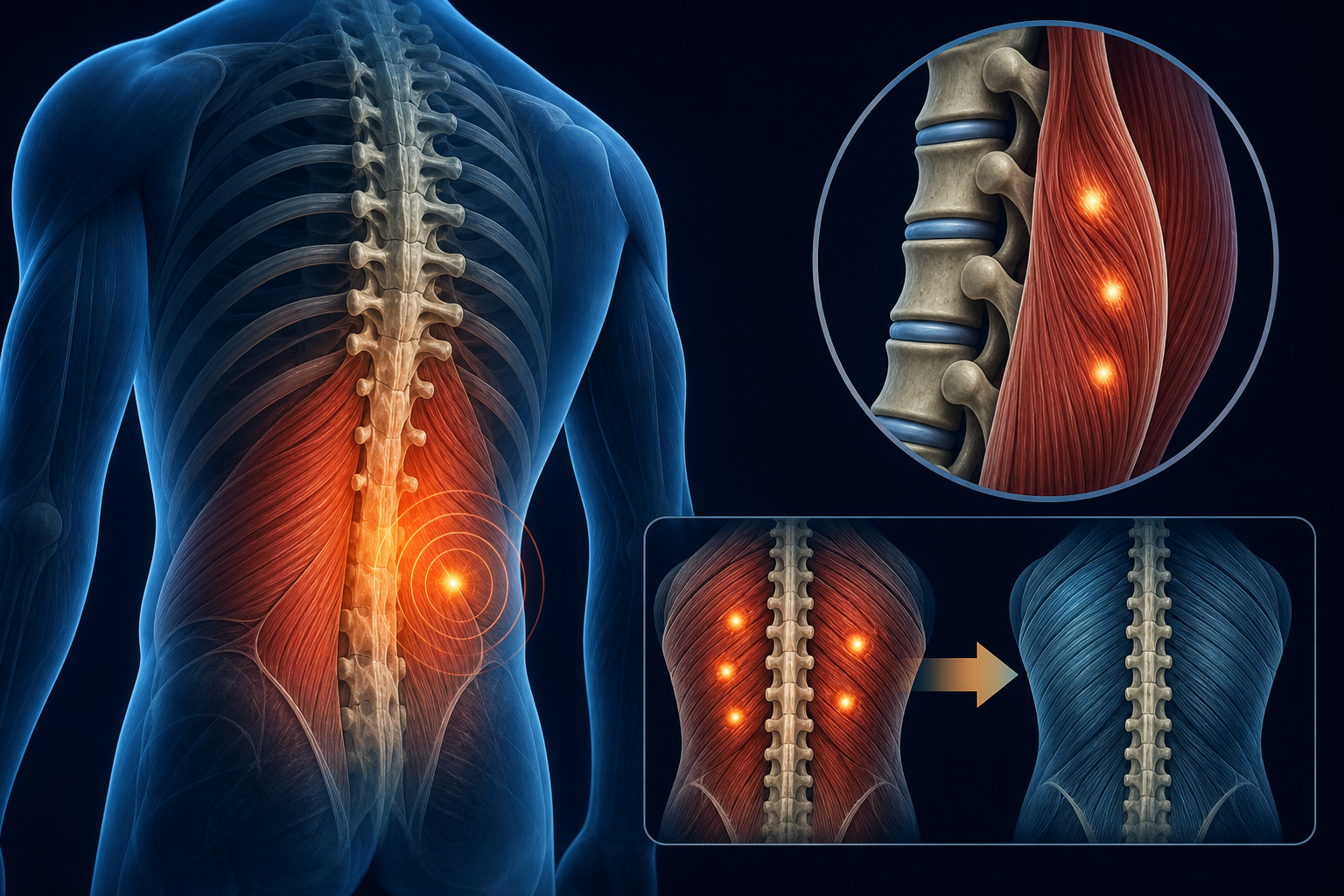
Understanding Back Muscle Spasms: Symptoms, Causes, and Treatment can help you make sense of a painful, sometimes alarming experience. A back muscle spasm is an involuntary tightening or cramping of one or more muscles in the back. It may feel like a sudden grab, a knot that will not release, or a wave of tightness that makes it hard to stand, bend, twist, or breathe comfortably.
In many cases, back spasms are related to muscle strain, irritation around the joints of the spine, overuse, deconditioning, prolonged sitting, or a sudden movement that your body was not prepared for. Most spasms are not dangerous, but they can be intensely painful. Recurring spasms, severe pain, weakness, numbness, fever, unexplained weight loss, or symptoms after a fall or accident should be evaluated by a qualified healthcare provider.
This guide explains what causes back muscle spasms, common back muscle spasm symptoms in adults, how spasms differ from a pulled muscle, and what to expect from conservative care such as chiropractic care, physical therapy, and rehabilitation. If you are looking for help now, Medximity can help you find a chiropractor for back spasms near you or connect with physical therapy providers who treat back pain and movement limitations.
What Is a Back Muscle Spasm?
A back muscle spasm is a sudden, involuntary contraction of muscle tissue. The muscle tightens without you intentionally activating it, and it may remain tight for seconds, minutes, hours, or longer. Some spasms come and go in waves. Others feel like a constant locked-up area in the lower, middle, or upper back.
The back contains several layers of muscles that help you stand upright, bend, rotate, lift, walk, and stabilize your spine. When these muscles are irritated, fatigued, overstretched, underprepared, or guarding an irritated joint or disc, they may tighten in a protective pattern. That protective response may be useful at first, but it can also become painful and limit normal movement.
Back spasms are commonly reported in the lower back because the lumbar spine handles a large share of daily movement and load. However, spasms can also occur between the shoulder blades, around the rib cage, or near the neck and upper back. The location, severity, and pattern of symptoms can help a provider understand which tissues may be involved.
Common Back Muscle Spasm Symptoms in Adults
Back muscle spasm symptoms in adults can vary from mild tightness to severe pain that makes it difficult to stand upright. A spasm may start during an activity, shortly after lifting or twisting, after a long period of sitting, or even when getting out of bed.
Symptoms You May Notice
- Sudden tightening, cramping, or grabbing pain in the back
- A hard, tender, or knotted feeling in the muscle
- Pain that increases with bending, twisting, lifting, or standing from a chair
- Difficulty standing up straight because the back feels locked or guarded
- Reduced range of motion in the spine or hips
- Pain that eases somewhat with rest, gentle movement, or position changes
- Muscle twitching or repeated waves of tightening
- Soreness after the spasm relaxes
Some people describe the feeling as their back “going out.” Others say they “can’t stand up straight” after a back spasm. While those descriptions are common, they do not point to one single diagnosis. A provider can evaluate whether the spasm appears related to muscle strain, joint irritation, nerve involvement, postural overload, or another factor.
Back Spasm Pain When Bending Over
Back spasm pain when bending over is common because forward bending increases demand on the lower back, hips, and supporting muscles. If your spinal muscles are already irritated, fatigued, or guarding, bending to pick something up may trigger a sudden contraction. This does not always mean a serious injury has occurred, but it is a sign that the area is sensitive and may need assessment if symptoms are significant or recurring.
When bending is painful, people often compensate by holding their breath, bracing, or moving stiffly. These strategies can temporarily protect the area, but they may also reinforce tension. A rehab-focused provider may assess your hip mobility, core control, lifting mechanics, spinal motion, and daily movement habits to identify what may be contributing.
What Causes Back Muscle Spasms?
If you are wondering what causes back muscle spasms, the answer is often a combination of tissue irritation, load, movement habits, and nervous system sensitivity. A spasm can be the primary problem, or it can be a secondary response to another irritated structure in the back.
Muscle Strain or Overload
A muscle strain can occur when fibers are overstretched or overloaded. This may happen during lifting, sports, yard work, moving furniture, or a sudden twist. The body may respond by tightening nearby muscles to protect the area. In many cases, the spasm is part of the body’s guarding response after the strain.
Prolonged Sitting or Static Posture
Long periods of sitting, driving, or working at a desk may contribute to back tightness in some people. Static posture can fatigue spinal muscles and reduce movement variability. When you eventually stand, bend, or rotate, the back may feel stiff or reactive.
Sudden Movement After Inactivity
A quick reach, awkward bend, or unexpected slip can trigger a spasm, especially if the muscles were not warmed up or ready for load. This is one reason spasms sometimes happen during ordinary tasks, not just strenuous activity.
Joint or Disc Irritation
Spinal joints, discs, ligaments, and surrounding soft tissues can become irritated. When the nervous system senses irritation, nearby muscles may tighten protectively. This can make it feel like the muscle is the only problem, even when the spasm is part of a broader pattern.
Related symptoms such as pain traveling into the buttock or leg may need a more specific evaluation. You can learn more about nerve-related symptoms on Medximity’s page about sciatica and radiating leg pain.
Deconditioning or Poor Load Tolerance
Muscles that are not accustomed to certain loads may fatigue more quickly. This does not mean someone is weak or unhealthy; it simply means the body may not be conditioned for a specific task. Physical therapy and rehabilitation often focus on gradually improving load tolerance so everyday activities are less likely to provoke symptoms.
Stress, Sleep, and Recovery Factors
Stress and poor sleep may increase muscle tension and pain sensitivity for some people. They may not be the only cause of a spasm, but they can influence how strongly the body reacts. A provider may ask about work demands, sleep position, activity patterns, and recovery habits because these factors can affect back pain.
Hydration and General Health
Some people associate cramping with dehydration or electrolyte changes. The relationship between hydration and back spasms is not always straightforward, and spasms are often mechanical or neuromuscular rather than purely hydration-related. Still, general wellness habits may support recovery when combined with appropriate movement and care.
Back Muscle Spasm vs Pulled Muscle: What Is the Difference?
The difference between a back muscle spasm and a pulled muscle can be confusing because they often occur together. A spasm is an involuntary contraction. A pulled muscle, also called a strain, is an injury to muscle fibers or the tendon where muscle connects to bone.
A pulled muscle may trigger spasms as the body tries to protect the injured tissue. A spasm can also occur without a clear muscle tear, such as when the back tightens due to joint irritation, fatigue, or movement sensitivity.
How They May Feel Different
- Back muscle spasm: Often feels like sudden locking, cramping, grabbing, or waves of tightness.
- Pulled muscle: May feel like sharp or tearing pain during a specific movement, followed by soreness, tenderness, or pain with contraction.
- Both together: Many people feel a sharp onset followed by tightness, guarding, and limited motion.
Because symptoms overlap, self-diagnosis can be unreliable. If pain is severe, does not improve, keeps returning, or affects your ability to work or function, a qualified provider can help identify likely contributors and guide conservative care.
How Long Do Back Spasms Last?
How long back spasms last depends on the cause, severity, activity demands, and whether the area continues to be irritated. Some spasms ease within minutes or hours. Others may cause soreness and stiffness for several days. In some cases, recurring spasms may continue over weeks if the underlying movement pattern, workload, joint irritation, or conditioning issue is not addressed.
It is reasonable to monitor mild symptoms that improve steadily. However, if a spasm is severe, keeps returning, follows trauma, or comes with neurological symptoms such as numbness, tingling, weakness, or loss of coordination, it should be evaluated. A provider can help determine whether conservative treatment is appropriate and whether additional medical assessment is needed.
Is It Normal to Have Recurring Back Spasms?
Recurring back spasms are common, but they should not be ignored. Having repeated episodes does not automatically mean something serious is wrong, but it suggests the back is being repeatedly irritated or overloaded in a way your body has not fully adapted to.
Common reasons spasms may recur include incomplete recovery after a strain, repetitive lifting, long sitting hours, limited hip mobility, reduced core endurance, poor sleep, high stress, or returning too quickly to activities that exceed current capacity. Sometimes, recurring spasms are associated with spinal joint irritation or nerve sensitivity that needs a more detailed evaluation.
If you find yourself asking, “Is it normal to have recurring back spasms?” a practical next step is to look for patterns. Do spasms happen after bending? After driving? During workouts? First thing in the morning? During stressful work periods? Those patterns can help a chiropractor, physical therapist, or rehab provider design a more targeted plan.
When to See a Provider for Back Spasms
You should consider seeing a provider when back spasms interfere with daily activities, keep coming back, or do not improve as expected. Conservative providers such as chiropractors, physical therapists, and rehabilitation specialists commonly evaluate back pain, movement limitations, and muscle guarding.
Schedule an Evaluation If You Notice
- Back spasms that last more than a few days or keep returning
- Pain that makes it hard to stand, walk, work, sleep, or care for yourself
- Back spasm pain when bending over or lifting that does not improve
- A feeling that you cannot stand up straight because the back is locked
- Pain that travels into the hip, buttock, or leg
- Reduced mobility after a fall, sports injury, or motor vehicle collision
- Spasms that prevent normal exercise or activity despite rest and gentle movement
Seek Urgent Medical Care for Red Flags
Some symptoms require prompt medical attention. Seek urgent evaluation if back pain or spasms occur with new loss of bladder or bowel control, numbness in the groin or saddle area, progressive leg weakness, fever, unexplained weight loss, a history of cancer, major trauma, or severe pain that is not manageable. These symptoms are not typical of a simple muscle spasm and should be assessed by a medical professional.
Back Muscle Spasm Treatment Without Surgery
Many people search for back muscle spasm treatment without surgery because most back spasms are initially managed conservatively. Conservative care may include education, gentle movement, manual therapy, spinal or joint mobility work, therapeutic exercise, posture and ergonomics coaching, and gradual return-to-activity planning. The right approach depends on your symptoms and evaluation findings.
Conservative care does not mean doing nothing. It means using non-invasive strategies to reduce irritation, improve movement, restore confidence, and build capacity over time. You can explore Medximity’s overview of back pain conditions and conservative care for more information about how different types of back pain are commonly assessed.
Gentle Movement and Activity Modification
During an acute spasm, complete bed rest for long periods is often not helpful for many people. Gentle, tolerable movement may help keep the area from stiffening further. This might include short walks, careful position changes, relaxed breathing, or movements prescribed by a provider. The key is to avoid forcing painful ranges or repeatedly provoking the spasm.
Activity modification may also matter. If bending forward triggers pain, a provider may suggest temporary changes to lifting, sitting, or sleeping positions while the area calms down. These changes are usually meant to reduce irritation, not create fear of movement.
Heat, Relaxation, and Breathing Strategies
Some patients report relief from heat, gentle stretching, or breathing techniques that reduce guarding. These strategies may help calm the nervous system and make movement more comfortable. They are not a substitute for evaluation when symptoms are severe or recurring, but they may be part of a broader conservative plan.
Chiropractic Care for Back Spasms
A chiropractor may evaluate spinal motion, joint irritation, muscle tone, posture, and functional movement patterns. Chiropractic care for back spasms may include manual therapy, spinal manipulation or mobilization when appropriate, soft tissue techniques, mobility exercises, and home-care guidance. The goal is not to “force” a muscle to relax, but to address mechanical and neuromuscular contributors that may be maintaining the spasm.
If you are searching for a chiropractor for back spasms near me, look for a provider who takes a history, screens for red flags, explains the likely contributors to your symptoms, and provides a plan that includes movement and prevention strategies. Medximity can help you compare chiropractors who treat back spasms and back pain.
Physical Therapy for Lower Back Spasms
Physical therapy for lower back spasms often focuses on restoring movement, reducing fear of motion, improving trunk and hip strength, and teaching strategies for bending, lifting, sitting, and returning to exercise. A physical therapist may assess range of motion, strength, balance, gait, movement coordination, and task-specific mechanics.
Treatment may include guided mobility work, therapeutic exercise, manual therapy, neuromuscular re-education, progressive strengthening, and a home exercise program. For recurring lower back spasms, physical therapy may be especially helpful because it addresses both the immediate limitation and the long-term capacity of the muscles and joints involved.
To learn more about this type of care, visit Medximity’s guide to physical therapy treatment or search for physical therapists near you.
Rehabilitation for Recurring Spasms
Rehabilitation is often appropriate when spasms are recurring, activity-related, or connected to a broader injury recovery plan. A rehab provider may help you rebuild tolerance for work, sport, lifting, walking, or household tasks. This may include graded exposure to movements that currently feel threatening, such as hinging, squatting, rotating, or carrying.
The best rehab provider for back spasms is one who matches the plan to your goals and current ability. A person who sits all day may need a different plan than a warehouse worker, runner, parent lifting a toddler, or older adult trying to improve balance and independence. Medximity’s resource on rehabilitation services explains how rehab can support recovery and function.
Natural Treatment for Back Muscle Spasms
Many people use the phrase natural treatment for back muscle spasms to mean non-surgical, non-invasive approaches that support the body’s recovery. These may include movement, ergonomics, stretching, strengthening, breathing, sleep improvement, and manual therapy. Natural does not always mean risk-free, and not every stretch or exercise is right for every person. A provider can help you choose strategies that fit your situation.
Movement That Respects Symptoms
Gentle movement may help some spasms settle, but the right movement depends on what irritates your symptoms. Some people tolerate walking well. Others respond better to supported positions, hip mobility work, or very small spinal movements at first. A provider can help you identify a starting point that does not repeatedly flare the spasm.
Core and Hip Strengthening
Core training for back spasms is not just about abdominal exercises. It may include coordinated breathing, pelvic control, hip strength, trunk endurance, and learning how to brace appropriately for tasks. Over time, progressive strengthening may help the back tolerate bending, lifting, and twisting with less protective guarding.
Ergonomics and Daily Habits
Workstation setup, driving posture, sleep position, and lifting technique may all influence symptoms. Small changes can sometimes reduce repeated irritation. Examples include changing positions during the day, using a hip-hinge strategy for lifting, placing frequently used items at waist height temporarily, or taking short walking breaks during long sitting periods.
Stress and Recovery Support
Pain is influenced by both body tissues and the nervous system. Stress, poor sleep, and high workload can make muscles feel more reactive. Relaxation breathing, consistent sleep routines, and pacing may support recovery for some people. These strategies are usually most helpful when paired with movement-based care rather than used alone.
What to Expect at a Back Spasm Appointment
If you see a chiropractor, physical therapist, or rehab provider for back spasms, the first visit usually starts with a conversation about your symptoms, medical history, activity level, and goals. The provider may ask when the spasm started, what movements make it better or worse, whether pain travels into the leg, and whether you have had similar episodes before.
History and Symptom Review
Your provider may ask about recent lifting, exercise, falls, accidents, work tasks, sitting time, sleep, and prior back injuries. They may also screen for red flags such as fever, unexplained weight loss, major trauma, progressive weakness, or changes in bowel or bladder control. This screening helps determine whether conservative care is appropriate or whether medical referral is needed.
Movement and Physical Assessment
The physical assessment may include posture observation, range-of-motion testing, walking assessment, strength testing, reflex or sensation screening when indicated, palpation of tender muscles, and functional movements such as bending, squatting, or getting up from a chair. The goal is to understand how your back and hips are moving and what patterns may be contributing to symptoms.
Treatment Plan and Home Guidance
After the evaluation, your provider should explain what they think is contributing to the spasm and outline a care plan. Depending on the provider and your presentation, care may include manual therapy, spinal mobilization or manipulation, soft tissue work, guided exercise, stretching, strengthening, and education about daily activities. You may leave with a few home strategies to use between visits.
A good plan should feel understandable and specific. It should answer questions such as: What movements are safe to try? What should be avoided temporarily? How will progress be measured? When should you follow up? What signs mean you should seek medical evaluation?
Can You Prevent Back Spasms?
Not every back spasm can be prevented, but many people can reduce their risk by improving movement capacity and managing repeated triggers. Prevention is less about perfect posture and more about helping the back tolerate real life: bending, lifting, sitting, walking, carrying, and exercising.
Practical Prevention Strategies
- Build gradually: Increase exercise, lifting, or yard work volume over time rather than jumping into a high-load day.
- Change positions: Break up long sitting or standing periods when possible.
- Train hips and trunk: Strengthening the hips, glutes, and trunk may support better load sharing.
- Warm up before demanding tasks: Gentle movement before lifting or sports may help prepare the tissues.
- Use good-enough lifting mechanics: Keep loads close, avoid rushing, and turn with your feet when possible.
- Address early warning signs: Recurrent tightness, stiffness, or small flare-ups may be easier to manage before they become severe.
If you have had several episodes, prevention may require more than stretching. A provider can help identify whether strength, endurance, mobility, work setup, or movement coordination is the most relevant target.
How to Choose the Best Rehab Provider for Back Spasms
The best rehab provider for back spasms is not simply the closest office or the most aggressive treatment style. Look for a provider who listens carefully, screens for concerning symptoms, explains their reasoning, and gives you a plan that includes both short-term relief and long-term function.
Questions to Ask Before or During Your Visit
- Do you commonly treat lower back spasms or recurring back pain?
- What types of conservative care do you use for back spasms?
- Will my plan include home exercises or movement guidance?
- How do you decide whether chiropractic care, physical therapy, or rehab is appropriate?
- What symptoms would mean I need medical referral?
- How will we measure progress?
Medximity helps patients compare conservative care providers and learn about treatment options. You can explore chiropractic care, learn more about physical therapy, or review broader rehabilitation options to find a care path that fits your needs.
Frequently Asked Questions About Back Muscle Spasms
What causes back muscle spasms?
Back muscle spasms may be caused by muscle strain, sudden movement, prolonged sitting, overuse, joint irritation, disc-related irritation, reduced conditioning, or stress-related muscle tension. Often, more than one factor contributes.
Are back spasms serious?
Many back spasms are not serious and improve with conservative care, but severe, recurring, or unusual symptoms should be evaluated. Seek urgent care for red flags such as loss of bladder or bowel control, saddle numbness, progressive weakness, fever, major trauma, or unexplained weight loss.
How long do back spasms last?
Some back spasms last only minutes or hours, while others can leave soreness for several days. Recurring spasms may continue if underlying triggers are not addressed. A provider can help evaluate persistent or repeated episodes.
Can a chiropractor help with back spasms?
A chiropractor may help some patients with back spasms through evaluation, manual therapy, spinal mobilization or manipulation when appropriate, soft tissue techniques, and movement guidance. Care should be based on your specific symptoms and screening findings.
Is physical therapy good for lower back spasms?
Physical therapy may be helpful for lower back spasms, especially when symptoms are recurring or related to movement, strength, posture, or activity tolerance. A physical therapist may use mobility work, strengthening, manual therapy, and education to support recovery.
What is the difference between a back spasm and a pulled muscle?
A back spasm is an involuntary muscle contraction. A pulled muscle is a strain or injury to muscle fibers. They can happen together, and symptoms may overlap, so a provider evaluation can be useful when pain is significant or persistent.
Why can’t I stand up straight during a back spasm?
When a back spasm occurs, muscles may tighten protectively and limit spinal motion. This can make standing upright difficult. If this is severe, recurring, or associated with leg symptoms or weakness, it should be assessed by a qualified provider.
What natural treatments may help back muscle spasms?
Natural, conservative strategies may include gentle movement, heat, breathing techniques, stretching or strengthening prescribed by a provider, ergonomic changes, sleep support, chiropractic care, physical therapy, and rehabilitation. The right approach depends on the cause and severity of symptoms.
Find Conservative Care for Back Spasms
Back muscle spasms can be painful and disruptive, but many people improve with the right conservative plan. If your symptoms are severe, keep returning, or interfere with daily life, a qualified provider can help determine what may be driving the spasm and guide safe next steps.
Medximity connects patients with chiropractors, physical therapists, and rehabilitation providers who evaluate and treat back pain. Start by searching for a chiropractor for back spasms near you or a physical therapist for lower back spasms.
This article is for educational purposes only and is not a substitute for professional medical advice, diagnosis, or treatment. Always consult a qualified healthcare provider about your specific condition. If you may be experiencing a medical emergency, call 911 or seek emergency care immediately.


