Understanding Your Left Knee Collateral Ligament Sprain Treatment Options
A sprain of the collateral ligament of the left knee represents an injury to the supportive structures on either side of the knee joint, classified as an "initial encounter" when a patient seeks treatment for the first time. The collateral ligaments include the medial collateral ligament (MCL) on the inner side and the lateral collateral ligament (LCL) on the outer side of the knee, both crucial for maintaining knee stability during movement and weight-bearing activities.
When facing this type of injury, patients typically have two primary treatment pathways: conservative (non-surgical) management and surgical intervention. The choice between these approaches depends on various factors including injury severity, patient age, activity level, and overall health status. Conservative treatment focuses on natural healing through rest, rehabilitation, and supportive care, while surgical options may be considered for severe injuries or cases where conservative methods prove insufficient.
Selecting the appropriate initial treatment approach can significantly impact recovery outcomes, return to activities, and long-term knee function. Healthcare providers typically evaluate multiple factors before recommending a treatment plan, emphasizing the importance of proper medical assessment and ongoing monitoring. MedXimity connects patients with qualified orthopedic specialists, sports medicine physicians, and physical therapists who can provide expert evaluation and guide treatment decisions based on individual circumstances and medical history.
Conservative Treatment: Non-Surgical Management Approach
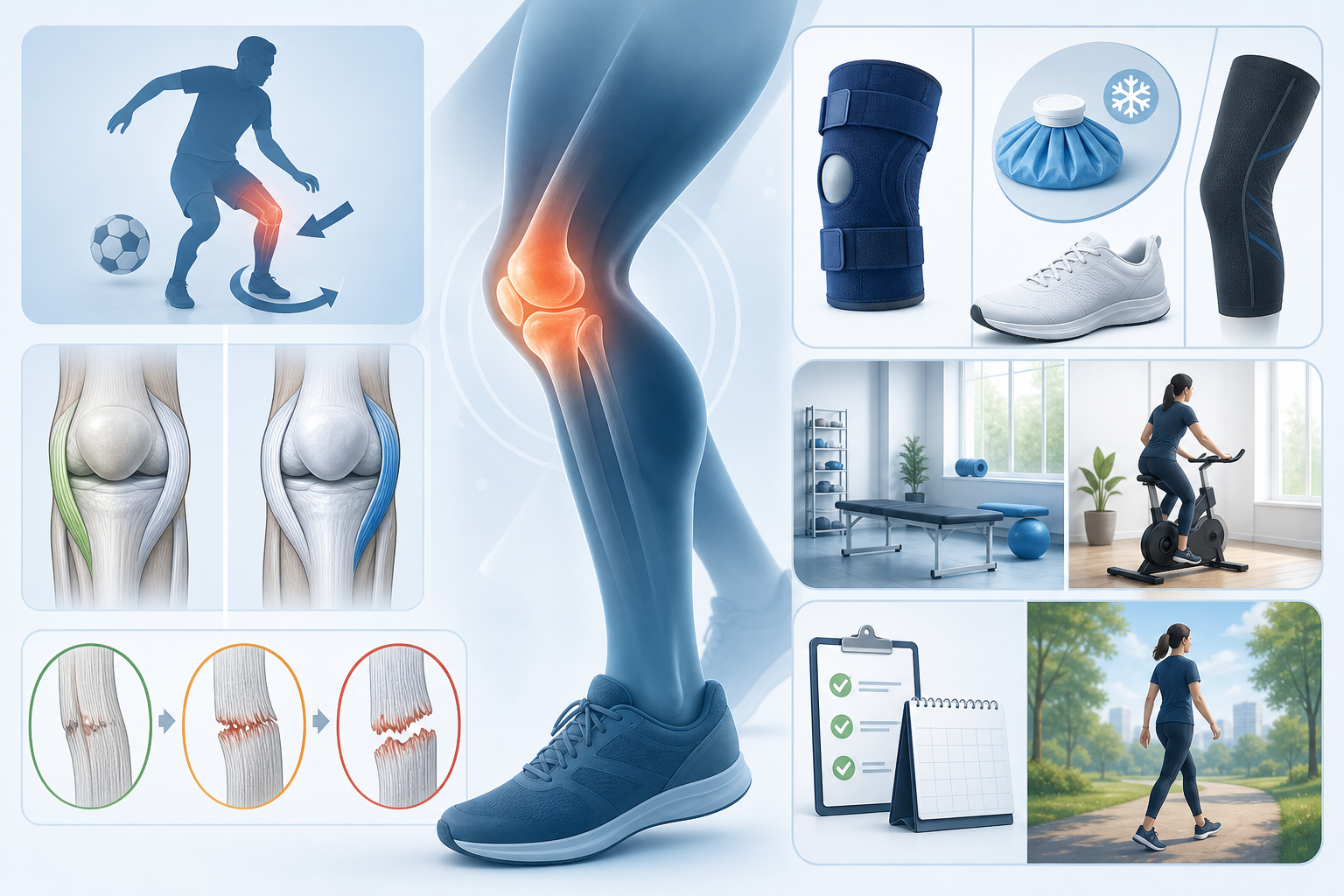
Conservative treatment represents the first-line approach for most collateral ligament sprains, particularly those classified as Grade I or II injuries. The foundation of non-surgical management begins with the RICE protocol: Rest, Ice, Compression, and Elevation. Healthcare providers typically recommend immediate rest from aggravating activities, ice application for 15-20 minutes every 2-3 hours during the first 48-72 hours, compression using elastic bandages or knee sleeves, and elevation when possible to reduce swelling.
Physical therapy forms the cornerstone of conservative rehabilitation, usually beginning within the first week after injury once acute pain and swelling subside. The rehabilitation timeline typically progresses through distinct phases: initial pain and swelling management (weeks 1-2), range of motion restoration (weeks 2-4), strength building (weeks 4-8), and functional training (weeks 6-12). Physical therapists design individualized programs focusing on quadriceps and hamstring strengthening, proprioceptive training, and gradual return to functional activities.
Bracing options play a crucial role in conservative management, ranging from simple elastic supports for mild sprains to hinged knee braces for more significant injuries. Healthcare providers may recommend activity modifications, including temporary restrictions on pivoting sports, running, or high-impact activities. Pain management typically involves over-the-counter anti-inflammatory medications when appropriate, though patients should consult healthcare providers before starting any medication regimen.
Conservative treatment demonstrates success rates of 80-90% for Grade I and II collateral ligament sprains, with most patients returning to previous activity levels within 6-12 weeks. Ideal candidates for non-surgical management include those with partial tears, minimal instability, and good compliance with rehabilitation programs. Cost considerations favor conservative treatment, as most insurance plans cover physical therapy and bracing, making this approach more accessible for many patients compared to surgical alternatives.
Surgical Treatment: When Intervention is Necessary
Surgical intervention for collateral ligament sprains becomes necessary when conservative treatment fails to restore adequate stability or when patients present with complete ligament tears (Grade III injuries) associated with significant instability. Healthcare providers typically consider surgery for patients experiencing persistent pain, recurrent instability episodes, or inability to return to desired activity levels after 3-6 months of conservative management. Professional athletes or individuals with high physical demands may be candidates for earlier surgical consultation.
Surgical procedures for collateral ligament injuries fall into two main categories: repair and reconstruction. Ligament repair involves reattaching the torn ligament to its original bone attachment site, typically performed within the first few weeks after injury when tissue quality remains optimal. Reconstruction procedures utilize grafts (either from the patient's own tissue or donor tissue) to replace severely damaged ligaments that cannot be directly repaired. The choice between repair and reconstruction depends on injury chronicity, tissue quality, and patient factors.
Modern surgical approaches include both arthroscopic and open techniques, with the selection based on injury location and complexity. Arthroscopic procedures offer advantages of smaller incisions, reduced tissue trauma, and potentially faster initial recovery, though not all collateral ligament injuries are amenable to arthroscopic treatment. Open surgical approaches provide better visualization and access for complex repairs or reconstructions, particularly for injuries involving multiple structures.
Post-operative rehabilitation requires a structured approach typically spanning 4-6 months, beginning with protected weight-bearing and gradual progression through range of motion, strengthening, and functional activities. Success rates for collateral ligament surgery range from 85-95%, though outcomes depend on factors including patient age, activity level, and rehabilitation compliance. Potential complications include infection, stiffness, persistent pain, and re-injury, emphasizing the importance of selecting experienced orthopedic surgeons and sports medicine specialists through platforms like MedXimity.
Conservative vs Surgical: Key Differences and Outcomes
Recovery timelines represent one of the most significant differences between conservative and surgical approaches. Conservative treatment typically allows return to normal daily activities within 4-6 weeks and sports participation within 6-12 weeks, depending on injury severity and individual healing rates. Surgical patients generally require 3-4 months before returning to sports, with full recovery often taking 6-9 months due to the need for tissue healing and comprehensive rehabilitation.
Cost analysis reveals substantial differences between approaches, with conservative treatment typically ranging from $1,000-$3,000 including physical therapy and imaging studies. Surgical intervention costs vary widely from $10,000-$25,000 or more, depending on procedure complexity, facility fees, and geographic location. Insurance coverage generally favors conservative treatment initially, with many plans requiring documented failure of non-surgical management before approving surgical options.
Success rates and long-term outcomes show both approaches can achieve excellent results when appropriately selected. Conservative treatment demonstrates 85-90% success rates for appropriate candidates, with most patients achieving full functional recovery. Surgical outcomes show similar success rates of 85-95%, though the definition of success may differ, with surgical patients potentially achieving better objective stability measures in cases of complete ligament tears.
Risk profiles differ significantly between approaches, with conservative treatment carrying minimal risks beyond potential prolonged symptoms or incomplete healing. Surgical risks include standard operative complications such as infection (1-2% incidence), blood clots, anesthesia reactions, and knee stiffness. Return to activity timelines favor conservative treatment for recreational athletes, while surgical intervention may be necessary for competitive athletes requiring optimal knee stability for high-demand sports participation.
Choosing the Right Treatment Approach for Your Situation
Treatment selection decisions depend on multiple interconnected factors that healthcare providers carefully evaluate during initial assessment and ongoing monitoring. Injury severity represents the primary consideration, with Grade I and II sprains typically managed conservatively, while Grade III injuries with complete tears and significant instability often require surgical consideration. However, severity alone doesn't determine treatment, as patient-specific factors play equally important roles in decision-making.
Patient lifestyle and activity level significantly influence treatment recommendations, with weekend recreational athletes often achieving excellent outcomes with conservative management, while competitive athletes or individuals with physically demanding occupations may benefit from surgical restoration of optimal stability. Age-related factors also impact treatment selection, as younger patients generally tolerate surgery well and may have longer-term durability concerns, while older patients might prefer conservative approaches that avoid operative risks.
Healthcare providers consider additional factors including associated injuries, previous knee problems, general health status, and patient preferences when developing treatment recommendations. The presence of other ligament injuries, meniscus tears, or cartilage damage may influence the decision toward surgical management to address multiple issues simultaneously. Patient motivation and ability to comply with rehabilitation requirements are crucial considerations regardless of treatment approach selected.
Seeking second opinions from qualified specialists can provide valuable perspective, particularly for borderline cases where multiple treatment options exist. MedXimity facilitates connections with board-certified orthopedic surgeons, sports medicine physicians, and experienced physical therapists who can provide expert evaluation and help patients understand all available options. This comprehensive approach ensures patients can make informed decisions aligned with their individual circumstances, goals, and preferences.
Making Informed Treatment Decisions with Professional Guidance
Conservative treatment proves most appropriate for patients with partial ligament tears, minimal instability, and willingness to modify activities during healing, while surgical intervention becomes necessary for complete tears with significant instability or failed conservative management. The key to optimal outcomes lies in proper initial assessment, appropriate treatment selection, and comprehensive rehabilitation regardless of the chosen approach.
Early intervention and accurate diagnosis form the foundation of successful treatment, emphasizing the importance of seeking prompt medical attention after knee injuries. Qualified healthcare providers can perform comprehensive evaluations, order appropriate imaging studies, and develop individualized treatment plans that maximize recovery potential while minimizing risks and complications.
Consulting with qualified specialists ensures access to current treatment options, evidence-based recommendations, and expert surgical skills when needed. MedXimity's provider directory connects patients with experienced professionals who can guide treatment decisions and provide ongoing care throughout the recovery process, supporting optimal outcomes and return to desired activities.
This information is for educational purposes only and should not replace professional medical advice. Always consult with a qualified healthcare provider for personalized medical guidance.