Understanding Your Right Knee Cruciate Ligament Injury
If you're dealing with a suspected cruciate ligament sprain in your right knee, you're likely experiencing pain, uncertainty, and questions about what comes next. This comprehensive guide addresses your concerns and provides the essential information you need during this initial encounter with your injury.
A cruciate ligament sprain represents a significant knee injury that requires proper medical attention and understanding. When medical professionals use the term "initial encounter," they're referring to your first visit for this specific injury—the beginning of your diagnostic and treatment journey. This designation helps healthcare providers track your progress and ensures appropriate care coordination.
The good news is that cruciate ligament sprains, while serious, are highly treatable conditions with excellent recovery potential when managed properly. Whether your injury occurred during sports, daily activities, or an accident, effective treatment options are available. This guide will walk you through understanding your injury, recognizing symptoms, navigating the healthcare system, and taking the right steps toward recovery.
You'll learn what to expect during your medical visits, how to make informed decisions about your care, and how to find qualified specialists who can guide your recovery journey. Remember, while every injury is unique, most patients with cruciate ligament sprains can return to their normal activities with appropriate treatment and rehabilitation.
What is a Cruciate Ligament Sprain and Why It Matters
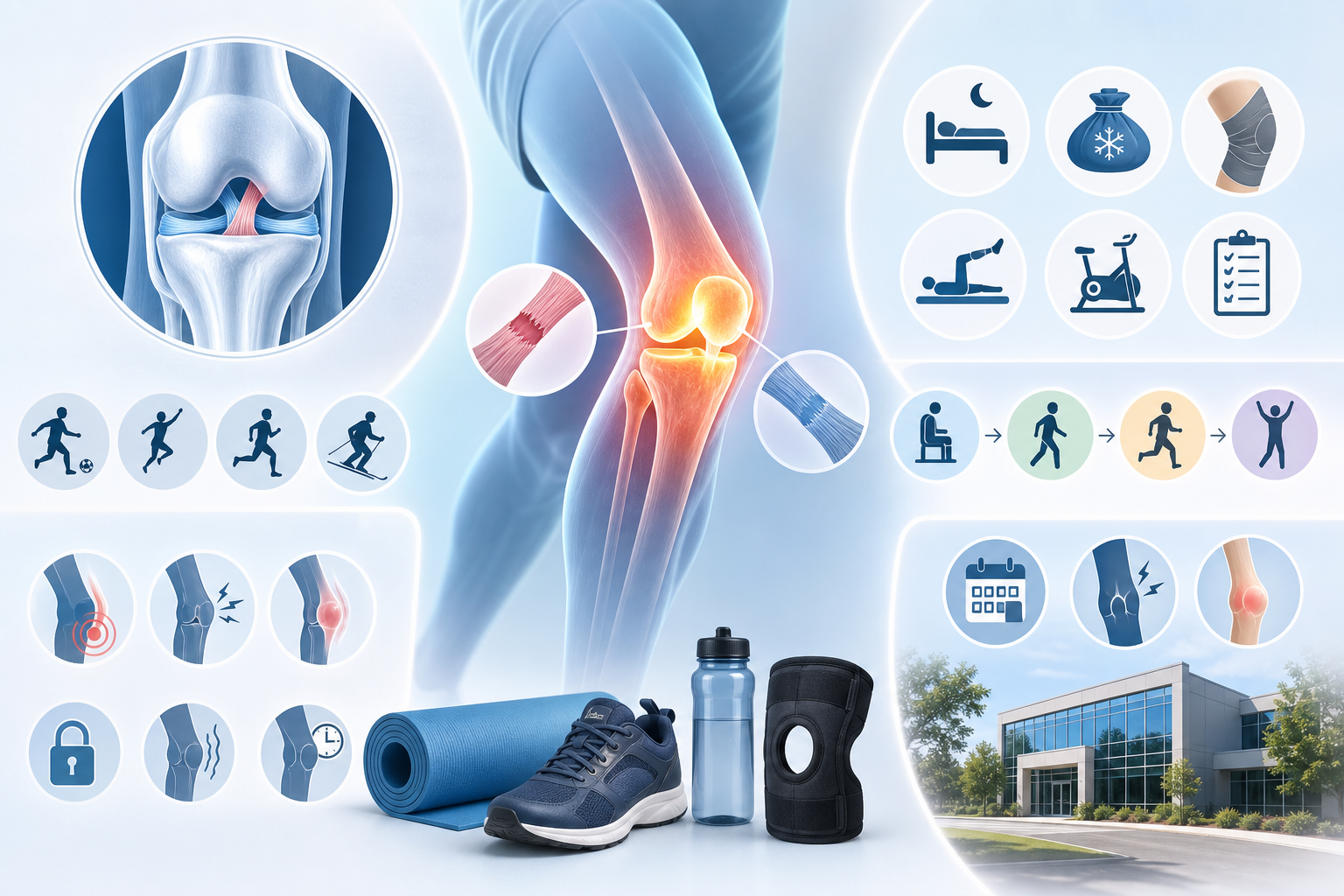
Your knee contains two cruciate ligaments that form an "X" shape inside the joint, providing crucial stability during movement. The anterior cruciate ligament (ACL) prevents your shinbone from sliding too far forward, while the posterior cruciate ligament (PCL) prevents backward sliding. These ligaments work together to maintain knee stability during walking, running, and pivoting movements.
When healthcare providers diagnose an "unspecified cruciate ligament sprain," it means imaging or physical examination hasn't yet determined whether the ACL, PCL, or both ligaments are involved. This initial classification is common during first visits when swelling and pain may limit detailed assessment. Further diagnostic testing typically clarifies which specific ligament sustained injury.
Cruciate ligament sprains commonly occur during sports activities involving sudden direction changes, direct knee impact, or awkward landings. However, they can also result from motor vehicle accidents, falls, or workplace injuries. The mechanism of injury often provides clues about which ligament may be affected—ACL injuries frequently occur during pivoting or landing, while PCL injuries often result from direct frontal impact to the knee.
Healthcare providers classify ligament sprains using a three-grade system. Grade 1 sprains involve mild stretching with microscopic tears, Grade 2 sprains feature partial tearing with moderate instability, and Grade 3 sprains represent complete tears requiring more intensive treatment. This grading system helps determine appropriate treatment approaches and recovery timelines.
Early diagnosis and treatment are crucial for optimal outcomes. Delayed or inadequate treatment can lead to chronic instability, increased risk of additional injuries, and long-term complications such as arthritis. Proper initial management sets the foundation for successful recovery and return to previous activity levels. Understanding the severity and specific nature of your injury enables healthcare providers to develop personalized treatment plans that address your unique needs and goals.
Recognizing Symptoms and Making Critical Decisions
Immediate symptoms following a cruciate ligament sprain typically include a sudden onset of severe knee pain, often accompanied by a audible "pop" at the time of injury. Patients frequently experience rapid swelling within the first few hours, significant pain with weight-bearing, and a feeling of knee instability or "giving way." These initial symptoms warrant prompt medical evaluation to assess the extent of injury and prevent further damage.
Secondary symptoms may develop over the following days and weeks. These can include persistent swelling, stiffness limiting range of motion, difficulty with stairs or uneven surfaces, and continued feelings of instability during daily activities. Some patients notice their knee "catching" or locking during movement, which may indicate additional structural damage such as meniscus tears that commonly accompany cruciate ligament injuries.
Certain red flags indicate the need for immediate surgical consultation. These include complete inability to bear weight, obvious deformity of the knee joint, signs of vascular compromise such as numbness or color changes in the foot, or severe instability where the knee feels completely unstable in multiple directions. Additionally, if conservative treatment fails to improve symptoms after several weeks, surgical evaluation becomes necessary.
Emergency care is appropriate when patients experience severe pain uncontrolled by over-the-counter medications, signs of infection such as fever or red streaking, or inability to move the knee at all. However, most cruciate ligament sprains can be initially managed with scheduled appointments to orthopedic specialists or sports medicine physicians within a few days of injury.
ACL and PCL injuries often present with different symptom patterns. ACL injuries typically cause immediate severe pain and swelling with instability during pivoting movements, while PCL injuries may have less initial swelling but cause pain with knee bending and difficulty with activities requiring knee stability. Both types significantly impact daily activities such as walking on uneven surfaces, climbing stairs, or participating in recreational activities.
The impact on mobility varies depending on injury severity and individual factors. Some patients can walk with mild discomfort, while others require assistive devices such as crutches or knee braces for basic mobility. Understanding these symptom patterns helps patients communicate effectively with healthcare providers and make informed decisions about activity modification during the acute injury phase.
Your Journey from Diagnosis to Recovery
During your first medical visit, healthcare providers will conduct a comprehensive evaluation including detailed injury history, physical examination, and assessment of knee stability. The physical exam may include specific tests such as the Lachman test for ACL integrity or posterior drawer test for PCL function. Your provider will also assess overall knee alignment, range of motion, and associated injuries to surrounding structures.
Diagnostic imaging plays a crucial role in confirming the diagnosis and treatment planning. X-rays help rule out fractures and assess overall joint alignment, while MRI scans provide detailed visualization of soft tissues including ligaments, cartilage, and meniscus. These tests help determine the exact location and severity of injury, guiding treatment decisions and prognosis discussions.
Treatment timelines vary significantly between conservative and surgical approaches. Conservative treatment typically involves an initial period of rest, ice, compression, and elevation, followed by progressive physical therapy over 3-6 months. Surgical reconstruction generally requires 6-12 months for complete recovery, with specific phases including pre-surgical conditioning, surgical procedure, post-operative protection, and intensive rehabilitation.
Physical therapy progression follows established phases regardless of treatment approach. Early phases focus on controlling swelling, maintaining range of motion, and protecting healing tissues. Intermediate phases emphasize strength building and functional movement patterns, while advanced phases incorporate sport-specific or activity-specific training to prepare for return to previous activity levels.
Return to activities follows specific guidelines based on objective criteria rather than time alone. Healthcare providers assess factors such as strength measurements, functional movement patterns, and psychological readiness before clearing patients for progressive activity advancement. Athletes typically require additional testing and sport-specific training before returning to competitive activities.
Long-term outlook for cruciate ligament injuries is generally positive with appropriate treatment. Most patients can return to their previous activity levels, though some may require activity modification or ongoing knee protection. Prevention strategies for future injuries include maintaining lower extremity strength, proper movement mechanics, and using appropriate protective equipment during high-risk activities.
Taking Action: Your Next Steps Forward
The key takeaways for managing your cruciate ligament sprain include seeking prompt medical evaluation, following through with recommended diagnostic testing, and committing to prescribed treatment plans whether conservative or surgical. Understanding that recovery is a process requiring patience and dedication empowers you to actively participate in your care and achieve the best possible outcomes.
Finding qualified specialists is crucial for optimal recovery. Look for orthopedic surgeons with sports medicine fellowship training, physical therapists experienced in knee rehabilitation, and healthcare teams that communicate effectively about your progress and concerns. The right healthcare team will provide clear explanations, realistic timelines, and ongoing support throughout your recovery journey.
Recovery outcomes for cruciate ligament sprains are excellent when patients receive appropriate care and follow treatment recommendations. Most individuals can expect to return to their previous activity levels with proper rehabilitation, though timelines vary based on injury severity and individual factors. Your commitment to the recovery process significantly influences your final outcome.
Take action today by scheduling an evaluation with a qualified orthopedic specialist or sports medicine physician. MedXimity can help you find experienced providers in your area who specialize in knee injuries and cruciate ligament rehabilitation, ensuring you receive the expert care needed for optimal recovery.
Frequently Asked Questions About Right Knee Cruciate Sprains
How do I know if I need surgery for my cruciate ligament sprain?
The decision for surgery depends on several factors including the completeness of the tear, your activity level, age, and response to conservative treatment. Generally, complete tears in active individuals or those planning to return to pivoting sports often benefit from surgical reconstruction. However, partial tears or injuries in less active individuals may heal well with physical therapy alone. Your orthopedic surgeon will assess these factors and discuss the risks and benefits of both surgical and non-surgical options based on your specific situation and goals.
What's the difference between ACL and PCL injuries?
ACL injuries typically occur during pivoting or landing movements and cause immediate severe pain, swelling, and instability with cutting or turning activities. PCL injuries often result from direct impact to the front of the knee and may cause less initial swelling but significant pain with knee bending and difficulty with activities requiring posterior stability. ACL tears are more common and often require surgical reconstruction for active individuals, while PCL injuries more frequently heal with conservative treatment. The specific symptoms and mechanism of injury help healthcare providers differentiate between these two types of cruciate ligament sprains.
How long does recovery take without surgery vs. with surgery?
Conservative treatment for partial cruciate ligament tears typically requires 3-6 months for complete recovery, focusing on physical therapy to restore strength and stability. Surgical reconstruction generally requires 6-12 months for full recovery, with return to sports often taking 9-12 months. The surgical timeline includes pre-operative conditioning, the surgical procedure itself, initial healing phases, progressive rehabilitation, and sport-specific training. While surgical recovery takes longer initially, it may provide better long-term stability for high-demand activities. Your healthcare provider can provide more specific timelines based on your injury severity and treatment approach.
What specialists should I see for my knee injury?
The primary specialist for cruciate ligament injuries is an orthopedic surgeon, preferably one with sports medicine fellowship training who specializes in knee injuries. You'll also work closely with physical therapists experienced in knee rehabilitation throughout your recovery process. Depending on your situation, you may also consult with sports medicine physicians, athletic trainers, or other rehabilitation specialists. Your primary care physician can provide initial referrals, but ensure you're seeing providers with specific expertise in cruciate ligament injuries for optimal care.
Will insurance cover my treatment and physical therapy?
Most insurance plans cover medically necessary treatment for cruciate ligament injuries, including diagnostic imaging, surgical procedures, and physical therapy. However, coverage varies by plan, and you may need pre-authorization for certain treatments or have limitations on the number of physical therapy visits covered. Contact your insurance provider to understand your specific benefits, copayments, and any requirements for referrals or pre-authorization. Your healthcare provider's office can often assist with insurance verification and pre-authorization processes to ensure you understand your coverage before beginning treatment.
Can I prevent future cruciate ligament injuries?
While not all cruciate ligament injuries are preventable, several strategies can significantly reduce your risk. These include maintaining strong leg muscles, particularly the quadriceps and hamstrings, practicing proper movement mechanics during sports and activities, using appropriate protective equipment when indicated, and participating in injury prevention programs that focus on balance, agility, and proper landing techniques. Female athletes may benefit from specific training programs that address biomechanical factors that increase ACL injury risk. Your physical therapist or sports medicine provider can recommend specific exercises and training programs based on your activity level and risk factors.
This information is for educational purposes only and should not replace professional medical advice. Always consult with a qualified healthcare provider for personalized medical guidance.