Spinal Instability: What Patients Need to Know starts with a simple idea: your spine is designed to move, but it also needs enough control to protect nerves, joints, discs, muscles, and ligaments. When that control is reduced, some people describe a sensation that their back or neck feels loose, weak, shifting, painful, or hard to trust during movement.
Spinal instability is not a single diagnosis that means the same thing for every patient. It may involve irritation of spinal joints, ligament sprain, disc changes, muscle weakness, altered movement patterns, or poor coordination of the deep stabilizing muscles. In some cases, imaging may show structural changes. In others, the main issue is functional instability, meaning the spine has difficulty maintaining smooth, controlled movement even if major structural damage is not present.
If your back feels unstable when bending, your neck feels difficult to control, or you feel repeated catching, slipping, spasms, or weakness with certain movements, it is reasonable to be evaluated by a qualified provider. Conservative care such as physical therapy, rehabilitation, chiropractic care, exercise progression, posture training, and activity modification may help many patients improve control and reduce flare-ups. Your provider can help determine what is appropriate for your specific situation.
For related patient education, Medximity also offers resources on back pain, neck pain, and herniated disc symptoms.
What Is Spinal Instability?
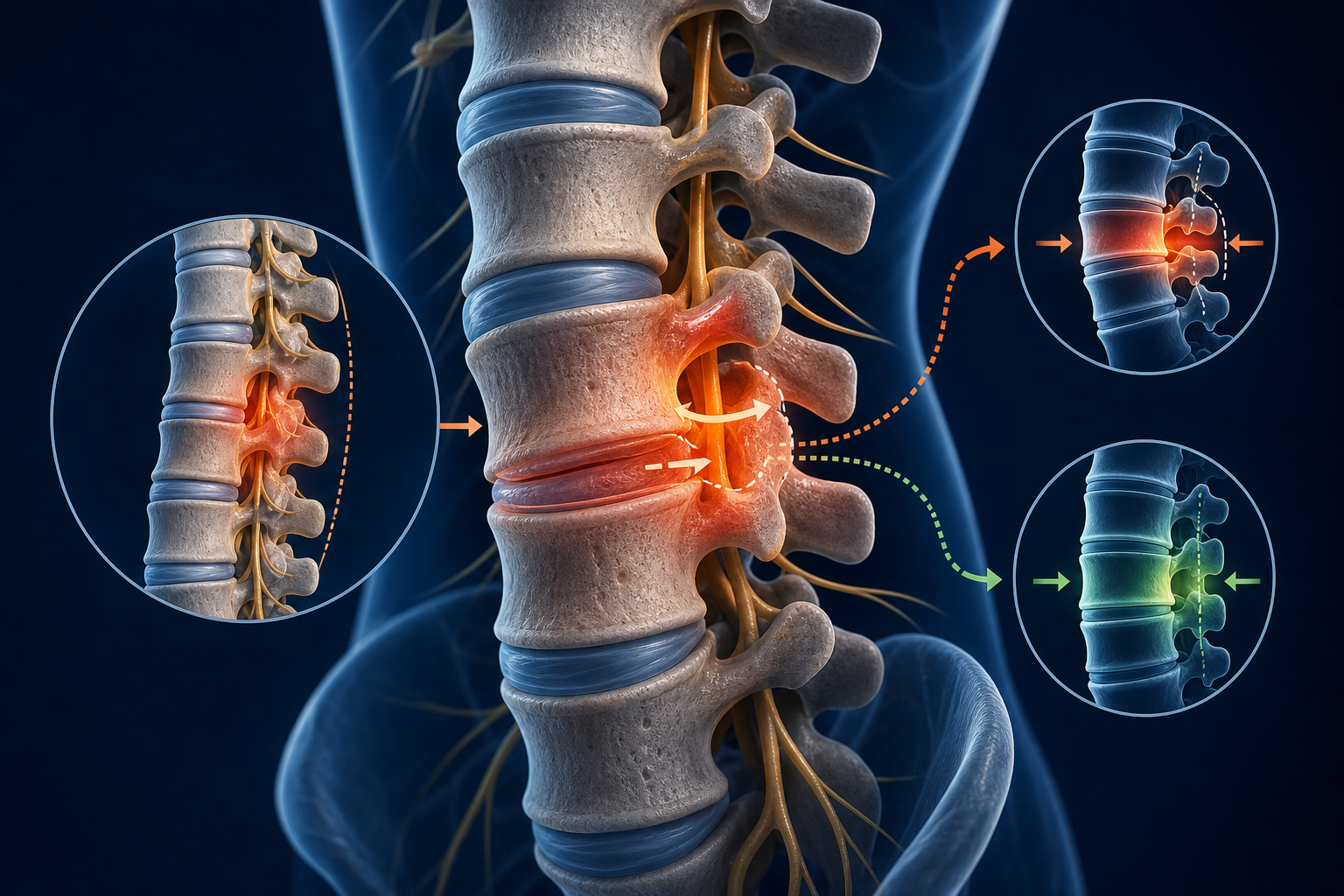
What is spinal instability? In patient-friendly terms, spinal instability means the spine may not be controlling motion as well as it should. The bones, discs, joints, ligaments, nerves, and muscles of the spine work together to allow movement while limiting excessive motion. When one or more parts of that system are irritated, injured, weakened, or poorly coordinated, the spine may feel less stable.
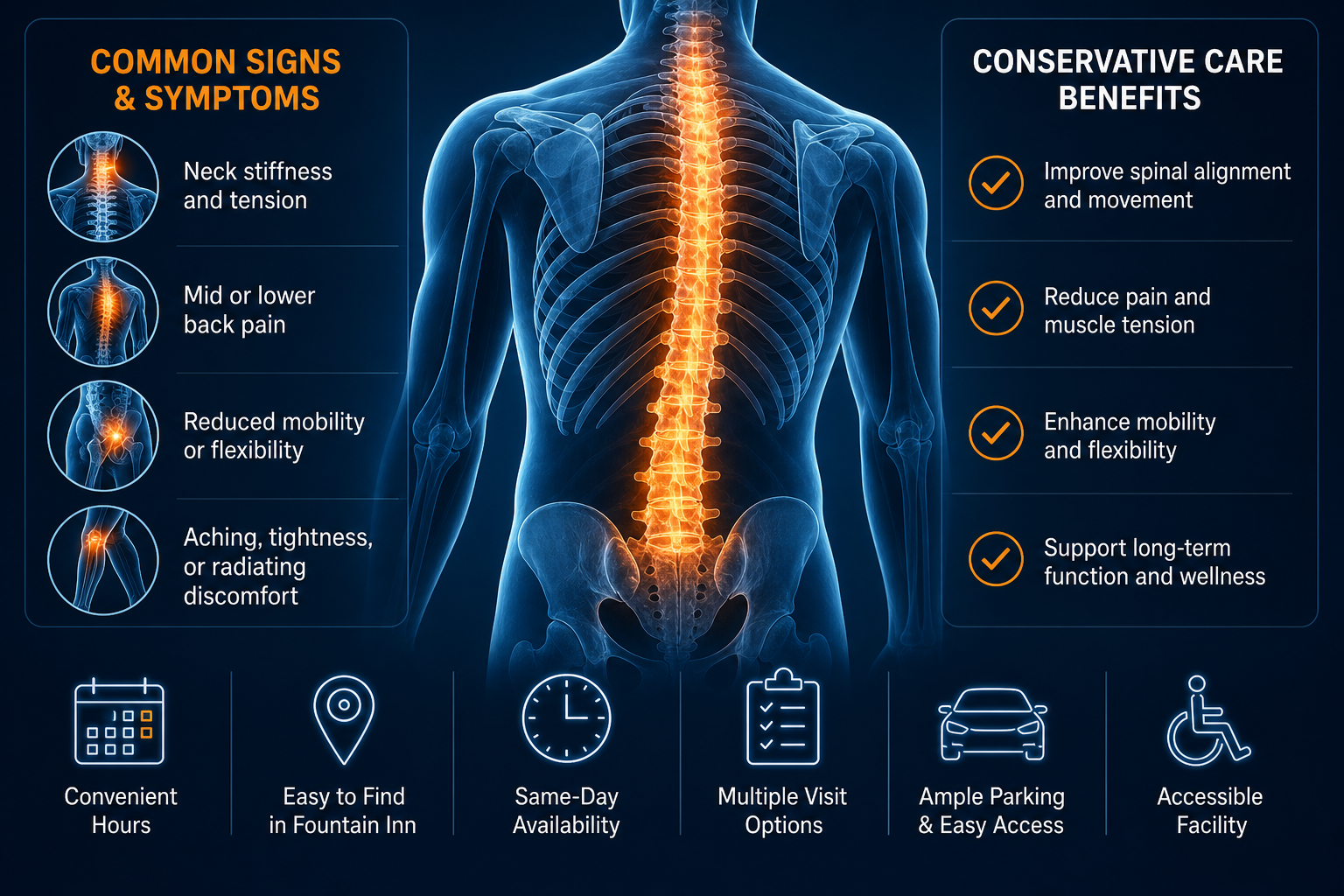
Some patients feel this as pain. Others feel a sense of wobbling, catching, shifting, weakness, or loss of confidence with certain movements. The feeling may occur in the low back, mid back, or neck. It may be worse when bending forward, returning upright, lifting, twisting, standing from a chair, looking over the shoulder, or holding one posture for too long.
Clinicians may talk about spinal instability in two broad ways:
Structural instability
Structural instability refers to excessive or abnormal movement related to changes in the spine’s supporting structures. This may be associated with ligament injury, joint degeneration, certain fractures, spondylolisthesis, postsurgical changes, or other medical conditions. Structural instability may require careful evaluation, and the treatment plan depends on the severity, symptoms, imaging findings, and overall health picture.
Functional instability
Functional instability means the spine may not be moving with enough muscular control, even when there is no major structural damage. This can happen after pain, injury, deconditioning, poor movement habits, prolonged sitting, pregnancy-related changes, sports strain, or repeated flare-ups. Functional instability is often addressed with rehabilitation, graded exercise, manual therapy when appropriate, and education on movement mechanics.
Many patients have a mix of factors. For example, mild degenerative joint changes may be present on imaging, while the day-to-day symptoms are driven more by muscle guarding, poor endurance, and difficulty coordinating movement. That is why a thorough exam matters.
Common Symptoms of Spinal Instability
Spinal instability symptoms vary. Some patients have symptoms mainly in the low back, while others notice them in the neck. Symptoms can also change depending on activity level, fatigue, stress, posture, and how recently an injury occurred.
Low back instability symptoms
Possible low back instability symptoms may include:
- A feeling that the back may “give out” during bending, lifting, or standing up
- Pain or catching when returning from a bent position
- Muscle spasms after simple movements
- Repeated episodes of low back pain that flare with activity
- Difficulty standing still for long periods
- Relief when bracing the abdomen, lying down, or changing position
- Fear of bending, lifting, or twisting because the back feels unreliable
- Reduced confidence with exercise, work tasks, or household activities
A common patient description is: “My back feels unstable when bending, especially when I try to stand back up.” This does not automatically mean there is a dangerous condition, but it is a useful symptom to discuss with a provider.
Neck instability symptoms and treatment considerations
Neck instability symptoms and treatment should be approached carefully because the neck protects important nerves and blood vessels and supports the head during nearly every daily activity. Possible neck-related symptoms may include:
- A feeling that the head is heavy or hard to support
- Neck pain with movement or prolonged posture
- Clicking, catching, or guarding with rotation
- Headaches that seem connected to neck tension or position
- Muscle fatigue while working at a computer or driving
- Shoulder blade discomfort or upper back tightness
- Symptoms that worsen after quick movements or sustained looking down
Conservative treatment for neck instability may include gentle mobility work, deep neck flexor strengthening, postural endurance training, scapular strengthening, ergonomic changes, and manual therapy when appropriate. Because neck symptoms can have many causes, evaluation by a qualified provider is important before starting new exercises.
Symptoms that may need urgent medical evaluation
Most back and neck pain is not an emergency, but some symptoms deserve prompt medical attention. Seek urgent care or emergency evaluation if you have new or worsening weakness, loss of bowel or bladder control, numbness in the groin or saddle area, fever with severe spine pain, unexplained weight loss, severe trauma, difficulty walking, severe unrelenting night pain, or symptoms that feel sudden and alarming. If you are unsure whether symptoms are urgent, it is safer to contact a medical professional.
Is Spinal Instability Serious?
Is spinal instability serious? It can be, but it is not always. The seriousness depends on the cause, severity, neurological findings, imaging when indicated, and how much the symptoms interfere with daily life. Many patients with feelings of instability have treatable movement-control problems, muscle weakness, mobility restrictions, or irritated joints that may respond to conservative care.
However, some forms of instability may involve structural concerns that require closer medical management. Examples may include significant trauma, progressive neurological symptoms, certain congenital or inflammatory conditions, severe spondylolisthesis, or instability after a major injury or surgery. Your provider may recommend imaging or referral if your history and exam suggest the need.
The key is not to panic, but not to ignore persistent instability either. A spine-focused evaluation can help clarify whether your symptoms appear mechanical and manageable with conservative care, or whether additional medical assessment is needed.
Why the Spine Can Start to Feel Unstable
The spine relies on three overlapping systems: passive structures, active muscles, and nervous system coordination. The passive structures include bones, discs, ligaments, and joint capsules. The active system includes muscles that move and support the spine. The nervous system coordinates timing, balance, and protective responses. Instability can develop when one or more of these systems is not working well.
Muscle weakness or poor endurance
The deep muscles of the trunk and neck help control small spinal movements. When these muscles become weak, inhibited by pain, or poorly coordinated, larger muscles may overwork to compensate. This can contribute to tightness, spasms, and a feeling that the spine is hard to control.
Ligament sprain or soft tissue injury
Ligaments help limit excessive motion. After a sprain, strain, whiplash-type injury, fall, sports injury, or lifting incident, the spine may feel guarded and unreliable for a period of time. Healing timelines vary, and symptoms should be monitored by a qualified provider when pain persists or worsens.
Disc and joint changes
Spinal discs and facet joints help guide motion. Age-related changes, repetitive strain, and prior injuries may affect how loads are distributed. Disc degeneration or joint irritation does not always cause symptoms, but in some patients it may contribute to stiffness, pain, or movement sensitivity.
Deconditioning and prolonged sitting
Long periods of sitting, reduced activity, or time away from exercise can reduce trunk endurance. The spine may feel fine during light tasks but flare when lifting, bending, or returning to activity. A gradual strengthening plan may help rebuild tolerance.
Movement habits and fear of motion
After pain, the body often protects itself by stiffening. Short-term guarding can be helpful, but long-term guarding may lead to less efficient movement. Some patients become fearful of bending or twisting, which can reduce strength and confidence. A provider can help reintroduce movement gradually and safely.
Spinal Instability vs Herniated Disc
Spinal instability vs herniated disc is a common comparison because both can cause back or neck pain, and both can affect movement. They are not the same condition.
A herniated disc occurs when disc material pushes beyond its usual boundary. If it irritates a nearby nerve, symptoms may include pain that travels into the arm or leg, numbness, tingling, or weakness. Some disc herniations are painful, while others are found on imaging and may not be the main source of symptoms.
Spinal instability is more about control of spinal motion. A patient may feel shifting, catching, giving way, or difficulty stabilizing during movement. Instability can occur with or without a disc herniation. Likewise, a herniated disc can occur without a strong feeling of instability.
Because symptoms overlap, a provider will usually consider your history, movement testing, neurological screening, strength, reflexes, sensation, and symptom behavior. Imaging may be considered when symptoms suggest nerve involvement, trauma, progressive deficits, or other concerns. You can learn more about disc-related symptoms in Medximity’s guide to herniated discs.
How Long Does Spinal Instability Last?
How long does spinal instability last? The answer depends on the cause. A mild functional instability pattern after a strain may improve over weeks with appropriate care, activity modification, and progressive strengthening. Symptoms related to more complex structural changes may last longer and may require a more detailed plan.
Many patients improve in stages rather than all at once. Pain may reduce before strength fully returns. A person may feel better during daily activities but still notice instability during lifting, sports, long drives, or long workdays. That is why rehabilitation often includes both symptom relief and capacity building.
Factors that may influence recovery include:
- How long symptoms have been present
- Whether there was a specific injury or gradual onset
- Presence of nerve symptoms such as numbness, tingling, or weakness
- Sleep quality, stress, and general health
- Work demands, lifting requirements, and activity level
- Consistency with a home exercise program
- Whether the exercises match the patient’s current tolerance
If instability sensations continue, worsen, or repeatedly return, it is worth scheduling an evaluation rather than simply pushing through. Persistent symptoms may respond better when the contributing factors are identified and treated directly.
When to See a Provider for Spinal Instability
You should consider seeing a provider if spinal instability interferes with daily life, limits work or exercise, follows an injury, or does not improve with reasonable self-care. You do not need to wait until symptoms are severe to ask for help.
Make an appointment if you notice:
- Your back feels unstable when bending or lifting
- Your neck feels weak, heavy, or difficult to support
- You have repeated flare-ups in the same area
- You feel catching, locking, or giving way
- Pain is limiting sleep, work, driving, or caregiving
- You are avoiding normal movement because you do not trust your spine
- Symptoms started after a fall, collision, sports injury, or lifting incident
- You have tingling, numbness, or pain traveling into an arm or leg
A physical therapist, chiropractor, rehabilitation specialist, or other qualified spine-focused provider can perform an exam and help determine whether conservative care is appropriate. If you are searching for a chiropractor for spinal instability near me, Medximity’s provider directory can help you compare local options for chiropractic care near you. If you are looking for the best spine stabilization therapist near me, you can also search for physical therapy providers near you.
What to Expect at Your First Visit
A first visit for suspected spinal instability usually begins with a detailed conversation. Your provider may ask when symptoms started, what movements trigger them, whether there was an injury, what helps, what worsens symptoms, and whether you have any nerve-related signs such as numbness or weakness.
History and symptom review
Be ready to describe the instability sensation in your own words. Does the back feel loose, weak, stuck, or painful? Does it happen while bending down, standing back up, rolling in bed, lifting, turning your head, or holding posture? Does bracing your core help? Do symptoms improve with walking, lying down, or changing position?
Movement and strength testing
Your provider may observe posture, walking, spinal range of motion, hip and shoulder mobility, balance, and core control. They may test how your spine responds to bending, extension, rotation, or repeated movement. For neck symptoms, they may assess head and neck control, shoulder blade strength, and upper back mobility.
Neurological screening
If symptoms travel into an arm or leg, the provider may check reflexes, sensation, and strength. This helps screen for nerve irritation. A neurological screen does not diagnose every condition, but it helps guide whether conservative care is appropriate or whether additional evaluation may be needed.
Imaging decisions
Not every patient with instability sensations needs imaging. X-rays, MRI, or other studies may be considered when there is trauma, suspected structural instability, progressive neurological symptoms, severe or unexplained pain, or lack of improvement. Your provider can explain whether imaging is appropriate for your situation.
Your care plan
A conservative care plan may include education, hands-on care, mobility work, stabilization exercises, gradual strengthening, gait or lifting mechanics, ergonomic changes, and a home program. The plan should be adjusted based on your response rather than using a one-size-fits-all approach.
Spinal Instability Treatment Without Surgery
Spinal instability treatment without surgery often focuses on improving control, reducing irritation, restoring confidence, and building tolerance for daily activities. Conservative care does not mean ignoring symptoms. It means using noninvasive strategies that match the patient’s exam findings and goals.
Many patients start with a combination of physical therapy, rehabilitation, chiropractic care, targeted exercise, and education. The right mix depends on whether the primary issue appears to be pain sensitivity, mobility limitation, muscle weakness, coordination, posture, work demands, or a combination of factors.
Education and activity modification
Understanding what triggers symptoms can reduce fear and help you move more confidently. A provider may recommend temporary changes to lifting, bending, sitting, sleeping position, training volume, or work setup. The goal is usually not permanent avoidance, but a gradual return to activity.
Manual therapy
Manual therapy may include joint mobilization, soft tissue techniques, stretching, or other hands-on methods. For some patients, manual therapy may help reduce pain and improve motion so exercise is easier. It is typically most useful when paired with active rehabilitation rather than used alone.
Spine stabilization exercises
Stabilization exercises train the muscles that support the spine. Early exercises often emphasize control, breathing, and low-load endurance. Over time, the plan may progress to functional movements such as squats, hinges, carries, step-ups, sport-specific drills, or work-simulation tasks.
Posture and ergonomics
Posture is not about holding one perfect position all day. It is about having enough options and endurance to change positions comfortably. Ergonomic adjustments may include monitor height, chair support, driving posture, lifting setup, and breaks from sustained positions.
Gradual return to activity
Returning too quickly can flare symptoms, while avoiding activity for too long can reduce strength and confidence. A graded plan helps bridge the gap. Your provider may track pain response, movement quality, fatigue, and functional goals to decide when to progress.
For more information on conservative care options, see Medximity’s pages on physical therapy, chiropractic care, and rehabilitation.
Physical Therapy for Spinal Instability
Physical therapy for spinal instability is commonly used to improve strength, coordination, mobility, and functional tolerance. A physical therapist can assess how your spine, hips, shoulders, and nervous system work together during movement.
Physical therapy may include:
- Deep core activation and breathing coordination
- Hip and glute strengthening
- Neck stabilizer training when symptoms involve the cervical spine
- Balance and proprioception exercises
- Manual therapy to improve movement tolerance
- Education on bending, lifting, sitting, and sleeping positions
- Progressive strengthening for work, sports, or daily activities
- A home exercise program adjusted over time
Good therapy is progressive. The early phase may focus on calming symptoms and finding movements you can perform without a flare. The middle phase often builds endurance and control. The later phase should connect strength to real life: lifting groceries, returning to the gym, caring for children, sitting through a workday, or performing job tasks.
If exercises consistently worsen symptoms, the plan may need to be modified. More exercise is not always better. The right dose matters.
Chiropractic Care for Spinal Instability
Some patients seek chiropractic care when the spine feels stiff, painful, or poorly coordinated. A chiropractor may evaluate spinal motion, joint irritation, posture, muscle tone, and movement patterns. Depending on the exam, conservative chiropractic care may include gentle mobilization or adjustment, soft tissue work, therapeutic exercise, and education on daily mechanics.
For suspected instability, communication is especially important. Tell your chiropractor if your spine feels loose, if symptoms started after trauma, if you have nerve symptoms, or if certain movements make you feel worse. A careful provider can adapt techniques to your tolerance and may recommend referral or imaging if your presentation suggests additional evaluation.
Chiropractic care should not be viewed as a stand-alone cure for instability. When symptoms involve poor control or weakness, active stabilization work is often an important part of long-term management.
Core Exercises for Spinal Instability
Core exercises for spinal instability should usually start with control, not intensity. The goal is to teach the trunk muscles to support the spine during breathing, posture changes, and movement. Before beginning a new program, especially after injury or with nerve symptoms, ask a qualified provider which exercises are appropriate for you.
Foundational exercise categories
Many stabilization programs include some version of the following categories:
- Breathing and bracing: Learning to gently engage the trunk without holding the breath.
- Pelvic control: Practicing small, controlled pelvic tilts or neutral-spine awareness.
- Anti-extension exercises: Movements that train the spine to resist excessive arching, such as modified dead bug variations.
- Anti-rotation exercises: Exercises that train the trunk to resist twisting, often using bands or controlled limb movement.
- Hip strengthening: Glute bridges, side-lying hip work, and sit-to-stand progressions may support better spinal mechanics.
- Loaded functional patterns: Later-stage work may include hip hinges, carries, squats, or lifting practice.
Examples often used in early-stage programs
Your provider may choose exercises such as abdominal bracing, heel slides, bird dog variations, modified side planks, glute bridges, wall-supported squats, or gentle neck stabilizer exercises. These are not appropriate for every patient, and technique matters. Stop and seek guidance if an exercise causes sharp pain, worsening numbness, new weakness, dizziness, or symptoms that do not settle.
Why progression matters
Many people stay with very easy exercises too long or jump to advanced exercises too soon. A provider can help progress the plan from floor-based control to standing strength and real-world movement. The long-term goal is not just to do a plank. It is to bend, lift, turn, walk, work, and exercise with better confidence.
Daily Habits That May Help Support Spine Stability
Small daily changes may support your recovery when they are matched to your symptoms. These habits are not a substitute for care, but they may complement a provider-guided plan.
Change positions regularly
Long periods in one position can increase stiffness and muscle fatigue. Short movement breaks, gentle walking, or alternating sitting and standing may help some patients tolerate the day better.
Use a hip hinge for bending
Instead of rounding repeatedly through the low back, some patients benefit from learning to bend through the hips while keeping the load close. This does not mean the spine should never flex. It means learning different movement strategies for different tasks.
Build walking tolerance
Walking is a low-cost way to maintain general conditioning. For many patients, short and frequent walks are easier than one long walk. If walking worsens symptoms, ask your provider to evaluate your gait, stride, footwear, and symptom pattern.
Avoid boom-and-bust activity cycles
It is common to do too much on a good day and then flare for several days. A gradual plan may help you build capacity more consistently.
Sleep and recovery matter
Pain and instability sensations can feel worse when sleep is poor. Pillows, mattress comfort, bedtime positioning, and stress management may influence symptoms. If pain repeatedly wakes you or is severe at night, discuss this with a provider.
How Providers Measure Progress
Progress is not only measured by pain level. A good care plan may also track how well you move, how long you can sit or stand, how confidently you bend, how often flare-ups occur, and whether you can return to meaningful activities.
Useful progress markers may include:
- Fewer episodes of giving way or catching
- Improved confidence with bending and lifting
- Better tolerance for sitting, standing, or walking
- Improved strength or endurance on specific tests
- Less fear around normal movement
- Reduced need to brace constantly
- Ability to return to work, exercise, or recreation in stages
If progress stalls, the plan may need to be adjusted. That may mean changing exercise dosage, addressing hip or thoracic mobility, screening for nerve involvement, reviewing imaging decisions, or coordinating with another healthcare professional.
Questions to Ask Your Provider
When you see a provider for spinal instability, consider asking:
- What findings on my exam suggest instability or movement-control issues?
- Do my symptoms suggest nerve involvement?
- Are there any red flags that require additional evaluation?
- Do I need imaging, or can we begin conservative care first?
- Which movements should I temporarily modify?
- Which exercises should I start with, and how should I progress?
- What symptoms mean I should stop an exercise and contact you?
- How will we measure improvement beyond pain level?
- When can I return to work, sport, or gym activities?
Clear answers can help you understand the plan and participate actively in recovery.
Finding a Spine Stabilization Provider Near You
If you are searching online for a chiropractor for spinal instability near me or the best spine stabilization therapist near me, focus on fit rather than marketing claims. Look for a provider who performs a thorough exam, explains findings clearly, uses conservative care appropriately, and gives you a practical plan for home and daily activity.
A good provider should be willing to modify treatment based on your response, communicate about warning signs, and refer you when symptoms fall outside the scope of conservative care. You can use Medximity to explore local options for physical therapy and chiropractic providers.
Frequently Asked Questions
What is spinal instability?
Spinal instability means the spine may not be controlling movement as well as expected. It can involve structural changes, muscle weakness, ligament irritation, poor coordination, or a combination of factors. A provider can help determine what may be contributing to your symptoms.
Why does my back feel unstable when bending?
Your back may feel unstable when bending because of pain-related muscle guarding, reduced core endurance, joint irritation, hip mobility limits, disc or ligament irritation, or movement-control issues. This symptom does not confirm one diagnosis, but it is a good reason to seek an evaluation if it persists or limits activity.
Is spinal instability serious?
Spinal instability can be serious in some situations, especially after trauma or when symptoms include progressive weakness, numbness, walking difficulty, or bowel or bladder changes. Many patients, however, have functional instability that may improve with conservative care. A professional exam is the safest way to sort this out.
How long does spinal instability last?
Duration varies. Mild functional instability may improve over weeks with appropriate care, while symptoms related to structural changes or long-standing movement patterns may take longer. Recovery often depends on the cause, severity, consistency with rehabilitation, and overall health factors.
Can spinal instability be treated without surgery?
Many cases are managed with nonsurgical care such as physical therapy, rehabilitation, chiropractic care, targeted stabilization exercises, manual therapy, and activity modification. The right plan depends on your exam findings and should be guided by a qualified provider.
What is the difference between spinal instability and a herniated disc?
A herniated disc involves disc material moving beyond its usual boundary and sometimes irritating a nerve. Spinal instability involves difficulty controlling spinal motion. The two can overlap, but they are not the same. Evaluation helps identify which factors are most relevant.
What exercises help spinal instability?
Common exercise categories include breathing and bracing, pelvic control, modified dead bugs, bird dog variations, side planks, glute bridges, hip strengthening, and later functional lifting drills. Exercises should be matched to your symptoms and progressed gradually.
When should I see a provider?
Consider seeing a provider if instability sensations persist, follow an injury, limit work or exercise, cause repeated flare-ups, or occur with numbness, tingling, or weakness. Seek urgent care for severe or progressive neurological symptoms, bowel or bladder changes, major trauma, fever with severe pain, or other alarming signs.
Key Takeaway
Spinal instability can feel unsettling, but it does not always mean something dangerous is happening. For many patients, the path forward begins with a careful exam, a clear explanation, and a conservative plan that improves movement control step by step. If your back or neck feels unreliable, a qualified spine-focused provider can help you understand what may be contributing and what to expect from care.
This article is for educational purposes only and is not a substitute for professional medical advice, diagnosis, or treatment. Always consult a qualified healthcare provider about your specific condition. If you may be experiencing a medical emergency, call 911 or seek emergency care immediately.