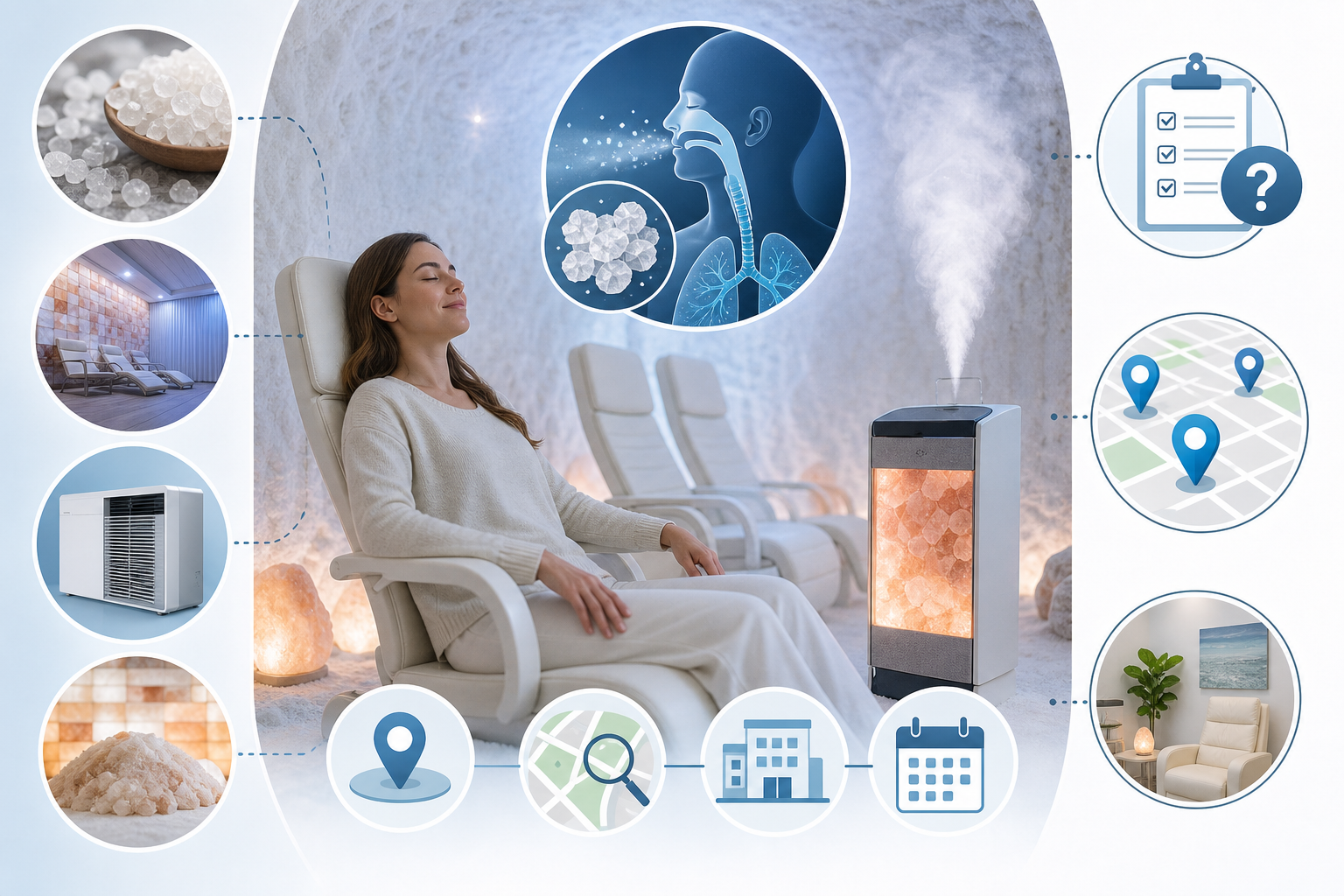
Halotherapy — also called dry salt therapy — involves breathing pharmaceutical-grade sodium chloride aerosol in a controlled environment, typically a salt room or salt cave. Research published in the Journal of Aerosol Medicine suggests inhaled salt particles in the 1–5 micron range reach the lower respiratory tract and can reduce airway inflammation, thin mucus secretions, and improve mucociliary clearance. Finding a qualified provider near you means knowing what equipment standards, session protocols, and facility credentials actually matter before you book.
What Is Halotherapy (Dry Salt Therapy)?
Dry salt therapy uses a device called a halogenerator to grind pharmaceutical-grade sodium chloride into fine aerosol particles and disperse them into an enclosed room. This is distinct from wet salt therapy (salt baths, nasal rinses), which works through different mechanisms and does not deliver particles to the lower airways.
Active vs. Passive Halotherapy
Not every salt room is the same. The distinction matters clinically:
- Active halotherapy: A halogenerator is running during your session, continuously dispersing dry salt aerosol. This is the modality with the most clinical research behind it. Sessions typically run 45 minutes at concentrations of 1–16 mg/m³ depending on the condition being addressed.
- Passive halotherapy: The room is lined with Himalayan salt panels or bricks but no halogenerator is in use. Particle concentration is negligible. This is primarily a relaxation environment, not a therapeutic one.
If respiratory or skin conditions are your reason for trying salt therapy, confirm the facility uses an active halogenerator — not just decorative salt walls.
What to Look for in a Halotherapy Provider
Facility quality varies significantly. These are the non-negotiables to verify before booking:
Equipment and Facility Standards
- Certified halogenerator: Look for equipment certified by the Salt Therapy Association or equivalent body. Reputable brands include Halomed and IIRIS.
- Pharmaceutical-grade sodium chloride: Only 99.99% pure NaCl should be used. Table salt or Himalayan salt in a halogenerator introduces contaminants into the aerosol.
- HVAC and air exchange: The room should have controlled ventilation to maintain consistent salt concentration and prevent buildup between sessions.
- Session capacity limits: Smaller rooms (2–4 people) allow more precise particle concentration control than large group rooms holding 10–15.
Staff Credentials
Halotherapy is not a licensed medical profession in most U.S. states, but the best providers employ staff with backgrounds in respiratory therapy, nursing, or wellness with specific halotherapy certification. Ask whether any staff hold credentials from the Salt Therapy Association or have completed clinical training in aerosol therapy.
If you are managing a diagnosed respiratory condition like asthma or COPD, coordinate with your primary care provider or a wellness specialist near you before starting a halotherapy regimen.
Questions to Ask Before You Book
Call the facility or check their website for answers to these before committing to a package:
- Do you use an active halogenerator, and what brand/model?
- What grade of sodium chloride do you use in the halogenerator?
- What is the maximum occupancy per session?
- How is the room sanitized between sessions?
- Do you have protocols for clients with asthma, COPD, or skin conditions?
- What is the recommended session frequency for my specific concern?
A provider who cannot answer questions 1 and 2 with specifics is a red flag. Reputable facilities are transparent about their equipment.
How Does Halotherapy Compare to Other Respiratory Wellness Options?
Modality Mechanism Typical Session Best For Evidence Level Active Halotherapy Inhaled NaCl aerosol (1–5 micron) 45 min, 2–3x/week Respiratory conditions, skin conditions Moderate (clinical trials, limited RCTs) Passive Salt Room Ambient salt environment 45–60 min Relaxation, stress reduction Low (minimal aerosol delivery) Nasal Saline Rinse Wet saline, upper airway only 5 min daily Sinusitis, allergies High (strong RCT evidence) Nebulized Saline Wet aerosol via medical device 15–20 min Bronchiectasis, CF High (medical standard of care)Halotherapy occupies a middle ground — more targeted than a passive salt room, less clinically controlled than medical nebulization. For seasonal allergy management alongside halotherapy, see our guide on combating allergen season with natural solutions.
How to Find Halotherapy Near You
The fastest approach: search for "halotherapy" or "salt therapy" combined with your city name, then filter results by the criteria above. Most salt therapy facilities operate as standalone wellness centers, day spas, or integrative health practices — some chiropractic and physical therapy offices have added salt rooms as a complementary service.
- Use the Salt Therapy Association member directory to find certified facilities in your region.
- Search halotherapy providers near you on Medximity to find wellness-integrated practices that offer salt therapy alongside chiropractic or PT services.
- Check whether the facility offers a trial session before purchasing a package — most reputable providers do.
- Read reviews specifically for mentions of the halogenerator being active, not just "beautiful salt walls."
If you are also managing musculoskeletal issues — neck pain, headaches, or post-accident recovery — it is worth finding a practice that combines halotherapy with hands-on care. The same way you would use our guide to find the right chiropractor for you, apply the same due-diligence framework to any wellness provider you are vetting.
What to Expect at Your First Session
Arrive 10 minutes early to complete an intake form. You will be asked about respiratory conditions, skin conditions, and current medications. Remove shoes before entering the salt room — most facilities provide disposable booties. Wear comfortable, loose clothing; some providers recommend white clothing to see salt residue post-session.
During the session:
- Breathe normally through your mouth and nose — no forced deep breathing is required.
- You may notice a slight salty taste or mild throat sensation. This is normal.
- Coughing during or after the session is a common response as mucociliary clearance increases — this is the intended mechanism, not an adverse reaction.
- Stay hydrated; drink 16 oz of water within 30 minutes post-session.
Most protocols for respiratory conditions recommend 10–15 sessions over 3–5 weeks for initial results, with monthly maintenance sessions thereafter. For skin conditions like eczema or psoriasis, 20+ sessions over 6–8 weeks is the typical starting protocol.
A 2014 study in the Pneumonologia i Alergologia Polska journal found that children with asthma who completed 13 halotherapy sessions showed statistically significant improvement in FEV1 (forced expiratory volume) compared to controls.
When Should You Not Use Halotherapy?
Halotherapy is contraindicated in several situations. Do not book a session if you have:
- Active tuberculosis or any contagious respiratory infection
- Hemoptysis (coughing blood)
- Stage 3 or 4 COPD with severe airflow obstruction
- Uncontrolled hypertension
- Open wounds or active skin infections
Seek emergency care — not a salt room — if you experience sudden chest pain, difficulty breathing at rest, or coughing up blood. These are red flags requiring immediate medical evaluation, not wellness intervention.
For headaches or sinus-related symptoms that persist despite halotherapy, a migraine or headache specialist can rule out structural causes that salt therapy will not address.
What to Do Next
Start by identifying whether your goal is respiratory (active halogenerator required), skin-focused (active halogenerator plus skin-specific protocols), or general relaxation (passive salt room is sufficient). That single distinction narrows your search immediately.
- For respiratory or skin conditions: Confirm active halogenerator use, pharmaceutical-grade salt, and staff with halotherapy certification before booking. Plan for a minimum 10-session commitment to assess results.
- For general wellness: A single trial session at any reputable spa-based salt room is a reasonable starting point.
- If you have a diagnosed condition: Coordinate with your primary care provider or specialist first. Halotherapy is a complement to, not a replacement for, evidence-based medical care.
Find halotherapy and wellness providers near you on Medximity — or if you are also managing back pain, neck tension, or post-accident recovery, browse our full provider directory to find practices that integrate salt therapy with chiropractic and physical therapy care. You can also explore more health and wellness topics to support your care decisions.