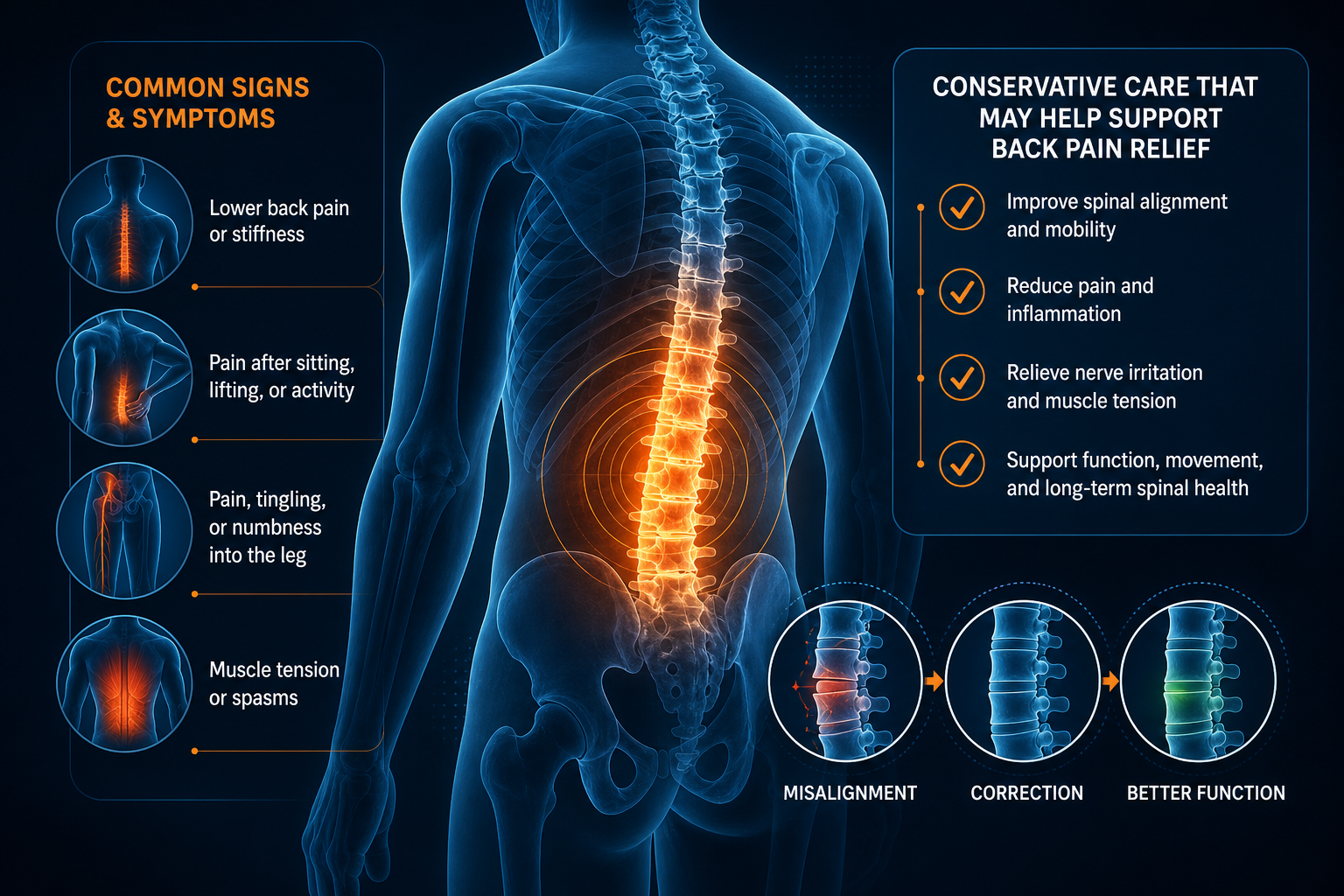
If you are trying to find back pain chiropractor Fountain Inn options, you are probably looking for relief that is practical, conservative, and close to home. Back pain can come on after lifting, sitting too long, a sports injury, a car accident, or sometimes for no obvious reason. A chiropractor may help evaluate how your spine, joints, muscles, and movement patterns are contributing to your symptoms, then recommend non-surgical care when appropriate.
This guide explains what may cause lower back pain, when to see a provider, what happens during a chiropractic visit, and how to compare local options. You can also use Medximity to search for a chiropractor near you or browse Fountain Inn chiropractic providers if you are ready to schedule an evaluation.
What Does a Back Pain Chiropractor Do?
A back pain chiropractor focuses on conservative care for the spine, joints, muscles, and nervous system. For many patients, chiropractic care may include spinal adjustments, soft-tissue techniques, mobility work, posture coaching, ergonomic recommendations, and guided exercises. The goal is not simply to “crack the back,” but to understand how the body is moving and where irritation, stiffness, or overload may be occurring.
Chiropractors commonly see patients with lower back pain, mid-back stiffness, neck-related tension, sciatica-like leg symptoms, pain with bending, and difficulty standing upright. A chiropractor should also screen for signs that a patient may need medical evaluation outside of conservative care.
If you are searching for a back pain chiropractor near me, look for a provider who explains the evaluation process clearly, discusses realistic expectations, and personalizes care rather than using the same treatment plan for every patient.
What Causes Lower Back Pain?
Many people search “what causes lower back pain” because the symptoms can feel alarming, especially when they appear suddenly. Lower back pain may be associated with several common issues, including muscle strain, joint irritation, disc-related irritation, poor movement mechanics, prolonged sitting, repetitive lifting, hip mobility limitations, or weakness in the core and glute muscles.
In some cases, symptoms are related to the lumbar spine, sacroiliac joints, hips, or surrounding soft tissues. Some patients also report pain that travels into the buttock or leg, which may be associated with nerve irritation, including sciatica-like symptoms. Only a qualified provider can evaluate your specific situation and help determine what may be contributing to your pain.
Pain When Bending the Lower Back
Pain when bending lower back movements can happen when tissues are irritated by repeated flexion, lifting with poor mechanics, stiffness in the hips, or a sudden strain. Some patients feel a sharp catch when reaching forward, while others feel a dull ache after bending repeatedly during work, yard tasks, or exercise.
A chiropractor may assess your range of motion, spinal joint mobility, muscle tenderness, hip movement, and functional patterns such as bending, squatting, or transitioning from sitting to standing. This helps guide a conservative care plan that may include manual therapy and movement coaching.
“I Can’t Stand Straight” Back Pain
If you feel like you cant stand straight back pain is limiting your posture, that may occur when the body guards against irritation. Muscle spasm, joint stiffness, or acute strain may cause the body to lean or avoid certain positions. While this can be uncomfortable, it does not automatically mean there is a serious injury.
However, you should seek prompt medical attention if back pain follows significant trauma, is accompanied by new bowel or bladder changes, causes progressive leg weakness, includes numbness in the groin or saddle area, or comes with fever or unexplained illness. These symptoms may require urgent evaluation.
When Should You See a Chiropractor for Back Pain?
Consider seeing a chiropractor if back pain lasts more than a few days, keeps returning, affects your ability to work or sleep, worsens with bending or lifting, or makes normal activities difficult. You may also want an evaluation if you have recurring tightness, stiffness after sitting, pain that travels into the hip or leg, or back pain that has not improved with basic rest and activity modification.
Chiropractic care may be one option for back pain treatment without surgery, especially when symptoms appear to be related to musculoskeletal movement, joint stiffness, or soft-tissue irritation. It is not the right answer for every condition, and a good chiropractor should explain when referral or co-management with another provider may be appropriate.
If you are comparing conservative options, Medximity can help you search for back pain chiropractors and review provider profiles before you call.
How to Find the Best Chiropractor for Lower Back Pain
The best chiropractor for lower back pain is not necessarily the closest office or the one with the most dramatic claims. A good fit is a provider who listens carefully, performs a focused exam, explains findings in plain language, and recommends care that matches your goals and health history.
Look for Experience With Your Type of Back Pain
Some chiropractors see many patients with acute lifting injuries, while others focus heavily on chronic back pain, sports injuries, auto accident recovery, posture-related pain, or sciatica-like symptoms. When reviewing a profile or calling an office, ask whether the provider commonly treats patients with symptoms similar to yours.
Prioritize Clear Communication
A trustworthy provider should be willing to explain what they are evaluating, why they recommend a specific technique, and what changes may suggest progress. Be cautious with any provider who guarantees a cure, promises a specific timeline, or pressures you into a large prepaid care plan before completing a thorough assessment.
Check Location, Scheduling, and Practical Fit
Back pain care is easier to follow through with when the office is convenient. If you live or work near Fountain Inn, consider appointment availability, parking, office hours, and whether the clinic can accommodate your work schedule. You can start with Medximity’s Fountain Inn provider directory to compare local options.
What to Expect at Your First Chiropractic Visit
Your first appointment typically begins with a conversation about your symptoms, health history, activity level, work demands, prior injuries, and goals. The provider may ask when the pain started, what movements make it better or worse, whether pain travels into the leg, and whether you have numbness, tingling, or weakness.
The exam may include posture observation, range-of-motion testing, orthopedic tests, neurological screening, muscle and joint assessment, and movement analysis. Depending on your presentation, the chiropractor may discuss whether imaging or referral is appropriate, although many cases of uncomplicated back pain can be evaluated clinically.
How Long Does a Chiropractic Visit Take?
If you are wondering how long does chiropractic visit take, a first visit often takes longer than follow-up appointments because it includes history, examination, explanation, and care planning. Many initial visits may last about 30 to 60 minutes, depending on the clinic and complexity of your symptoms. Follow-up visits are often shorter, but timing varies by provider and treatment approach.
Before you schedule, ask the office how long to plan for the first appointment, whether treatment may occur the same day, and what paperwork or records to bring.
Common Conservative Treatments for Back Pain
Chiropractic care for back pain is usually built around conservative, non-invasive strategies. Your specific plan may vary based on your exam findings and tolerance.
Spinal Adjustments and Joint Mobilization
Spinal adjustments are controlled movements applied to joints that may be stiff or not moving well. Some chiropractors use hands-on techniques, while others use lower-force methods or instrument-assisted approaches. Joint mobilization is typically gentler and may involve repetitive movement to improve comfort and mobility.
Soft-Tissue Therapy
Muscles, tendons, and fascia can contribute to back pain when they are irritated, guarded, or overloaded. Soft-tissue techniques may help reduce tension and improve movement quality for some patients. These may be paired with stretching or strengthening exercises.
Exercise and Movement Coaching
Back pain often improves best when passive treatment is combined with active strategies. Your chiropractor may suggest core stabilization, hip mobility exercises, glute strengthening, walking progressions, or safer lifting mechanics. These recommendations should be tailored to your ability and symptoms.
Ergonomics and Daily Habits
Small changes to sitting, sleeping, lifting, and workstation setup may reduce repeated stress on the lower back. This can be especially helpful for people whose pain flares during desk work, driving, childcare, warehouse work, or repetitive bending.
For more general education, you may find Medximity’s resource on lower back pain causes and conservative treatment options helpful.
Chiropractic Care vs Physical Therapy for Back Pain
Patients often compare chiropractic care vs physical therapy back pain options. Both can be useful forms of conservative care, and the right choice depends on your symptoms, goals, and provider recommendations.
Chiropractic care often emphasizes spinal and joint assessment, manual therapy, adjustments, mobility, and functional movement. Physical therapy often emphasizes rehabilitation, progressive strengthening, mobility, balance, and return-to-activity planning. In practice, there can be overlap. Many chiropractors prescribe exercises, and many physical therapists use hands-on techniques.
Some patients choose one approach; others benefit from coordinated care. If your back pain is related to weakness, deconditioning, post-injury rehabilitation, or return to sport or work, physical therapy may be part of the plan. If stiffness, joint restriction, or movement-related spinal pain appears to be a major factor, chiropractic care may be considered. A qualified provider can help determine what is appropriate for your situation.
You can also compare options through Medximity’s physical therapy provider directory.
Chiropractic Treatment for Sciatica Pain
Chiropractic treatment for sciatica pain may be considered when symptoms suggest irritation affecting the sciatic nerve pathway, which can cause pain, tingling, numbness, or discomfort traveling from the lower back or buttock into the leg. Sciatica-like symptoms can come from different sources, so evaluation matters.
A chiropractor may assess lumbar mobility, hip motion, neurological signs, muscle tension, and positions that increase or reduce leg symptoms. Conservative care may include gentle spinal techniques, nerve mobility exercises, hip and core strengthening, soft-tissue work, and activity modifications. If symptoms are severe, worsening, or associated with progressive weakness, a provider may recommend referral for further evaluation.
For additional patient education, read Medximity’s guide to chiropractic care for sciatica symptoms.
Natural Treatment for Back Pain: What May Help?
Many patients prefer natural treatment for back pain when it is appropriate and safe. Conservative strategies may include staying gently active, walking, heat or ice based on comfort, mobility exercises, posture changes, chiropractic care, physical therapy, and gradual strengthening. The goal is to support movement and reduce irritation without relying on invasive options.
Rest may be helpful for a short period after an acute flare, but prolonged inactivity can sometimes make stiffness and weakness worse. A provider can help you decide which movements are reasonable and which activities should be modified while symptoms calm down.
Questions to Ask a Back Pain Chiropractor
Bringing questions to your first visit can help you feel more confident. Consider asking:
- What do you think may be contributing to my back pain based on today’s exam?
- Do my symptoms suggest anything that needs medical referral or additional evaluation?
- What treatment options do you recommend, and why?
- What techniques do you use for lower back pain?
- Will my plan include exercises or home-care recommendations?
- How will we measure progress?
- How many visits should we try before reassessing the plan?
- What symptoms should prompt me to stop activity or seek urgent care?
These questions to ask back pain chiropractor offices can help you compare providers and avoid vague care plans. A good provider should welcome informed questions and answer in terms you understand.
Finding a Back Pain Chiropractor in Fountain Inn With Medximity
When you need to find back pain chiropractor Fountain Inn providers, Medximity helps you compare local options in one place. Provider profiles may include clinic details, specialties, location information, and ways to contact the office. This can make it easier to narrow your search without calling every clinic individually.
Start by browsing chiropractors in Fountain Inn, SC. If you are open to nearby communities, you can also search the broader chiropractor search near Fountain Inn. As you compare options, focus on clinical fit, communication, convenience, and whether the provider’s approach matches your goals.
FAQ: Finding Back Pain Chiropractic Care in Fountain Inn
Can a chiropractor help lower back pain?
A chiropractor may help some patients with lower back pain, especially when symptoms are associated with joint stiffness, muscle tension, movement limitations, or mechanical irritation. Results vary, and an evaluation is needed to decide whether chiropractic care is appropriate for your situation.
How do I know if back pain is serious?
Seek urgent medical evaluation if back pain occurs after major trauma, includes new bowel or bladder changes, causes progressive leg weakness, includes numbness in the groin or saddle area, or comes with fever or unexplained illness. If you are unsure, it is safer to contact a qualified healthcare provider.
What should I bring to my first chiropractic visit?
Bring your ID, insurance information if applicable, a list of medications and health conditions, prior imaging reports if you have them, and notes about when your pain started. Wear comfortable clothing that allows you to move during the exam.
Will I be adjusted on the first visit?
Some clinics may provide treatment during the first visit, while others may focus on evaluation and care planning first. It depends on your symptoms, exam findings, provider approach, and whether any referral or additional evaluation is needed.
Is chiropractic care the same as physical therapy?
No. Chiropractic care and physical therapy are distinct professions, although both may help with conservative back pain care. Chiropractic often focuses on spinal and joint function, manual therapy, and movement, while physical therapy often emphasizes rehabilitation and progressive exercise. There can be overlap depending on the provider.
How many chiropractic visits will I need for back pain?
The number of visits varies based on the cause, severity, duration of symptoms, your response to care, and your goals. A reasonable plan should include reassessment points so you and your provider can decide whether care is helping.
Next Steps
Back pain can disrupt work, sleep, exercise, and family life, but you do not have to guess your way through it. If you are ready to explore conservative care, use Medximity to compare Fountain Inn chiropractors, review provider information, and choose an office that feels like a good fit for your needs.
To begin, visit the Medximity Fountain Inn chiropractor directory and contact a provider to discuss your symptoms, appointment availability, and what to expect at your first visit.
This article is for educational purposes only and is not a substitute for professional medical advice, diagnosis, or treatment. Always consult a qualified healthcare provider about your specific condition. If you may be experiencing a medical emergency, call 911 or seek emergency care immediately.