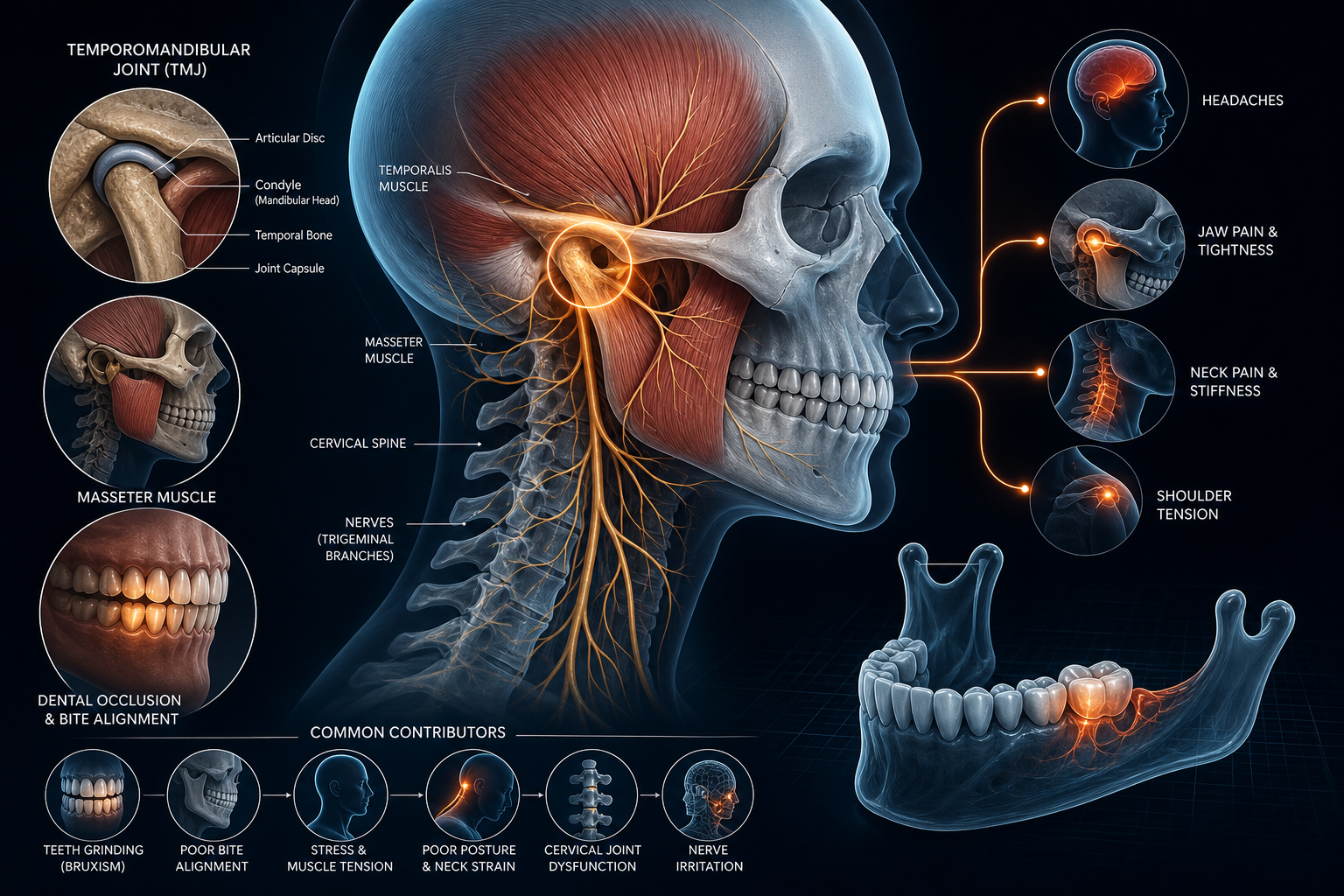
If you are searching for a dentist Dickson TN residents can turn to for jaw pain, chewing discomfort, or possible TMJ symptoms, you may be trying to answer a simple question: is this dental, muscular, or something else? Jaw pain can come from several sources, including tooth problems, gum irritation, clenching or grinding, temporomandibular joint dysfunction, muscle tension, or referred pain from the neck and head.
This guide explains what jaw and TMJ-related symptoms can mean, when to schedule an evaluation, and what to expect when you see a provider. If you need help finding care, you can start with a dentist in Dickson, TN accepting patients through Medximity.
Why Does My Jaw Hurt When Chewing?
Pain while chewing may happen when the jaw joint, teeth, bite, or chewing muscles are irritated. The temporomandibular joints, often called the TMJ, connect the lower jaw to the skull on each side of the face. These joints work with muscles, ligaments, teeth, and the neck to help you chew, speak, yawn, and open your mouth.
Common reasons patients report jaw pain when chewing include:
- Tooth or gum irritation: Cavities, cracked teeth, gum inflammation, or dental infection may cause chewing pain and should be evaluated by a dentist.
- Clenching or grinding: Also called bruxism, this can overload the jaw muscles and teeth, especially overnight.
- TMJ irritation: The joint or the small disc inside the joint may become inflamed or move less smoothly.
- Muscle tension: Tightness in the masseter, temporalis, neck, and upper shoulder muscles may contribute to jaw discomfort.
- Recent dental work or trauma: Holding the mouth open for a long appointment or experiencing a fall or collision may aggravate jaw tissues.
Because these causes can feel similar, an exam is the safest way to sort out what may be contributing to your symptoms.
When to See a Dentist for Jaw Pain in Dickson, TN
Consider scheduling with a dentist for jaw pain in Dickson, TN if pain is persistent, worsening, or affecting daily activities such as eating or speaking. A dental evaluation is especially important if you have tooth sensitivity, swelling, bleeding gums, a bad taste, fever, facial swelling, or pain that wakes you at night.
You should also seek prompt professional guidance if you can't open your mouth all the way, your jaw locks open or closed, your bite suddenly feels different, or pain started after an injury. These symptoms do not always mean something serious, but they deserve timely evaluation.
TMJ Symptoms That May Overlap With Headaches and Neck Pain
TMJ-related problems, sometimes called temporomandibular disorders or TMD, may cause symptoms beyond the jaw. Some patients report neck pain and headaches from jaw tension, especially when clenching, grinding, posture strain, or muscle guarding is present.
Symptoms that may be associated with TMJ dysfunction include:
- Jaw aching, pressure, or fatigue
- Clicking, popping, or grinding sounds in the jaw
- Pain when chewing, yawning, or talking for long periods
- Difficulty opening wide or a feeling that the jaw catches
- Headaches near the temples
- Ear fullness or discomfort after dental causes have been ruled out
- Neck, shoulder, or upper back tension
These symptoms can have more than one cause. A dentist can check the teeth, bite, gum health, and jaw joint mechanics. In some cases, they may coordinate care with a physical therapist, chiropractor, or medical provider.
What to Expect at a Dental Evaluation for Jaw Pain
At a visit for jaw pain or possible TMJ symptoms, the dentist will usually ask about your symptoms, health history, recent dental work, injuries, stress-related clenching, sleep habits, and whether pain changes with chewing or jaw movement. If you are wondering how to describe jaw pain symptoms, try to note:
- Where the pain is located
- Whether it is sharp, dull, aching, burning, or pressure-like
- When it started and whether it is improving or worsening
- What triggers it, such as chewing, yawning, talking, or waking up
- Whether you hear clicking or popping
- Whether your mouth opening feels limited
- Any headaches, neck pain, ear symptoms, or tooth sensitivity
The exam may include checking your teeth, gums, bite, jaw range of motion, joint sounds, facial muscles, and areas of tenderness. Dental X-rays or other imaging may be recommended when the provider needs more information about teeth, bone, or joint structures.
TMJ Treatment Without Surgery in Dickson, TN
Many cases of jaw tension or mild-to-moderate TMJ-related discomfort are managed conservatively first. TMJ treatment without surgery in Dickson, TN may include education, behavior changes, dental appliances when appropriate, home care strategies, and referral for rehabilitation. Treatment depends on the suspected cause and should be personalized by a qualified provider.
Dental Approaches
A dentist may discuss a night guard or oral appliance if clenching or grinding appears to be contributing. They may also evaluate bite changes, tooth damage, gum disease, cavities, or other dental issues that could be driving pain. Appliances are not right for every patient, so a dental exam matters before choosing one.
Physical Therapy for TMJ Near Dickson
Physical therapy for TMJ near Dickson may help some patients improve jaw mobility, reduce muscle guarding, and address neck or posture factors that contribute to symptoms. Care may include gentle jaw exercises, manual therapy, posture training, breathing strategies, and coordination exercises for the jaw and neck. You can also learn more about physical therapy as a conservative treatment option.
Chiropractic Care and Jaw-Related Neck Tension
Some patients searching for a chiropractor for jaw pain near me are actually dealing with a combination of jaw tension, neck stiffness, and headaches. Chiropractic care does not replace dental evaluation for tooth or gum problems, but a chiropractor may assess cervical spine mobility, posture, muscle tension, and movement patterns that can contribute to jaw discomfort in some cases. Medximity can help you find a chiropractor near Dickson, TN or learn more about chiropractic care.
Natural Treatment for Jaw Tension: What May Help at Home
Home strategies may ease mild jaw tension for some people, especially when symptoms are related to muscle overuse. These steps are not a substitute for professional care, but they may be useful while you are waiting for an appointment:
- Choose softer foods for a short period and avoid very chewy foods.
- Limit wide yawning, gum chewing, and nail biting.
- Use gentle heat or cold based on what feels soothing.
- Practice relaxed jaw posture: lips together, teeth apart, tongue resting lightly on the roof of the mouth.
- Take breaks from prolonged screen posture that pushes the head forward.
- Notice daytime clenching and intentionally relax the jaw.
A provider can show you which exercises are appropriate. Forceful stretching or aggressive self-massage may irritate symptoms in some cases.
How Long Does TMJ Pain Last?
The answer depends on the cause, severity, and whether contributing factors are addressed. Some short-term jaw flare-ups improve over days to weeks with conservative care and reduced irritation. Other cases, especially those linked to chronic clenching, joint inflammation, injury, or ongoing dental issues, may last longer and require coordinated care.
If you are asking how long does TMJ pain last because symptoms have continued for more than a few days, keep returning, or are limiting eating or speaking, it is reasonable to schedule an evaluation. Waiting too long may allow protective muscle tension and movement changes to become more persistent.
Finding the Best Dentist for TMJ Near Me
The best dentist for TMJ near me is usually one who listens carefully, evaluates both dental and jaw function, explains findings in plain language, and recommends conservative options when appropriate. For patients in Dickson, that may mean choosing a dentist who can assess tooth-related causes, identify signs of clenching or grinding, and coordinate with rehabilitation providers if the jaw, neck, and headache symptoms overlap.
You can start your search on Medximity by reviewing dentists in Dickson, TN. If your symptoms involve jaw mechanics, muscle tension, headaches, or neck pain, you may also want to review Medximity resources on TMJ disorders, jaw pain, and headaches.
Bottom Line
Jaw pain while chewing, limited mouth opening, TMJ clicking, headaches, and neck tension can be frustrating, but they are often manageable once the cause is better understood. A dentist can evaluate dental and bite-related factors, while physical therapy or chiropractic care may be considered when muscle, posture, or neck mechanics appear to play a role. If you are in Dickson and symptoms are affecting your comfort or function, use Medximity to find a qualified local provider and get an individualized evaluation.


