If you are searching for back pain physical therapy in Fountain Inn, you are probably looking for more than a quick stretch or a temporary fix. Lower back pain can interfere with work, sleep, driving, childcare, exercise, and even simple movements like bending forward to tie your shoes. Physical therapy may help by identifying movement patterns, strength limitations, mobility restrictions, and daily habits that may be contributing to your symptoms.
Back pain is common, but that does not mean it should be ignored. In many cases, a physical therapist can help patients understand what may be stressing the lower back and build a conservative treatment plan focused on movement, strength, posture, flexibility, and gradual return to activity. If you are ready to compare local options, you can start with Medximity's directory for physical therapists near Fountain Inn.
This guide explains what back pain physical therapy is, when to see a provider, what to expect during your first visit, how physical therapy may help sciatica-type symptoms, and how to think about home exercises, chiropractic care, and treatment timelines. It is educational only and should not replace advice from a qualified healthcare professional who can evaluate your specific situation.
What Is Back Pain Physical Therapy?
Back pain physical therapy is a conservative healthcare approach that uses assessment, education, exercise, hands-on techniques, and activity modification to help patients manage spine-related pain and movement problems. For lower back pain, a physical therapist typically evaluates how your spine, hips, pelvis, legs, and core work together during daily movement.
The goal is not simply to treat a painful spot. Lower back symptoms may be influenced by several factors, including limited hip mobility, reduced trunk endurance, irritated joints, muscle guarding, nerve sensitivity, deconditioning, repetitive bending, prolonged sitting, lifting mechanics, or recovery after an injury. A physical therapist looks for patterns that may be contributing to pain and creates a plan that fits your symptoms, health history, and activity goals.
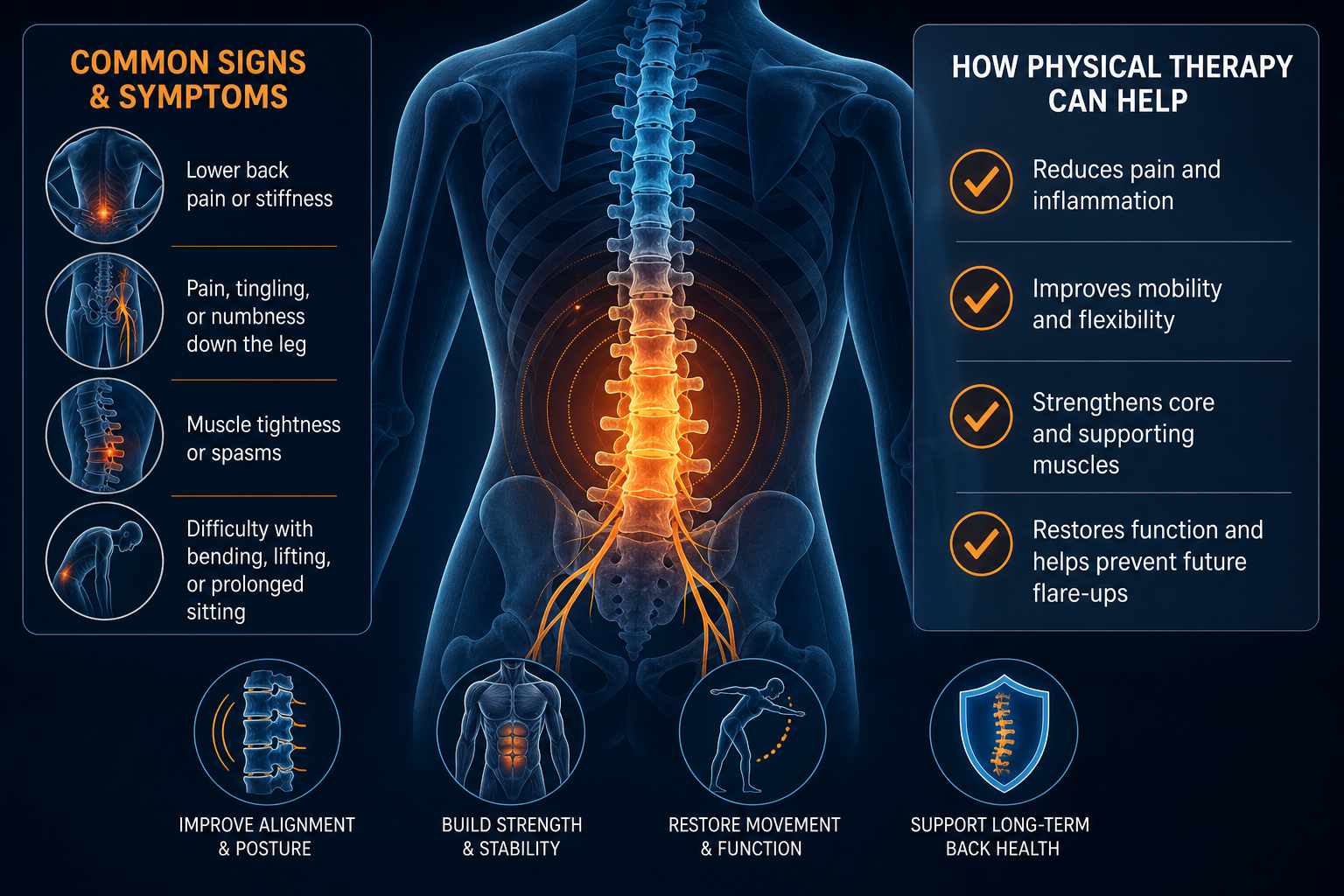
Physical therapy for lower back pain may include mobility drills, strengthening exercises, balance or coordination work, manual therapy, nerve mobility exercises, posture and ergonomic coaching, and a graded return to work or recreational activity. Some patients need a short course of care after a flare-up. Others may benefit from a longer program when symptoms have been recurring for months or when pain is affecting strength, walking, or confidence with movement.
For a broader overview of conservative care options, Medximity's resource on physical therapy for lower back pain explains how treatment plans are commonly structured.
What Causes Recurring Lower Back Pain?
Many people ask, what causes recurring lower back pain? The answer is often not one single issue. Lower back pain can come and go because the spine is affected by movement habits, workload, sleep, stress, fitness level, prior injuries, and how quickly someone returns to activity after a flare-up. Recurring pain does not always mean there is serious damage, but it is a reason to pay attention to patterns.
Common factors that may contribute to repeated flare-ups
- Prolonged sitting: Sitting for long periods may increase stiffness in the hips and lower back, especially when breaks are infrequent.
- Repetitive bending or lifting: Yard work, warehouse tasks, childcare, and gym movements can irritate the back when the body is not prepared for the load.
- Reduced core or hip strength: The trunk, hips, and legs help distribute forces. Weakness or poor endurance in these areas may increase strain on the lower back.
- Limited hip mobility: If the hips do not move well, the lower back may compensate during bending, squatting, or rotation.
- Sudden activity changes: A weekend of heavy lifting, a new workout routine, or returning to sports too quickly may trigger symptoms.
- Prior injury: After an episode of back pain, some people move differently or avoid activity, which may lead to stiffness and deconditioning over time.
- Nerve sensitivity: In some cases, irritated nerves may contribute to pain that travels into the buttock, thigh, or leg.
A physical therapist can help determine which factors seem most relevant during an evaluation. The focus is usually on building a plan that reduces sensitivity, restores motion, improves strength, and helps you return to activity in a measured way.
Back Pain When Bending Forward: Why It Happens
Back pain when bending forward is one of the most common reasons people look for care. Bending forward places the lower back, hips, discs, muscles, and ligaments under changing loads. For some patients, bending is painful because muscles are guarding. For others, the issue may be limited hip motion, sensitivity after repeated lifting, or irritation in structures of the lumbar spine.
Pain with bending does not automatically point to one diagnosis. A physical therapist may ask whether the pain is sharp or dull, whether it stays in the back or travels down the leg, whether symptoms improve after warming up, and whether sitting, standing, coughing, or lifting changes the pain. These details help guide the exam.
How physical therapy may address bending pain
Physical therapy may help by improving how the hips and spine share movement. A plan may include hip hinge training, gentle lumbar mobility, hamstring and hip flexor mobility work, core endurance, glute strengthening, and education about pacing. If bending has become frightening or guarded, the therapist may use graded exposure, which means gradually practicing the movement in tolerable steps so the body can rebuild confidence.
Patients should avoid forcing painful stretches or aggressive movements without guidance. Some soreness can occur when starting a new program, but worsening pain, increasing leg symptoms, or new neurological symptoms should be discussed with a provider.
Can Physical Therapy Help Sciatica Pain?
Many patients searching for back care ask, can physical therapy help sciatica pain? Sciatica is a term often used for pain, tingling, numbness, or burning that travels from the lower back or buttock into the leg along the path of the sciatic nerve. Symptoms may be related to nerve irritation, lumbar disc issues, spinal joint changes, muscle tension, or other factors. A provider can help determine what may be contributing to your symptoms.
Physical therapy may help some patients with sciatica-type symptoms by reducing mechanical irritation, improving mobility, building trunk and hip strength, and teaching positions or movements that calm symptoms. Treatment may include gentle repeated movements, nerve glides, walking progression, hip strengthening, posture changes, and strategies to reduce prolonged positions that worsen symptoms.
Because leg symptoms can vary widely, it is important to be evaluated rather than guessing. Numbness, weakness, symptoms below the knee, or pain that is worsening should be discussed with a healthcare professional. To learn more about conservative approaches, see Medximity's guide to physical therapy for sciatica pain.
When to See a Doctor or Physical Therapist for Back Pain
Knowing when to see doctor for back pain can be difficult. Some mild back pain improves with time, gentle activity, and basic self-care. However, you should consider seeing a qualified provider if pain is severe, keeps returning, limits normal activity, affects sleep, or does not improve after a short period of conservative care.
Schedule an evaluation if you notice these patterns
- Back pain that lasts more than a few days and is not steadily improving
- Pain that returns repeatedly after lifting, sitting, workouts, or work tasks
- Back pain that travels into the buttock, thigh, calf, or foot
- Numbness, tingling, or weakness in the leg
- Pain that makes it hard to stand, walk, bend, or get in and out of a car
- Symptoms that interfere with work, sleep, or caregiving responsibilities
- A recent fall, accident, or injury followed by back pain
Seek urgent medical attention for red flags
Some symptoms may require urgent evaluation. Seek prompt medical care if back pain is accompanied by loss of bowel or bladder control, numbness in the groin or saddle area, significant leg weakness, fever, unexplained weight loss, history of cancer, major trauma, or severe pain that is not manageable. These symptoms do not mean you definitely have a serious condition, but they should be assessed quickly.
For more patient-friendly guidance, Medximity has an article on when to see a doctor for back pain.
What to Expect at Your First Physical Therapy Visit
Your first visit for back pain physical therapy in Fountain Inn will usually begin with a conversation. The physical therapist may ask when symptoms started, what movements aggravate or ease the pain, whether symptoms travel into the leg, what your work and daily activities involve, and what goals matter most to you. A good evaluation should feel specific to your life, not like a generic exercise handout.
The movement assessment
The therapist may observe how you walk, bend, squat, stand from a chair, rotate, or lift. They may test spinal mobility, hip range of motion, leg strength, core endurance, balance, reflexes, sensation, and nerve tension depending on your symptoms. If a movement is painful, the therapist should modify the exam and explain what they are checking.
Your treatment plan
After the exam, the therapist should explain what they believe may be contributing to your pain in plain language. Your plan may include in-clinic treatment, a home exercise program, education about activity pacing, and practical strategies for work, sleep, lifting, or sitting. The plan may change as your symptoms respond.
What treatment may feel like
Some sessions may focus on calming symptoms and restoring comfortable movement. Others may focus on strength, endurance, balance, or sport- and job-specific tasks. Physical therapy should generally be tolerable. You may feel muscle fatigue or mild soreness when beginning exercises, but sharp, worsening, or radiating pain should be reported to your therapist.
Common Treatments Used in Physical Therapy for Lower Back Pain
There is no single best treatment for every back pain patient. Physical therapy for lower back pain is usually most useful when it matches the person's symptoms, exam findings, fitness level, and goals. A plan may include several of the following elements.
Therapeutic exercise
Exercise is a central part of many back pain treatment plans. Depending on your situation, your therapist may use trunk stabilization, hip strengthening, mobility drills, balance work, walking progressions, or lifting mechanics. Exercises are often progressed gradually so the body can adapt without unnecessary flare-ups.
Manual therapy
Manual therapy may include hands-on joint or soft tissue techniques intended to improve movement, reduce guarding, or help a patient tolerate exercise. It is usually used as part of a broader plan rather than as the only treatment.
Education and activity modification
Education can be one of the most practical parts of care. Your therapist may help you understand which movements are safe to continue, which activities need temporary modification, and how to pace chores, workouts, or work tasks. This can reduce fear and help you stay active within reasonable limits.
Movement retraining
If pain occurs during lifting, squatting, running, or bending forward, the therapist may teach different movement strategies. This does not mean there is one perfect posture. It means finding options that reduce symptoms and help you build tolerance over time.
Return-to-activity planning
For active adults, athletes, and workers with physical jobs, returning too quickly can sometimes trigger another flare-up. A therapist may help structure a step-by-step progression for lifting, walking, running, gym training, or job demands.
Natural Treatment for Lower Back Pain and Back Pain Treatment Without Surgery
Many patients prefer a natural treatment for lower back pain or want to explore back pain treatment without surgery. Physical therapy is one conservative option that may help many people manage pain and improve function without invasive treatment. Conservative care may include movement, exercise, posture and ergonomic strategies, sleep positioning changes, strength training, and education about safe activity.
It is important to keep expectations realistic. Physical therapy is not a guaranteed cure, and some conditions require additional medical evaluation. However, many back pain cases are initially managed with conservative care, especially when there are no urgent red flags. Your provider can help you understand whether physical therapy is appropriate based on your history and exam.
Natural does not mean doing nothing. It often means taking an active approach: walking regularly, building strength, improving mobility, changing repetitive habits, and learning how to respond to flare-ups. A physical therapist can help you choose the right starting point so you are not doing too much too soon.
Home Exercises for Lower Back Pain: What Patients Should Know
Home exercises for lower back pain can be helpful, but the right exercise depends on your symptoms. A movement that helps one person may irritate another. This is why an individualized plan is often better than copying a routine from a friend or trying every stretch you find online.
In general, many home programs start with gentle movements that reduce stiffness and build confidence. These may include walking, pelvic tilts, bridges, modified bird dogs, hip flexor stretches, hamstring mobility, or light core bracing. A therapist may adjust the range, repetitions, and frequency based on your response.
Safe exercise principles
- Start with movements that feel tolerable and controlled.
- Avoid forcing stretches into sharp pain.
- Stop and contact a provider if leg numbness, weakness, or radiating pain increases.
- Progress slowly instead of adding several new exercises at once.
- Track which activities improve, worsen, or do not change symptoms.
If you want to learn more about general exercise categories, review Medximity's guide to home exercises for lower back pain. Use it as education, not as a substitute for an evaluation if your symptoms are significant or persistent.
Physical Therapy vs Chiropractor for Back Pain
Patients often compare physical therapy vs chiropractor for back pain. Both may be involved in conservative spine care, but they often emphasize different tools. Physical therapists commonly focus on movement assessment, therapeutic exercise, functional strengthening, mobility, rehabilitation, and return-to-activity planning. Chiropractors commonly focus on spinal and joint assessment, manual adjustments or mobilization, soft tissue work, and conservative spine care education.
There can be overlap. Some physical therapists use manual therapy. Some chiropractors prescribe exercises and mobility work. The best fit may depend on your symptoms, preferences, medical history, and goals. If your main concern is recurring pain with weakness, conditioning, lifting tolerance, or return to sport or work, physical therapy may be especially useful because of its rehabilitation focus. If you are interested in conservative spinal joint care, chiropractic may also be worth discussing with a qualified provider.
Medximity offers resources on chiropractor vs physical therapy for back pain, and you can also search for chiropractors near Fountain Inn. The right choice should be based on a professional evaluation and your comfort with the treatment plan.
How Long Does Back Pain Therapy Take?
How long does back pain therapy take? The timeline varies. Some patients notice improvement within a few visits, especially when symptoms are recent and mild. Others need several weeks or longer, particularly when pain has been recurring, radiating into the leg, associated with weakness, or tied to demanding work or athletic goals.
A typical plan may involve visits one to three times per week at first, with home exercises between sessions. As symptoms improve, visits may become less frequent while the home program becomes more independent. Your therapist should reassess progress and adjust the plan rather than keeping the same routine indefinitely.
Factors that may affect your timeline
- How long you have had symptoms
- Whether pain is local to the back or travels into the leg
- Your baseline strength, mobility, and activity level
- Your work demands and daily sitting or lifting requirements
- How consistently you can complete home exercises
- Sleep quality, stress, and general health factors
- Whether symptoms are improving, plateauing, or worsening
If you are not improving as expected, a physical therapist may recommend that you follow up with a physician or another qualified provider for further evaluation. That does not mean something is necessarily serious. It simply means your care team may need more information.
How to Find the Best Physical Therapist Near Fountain Inn for Your Needs
Searching for the best physical therapist near Fountain Inn is really about finding the best fit for your symptoms, schedule, goals, and communication style. A good therapist should listen carefully, explain findings clearly, and give you a plan that feels specific rather than generic.
Questions to ask before scheduling
- Do you commonly treat lower back pain, sciatica-type symptoms, or recurring back flare-ups?
- What should I bring to the first appointment?
- How long is the initial evaluation?
- Will I receive a home exercise program?
- How do you measure progress?
- Do you help with return to work, lifting, sports, or daily activity goals?
- What insurance or payment options are available?
You may also want to consider location, appointment availability, parking, clinic environment, and whether the provider takes time to answer questions. For many patients in Fountain Inn and the surrounding Greenville County area, convenience matters because therapy works best when the plan is realistic to attend and follow.
To compare options, use Medximity's Fountain Inn physical therapy provider search. You can review nearby providers and choose a clinic that fits your needs.
What You Can Do Before Your Appointment
While you are waiting for an evaluation, gentle movement is often better tolerated than complete bed rest for many types of uncomplicated back pain. Short walks, comfortable position changes, and avoiding repeated movements that clearly worsen symptoms may help some patients stay functional. However, if your pain is severe, worsening, or associated with red flags, seek medical care promptly.
Before your visit, write down when symptoms started, what makes them better or worse, where the pain travels, and any prior treatment you have tried. Bring a list of medications and relevant medical history. If your pain is related to work, sports, or a specific activity, be ready to describe what that activity requires. The more specific you can be, the more useful the evaluation may be.
FAQ: Back Pain Physical Therapy in Fountain Inn
Is physical therapy good for lower back pain?
Physical therapy may help many patients with lower back pain by improving mobility, strength, movement tolerance, and confidence with daily activity. It is especially useful when pain keeps returning, affects work or exercise, or is linked to weakness, stiffness, or movement limitations.
Do I need a referral for back pain physical therapy in Fountain Inn?
Referral rules can vary by insurance plan, clinic policy, and state regulations. Some patients can schedule directly, while others may need a referral from a physician or another provider. Contact the clinic and your insurance plan before your first visit.
Can physical therapy help sciatica pain?
Physical therapy may help some sciatica-type symptoms by addressing nerve sensitivity, mobility, posture, hip and core strength, and activity patterns. Because leg pain, numbness, or weakness can have different causes, an evaluation is important.
How long does back pain therapy take?
The timeline depends on symptom severity, how long the pain has been present, whether pain travels into the leg, and how your body responds to treatment. Some patients improve within a few visits, while others need several weeks or a longer progression.
What should I avoid with lower back pain?
Avoid pushing through sharp pain, ignoring worsening leg symptoms, or staying completely inactive for long periods unless a provider has told you to rest. It is usually better to use tolerable movement and ask a qualified provider which activities are safe for your situation.
Should I choose physical therapy or chiropractic care?
Both may be appropriate for some types of back pain. Physical therapy often emphasizes rehabilitation, exercise, and return to activity, while chiropractic care often emphasizes spinal joint assessment and hands-on conservative care. Your symptoms, goals, and provider evaluation should guide the choice.
Start Your Search for Back Pain Care Near Fountain Inn
Back pain can be frustrating, especially when it keeps returning or limits the activities that matter to you. Physical therapy may offer a practical, conservative path forward by helping you understand your symptoms, move with more confidence, and build strength for daily life.
If you are looking for back pain physical therapy in Fountain Inn, Medximity can help you compare local providers and take the next step toward an evaluation. Start with the Medximity physical therapy directory for Fountain Inn and choose a provider who fits your needs, schedule, and care goals.