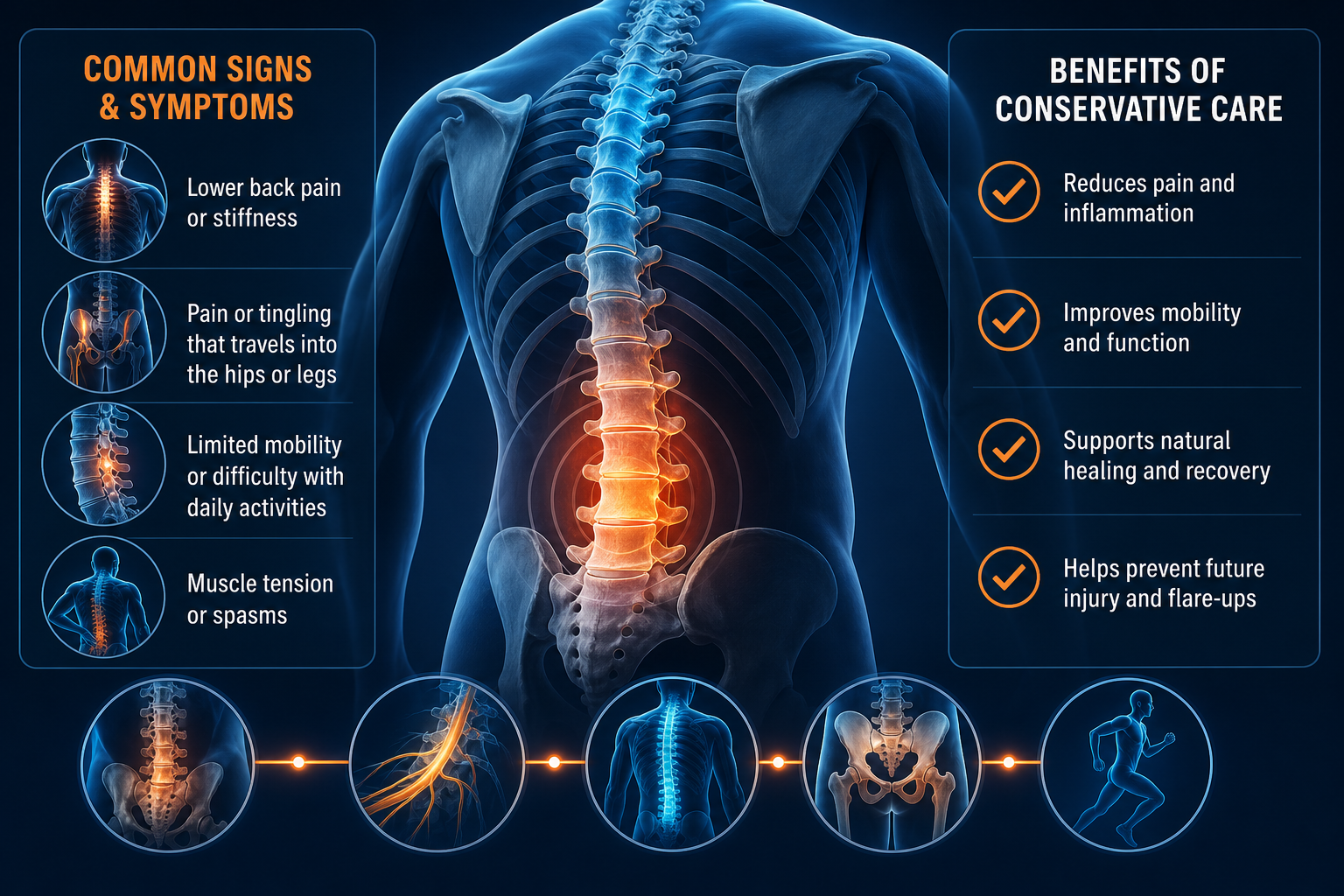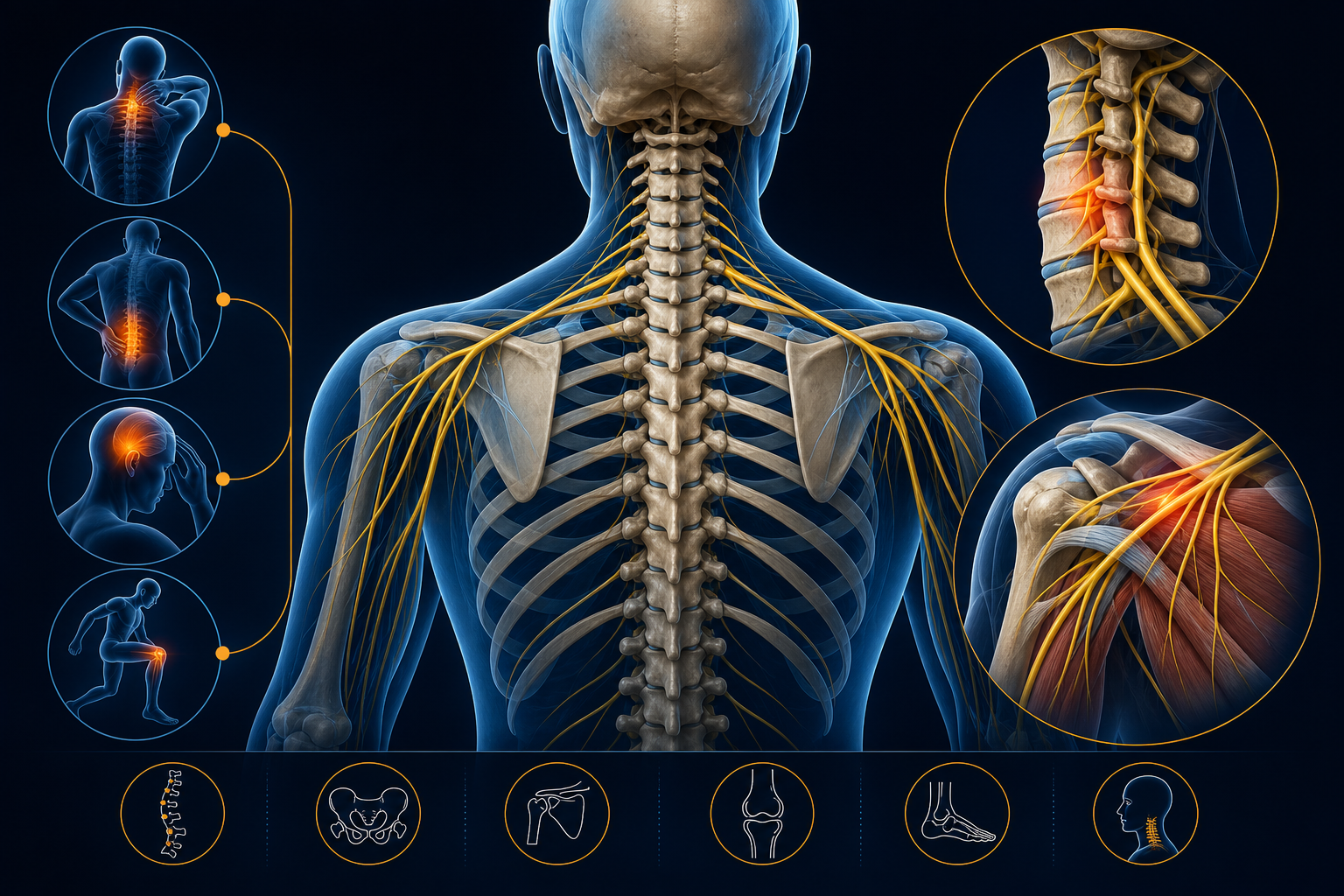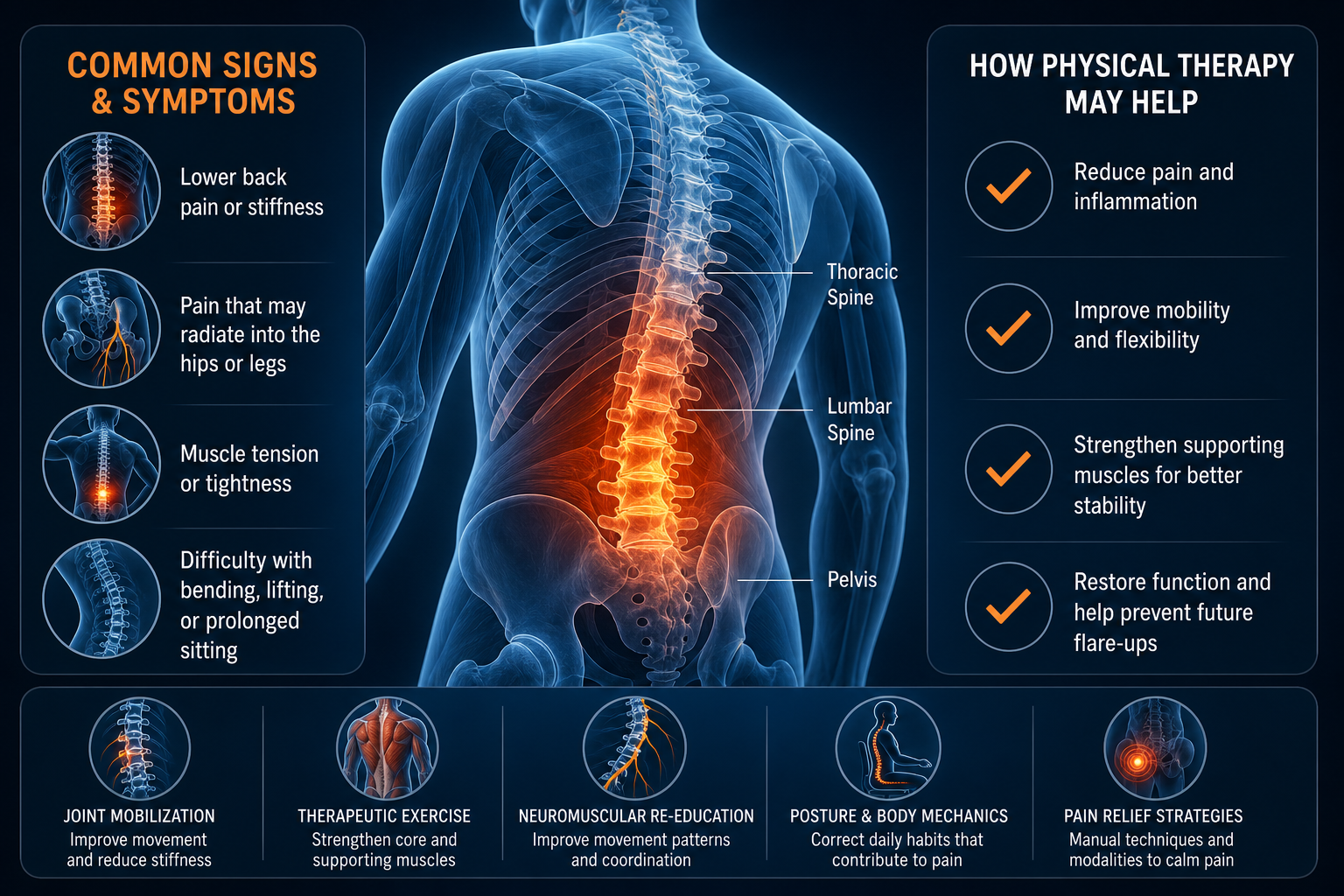
If you are searching for back pain physical therapy Fountain Inn, you may be trying to understand why your back hurts, whether physical therapy is the right next step, and how quickly you might feel better. Back pain is common, but that does not make it simple. Pain may come from irritated joints, strained muscles, disc-related sensitivity, posture and movement habits, nerve irritation, or a combination of factors.
Physical therapy for lower back pain focuses on improving movement, reducing sensitivity, restoring strength, and helping you return to daily activities with more confidence. It is a conservative, non-surgical approach that may include guided exercise, hands-on techniques, education, mobility work, and a plan for progressing safely at home.
This guide is written for people in and around Fountain Inn who are considering physical therapy for back pain. It explains common causes, when to seek care, what to expect at the first appointment, how long therapy may take, and how to compare physical therapy vs chiropractic for back pain. If you are ready to look for local options, you can start with Medximity’s physical therapy providers near Fountain Inn.
What Is Back Pain Physical Therapy?
Back pain physical therapy is a structured rehabilitation approach for people with pain, stiffness, reduced mobility, or activity limitations involving the spine, hips, pelvis, or surrounding muscles. A physical therapist evaluates how you move, where symptoms appear, what positions make pain better or worse, and which strength or mobility limitations may be contributing to the problem.
The goal is not simply to give you a list of exercises. Good back rehabilitation usually starts with understanding your specific pattern. For one person, sitting may be the main trigger. For another, symptoms may appear when bending forward, lifting groceries, getting out of the car, or standing at work. Your plan should reflect those details.
Physical therapy may help people with many types of back pain, including mechanical low back pain, muscle strains, mobility restrictions, core weakness, hip-related movement limitations, sciatica-like symptoms, and recurring stiffness. It may also support recovery after a flare-up by helping you gradually return to normal movement instead of avoiding activity out of fear.
To learn more about the broader role of rehab, you can visit Medximity’s physical therapy treatment guide.
Why Does My Back Hurt When Sitting?
Many people notice back pain when sitting, especially during long drives, desk work, meals, or evenings on the couch. Sitting is not automatically harmful, but it can increase discomfort when your back is already sensitive or when you stay in one position too long.
If you are wondering, why does my back hurt when sitting, possible contributors may include prolonged spinal flexion, reduced hip mobility, muscle fatigue, irritation around the lumbar joints or discs, weak endurance in the trunk muscles, or poor workstation setup. For some people, the issue is less about posture being “bad” and more about the body needing more position changes throughout the day.
A physical therapist may look at how you sit, how often you move, how your hips and spine move, and whether certain muscles are overworking or underperforming. Small changes can sometimes make a meaningful difference. These may include changing chair height, adding lumbar support, taking brief movement breaks, adjusting monitor position, or using a short walking routine during the workday.
Physical therapy may also include exercises that improve tolerance to sitting. That can involve hip mobility, gentle lumbar movement, glute strengthening, core endurance, and education about pacing. The plan should be based on your symptoms and your daily routine, not a one-size-fits-all posture rule.
Why Do I Have Back Pain When Bending Forward?
Back pain when bending forward can feel sharp, tight, pulling, or hesitant. Some people notice it when tying shoes, picking something up, loading the dishwasher, or getting dressed. Others feel okay bending once but become sore after repeated bending during yardwork or cleaning.
Forward bending involves coordinated movement from the lower back, hips, pelvis, and hamstrings. If one area is stiff or sensitive, another area may compensate. Pain with bending may be associated with muscle strain, irritated spinal tissues, limited hip mobility, hamstring tightness, reduced trunk control, or a recent increase in activity. In some cases, bending symptoms may also occur with radiating leg pain, numbness, or tingling, which should be discussed with a qualified provider.
Physical therapy does not usually begin by forcing painful bending. Instead, your therapist may identify what range feels safe, which movement pattern is less irritating, and how to build tolerance gradually. You may practice hip-hinge mechanics, supported forward bending, gentle mobility drills, or strengthening exercises that prepare the body for real tasks.
If bending forward is painful, it is understandable to avoid it. But complete avoidance for long periods may make normal movement feel more threatening. A careful rehab plan may help you reintroduce bending in a graded way so daily tasks become more manageable.
Is It Normal to Have Back Stiffness?
Many people ask, is it normal to have back stiffness, especially in the morning or after sitting. Mild stiffness can happen after sleep, prolonged inactivity, a demanding workout, or a long day on your feet. In many cases, stiffness improves once you move around.
However, stiffness that is persistent, worsening, painful, or limiting your daily activities may be worth discussing with a provider. Stiffness can be related to muscle guarding, reduced spinal or hip mobility, inflammation, deconditioning, stress, sleep quality, or protective movement habits after a painful episode.
A physical therapist may assess whether stiffness appears mostly in the lumbar spine, hips, thoracic spine, pelvis, or surrounding soft tissues. Treatment may include mobility work, strengthening, manual therapy, movement education, and a home plan. The aim is to improve comfort and function while helping you understand what movements are safe and useful for your specific situation.
When Should You See a Provider for Back Pain?
Back pain often improves with time and gentle activity, but there are times when professional evaluation is a smart step. You may want to see a physical therapist, chiropractor, primary care provider, or other qualified clinician if pain lasts more than a few days, keeps returning, interferes with work or sleep, limits walking or bending, or makes you avoid normal activities.
You should seek urgent medical evaluation if you have back pain with new bowel or bladder control problems, numbness in the groin or saddle area, major weakness in the leg, fever, unexplained weight loss, a history of cancer, significant trauma, or severe pain that does not change with rest or position. These symptoms do not always mean something serious is present, but they should be assessed promptly.
For non-urgent back pain, physical therapy may be appropriate when you want help improving movement and function without starting with surgery. If you are searching for back pain treatment without surgery, a physical therapist can help determine whether conservative rehab is reasonable and whether another medical referral may be needed.
You can explore Medximity’s general lower back pain resource for more patient-friendly background on symptoms and conservative care options.
What Happens at the First Physical Therapy Visit?
If you are wondering what happens at first physical therapy visit, the appointment usually begins with a conversation. Your therapist may ask when symptoms started, what movements or positions aggravate pain, what helps, what activities you want to return to, your work demands, your exercise history, and any relevant medical background.
The physical exam may include observing posture and walking, checking spinal and hip motion, testing strength, evaluating balance or functional movements, and screening for nerve-related signs when appropriate. You may be asked to bend, squat, lift, lie down, or perform simple movements so the therapist can see how your body responds.
The first visit is also educational. Your therapist should explain what they found in clear language, discuss likely contributors to your symptoms, and outline a treatment plan. You may receive a few starter exercises or movement strategies to use at home. The first plan is usually simple and focused. Too many exercises too soon can be hard to follow and may irritate symptoms.
Some people feel relief after the first visit, while others need several sessions before symptoms begin to change. Either response can be normal. The important part is that your plan is adjusted based on how you respond.
For a deeper overview, see Medximity’s article on what to expect at your first physical therapy visit.
What Does Physical Therapy for Lower Back Pain Include?
Physical therapy for lower back pain may include several types of care. The exact combination depends on your evaluation, diagnosis or working clinical impression, symptom irritability, goals, and tolerance.
Movement Assessment
A movement assessment helps the therapist understand which motions are limited, painful, unstable, or poorly coordinated. This may include bending forward and backward, rotating, side bending, walking, squatting, stepping, and getting up from a chair. The assessment helps connect your symptoms to real-life tasks.
Therapeutic Exercise
Therapeutic exercise is often central to back rehabilitation. Exercises may focus on mobility, core endurance, hip strength, glute activation, balance, or gradual loading. The goal is not to make you sore for the sake of working hard. It is to build capacity in a way your back can tolerate.
Manual Therapy
Manual therapy may include hands-on techniques for muscles and joints. Some patients report reduced stiffness or improved movement after manual therapy, especially when it is paired with exercise and education. It is usually one part of a broader plan rather than the entire treatment.
Education and Activity Modification
Education may include learning how pain works, how to pace activity, how to set up your workspace, how to lift more comfortably, and how to avoid cycles of flare-up and rest. This is especially important for people whose back pain returns every few months.
Home Exercise Program
Your home program should be realistic. A good plan may include a short set of exercises, clear instructions, and guidance on what discomfort is acceptable versus what should be reported. If the program feels too long or confusing, tell your therapist so it can be adjusted.
Common Exercises for Back Pain Physical Therapy
Exercises for back pain physical therapy should be selected for the person, not copied from a generic list. Still, certain categories are commonly used because they can support mobility, strength, and confidence with movement.
Gentle Mobility Exercises
Mobility exercises may include pelvic tilts, cat-cow movements, lumbar rotations, knee-to-chest variations, or supported extension movements. These exercises may help reduce stiffness and provide a gentle way to explore movement without heavy loading.
Core Endurance Exercises
Core work in physical therapy is not always about intense abdominal workouts. It may include modified dead bugs, bird dogs, side planks, marching bridges, or breathing-based stabilization. The goal is controlled support through the trunk during daily movement.
Hip and Glute Strengthening
The hips and glutes influence how force is shared during walking, stairs, lifting, and bending. Exercises may include bridges, clamshells, sit-to-stands, step-ups, hip hinges, or resisted side steps. Improving hip strength may reduce unnecessary strain on the lower back for some patients.
Functional Movement Practice
Physical therapy often progresses toward the activities that matter most to you. This may include lifting mechanics, gardening positions, getting in and out of the car, returning to the gym, carrying a child, or standing for a work shift. Rehab is most useful when it connects to daily life.
Do not start a new exercise program for back pain if you are experiencing severe symptoms, progressive leg weakness, new numbness, or other concerning changes. A qualified provider can help determine what is appropriate for your situation.
How Long Does Back Pain Physical Therapy Take?
How long does back pain physical therapy take? The honest answer is that it varies. Some mild, recent back pain episodes may improve within a few visits when the main issue is movement sensitivity, a minor strain, or a short-term flare-up. More persistent back pain may require several weeks or longer, especially if symptoms have been present for months, involve nerve irritation, or are linked to work demands, deconditioning, or recurring flare-ups.
Many physical therapy plans begin with one to two visits per week, then taper as you improve and become more independent with your home program. Progress is often measured by function, not only pain. For example, you might track sitting tolerance, walking distance, sleep quality, bending comfort, lifting ability, or return to exercise.
It is also common for recovery to be uneven. You may have better days and more sensitive days. A flare-up does not always mean you are starting over. Your therapist can help you interpret symptoms, adjust exercise intensity, and return to the plan safely.
If you are not improving as expected, a good therapist should reassess. That may mean modifying the plan, communicating with another provider, or recommending further medical evaluation when appropriate.
Back Pain Treatment Without Surgery
Many people want back pain treatment without surgery, and conservative care is often the first area patients explore. Physical therapy may help by addressing mobility, strength, coordination, posture tolerance, and activity habits. It can also help you understand which movements are safe and how to return to them gradually.
Non-surgical back pain care may include therapeutic exercise, manual therapy, walking programs, ergonomic changes, sleep-position adjustments, heat or cold strategies, and education about pacing. Chiropractic care may also be considered by some patients, particularly when joint mobility and spinal manipulation are part of the discussion.
Not every back pain episode requires imaging or invasive care. At the same time, some symptoms deserve medical evaluation. A qualified clinician can help determine whether conservative care is appropriate and whether additional assessment is needed.
Physical Therapy vs Chiropractic for Back Pain
If you are comparing physical therapy vs chiropractic for back pain, it may help to understand how the approaches often differ. Both can be part of conservative care, and both may help some patients depending on the condition, provider training, treatment plan, and patient goals.
Physical therapy typically emphasizes movement evaluation, therapeutic exercise, functional strengthening, mobility, education, and graded return to activity. A physical therapist may focus heavily on how you move during work, lifting, sitting, sports, or daily tasks.
Chiropractic care often emphasizes spinal and joint assessment, manual adjustment or manipulation, soft-tissue work, mobility, and advice on movement or posture. Some chiropractors also provide exercise-based rehabilitation, depending on their training and practice style.
One is not automatically better for every person. The best choice may depend on your symptoms, preferences, goals, medical history, and how each provider practices. Some patients use one approach; others use both in a coordinated way. If symptoms are severe, radiating, worsening, or associated with neurological changes, you should seek evaluation from an appropriate healthcare professional.
Medximity can help you compare local options for chiropractic care near Fountain Inn as well as physical therapy providers.
How to Find the Best Physical Therapist for Back Pain Near Me
Searching for the best physical therapist for back pain near me can feel overwhelming because every clinic describes its services differently. Instead of looking for a single universal “best,” focus on fit. A good match is a provider who evaluates your specific symptoms, explains findings clearly, offers a realistic plan, and adjusts care based on your response.
Look for Back Pain Experience
Many physical therapists treat back pain, but you may want to look for clinics that clearly discuss spine rehabilitation, lower back pain, postural strain, sports injuries, work-related movement problems, or orthopedic physical therapy. If your symptoms involve leg pain, numbness, or tingling, ask whether the provider commonly evaluates nerve-related back pain presentations.
Ask About the Treatment Approach
Consider asking whether care includes exercise progression, manual therapy when appropriate, functional movement training, and a home program. If your main problem is pain when sitting at work, ask whether the therapist addresses workstation setup and sitting tolerance. If your pain happens when bending, ask whether they work on lifting and hip-hinge mechanics.
Consider Location and Scheduling
Consistency matters in rehab. A clinic that is convenient to Fountain Inn, Simpsonville, Mauldin, or nearby Upstate South Carolina communities may make it easier to keep appointments. Also consider appointment times, insurance participation, parking, and whether the clinic offers follow-up plans that fit your schedule.
Pay Attention to Communication
You should feel comfortable asking questions. Your therapist should explain what they are doing and why. If an exercise increases symptoms, they should help you modify it rather than simply pushing through pain.
You can begin your search with Medximity’s physical therapy provider directory or narrow your search to providers near Fountain Inn.
What to Expect During a Back Rehabilitation Plan Near Fountain Inn
When looking for back rehabilitation near Fountain Inn, expect your care plan to change as you improve. Early treatment may focus on calming symptoms and identifying comfortable movements. As pain becomes more manageable, therapy may progress toward strength, endurance, and task-specific training.
For example, someone whose back pain worsens with sitting may start with position changes, gentle mobility, and low-intensity core activation. Later, the plan may include hip strengthening, walking progression, and ergonomic strategies for longer workdays. Someone with back pain when bending forward may begin with supported mobility and progress to hip-hinge training, lifting drills, and lower-body strengthening.
Your therapist may also help you set goals. Useful goals are specific and measurable. Instead of “have less pain,” you might work toward sitting through a 45-minute commute, lifting a laundry basket, walking two miles, sleeping through the night, or returning to a favorite exercise class.
Rehabilitation is collaborative. Tell your therapist what matters to you, what feels confusing, and what barriers you face at home or work. The more your plan reflects your real life, the more likely you are to follow it consistently.
How Back Pain Can Affect Daily Life in Fountain Inn
Back pain often becomes frustrating because it interferes with ordinary routines. You may feel it while commuting along local roads, sitting through work, caring for children, doing yardwork, exercising, attending church or community events, or walking around downtown Fountain Inn. The pain may not be constant, but it can make you plan your day around what your back might tolerate.
Physical therapy can be helpful because it connects treatment to those specific demands. A good rehab plan does not stop at clinic exercises. It should help you understand how to manage real positions and activities, such as driving, lifting, reaching, bending, carrying, and prolonged standing.
For people with active jobs, the plan may include body mechanics, progressive lifting, work-simulation tasks, and endurance training. For desk-based workers, it may include sitting strategies, movement breaks, hip mobility, and trunk endurance. For older adults, the plan may include balance, walking confidence, and safe strengthening. For recreational athletes, it may include return-to-running, gym progressions, or sport-specific movement.
Questions to Ask Before Starting Physical Therapy
Before scheduling, it can help to ask a few practical questions. These questions may make it easier to choose a clinic and understand what your care might involve.
- Do you commonly treat lower back pain and spine-related movement problems?
- What should I bring to my first appointment?
- Will my first visit include an evaluation and treatment plan?
- How often do patients with back pain typically come in at the beginning?
- Will I receive exercises to do at home?
- How do you adjust care if symptoms flare up?
- Do you help with sitting, bending, lifting, or work-related movement issues?
- Do you accept my insurance or offer self-pay options?
These questions do not replace a clinical evaluation, but they can help you find a provider whose approach matches your needs.
How to Prepare for Your First Appointment
To get the most from your first physical therapy visit, wear comfortable clothing that lets you move. Bring your insurance information, a list of medications if requested by the clinic, any relevant imaging reports if you already have them, and notes about your symptoms. You do not need to have all the answers, but details help.
Try to think about when your back pain started, whether it came on suddenly or gradually, what movements aggravate it, what makes it feel better, whether symptoms travel into the hip or leg, and what activities you are trying to return to. If sitting is the main problem, note how long you can sit before symptoms start. If bending is the issue, note which tasks are hardest.
It may also help to write down your top questions. For example, you may want to ask whether your symptoms are consistent with a mechanical back pain pattern, which activities you can continue, how much discomfort is acceptable during exercise, and what signs mean you should contact the clinic.
Making Progress Between Visits
Most progress in physical therapy happens through a combination of clinic visits and what you do between sessions. Your home plan does not need to be complicated. In many cases, a few consistent exercises, short walks, posture changes, or pacing strategies can be more useful than an overwhelming routine that you cannot maintain.
Follow your therapist’s instructions and report how your body responds. If an exercise causes lingering pain, sharp symptoms, or new radiating discomfort, tell your provider. They may modify the movement, reduce intensity, or choose a different exercise. If an exercise feels too easy after a few weeks, that may also be useful feedback because your plan may need progression.
Sleep, stress, hydration, activity level, and general health can influence how back pain feels. Physical therapy does not control every factor, but it can give you practical tools for building resilience and reducing repeated flare-ups.
Finding Back Pain Physical Therapy in Fountain Inn
When you are ready to search for back pain physical therapy Fountain Inn, Medximity can help you compare providers and find care that fits your location and needs. Look for a clinic that takes time to evaluate your symptoms, explains your plan clearly, and helps you return to the activities that matter most.
Back pain can be disruptive, but many people improve with the right conservative plan. Physical therapy may help you move with more confidence, understand your symptoms, and build the strength and mobility needed for everyday life. If your pain is severe, worsening, or associated with concerning symptoms, seek medical evaluation promptly.
To start your search, visit Medximity’s directory for back pain physical therapy near Fountain Inn.
Frequently Asked Questions
What kind of back pain can physical therapy help with?
Physical therapy may help with many types of lower back pain, including stiffness, muscle strains, movement-related pain, recurring flare-ups, pain with sitting, and pain with bending. It may also help some people with leg symptoms related to back irritation, although radiating pain, numbness, or weakness should be evaluated carefully by a qualified provider.
Do I need a diagnosis before starting physical therapy?
Requirements vary by state, insurance plan, and clinic policy. Some patients can begin with a physical therapy evaluation, while others may need a referral. Even when a formal diagnosis is not already available, a therapist can perform a movement-based evaluation and refer you to another provider if symptoms suggest the need for additional medical assessment.
How many physical therapy sessions will I need for back pain?
The number of visits depends on the duration and severity of symptoms, your goals, your response to treatment, and other health factors. Some people need only a few visits for a recent flare-up, while more persistent or complex back pain may require several weeks of care. Your therapist should reassess progress and adjust the plan as needed.
Will physical therapy exercises hurt?
Exercises should be selected and modified for your tolerance. Mild discomfort or muscle effort can happen, but sharp pain, worsening radiating symptoms, or lingering flare-ups should be discussed with your therapist. Physical therapy should help you progress gradually, not force you through severe pain.
Is physical therapy better than chiropractic for back pain?
Physical therapy and chiropractic care have different areas of emphasis, and one is not automatically better for every person. Physical therapy often focuses on exercise, movement, strength, and function, while chiropractic care often includes spinal or joint manipulation and mobility-focused treatment. The right choice depends on your symptoms, preferences, goals, and provider recommendations.
Can physical therapy help me avoid back surgery?
Physical therapy is a conservative option that may help many people manage back pain without surgery, depending on the condition and severity. It cannot guarantee that surgery will be avoided, and some symptoms require medical evaluation. A qualified provider can help you understand whether conservative care is appropriate for your situation.
What should I wear to physical therapy for back pain?
Wear comfortable clothing that allows you to bend, walk, stretch, and perform simple exercises. Athletic shoes are often helpful. Your therapist may need to observe how your back, hips, and legs move, so choose clothing that does not restrict movement.
How do I find back rehabilitation near Fountain Inn?
You can search Medximity for physical therapy providers near Fountain Inn and compare options based on location, specialty, and clinic information. Look for providers who discuss lower back pain, orthopedic rehabilitation, movement assessment, and individualized exercise plans.