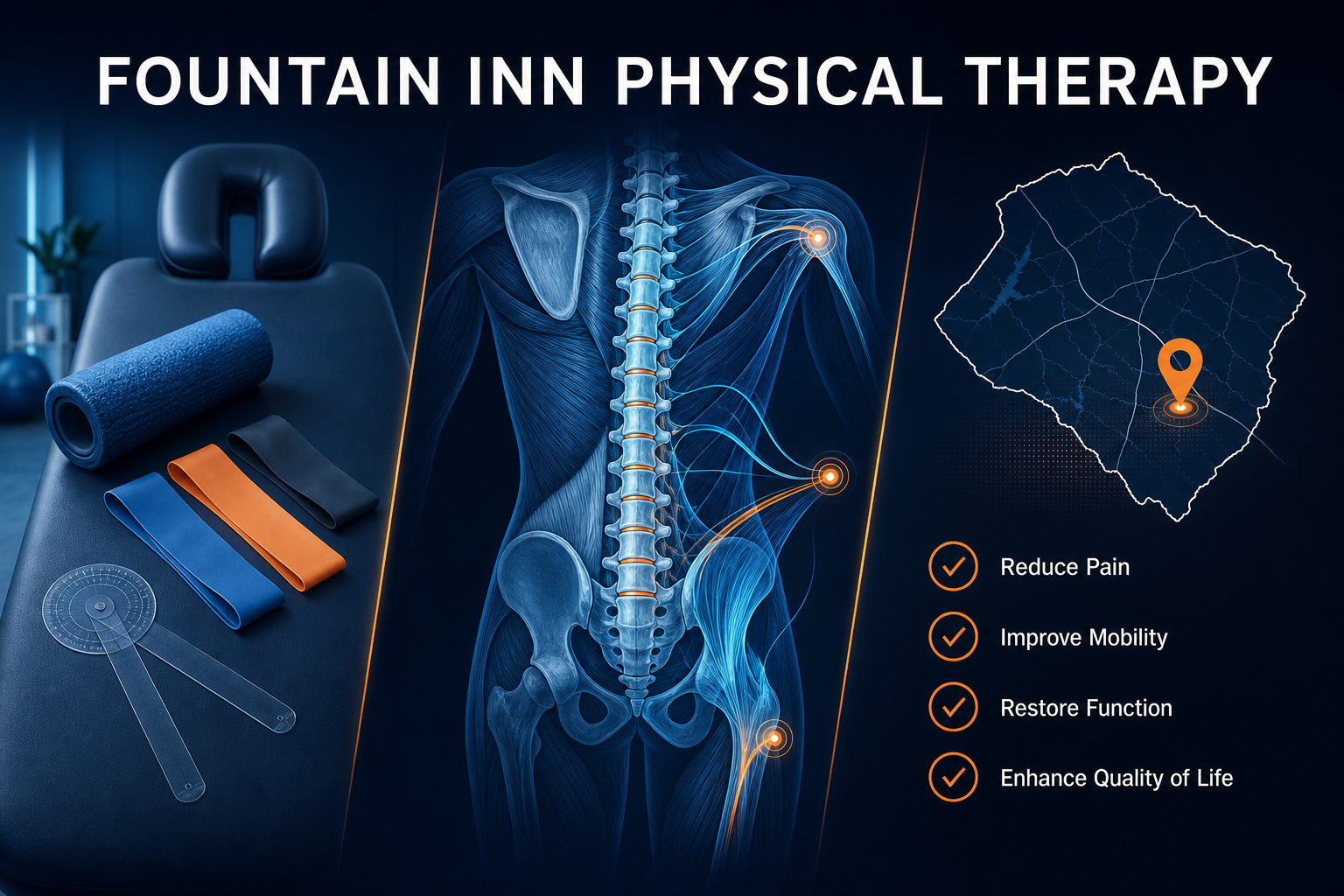
If you are looking for Back in Motion physical therapy clinic Fountain Inn SC, you are likely trying to find practical, conservative care close to home. Physical therapy may help people recover movement, reduce pain, improve strength, and return to daily activities after an injury, surgery, flare-up, or long period of stiffness. For patients in Fountain Inn, Simpsonville, and the greater Greenville County area, choosing a clinic often comes down to access, communication, treatment approach, and whether the provider understands your specific goals.
This guide explains what physical therapy is, what conditions it commonly treats, when to see a provider, and what to expect at a first appointment. You can also use Medximity to compare local options through the physical therapy clinic search near Fountain Inn, SC or browse the broader physical therapy specialty directory.
What Is Physical Therapy?
Physical therapy is a conservative healthcare service focused on movement, strength, function, and pain management. A licensed physical therapist evaluates how your body moves, identifies limitations that may be contributing to symptoms, and builds a treatment plan that may include therapeutic exercise, manual therapy, balance training, mobility work, posture education, and a home exercise program.
Physical therapy is not one-size-fits-all. Someone with low back pain may need a different plan than someone recovering from a knee injury or a car accident. A good plan should be based on your evaluation findings, your medical history, your daily activities, and your progress over time.
What Conditions Does Physical Therapy Treat?
Patients often ask, what conditions does physical therapy treat? In many cases, physical therapists help manage musculoskeletal and movement-related problems, including:
- Low back pain, neck pain, and stiffness
- Shoulder, hip, knee, ankle, and foot pain
- Sprains, strains, and overuse injuries
- Balance problems or difficulty walking
- Sports and work-related injuries
- Post-surgical rehabilitation when prescribed by the treating surgeon
- Weakness or loss of mobility after a period of inactivity
- Pain or movement limitations after a motor vehicle accident
Physical therapy may also support people trying to stay active without relying only on rest or medication. For example, physical therapy for back pain often includes education, gradual strengthening, movement retraining, and strategies for avoiding repeated flare-ups.
Physical Therapy for Back Pain in Greenville County
Back pain is one of the most common reasons people search for a physical therapy clinic near Fountain Inn, SC. Symptoms can come from irritated joints, muscle strain, disc-related issues, nerve irritation, poor movement patterns, or a combination of factors. A physical therapist cannot diagnose every cause without the proper evaluation and, when needed, coordination with a medical provider, but they can assess movement, strength, flexibility, and functional limitations.
Physical therapy for back pain in Greenville County may include gentle mobility exercises, core and hip strengthening, lifting mechanics, posture education, and graded activity. Some patients report improvement within a few visits, while others need a longer plan depending on symptom severity, work demands, age, general health, and consistency with home exercises.
Physical Therapy Without Surgery for Knee Pain
Many people also look for physical therapy without surgery for knee pain. Conservative care may be appropriate for certain knee problems, such as mild sprains, tendinopathy, patellofemoral pain, weakness, stiffness, or gradual discomfort with stairs and squatting. A therapist may work on hip and knee strength, joint mobility, balance, gait mechanics, and gradual return to activity.
Physical therapy cannot guarantee that surgery will be avoided, and some knee conditions require medical evaluation. However, for many patients, a structured rehabilitation plan may help improve function and provide a clearer picture of what the knee tolerates. Learn more about conservative options in Medximitys guide to physical therapy for knee pain without surgery.
When Should You See a Physical Therapist?
Consider scheduling with a qualified provider if pain, stiffness, weakness, or limited movement is affecting work, sleep, driving, exercise, or normal daily tasks. You may also want to be evaluated if symptoms have not improved after a reasonable period of rest, if discomfort keeps returning, or if you feel unsure how to move safely.
Seek prompt medical attention for red flags such as severe or worsening pain after trauma, new bowel or bladder changes, unexplained fever, sudden weakness, numbness in the groin area, chest pain, or symptoms that feel urgent. Physical therapy can be an important part of recovery, but it is not a substitute for emergency or medical evaluation when serious symptoms are present.
What to Expect at Your First Physical Therapy Appointment
If you are wondering what to expect at first physical therapy appointment, the visit usually begins with questions about your symptoms, medical history, activity level, work demands, medications, prior imaging or diagnoses, and goals. The therapist may then assess range of motion, strength, posture, balance, walking pattern, functional movements, and areas of tenderness or restriction.
After the evaluation, the therapist should explain their findings in plain language and outline a treatment plan. Your first visit may include education, gentle exercises, hands-on techniques, and a home program. You should leave with a clearer understanding of what may be contributing to your symptoms and what steps come next. For a deeper overview, read Medximitys guide on what happens at a first physical therapy appointment.
Physical Therapy After a Car Accident in South Carolina
After a collision, some people develop neck pain, back pain, headaches, shoulder discomfort, hip pain, or general stiffness. Physical therapy after car accident South Carolina may help address movement limitations and build a safe, gradual path back to activity. Symptoms can change in the days after a crash, so it is reasonable to seek evaluation if pain persists or function is limited.
Documentation can also matter. Physical therapy documentation for personal injury claim SC may include evaluation findings, treatment dates, objective measurements, progress notes, functional limitations, and discharge summaries. This information may help create a clear record of care, but it does not guarantee any legal outcome. Personal-injury laws, deadlines, and insurance procedures vary by jurisdiction, so patients with legal questions should speak with a licensed South Carolina attorney. For related patient education, see physical therapy after a car accident.
Workers Comp Physical Therapy Near Fountain Inn, SC
For job-related injuries, workers comp physical therapy Fountain Inn SC searches are common. Physical therapy may be part of a work-injury recovery plan when authorized under the applicable process. Treatment may focus on pain-limited movement, strength, job-specific tasks, lifting mechanics, and safe return-to-work progression.
Workers compensation rules and authorization requirements vary. Patients should follow the instructions provided by their employer, claims representative, treating provider, or attorney if one is involved. A physical therapy clinic may also need claim details before visits can be billed through workers compensation.
Does Insurance Cover Physical Therapy Visits?
Does insurance cover physical therapy visits? Often, yes, but coverage depends on your plan, diagnosis, referral requirements, deductible, copay, coinsurance, visit limits, and whether the clinic is in network. Some plans require prior authorization. Others may allow direct access to physical therapy but still apply medical necessity rules.
Before scheduling, ask the clinic to verify benefits or call your insurance plan directly. Helpful questions include whether a referral is required, how many visits are covered, what your out-of-pocket cost may be, and whether authorization is needed after the evaluation. Medximity also offers a patient-friendly guide to insurance coverage for physical therapy.
How Long Does Physical Therapy Take to Work?
The answer depends on the condition, severity, duration of symptoms, general health, and consistency with the plan. Some patients notice changes in pain or mobility within a few sessions. Others improve gradually over several weeks. Chronic pain, post-surgical recovery, nerve-related symptoms, and physically demanding jobs may require more time.
A reasonable treatment plan should include measurable goals. These might include improved range of motion, better walking tolerance, less pain with stairs, safer lifting mechanics, or return to a specific activity. If progress stalls, the therapist may adjust the plan or recommend follow-up with another healthcare provider.
How to Schedule a Physical Therapy Appointment Near Me
If you are searching how to schedule physical therapy appointment near me, start by identifying clinics that serve Fountain Inn, Simpsonville, Mauldin, or Greenville, depending on what is most convenient. Confirm the clinic treats your type of issue, accepts your insurance if you plan to use it, and offers appointment times that fit your schedule.
Medximity can help you compare local options, including the best physical therapy services in the Simpsonville and Greenville area. Bring your insurance card, photo ID, referral if required, medication list, relevant imaging reports, and any accident or workers compensation information if applicable.
Choosing a Physical Therapy Clinic Near Fountain Inn, SC
When comparing Back in Motion physical therapy clinic Fountain Inn SC with other local providers, look for clear communication, individualized treatment, practical home exercises, and a plan that matches your goals. The right clinic should explain why each activity is being recommended and how progress will be measured.
Physical therapy works best when the patient and provider are aligned. Ask questions, report changes in symptoms, and let your therapist know what activities matter most to you. If you are ready to explore care, start with Medximitys physical therapy provider search in Greenville County.
FAQ
Do I need a referral for physical therapy in South Carolina?
Some patients may be able to access physical therapy directly, but insurance plans may still require a referral or authorization for coverage. Check with the clinic and your insurance plan before your visit.
What should I wear to physical therapy?
Wear comfortable clothing that allows you to move. For knee, hip, ankle, or back concerns, athletic clothing and supportive shoes are usually helpful.
Can physical therapy help after a car accident?
Physical therapy may help with pain, stiffness, weakness, and movement limitations after a crash. A provider can evaluate your symptoms and recommend a plan based on your specific presentation.
How many visits will I need?
The number of visits varies. Your therapist should discuss an estimated plan after the evaluation and update it based on your progress.


