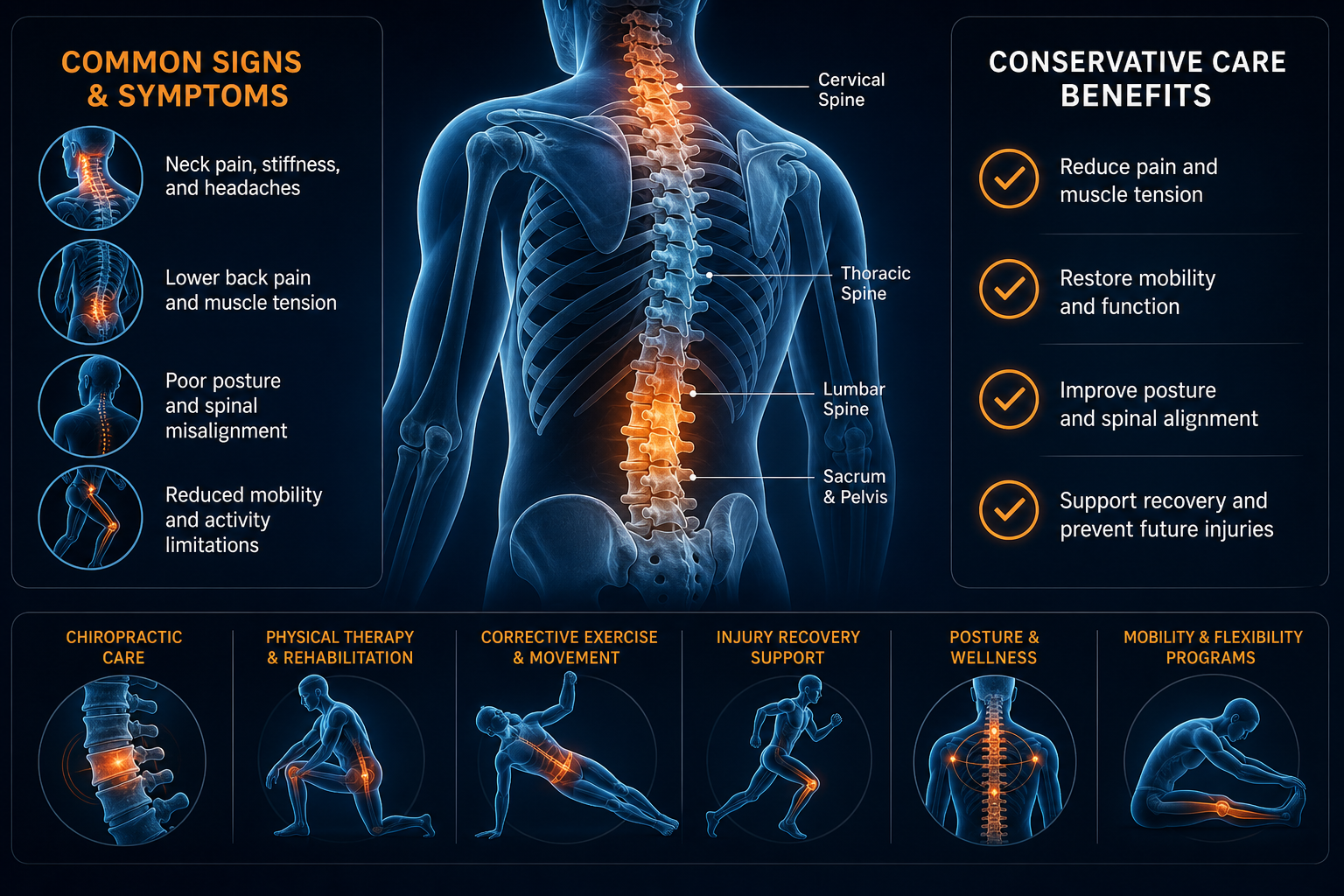
If you are searching for Back in Motion Fountain Inn services, you are likely looking for help with back pain, neck stiffness, posture problems, mobility limits, or recovery after an injury. Many patients want conservative care first: options such as chiropractic care, physical therapy, guided exercise, soft tissue work, posture coaching, and rehabilitation before considering more invasive approaches.
This guide explains the types of services patients often look for in Fountain Inn, how chiropractic and physical therapy may differ, when lower back or neck pain should be evaluated, and what to expect at an appointment. It is not a diagnosis or personal medical advice. A qualified provider can evaluate your symptoms, health history, and goals to help determine what type of care may be appropriate.
To compare local options, you can also search Medximity for chiropractors in Fountain Inn or physical therapy in Fountain Inn.
What Are Back in Motion Fountain Inn Services?
The phrase Back in Motion Fountain Inn services may refer to the conservative musculoskeletal care patients seek when pain, stiffness, weakness, or limited movement affects daily life. These services may include chiropractic evaluation, spinal or joint mobilization, therapeutic exercise, rehabilitation planning, posture and ergonomics coaching, and hands-on care for muscles and soft tissues.
The goal of conservative care is not simply to chase pain. A good treatment plan usually looks at how you move, what activities aggravate symptoms, what helps, and whether strength, flexibility, balance, coordination, or posture may be contributing. For example, someone with pain when bending the lower back may need an assessment of the lumbar spine, hips, hamstrings, core control, lifting mechanics, and activity habits.
Common Reasons Patients Seek Care in Fountain Inn
Lower Back Pain
Lower back pain is one of the most common reasons people search for chiropractic care in Fountain Inn or physical therapy Fountain Inn near me. It may feel sharp, dull, tight, achy, or stiff. Some people notice discomfort after sitting, lifting, yard work, exercise, or a car accident. Others wake up with stiffness and are unsure what caused it.
Conservative lower back pain care may include movement assessment, hands-on therapy, mobility work, core and hip strengthening, education on safe activity, and a gradual return to normal routines. Treatment for lower back pain in Fountain Inn should be individualized because back pain can have many contributing factors.
Pain When Bending the Lower Back
Pain when bending the lower back can happen with muscle strain, joint irritation, disc-related sensitivity, poor load tolerance, hip stiffness, or movement patterns that place extra stress on the lumbar spine. That does not mean every episode is serious, but it does mean the pattern is worth paying attention to, especially if bending, lifting, coughing, or sitting repeatedly worsens symptoms.
A provider may ask when the pain started, whether it travels into the leg, what positions improve it, and whether there is numbness, tingling, weakness, fever, or changes in bowel or bladder control. Those details help determine whether conservative care is appropriate or whether medical evaluation is needed more urgently.
Neck Pain and Stiffness
Natural treatment for neck pain often focuses on mobility, posture, muscle tension, strengthening, and daily habits such as workstation setup or sleep position. Neck pain may be associated with prolonged screen use, stress, prior injury, whiplash-type strain, or restricted motion in the cervical or upper thoracic spine.
Some patients ask, “Is it normal to feel stiff?” Mild stiffness after a new activity, long drive, poor sleep position, or hard workout can be common. However, stiffness that persists, worsens, limits normal motion, follows trauma, or comes with arm symptoms, headache changes, dizziness, fever, or weakness should be evaluated by a qualified clinician.
Posture Problems
Patients often ask how to improve posture naturally. In many cases, posture care is less about forcing the body to stay perfectly upright and more about improving movement variety, strength, endurance, breathing mechanics, desk setup, and awareness. A provider may assess how your neck, shoulders, mid-back, hips, and core work together.
Posture-focused care may include mobility drills, strengthening exercises, ergonomic coaching, and practical strategies for sitting, driving, lifting, and using a phone or computer. For more background, Medximity offers patient education on how to improve posture naturally.
Recovery After a Car Accident
After a car accident, symptoms may appear immediately or develop over the next few days. Patients may notice neck pain, back pain, headaches, shoulder tension, stiffness, bruising, or difficulty returning to normal activity. Rehab exercises after car accident injuries should be guided by a provider, especially when symptoms are new, changing, or limiting daily function.
Rehabilitation may include gentle range-of-motion work, soft tissue care, progressive strengthening, balance or coordination training, and education on pacing activity. The right plan depends on the injury pattern, symptom irritability, and overall health status.
Chiropractor vs Physical Therapy for Back Pain
Many patients compare chiropractor vs physical therapy back pain options before scheduling care. Both approaches may help some people with musculoskeletal pain, but they often emphasize different tools.
Chiropractic care commonly focuses on the relationship between joints, muscles, spinal motion, and nervous system function. Care may include spinal adjustments or mobilization, soft tissue techniques, movement advice, and exercise recommendations. You can learn more about chiropractic care through Medximity.
Physical therapy often emphasizes functional assessment, therapeutic exercise, mobility training, strengthening, balance work, gait or movement retraining, and recovery after injury or surgery. Some physical therapists also use hands-on techniques as part of care. Medximity also explains what patients can expect from physical therapy.
For many patients, the best choice depends on the symptoms, diagnosis, provider training, personal preference, and goals. Some people benefit from chiropractic care, some from physical therapy, and some from coordinated care that includes both. If you are unsure, an initial evaluation can help clarify which path may fit your situation.
Back Pain Treatment Without Surgery
Many people searching for Back in Motion Fountain Inn services want back pain treatment without surgery. Conservative care may help some patients reduce pain, improve mobility, build strength, and return to daily activities. Common non-surgical approaches include education, activity modification, therapeutic exercise, spinal or joint mobilization, soft tissue therapy, stretching, posture changes, and gradual conditioning.
It is important to keep expectations realistic. Back pain can improve quickly for some people, while others need a longer plan. Progress may depend on the cause of symptoms, how long pain has been present, sleep, stress, work demands, fitness level, and whether nerve symptoms are involved.
How Long Does Back Pain Last?
Patients commonly ask: how long does back pain last? There is no single answer. Mild muscle strains may improve over days to a few weeks. More persistent or recurring back pain may take longer and may require a structured plan. Some people have flare-ups that come and go, especially when activity levels, lifting demands, sitting time, or stress change.
You should consider seeing a provider if back pain lasts more than a few days without improvement, keeps returning, interferes with sleep or work, travels into the leg, follows a fall or collision, or comes with numbness, tingling, or weakness. Seek urgent medical care for severe trauma, loss of bowel or bladder control, saddle numbness, fever with severe back pain, or rapidly worsening neurological symptoms.
What to Expect at a Visit
History and Symptom Review
Your provider will usually begin by asking about your symptoms, medical history, daily activities, prior injuries, and goals. They may ask what makes pain better or worse, whether symptoms travel, and how the issue affects walking, sitting, lifting, sleeping, work, or exercise.
Movement and Physical Assessment
An evaluation may include posture observation, range-of-motion testing, strength checks, balance or gait assessment, orthopedic tests, and palpation of muscles and joints. The goal is to understand how your body is moving and whether your symptoms appear appropriate for conservative care.
Personalized Treatment Plan
Depending on the findings, your visit may include hands-on care, guided exercise, stretching, education, or a home program. You may also receive advice on activity pacing, lifting mechanics, workstation setup, sleep positioning, or ways to reduce repeated strain.
Progress Checks
A good care plan should be monitored over time. Your provider may track pain levels, motion, strength, function, and activity tolerance. If symptoms do not respond as expected, they may modify the plan or recommend further evaluation.
When to See a Provider
Consider scheduling an evaluation if you have ongoing back or neck pain, stiffness that limits movement, pain when bending the lower back, symptoms after a car accident, recurring headaches associated with neck tension, posture-related discomfort, or difficulty returning to work, exercise, or normal daily activities.
You do not need to wait until pain is severe to ask for help. Early conservative care may help identify movement limitations, reduce aggravating habits, and guide a safer return to activity. To explore care options nearby, search for Fountain Inn chiropractic providers or Fountain Inn physical therapy providers on Medximity.
How to Prepare for Your Appointment
Before your visit, write down when symptoms started, where you feel pain, what movements aggravate it, what helps, and any previous treatments or imaging. Wear comfortable clothing that allows you to move. Bring a list of medications and relevant medical conditions, even if you are seeking non-drug conservative care.
If you are recovering from a recent accident, sports injury, or work-related strain, describe the mechanism clearly. Your provider can use that information to decide which movements to test, which exercises may be appropriate, and whether any red flags need medical referral.
FAQ: Back in Motion Fountain Inn Services
What services do patients usually look for when searching Back in Motion Fountain Inn services?
Patients often search this phrase when looking for conservative care such as chiropractic treatment, physical therapy, rehabilitation exercise, soft tissue therapy, posture support, and help with back or neck pain. Actual services vary by provider, so it is best to confirm directly with the office or compare providers on Medximity.
Can chiropractic care help lower back pain?
Chiropractic care may help some patients with lower back pain, especially when symptoms are related to joint mobility, muscle tension, or movement patterns. A chiropractor can evaluate your symptoms and discuss whether spinal adjustment, mobilization, exercise, or another conservative approach may be appropriate.
Is physical therapy good for back pain?
Physical therapy may help many patients improve strength, mobility, posture, and activity tolerance. A physical therapist may use therapeutic exercise, movement retraining, hands-on care, and education to support recovery and reduce future flare-ups.
How do I know if stiffness is normal?
Short-term stiffness after activity, sitting, travel, or sleep position can be common. Stiffness that persists, worsens, follows an injury, or comes with numbness, tingling, weakness, fever, or severe pain should be evaluated by a qualified provider.
Can I get back pain treatment without surgery?
Many patients start with conservative, non-surgical care such as exercise, mobility work, chiropractic care, physical therapy, soft tissue therapy, and posture changes. The right approach depends on the cause and severity of symptoms.
Finding Care in Fountain Inn
Whether you are comparing Back in Motion Fountain Inn services, searching for chiropractic care in Fountain Inn, or looking for physical therapy Fountain Inn near me, the most useful next step is a provider evaluation. Conservative care works best when it is specific to your symptoms, your movement patterns, and your daily goals.
Medximity helps patients compare local providers, learn about treatment options, and make more informed care decisions. Start by reviewing neck pain resources, exploring chiropractor vs physical therapy for back pain, or searching for a provider near Fountain Inn.
This article is for educational purposes only and is not a substitute for professional medical advice, diagnosis, or treatment. Always consult a qualified healthcare provider about your specific condition. If you may be experiencing a medical emergency, call 911 or seek emergency care immediately.


