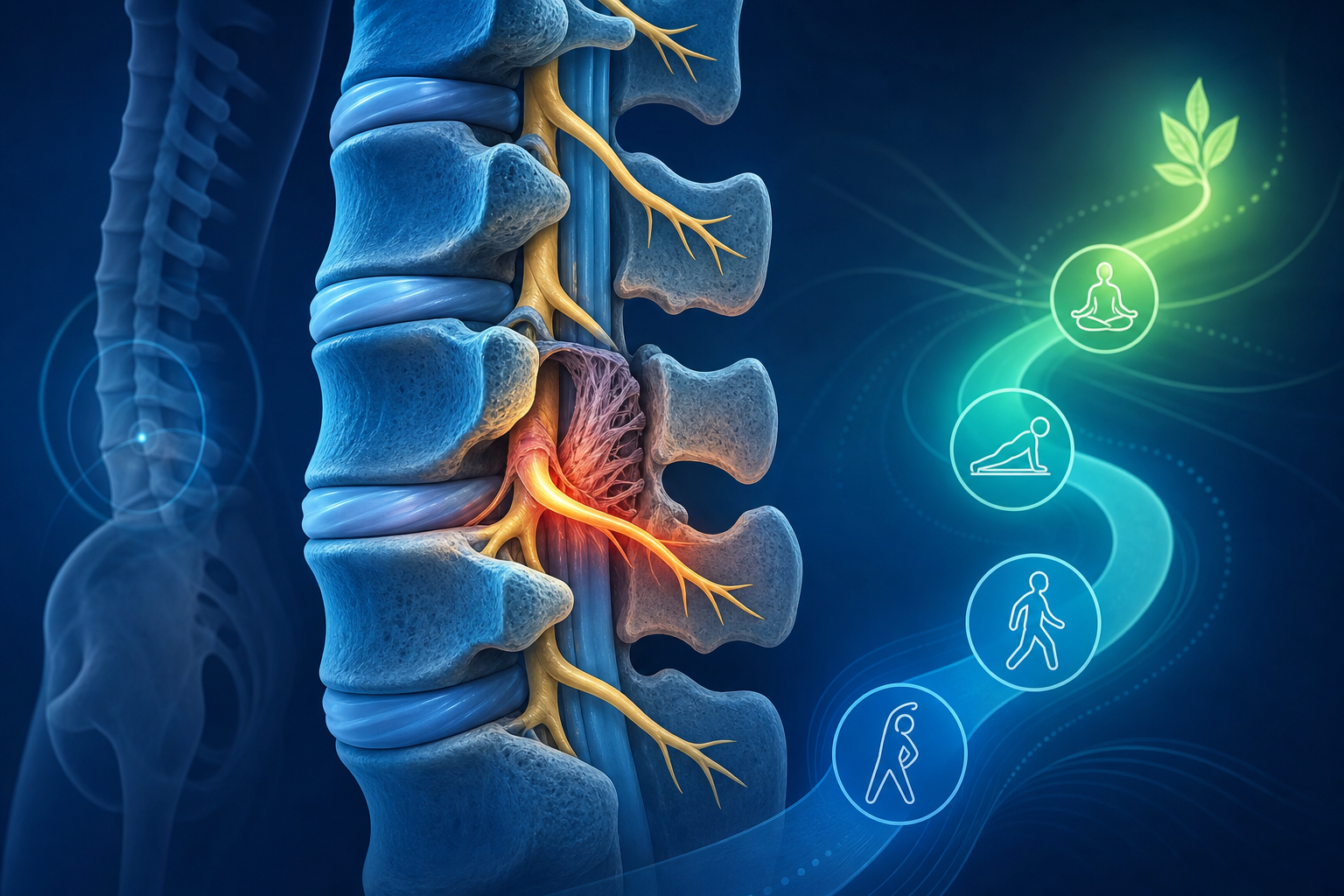
Back surgery is often performed with the goal of reducing nerve pressure, improving function, or addressing structural problems in the spine. For many people, recovery includes a period of soreness, stiffness, and gradual rebuilding. But when pain continues, returns, or changes after surgery, it can raise a difficult question: pain after back surgery is it normal, or is something else going on?
Postlaminectomy syndrome, sometimes called failed back surgery syndrome, refers to persistent or recurring pain after spine surgery. The term does not mean a person did anything wrong, and it does not always mean the surgery itself failed. It describes a pattern of ongoing back pain, leg pain, nerve symptoms, or functional limits that may continue after procedures such as laminectomy, discectomy, decompression, or spinal fusion.
This article offers a patient-friendly overview of Understanding Persistent Pain After Back Surgery (Postlaminectomy Syndrome): Symptoms, Causes, and Treatment. It explains what postlaminectomy syndrome is, how it can feel, why symptoms may persist, when to see a provider, and what to expect from conservative treatment such as physical therapy, rehabilitation, movement-based care, and carefully selected chiropractic support.
If you are dealing with ongoing symptoms, the most important step is a qualified evaluation. Persistent pain can have several causes, and the right plan depends on your surgery, imaging, neurological findings, activity level, and recovery timeline. You can use Medximity to explore physical therapists near you, chiropractors near you, and other conservative care providers who may support post-surgical recovery when appropriate.
What Is Postlaminectomy Syndrome?
What is postlaminectomy syndrome? Postlaminectomy syndrome is a general term for ongoing pain after spine surgery, especially after a laminectomy or other decompression procedure. A laminectomy removes part of the vertebral bone called the lamina to create more room around the spinal cord or nerve roots. The goal is often to reduce nerve compression associated with spinal stenosis, disc problems, or other structural narrowing.
Despite appropriate surgery and careful recovery, some patients continue to have pain. Others feel better for a period of time and then notice symptoms return. Pain may stay in the lower back, travel into the buttock or leg, cause numbness or tingling, or make activities like standing and walking harder than expected.
The word postlaminectomy can sound specific, but in real-world use it is often applied more broadly to persistent pain after several types of back surgery. Some clinicians may also use terms such as persistent spinal pain syndrome or failed back surgery syndrome. While the names differ, the concern is similar: pain or functional limitation continues beyond what would be expected for a typical recovery.
Postlaminectomy Syndrome vs Normal Recovery
One of the most common questions after surgery is how to tell the difference between expected healing and a problem that needs further evaluation. The distinction between postlaminectomy syndrome vs normal recovery is not always clear from symptoms alone, because surgical tissues, nerves, muscles, and joints can all take time to settle.
What may be expected during early recovery
In the first days and weeks after surgery, many patients experience soreness around the incision, muscle guarding, stiffness, fatigue, and limited tolerance for bending, lifting, standing, or sitting. Some nerve-related symptoms may fluctuate as irritated tissues calm down. It is also common for activity to feel more difficult while the body rebuilds strength and endurance.
Normal recovery is usually expected to trend in the right direction over time, even if progress is not perfectly linear. Some days may feel better than others. A provider may monitor wound healing, neurological symptoms, walking tolerance, pain levels, and how well you are returning to daily tasks.
When pain may be more concerning
Persistent symptoms deserve attention when pain does not gradually improve, when leg pain returns after an initial period of relief, when numbness or weakness worsens, or when you cannot progress with basic activities. For example, leg pain after laminectomy when walking may be related to nerve irritation, spinal mechanics, muscular endurance, circulation-related issues, or other factors that require evaluation.
Another common complaint is, can't stand long after back surgery. Limited standing tolerance may occur because of muscular deconditioning, joint irritation, nerve sensitivity, postural strain, scar tissue, or continued spinal loading problems. A provider can help determine whether symptoms fit an expected recovery pattern or suggest a need for further assessment.
Seek prompt medical attention if you notice new or worsening weakness, loss of bowel or bladder control, saddle numbness, fever, drainage from the incision, severe unexplained pain, or other urgent symptoms. These signs require direct medical evaluation and should not be managed with home care alone.
Common Symptoms of Persistent Pain After Back Surgery
Postlaminectomy syndrome can look different from person to person. Some patients mainly have low back pain. Others have radiating leg pain or nerve symptoms. Many have a combination of pain, stiffness, reduced confidence with movement, and frustration over slower-than-expected recovery.
Back pain
Persistent back pain after surgery may feel aching, sharp, burning, tight, or pressure-like. It may be located near the surgical area or spread into nearby regions such as the hips, pelvis, or mid-back. Some patients notice pain with standing, walking, sitting, bending, or transitions such as getting out of a chair.
Back pain can come from several structures, including muscles, joints, discs, ligaments, and irritated nerves. After surgery, the spine may move differently, and surrounding tissues may work harder to protect the healing area. A conservative care provider may assess posture, movement quality, mobility, strength, and pain triggers to better understand what is contributing to symptoms.
Leg pain, sciatica-like symptoms, numbness, or tingling
Leg symptoms after back surgery may involve the buttock, thigh, calf, foot, or toes. Pain can feel electric, burning, shooting, or deep and aching. Numbness, tingling, or pins-and-needles sensations may occur if a nerve remains irritated or sensitized.
Patients often search for information about sciatica when pain travels down the leg. Sciatica describes pain associated with irritation of the sciatic nerve or the nerve roots that contribute to it. You can learn more in Medximity's patient guide to sciatica and radiating leg pain.
Difficulty standing or walking
Some people can sit comfortably but struggle with standing. Others feel symptoms increase after a certain walking distance. This can be especially frustrating because walking is often encouraged as part of recovery. The reason may involve nerve sensitivity, lumbar extension intolerance, hip weakness, reduced core endurance, altered gait, or ongoing spinal narrowing.
A rehabilitation-focused evaluation may include gait observation, balance testing, hip and trunk strength assessment, mobility screening, and a review of how symptoms change with different positions. The goal is not simply to push through pain, but to identify tolerable ways to rebuild capacity.
Muscle tightness, spasms, and guarding
Muscles around the spine may tighten after surgery as a protective response. Guarding can be helpful early in healing, but persistent guarding may contribute to stiffness and inefficient movement. Some patients describe repeated spasms or a feeling that the back locks up with minor activity.
Manual therapy, therapeutic exercise, breathing mechanics, graded mobility work, and education about safe movement may help some patients reduce unnecessary guarding over time. Response varies, and care should be tailored to surgical restrictions and individual findings.
Reduced confidence and activity avoidance
Persistent pain can affect more than the body. It may make people fearful of bending, lifting, walking, or returning to work and hobbies. This does not mean the pain is imaginary. Pain is real, and the nervous system can become more protective after injury, surgery, and prolonged symptoms.
A good rehabilitation plan helps patients understand what movements are safe, what symptoms should be respected, and how to rebuild activity gradually. Education is often as important as exercise because it can reduce fear and improve consistency.
Why Does Back Surgery Pain Return?
Patients often ask, why does back surgery pain return? There is rarely one simple answer. Back surgery may successfully address one source of symptoms, such as a compressed nerve root, while other pain generators remain. In other cases, pain improves but later returns because of scar tissue, recurrent disc issues, progressive degeneration, joint irritation, muscular weakness, or altered movement patterns.
Nerve irritation or nerve sensitization
Nerves can remain sensitive after being compressed or inflamed for a long time. Even after decompression, nerve tissue may need time to recover. Some patients experience lingering burning, tingling, numbness, or shooting pain. In many cases, nerve symptoms improve gradually, but the timeline can vary widely.
Persistent or worsening nerve symptoms should be evaluated. A provider may check reflexes, strength, sensation, walking tolerance, and symptom patterns to determine whether continued monitoring, rehabilitation, or referral back to the surgical team is appropriate.
Scar tissue and changes around the surgical area
Scar tissue is a normal part of healing. In some patients, tissue changes around the surgical site may be associated with stiffness, tethering sensations, or nerve irritation. Scar tissue alone does not always cause pain, but it can be one factor among many.
Conservative care may include gentle mobility work, soft tissue techniques, graded movement, and education on activity pacing. These approaches are not intended to remove scar tissue, but they may help improve comfort, mobility, and function for some patients.
Recurrent or adjacent-level spine problems
The spine is a connected system. After one area is treated surgically, nearby joints, discs, muscles, and ligaments continue to absorb load. Some patients develop symptoms at the same level or at adjacent levels over time. Degenerative changes may also continue naturally with aging, work demands, prior injury, or lifestyle factors.
This does not mean every new ache is a serious problem. However, returning pain after an initial period of improvement should be discussed with a qualified provider, especially if symptoms are intense, progressive, or associated with neurological changes.
Muscle weakness and deconditioning
Back surgery often requires a period of reduced activity. Even short periods of limited movement can reduce strength, endurance, balance, and confidence. The deep trunk muscles, hip stabilizers, and gluteal muscles may not automatically return to full function without a structured plan.
Deconditioning can contribute to fatigue, poor standing tolerance, altered walking mechanics, and recurring flare-ups. This is one reason physical therapy after failed back surgery or persistent post-surgical pain may focus on progressive strengthening, not just stretching or symptom relief.
Movement habits and work demands
Daily habits can influence recovery. Prolonged sitting, heavy lifting, awkward work positions, limited sleep, stress, and sudden spikes in activity may all aggravate symptoms. A provider may help identify specific triggers and create practical strategies for work, home tasks, driving, and exercise.
Ergonomics are not about perfect posture all day. They are about reducing repeated strain, changing positions before symptoms build, and matching tasks to your current capacity while you rebuild strength.
How Long Does Post-Surgery Back Pain Last?
How long does post surgery back pain last? The answer depends on the procedure, the reason for surgery, the degree of nerve irritation before surgery, overall health, activity demands, and how the body responds to rehabilitation. Some soreness is expected during early healing. Nerve-related symptoms may take longer to settle than incision pain or muscle soreness.
Many recovery plans are measured in weeks to months, not days. However, pain that persists beyond the expected healing period, fails to improve, or limits basic function should be evaluated. A patient who cannot stand long, cannot walk usual distances, or has recurring leg pain may benefit from a more detailed assessment of strength, mobility, nerve signs, and movement tolerance.
It can also help to think in terms of trends rather than single days. Are you walking farther than you could two weeks ago? Are flare-ups shorter? Are you needing less rest after activity? Are you more confident with daily tasks? These changes may indicate progress even when pain has not fully resolved.
When to See a Provider for Pain After Back Surgery
You should contact a qualified healthcare provider if symptoms are persistent, worsening, or interfering with daily life. This may include your surgeon, primary care clinician, physical therapist, chiropractor with post-surgical experience, or rehabilitation specialist, depending on your stage of recovery and medical history.
Consider an evaluation if you have:
- Back or leg pain that does not gradually improve after the expected early recovery period
- Leg pain after laminectomy when walking or standing
- Difficulty standing long enough for basic tasks such as cooking, showering, or shopping
- Numbness, tingling, or burning sensations that persist or increase
- Weakness, balance changes, or repeated stumbling
- Pain that returns after an initial period of relief
- Flare-ups that prevent you from progressing with rehabilitation
- Uncertainty about which movements are safe after surgery
Seek urgent medical care for red flags
Some symptoms need prompt medical attention. These include new bowel or bladder changes, saddle numbness, fever, severe escalating pain, new significant weakness, signs of infection near the incision, or sudden major changes in sensation or walking ability. If you are unsure whether symptoms are urgent, contact a medical professional promptly.
How Providers Evaluate Persistent Pain After Back Surgery
A careful evaluation begins with listening. Your provider may ask when symptoms started, how they changed after surgery, what activities aggravate or ease pain, whether symptoms travel into the leg, and how pain affects sleep, work, and daily tasks.
History and surgical context
The type of surgery matters. A laminectomy, discectomy, fusion, or multi-level decompression can each have different recovery considerations. Providers may also ask about pre-surgery symptoms, how long nerve compression was present, previous imaging, post-operative restrictions, and any complications.
Movement and functional testing
Conservative providers often assess how you sit, stand, walk, bend, and transition. They may check hip mobility, spinal motion within safe limits, core control, balance, and leg strength. The goal is to understand what your body currently tolerates and where rehabilitation can begin.
Neurological screening
Because leg pain and numbness may involve nerve tissue, a provider may screen reflexes, sensation, strength, and nerve tension signs. New or progressive neurological findings may warrant medical follow-up with the surgical or medical team.
Coordination with your surgical team
After back surgery, conservative care should respect surgical instructions. If you still have bending, lifting, twisting, or weight-bearing restrictions, your rehabilitation plan should match them. A physical therapist, chiropractor, or rehabilitation provider may coordinate with your surgeon when appropriate, especially if symptoms change or progress stalls.
Treatment for Postlaminectomy Syndrome Without Surgery
Many patients want to understand treatment for postlaminectomy syndrome without surgery. Conservative care may help some people improve mobility, reduce symptom sensitivity, rebuild strength, and return to daily activity. The right approach depends on the cause of symptoms and the stage of recovery.
Conservative treatment does not mean ignoring pain or simply waiting. It usually means using non-invasive strategies such as education, physical therapy, progressive exercise, manual therapy when appropriate, posture and ergonomic coaching, gait training, and lifestyle support. These approaches may be used alone or as part of a broader care plan directed by your medical team.
Physical therapy after failed back surgery or persistent pain
Physical therapy after failed back surgery often focuses on restoring safe movement and function. A physical therapist may start with gentle mobility, breathing, walking tolerance, and pain-limited activation exercises. As tolerance improves, the plan may progress to trunk endurance, hip strengthening, balance, lifting mechanics, and task-specific training.
Physical therapy may help by addressing deconditioning, movement fear, stiffness, gait changes, and weakness that can develop before and after surgery. It may also help patients learn how to pace activity so they can build capacity without repeated flare-ups.
If you are comparing options, Medximity offers information on physical therapy services and a directory to find licensed physical therapists in your area.
Rehabilitation and graded activity
Rehabilitation is broader than a list of exercises. The best rehab for back surgery pain is usually individualized, progressive, and matched to your symptoms, surgical history, and goals. Someone who wants to return to desk work may need sitting strategies and walking breaks. Someone who works in a physically demanding job may need lifting progression, hip-hinge training, and endurance conditioning.
Graded activity means starting where your body can succeed and increasing gradually. For example, if walking for 20 minutes triggers a significant flare-up, a provider may begin with shorter walks spread throughout the day, then slowly increase duration or pace. The plan should be specific enough to guide progress but flexible enough to adjust when symptoms change.
You can explore conservative rehabilitation options through Medximity's rehabilitation provider search.
Chiropractic care after back surgery
Some patients search for a chiropractor for pain after back surgery near me. Chiropractic care may be appropriate for certain post-surgical patients, but it should be approached carefully. The chiropractor should understand your surgical history, current restrictions, imaging when available, and neurological symptoms. High-force techniques may not be appropriate for all post-surgical spines, especially near a fusion or recently operated area.
Chiropractic care after surgery may include gentle mobilization, soft tissue work, exercise guidance, posture coaching, and non-thrust techniques when appropriate. Any treatment should be tailored and should not create new or worsening symptoms. If symptoms suggest nerve compression, instability, infection, or another medical concern, the chiropractor should refer or coordinate care.
Medximity provides an overview of chiropractic care and a directory to help you search for chiropractors near you.
Manual therapy and soft tissue techniques
Manual therapy may include gentle joint mobilization, soft tissue treatment, scar-area mobility work when healed and appropriate, and guided stretching. These techniques may help some patients feel less guarded and more comfortable moving. Manual care is usually most effective when paired with active rehabilitation rather than used as the only strategy.
After surgery, manual therapy should be conservative and clinically justified. Providers should avoid treating directly over healing tissue too soon and should respect all post-operative precautions.
Exercise for persistent post-surgical back pain
Exercise after back surgery is not one-size-fits-all. Early programs may include walking, gentle pelvic control, diaphragmatic breathing, and low-load trunk activation. Later phases may add hip strengthening, balance work, step-ups, resistance training, and functional lifting practice.
The goal is not to force the spine into painful ranges. It is to restore capacity gradually. A provider may use symptom response to guide progression. Mild soreness may be expected with new activity, but sharp pain, worsening leg symptoms, or prolonged flare-ups may mean the plan needs to be adjusted.
Ergonomics and daily activity modifications
Small changes in daily routines can reduce repeated irritation. These may include alternating sitting and standing, using a chair that supports the low back, keeping frequently used objects at waist height, breaking tasks into shorter sessions, and practicing safer lifting mechanics.
For people who cannot stand long after back surgery, the solution is not always to avoid standing. Instead, a provider may help identify tolerable standing intervals, supportive footwear, hip and trunk endurance exercises, and pacing strategies that gradually increase tolerance.
Natural treatment for persistent back surgery pain
Many patients look for natural treatment for persistent back surgery pain. In a conservative care setting, this usually means non-invasive approaches such as movement, strengthening, education, sleep hygiene, stress management, posture variety, walking programs, and hands-on care when appropriate. These strategies may help support recovery, but they should be personalized and medically appropriate.
Natural does not always mean risk-free. Exercises, stretches, or manipulation that are not suited to your surgery or symptoms can aggravate pain. Before starting a new program, especially after spine surgery, consult a qualified provider who can evaluate your individual situation.
What to Expect During Conservative Care
If you schedule a visit for persistent pain after back surgery, the first appointment will likely include a detailed history and physical assessment. Bring information about your surgery, restrictions, imaging reports if available, medication list, and any instructions from your surgeon. You do not need to have every answer, but the more context you provide, the better your provider can tailor care.
Your first visit
The provider may ask about your original symptoms, the procedure performed, what improved after surgery, what did not improve, and what has changed recently. They may ask you to rate pain, describe leg symptoms, identify daily limitations, and explain your goals. Goals might include walking farther, standing for work, sleeping better, returning to exercise, or reducing flare-ups.
Your treatment plan
A conservative plan may include education, home exercises, in-office rehabilitation, manual therapy, walking progression, ergonomic changes, and communication with your medical team. The plan should explain what to do on good days, what to do during flare-ups, and which symptoms require follow-up.
Progress may be gradual. Some patients notice improved movement confidence before pain changes significantly. Others first notice fewer flare-ups, better walking tolerance, or improved sleep. Your provider should help track meaningful measures so you can see whether care is helping.
How long conservative care may take
There is no universal timeline. A person with mild deconditioning may improve faster than someone with longstanding nerve pain, multiple surgeries, or complex health factors. Many rehabilitation plans are structured over several weeks, with reassessment along the way. If progress is limited, your provider may adjust the plan or recommend follow-up with your physician or surgeon.
Questions to Ask a Provider About Postlaminectomy Syndrome
Before starting care, it can help to ask direct questions. Good providers welcome informed patients and should explain the reasoning behind their recommendations.
- What findings suggest my pain is part of normal recovery versus persistent post-surgical pain?
- Are there any symptoms that mean I should contact my surgeon or seek urgent care?
- What activities are safe for me right now?
- What movements or loads should I avoid based on my surgery?
- How will we measure progress besides pain level?
- What should I do if leg pain increases during exercise?
- How often should my plan be updated?
- Do you have experience working with post-surgical spine patients?
Clear communication is especially important when symptoms involve the leg or when standing and walking are limited. Your provider should be able to explain the plan in plain language and adapt it as your body responds.
Living With Persistent Pain After Back Surgery
Persistent pain after surgery can be emotionally exhausting. Many patients expected surgery to be the final step, so continued symptoms may feel discouraging. It is reasonable to feel frustrated. At the same time, persistent pain does not always mean there is no path forward.
For some patients, meaningful improvement comes from addressing factors that surgery was not designed to fix: strength deficits, movement fear, endurance loss, joint stiffness, work demands, sleep disruption, and nervous system sensitivity. Conservative care may help identify these modifiable contributors and create a realistic plan.
It is also helpful to avoid comparing your recovery to someone else's. Two people can have the same procedure and very different timelines. Age, pre-surgery nerve irritation, physical demands, general health, prior injuries, and support systems all affect recovery.
Finding Care for Persistent Pain After Back Surgery
If you are searching for help, look for providers who take post-surgical symptoms seriously, communicate clearly, and stay within an appropriate scope of care. A good conservative provider will not promise a cure or dismiss your surgical history. They will evaluate, educate, coordinate when needed, and build a plan that fits your current capacity.
Medximity can help you compare conservative care options, including providers who focus on back pain, rehabilitation, physical therapy, and chiropractic care. You can start with Medximity's guide to back pain, then search for local providers based on your needs and location.
Key Takeaway
Persistent pain after back surgery can happen for many reasons, including nerve sensitivity, scar-related stiffness, recurrent symptoms, weakness, deconditioning, or ongoing mechanical stress. Postlaminectomy syndrome is not a single diagnosis with one solution; it is a description of continued pain that deserves careful evaluation.
If your pain is not improving, your leg pain has returned, or you cannot stand or walk as expected, consider speaking with a qualified provider. Conservative treatment such as physical therapy, rehabilitation, movement-based care, and carefully selected chiropractic support may help some patients improve function and manage symptoms without additional surgery. Your best next step is an individualized assessment and a plan that respects your surgical history.
Frequently Asked Questions
What is postlaminectomy syndrome?
Postlaminectomy syndrome refers to persistent or recurring pain after spine surgery, especially after a laminectomy or related decompression procedure. Symptoms may include low back pain, leg pain, numbness, tingling, weakness, or difficulty standing and walking. The term does not automatically mean the surgery was performed incorrectly; it means pain has continued beyond what is expected and should be evaluated.
Pain after back surgery is it normal?
Some pain after back surgery is expected, especially early in recovery. Incision soreness, muscle tightness, stiffness, and limited activity tolerance may occur as tissues heal. Pain becomes more concerning when it worsens, fails to improve over time, returns after initial relief, or is accompanied by new neurological symptoms such as weakness, numbness, or bowel or bladder changes.
How is postlaminectomy syndrome different from normal recovery?
Normal recovery usually shows a gradual trend toward better function, even with occasional flare-ups. Postlaminectomy syndrome is considered when pain persists, returns, or limits daily activity beyond the expected healing period. A provider can help distinguish normal healing from persistent post-surgical pain by reviewing your timeline, symptoms, neurological signs, and functional progress.
Why do I have leg pain after laminectomy when walking?
Leg pain after laminectomy when walking may be associated with nerve irritation, residual sensitivity, spinal mechanics, muscular endurance, gait changes, or other medical factors. Because radiating leg pain can have several causes, it should be assessed by a qualified provider, especially if it is worsening or associated with weakness, numbness, or balance changes.
Why can't I stand long after back surgery?
Difficulty standing after back surgery may relate to muscle deconditioning, hip or core weakness, joint stiffness, nerve sensitivity, posture habits, or continued irritation in the spine. A rehabilitation provider may assess your standing tolerance, walking pattern, strength, and movement mechanics to create a gradual plan for rebuilding capacity.
How long does post-surgery back pain last?
The timeline varies by procedure, symptoms before surgery, nerve involvement, general health, and rehabilitation. Some soreness may improve within weeks, while nerve symptoms and functional rebuilding may take longer. Pain that does not trend better, returns after improvement, or limits basic activities should be discussed with a healthcare provider.
What treatment for postlaminectomy syndrome without surgery may help?
Non-surgical care may include physical therapy, graded exercise, walking progression, manual therapy when appropriate, ergonomic changes, education, and rehabilitation focused on strength and function. These approaches may help some patients manage symptoms and improve activity tolerance, but they should be individualized to the person's surgery, restrictions, and exam findings.
Can a chiropractor help with pain after back surgery?
Chiropractic care may help some post-surgical patients when it is gentle, individualized, and appropriate for the surgery performed. The chiropractor should review your surgical history, current restrictions, symptoms, and neurological findings. High-force techniques may not be appropriate for all patients, especially near a fusion or recently operated area, so coordination with your medical team may be important.
This article is for educational purposes only and is not a substitute for professional medical advice, diagnosis, or treatment. Always consult a qualified healthcare provider about your specific condition. If you may be experiencing a medical emergency, call 911 or seek emergency care immediately.


