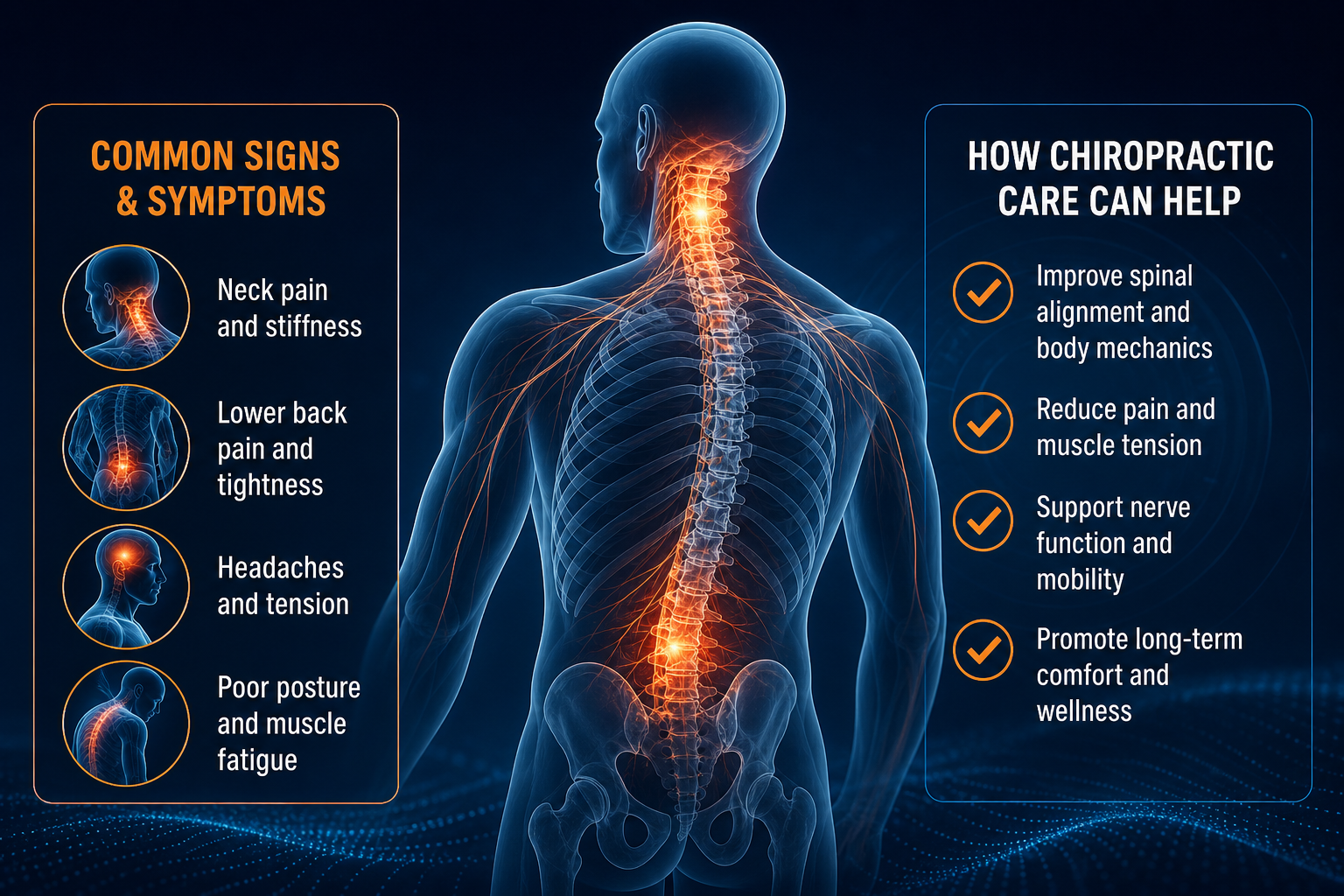
If you are looking for a chiropractor near Fountain Inn SC, you are probably trying to solve a practical problem: pain is affecting how you sit, sleep, work, drive, exercise, or care for your family. Chiropractic care is a conservative healthcare option that focuses on the spine, joints, muscles, and nervous system. For many patients, it may help reduce musculoskeletal discomfort, improve mobility, and support better movement habits without surgery.
This guide explains when chiropractic care may be worth considering, what conditions often bring patients into a chiropractic office, what happens at a first chiropractic visit, and how to choose a chiropractor in or near Fountain Inn. If you are ready to compare local options, you can start with Medximitys provider search for a chiropractor near Fountain Inn SC.
What does a chiropractor do?
A chiropractor is a licensed healthcare provider who evaluates and treats conditions involving the musculoskeletal system, especially the spine. Chiropractic treatment may include spinal adjustment or manipulation, joint mobilization, soft tissue therapy, therapeutic exercise, posture coaching, ergonomic education, and home-care recommendations.
The goal is not simply to create a popping sound or provide temporary relief. A thoughtful chiropractor looks at how your joints move, how your muscles support those joints, how posture and daily habits contribute to irritation, and whether your symptoms suggest a need for referral to another healthcare professional.
Common chiropractic treatments
Depending on your history and exam findings, a chiropractor may use several conservative techniques. These may include manual spinal adjustments, instrument-assisted adjustments, gentle mobilization, stretching, soft tissue work, stabilization exercises, balance or movement retraining, and practical changes to your workstation, sleep position, lifting habits, or exercise routine.
Not every patient receives the same treatment. For example, someone with neck pain when turning head may need a different plan than someone with lower back pain after sitting. A patient with soreness after a car crash may also need a more cautious evaluation than someone with mild posture-related tightness after desk work.
When should you see a chiropractor near Fountain Inn SC?
You may consider seeing a chiropractor when pain, stiffness, or reduced mobility lasts more than a few days, keeps returning, or interferes with normal activities. Chiropractic care may be appropriate for certain types of back pain, neck pain, headaches associated with neck tension, shoulder or hip mobility problems, and posture-related discomfort.
You should seek urgent medical care, rather than waiting for a routine chiropractic appointment, if you have severe or worsening weakness, loss of bowel or bladder control, numbness in the groin or saddle area, chest pain, trouble breathing, signs of stroke, fever with severe spine pain, or pain after significant trauma. These symptoms may require immediate medical evaluation.
Back pain that affects sitting, bending, or lifting
Back pain is one of the most common reasons people search for a back pain chiropractor near me. Some patients notice pain after yard work, lifting, travel, gym activity, long workdays, or simply sitting too long. In many cases, low back discomfort is associated with irritated joints, overworked muscles, reduced hip mobility, poor trunk endurance, or a combination of factors.
A chiropractor may assess your lumbar spine, pelvis, hips, posture, gait, and movement patterns. Treatment may include spinal or pelvic adjustments, mobility work, core stabilization, glute strengthening, and changes to how you sit or lift. If your symptoms suggest a disc injury, nerve irritation, fracture risk, infection, or another medical concern, the chiropractor may refer you for additional evaluation.
Lower back pain after sitting
Lower back pain after sitting can be frustrating because it often shows up during ordinary activities: driving on I-385, sitting at a computer, eating dinner, or relaxing at home. Sitting places the hips and spine in a sustained position. If your hip flexors are tight, your spinal joints are irritated, or your core and glute muscles fatigue quickly, discomfort may build over time.
Chiropractic care may help by improving joint mobility and reducing muscle guarding. Just as important, a provider may teach simple changes: adjusting chair height, supporting the low back, taking short movement breaks, changing screen height, improving hip mobility, and using strengthening exercises to build tolerance for sitting.
Neck pain when turning your head
Neck pain when turning head may occur after sleeping awkwardly, long computer use, driving, stress-related muscle tension, or a sudden movement. Patients often describe sharp pain with rotation, tightness across the upper shoulders, headaches, or a feeling that the neck is stuck.
A chiropractor may check cervical range of motion, muscle tone, joint mobility, posture, shoulder mechanics, and neurologic signs such as reflexes, strength, and sensation when appropriate. Treatment may include gentle cervical mobilization or adjustment, soft tissue therapy, thoracic spine mobility, shoulder blade strengthening, and ergonomic guidance. Cervical treatment should be selected carefully based on the patients age, health history, symptoms, and exam findings.
Posture-related pain from work, school, or phone use
Posture is not about holding one perfect position all day. It is about having enough mobility, strength, and body awareness to change positions comfortably. Natural treatment for posture related pain may include chiropractic care, strengthening, mobility exercises, breathing mechanics, workstation changes, and habit coaching.
Common posture-related complaints include upper back stiffness, neck tightness, headaches, shoulder tension, low back fatigue, and discomfort between the shoulder blades. A chiropractor may help identify which areas are stiff, which muscles are overworking, and which movement habits are contributing to recurring irritation.
Chiropractic treatment after auto accident soreness
Some people feel pain immediately after a collision. Others notice stiffness, headache, neck pain, back pain, or shoulder soreness later that day or over the next several days. Chiropractic treatment for auto accident soreness may be considered when symptoms appear to involve muscles, joints, ligaments, or movement limitations.
Auto accident evaluation should be careful and well documented. A chiropractor may ask about the crash direction, seatbelt use, airbag deployment, head position, symptom timing, prior injuries, and whether you were evaluated by emergency or urgent care. The exam may include range of motion, orthopedic tests, neurologic screening, palpation, posture assessment, and functional movement checks.
Conservative care after a motor vehicle collision may include gentle mobilization, soft tissue work, progressive exercise, heat or ice guidance, and activity modification. Some patients may need imaging or referral depending on the nature of the crash, symptom severity, age, health history, or neurologic findings. A qualified provider can help determine what is appropriate for your situation.
Chiropractor without surgery for back pain
Many patients search for a chiropractor without surgery for back pain because they want to explore conservative options first. Chiropractic care is non-surgical and does not involve prescription medication. It may be one part of a conservative care plan for certain types of mechanical back pain, especially when symptoms are related to joint restriction, muscle tension, posture, or movement patterns.
That said, no provider can promise that chiropractic care will resolve every back problem. Some conditions require medical co-management, imaging, specialist evaluation, or different forms of rehabilitation. A responsible chiropractor should explain what findings support conservative care, what warning signs require referral, and what progress should look like over time.
What happens at first chiropractic visit?
If you have never been to a chiropractor, it is normal to wonder what happens at first chiropractic visit. The first appointment is usually focused on understanding your symptoms, screening for safety, identifying likely contributing factors, and deciding whether chiropractic care is appropriate.
Health history and symptom review
Your chiropractor may ask when your symptoms started, where you feel pain, what makes it better or worse, whether pain travels into an arm or leg, and whether you have numbness, tingling, weakness, headaches, dizziness, or changes in coordination. They may also ask about prior injuries, surgeries, medications, medical conditions, work demands, sleep, exercise, and daily routines.
Physical examination
The exam may include posture assessment, spinal and joint motion testing, orthopedic tests, muscle strength checks, reflexes, sensation testing, gait or balance evaluation, and palpation of muscles and joints. The goal is to understand how your body is moving and whether your symptoms fit a pattern that can be managed conservatively.
Discussion of findings
After the evaluation, the chiropractor should explain what they found in plain language. You can expect a discussion of the suspected pain generators, contributing habits or movement limitations, recommended care options, expected timeline, and any reasons for referral. If treatment is appropriate that day, the chiropractor may begin with a conservative approach suited to your condition and comfort level.
Your first treatment
First-visit treatment varies. Some patients receive an adjustment, while others begin with gentle mobilization, soft tissue therapy, movement coaching, or home exercises. If your chiropractor believes imaging or medical evaluation is needed first, they may delay hands-on treatment until it is safer to proceed.
To learn more about appointment preparation, you may find Medximitys guide to what to expect at your first chiropractic visit helpful.
How long does chiropractic care take?
How long does chiropractic care take depends on the condition, symptom duration, exam findings, activity demands, prior injuries, and how your body responds. A mild neck or back strain may improve over a shorter period, while long-standing pain, recurring flare-ups, postural issues, or accident-related soreness may require a more gradual plan.
Many chiropractors use an initial trial of care, followed by reassessment. This helps determine whether range of motion, pain intensity, function, sleep, work tolerance, or activity level are improving. If meaningful progress is not occurring, the plan may need to change. That may include different exercises, co-management with physical therapy, referral to another provider, or additional evaluation.
Patients can support progress by following home-care instructions, staying reasonably active within tolerance, improving sleep posture, taking movement breaks, and communicating clearly about what is helping or worsening symptoms. Consistency matters, but care should still be individualized and periodically reassessed.
Chiropractor vs physical therapy for back pain
Many patients compare chiropractor vs physical therapy for back pain. Both can play important roles in conservative musculoskeletal care, and the best choice may depend on your condition, goals, and preferences.
How chiropractic care often focuses treatment
Chiropractic care often emphasizes spinal and joint mobility, manual therapy, nervous system function, posture, and movement mechanics. Chiropractors commonly use adjustments or mobilization along with exercise and lifestyle guidance. This may be a good fit for patients who feel stiff, restricted, or mechanically limited and want a hands-on conservative approach.
How physical therapy often focuses treatment
Physical therapy often emphasizes therapeutic exercise, rehabilitation after injury or surgery, strength, balance, gait, functional training, and progressive loading. Physical therapists may also use manual therapy, mobility work, and education. PT can be especially helpful when weakness, deconditioning, balance problems, sports injury, post-operative rehabilitation, or functional retraining are major concerns.
Can you use both?
In some cases, patients benefit from both chiropractic care and physical therapy, either at different stages or as coordinated care. For example, chiropractic treatment may help restore comfortable joint motion, while physical therapy may build strength and endurance to reduce recurrence. The right approach should be based on evaluation, not labels alone. You can compare provider types through Medximitys physical therapy search near Fountain Inn if you are considering rehabilitation-focused care.
How to choose a chiropractor in or near Fountain Inn
Knowing how to choose a chiropractor can make your search more productive. The best chiropractor in Fountain Inn for one patient may not be the best fit for another. Look for a provider whose experience, communication style, treatment methods, location, and scheduling fit your needs.
Check licensure, training, and clinical focus
Chiropractors must be licensed in the state where they practice. Beyond licensure, look for clues about clinical focus. Some chiropractors emphasize family wellness, while others focus more on sports injuries, auto accident care, spine pain, posture, or rehabilitation. If you have a specific concern, such as accident soreness or recurring low back pain, ask whether the provider commonly evaluates that type of condition.
Look for clear evaluation, not one-size-fits-all care
A good chiropractic visit should include a history, exam, explanation of findings, and a plan that matches your symptoms and goals. Be cautious with any approach that skips evaluation, promises a cure, pressures you into long prepaid plans without reassessment, or discourages you from seeking medical care when symptoms warrant it.
Ask about treatment style
Some patients prefer traditional manual adjustments. Others want gentle techniques, instrument-assisted care, soft tissue therapy, exercise-based rehab, or posture coaching. It is reasonable to ask what methods the chiropractor uses and whether they can adapt treatment to your comfort level.
Consider convenience and consistency
Location matters. If you live in Fountain Inn, work in Simpsonville, commute toward Greenville, or manage a busy family schedule, a convenient office can make it easier to attend appointments consistently. Search results on Medximity can help you compare nearby providers and service areas without relying only on a broad web search for back pain chiropractor near me.
You can also explore Medximitys broader chiropractor search near Greenville SC if you are open to nearby communities.
Questions to ask before scheduling
Before choosing a chiropractor near Fountain Inn SC, consider asking a few focused questions. These can help you understand whether the provider is a good match and whether the office can meet your needs.
- Do you evaluate conditions like mine often?
- What happens during the first visit?
- Do you provide exercises or home-care guidance?
- Do you offer gentle or low-force techniques if needed?
- How do you measure progress?
- When would you refer a patient to another provider?
- Do you coordinate with primary care, physical therapy, or other clinicians when appropriate?
- What should I bring to the first appointment?
The answers should feel clear and patient-centered. You do not need a provider who promises instant results. You need someone who evaluates carefully, explains honestly, and adjusts the plan based on your response.
What conditions may bring patients to chiropractic care?
Chiropractors commonly evaluate musculoskeletal symptoms that affect the back, neck, shoulders, hips, and extremities. The following examples are not diagnoses and do not mean chiropractic care is right for every case. They are common reasons patients seek conservative evaluation.
Low back pain
Low back pain may be associated with joint irritation, muscle strain, disc-related sensitivity, hip stiffness, poor lifting mechanics, prolonged sitting, or reduced trunk endurance. Chiropractic care may include spinal adjustments, hip mobility work, core exercises, and ergonomic advice.
Neck pain and upper back stiffness
Neck and upper back pain may be related to prolonged computer use, driving, sleep position, stress, or reduced thoracic mobility. Treatment may include cervical or thoracic mobilization, soft tissue therapy, posture coaching, and shoulder blade strengthening.
Headaches associated with neck tension
Some headaches are associated with neck tension or cervicogenic patterns, meaning structures in the neck may contribute to pain. A chiropractor may assess neck mobility, muscle tenderness, posture, and headache triggers. New, severe, unusual, or worsening headaches should be evaluated medically.
Sciatica-like leg pain
Pain that travels from the low back or buttock into the leg may have several causes, including nerve irritation, muscle tension, or referred pain from spinal or pelvic structures. Chiropractic care may be considered in some cases, but symptoms such as progressive weakness, numbness, or loss of bladder or bowel control require urgent medical evaluation.
Sports, lifting, and activity-related soreness
Active patients may seek chiropractic care for movement restrictions, recurring tightness, or pain related to training. Care may include mobility assessment, manual therapy, corrective exercises, and guidance on gradual return to activity.
For a deeper look at conservative spine care, you can read Medximitys article on chiropractic care for lower back pain.
What to bring to your first appointment
To make your first visit more useful, bring a list of symptoms, prior diagnoses, medications, relevant imaging reports if you have them, insurance information if applicable, and notes about what activities trigger or relieve pain. Wear comfortable clothing that allows you to move. If you were in an accident or had a recent medical evaluation, bring any discharge paperwork or provider instructions.
You may also want to write down your goals. For example: sitting through a workday with less discomfort, turning your head while driving, returning to exercise, sleeping more comfortably, or reducing recurring flare-ups. Specific goals help your chiropractor measure functional progress, not just pain levels.
How chiropractic care may support daily life in Fountain Inn
Fountain Inn and the surrounding Upstate communities include commuters, parents, healthcare workers, manufacturing employees, office professionals, students, athletes, and retirees. The physical demands vary, but many people share the same challenge: pain makes everyday life harder.
A chiropractor near Fountain Inn SC may help patients address movement problems that show up during local routines, such as driving to Greenville, working at a desk, standing on concrete floors, lifting at work, doing yard maintenance, playing recreational sports, or carrying children. Conservative care is most useful when it connects treatment in the office with the movements you need outside the office.
How to prepare for better results
Chiropractic care is typically more effective when patients participate actively. That does not mean pushing through severe pain. It means following reasonable home recommendations, communicating honestly, and making small changes that reduce repeated irritation.
Track your symptoms
Notice what worsens or improves your symptoms. Does pain increase after sitting, driving, lifting, sleeping, or exercise? Does walking help? Does heat or ice feel better? These details help your provider refine the plan.
Move within tolerance
For many mechanical spine complaints, complete rest is not necessary unless a provider advises it for a specific reason. Gentle movement, walking, and guided exercise may help many patients maintain mobility. Your chiropractor can suggest activity levels that fit your condition.
Improve your work and sleep setup
Small ergonomic changes may reduce repeated strain. This might include raising a monitor, changing chair support, taking short breaks, adjusting pillow height, or avoiding long periods in one position. These changes are not cures, but they may support recovery and reduce flare-ups.
Finding a chiropractor through Medximity
Medximity helps patients compare conservative care providers by location and specialty. Instead of searching dozens of unrelated pages, you can use Medximity to look for chiropractors near Fountain Inn, review provider information, and consider whether a practice fits your needs.
Start with the local search page for a chiropractor near Fountain Inn SC. If you are also comparing nearby options, you can search for chiropractors near Simpsonville SC or browse medical specialists near Greenville SC when your symptoms may need additional evaluation.
When chiropractic care may not be enough
Chiropractic care is one conservative option, but it is not the right answer for every symptom. A chiropractor should refer or co-manage when symptoms suggest a condition outside the scope of chiropractic treatment, when red flags are present, or when a patient is not improving as expected.
Examples that may call for additional evaluation include progressive neurologic symptoms, unexplained weight loss, history of cancer with new spine pain, fever, significant trauma, suspected fracture, severe night pain, worsening balance problems, or pain that does not respond to appropriate conservative care. If you are unsure whether your symptoms are urgent, seek medical guidance promptly.
FAQ: Chiropractor near Fountain Inn SC
How do I find the best chiropractor in Fountain Inn?
The best chiropractor in Fountain Inn for you is one who evaluates your specific symptoms, explains findings clearly, offers treatment that matches your goals and comfort level, and refers when needed. Look for licensure, relevant clinical focus, clear communication, and a plan that includes reassessment rather than a one-size-fits-all schedule.
Can a chiropractor help with lower back pain after sitting?
Chiropractic care may help some patients with lower back pain after sitting, especially when symptoms are related to joint stiffness, muscle tension, posture, or movement habits. A chiropractor may also recommend ergonomic changes, mobility work, and strengthening exercises to improve sitting tolerance.
Should I see a chiropractor for neck pain when turning my head?
A chiropractor may evaluate neck pain when turning your head and determine whether conservative treatment is appropriate. Seek urgent medical care if neck pain follows significant trauma or occurs with severe headache, dizziness, weakness, numbness, trouble speaking, fever, or other concerning symptoms.
What happens at the first chiropractic visit?
The first chiropractic visit usually includes a health history, symptom review, physical exam, explanation of findings, and discussion of treatment options. Some patients receive treatment the same day, while others may need imaging, referral, or further evaluation first.
How long does chiropractic care take?
The timeline varies. Some patients notice improvement within a few visits, while others need a longer plan depending on symptom duration, injury severity, posture, work demands, and response to care. A responsible chiropractor should reassess progress and adjust the plan when needed.
Is chiropractic care the same as physical therapy?
No. Chiropractic care often emphasizes joint mobility, spinal adjustments, manual therapy, and movement mechanics. Physical therapy often emphasizes rehabilitation, strengthening, functional training, and progressive exercise. Some patients benefit from one approach, while others may benefit from coordinated care.
Can chiropractic care help after an auto accident?
Chiropractic treatment may help some patients with musculoskeletal soreness after an auto accident, but the first step is a careful evaluation. Depending on symptoms and crash details, a provider may recommend conservative care, imaging, medical referral, or co-management.
Do chiropractors treat without surgery?
Yes. Chiropractic care is non-surgical and focuses on conservative treatment such as adjustments, mobilization, soft tissue therapy, exercise, posture coaching, and activity guidance. It may be appropriate for some types of back and neck pain, but outcomes vary and some symptoms need medical evaluation.
Next step: compare chiropractors near Fountain Inn
If back pain, neck stiffness, posture-related discomfort, or accident soreness is interfering with your routine, a conservative evaluation may help you understand your options. Use Medximity to compare a chiropractor near Fountain Inn SC and find a provider whose approach fits your needs. If your symptoms are severe, worsening, or associated with red flags, seek prompt medical care.


